
Why Ohio Lawns Fail in Summer Heat — and How Tall Fescue Grass Seed Finally Fixes It
How Vigoro Tall Fescue Grass Seed's deep-rooting, drought-tolerant blend is built to handle Ohio's climate swings — and why the 7 lb size is the right choice for mid-size bare areas and seasonal overseeding
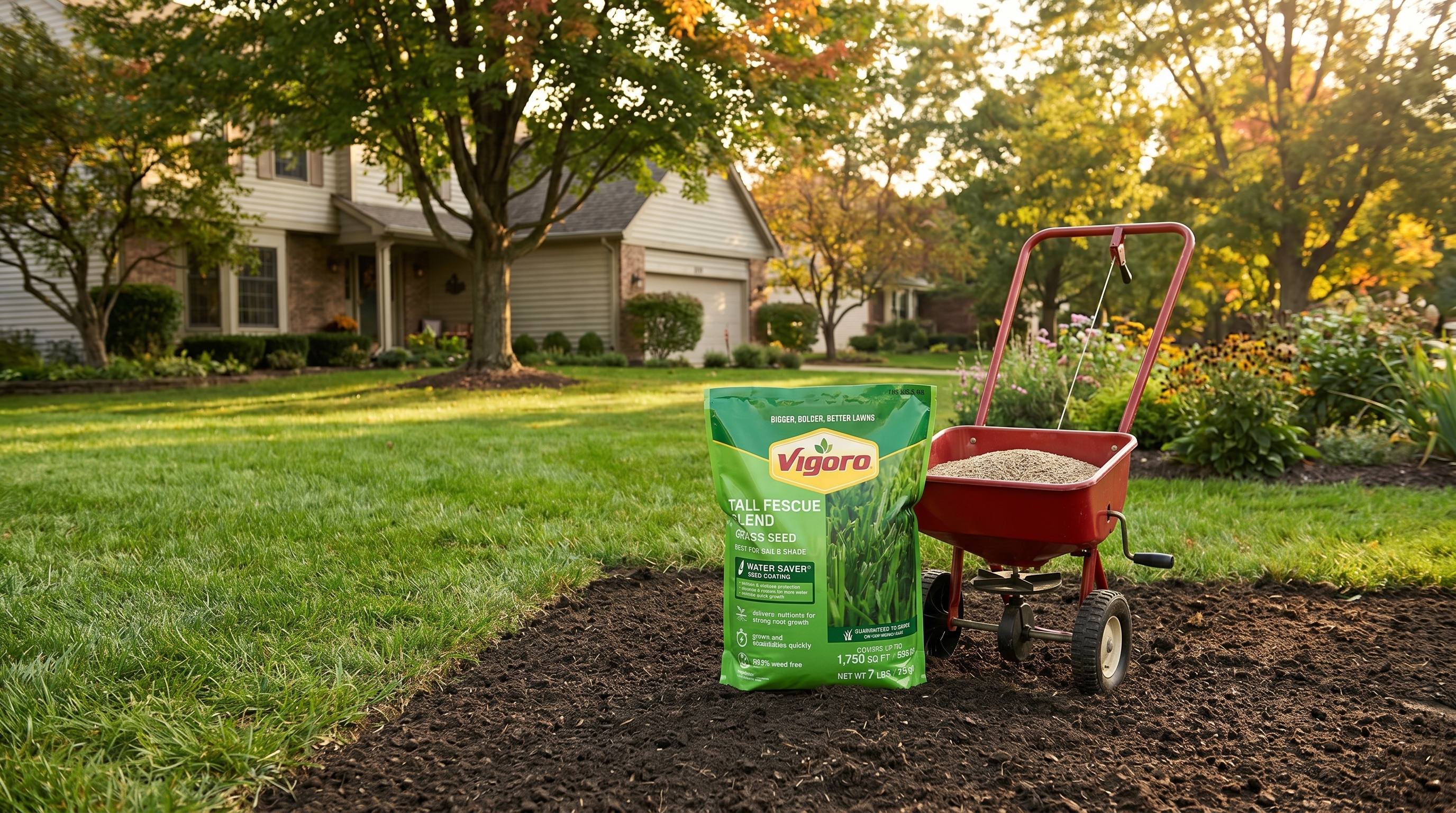
If your Ohio lawn thins out every August and never quite recovers by October, the problem almost certainly isn't how you're watering or fertilizing — it's the grass itself. Kentucky bluegrass and perennial ryegrass, the workhorses of northern lawn mixes for decades, go dormant under drought stress and struggle under the partial shade of mature trees. Tall fescue is built differently: deeper roots, wider heat tolerance, better shade adaptability, and the kind of slow-to-establish, long-to-persist growth habit that Ohio summers actually reward. Vigoro Tall Fescue Grass Seed (7 lb), available at Liberty Farm, Home & Garden in Galion, Ohio, brings all of that alongside a Water Saver seed coating that helps new seedlings establish in the inconsistent rainfall conditions Ohio's spring and fall planting windows deliver. Whether you're addressing a section of dead turf, overseeding a thin stand, or establishing grass in a spot that's burned out summer after summer, this is the product worth understanding before you seed.
Why Cool-Season Lawns Struggle in Ohio's Climate
Ohio sits in a challenging zone for turfgrass: it's warm enough in summer to stress cool-season grasses but too cold in winter for warm-season grasses like bermuda or zoysia to survive reliably. The practical result is that Ohio homeowners are working with cool-season species — Kentucky bluegrass, perennial ryegrass, fine fescues, and tall fescue — that are theoretically suited to the state but are not equally well matched to every part of Ohio's summer.
Kentucky bluegrass is the traditional Ohio lawn grass. It produces a dense, attractive turf with good cold hardiness, but it has a fundamental weakness: it goes dormant in hot, dry summers, turning brown and thin by late July in most years and failing to recover fully before frost. Perennial ryegrass germinates faster and looks better sooner after seeding, but it doesn't handle heat and drought any better than bluegrass and is more susceptible to fungal diseases during Ohio's humid summer months.
Tall fescue occupies a different position. It's a cool-season grass — it actively grows in spring and fall, slows in summer's peak heat — but its root system is substantially deeper than either bluegrass or ryegrass. In Ohio's clay-heavy soils, a tall fescue plant can root to 24–36 inches under good conditions, compared to 6–12 inches for bluegrass. That root depth is what makes the difference in July: a deeply rooted tall fescue plant can access soil moisture that a shallow-rooted bluegrass plant can't reach. The result is a grass that stays green and actively growing through moderate drought conditions that would put a bluegrass lawn into dormancy.
Tall fescue also tolerates partial shade better than bluegrass, which requires at least 6–8 hours of direct sun to thrive. In Ohio yards shaded by mature oaks, maples, and elms — which describe the majority of established residential properties across north-central Ohio — tall fescue maintains adequate density under 4–6 hours of filtered sun where bluegrass would gradually thin and fail.
What Makes Tall Fescue Different from Other Cool-Season Grasses
Modern turf-type tall fescues are a significant improvement over the older K-31 and similar coarse-bladed tall fescues that gave the species a rough reputation in home lawns for years. Today's turf-type varieties — the class that Vigoro Tall Fescue draws from — are finer-bladed, more disease-resistant, and produce a denser, more attractive turf than their predecessors.
The key characteristics that make turf-type tall fescue the right choice for Ohio residential lawns:
- Deep root system. Tall fescue's root architecture is its defining advantage over most cool-season competitors. Deep roots access subsoil moisture during drought, making the grass more self-sufficient and less dependent on supplemental irrigation to stay green through Ohio's July and August heat.
- Bunching growth habit. Unlike Kentucky bluegrass, which spreads by underground rhizomes, tall fescue is a bunch-type grass: it grows in tufts and doesn't spread laterally. This means it won't fill in bare spots on its own — you need to seed bare areas directly — but it also means it doesn't invade garden beds and stays where you put it.
- Summer dormancy resistance. Modern turf-type tall fescues maintain color and active growth into temperatures that push bluegrass and ryegrass into summer dormancy. They're not warm-season grasses — they will slow in extreme heat — but they hold up through the moderate heat stress that defines a typical Ohio summer far better than alternative cool-season species.
- Partial shade tolerance. Tall fescue is among the most shade-tolerant cool-season grasses. It's not a shade grass in the sense that it thrives in deep shade — no turfgrass does — but it maintains adequate density under 4–5 hours of filtered sun where most other cool-season varieties give up.
- Broad soil adaptability. Tall fescue tolerates Ohio's heavy clay soils, compaction, and the wet-dry cycles that come with clay's water retention behavior. It also adapts to heavier foot traffic than Kentucky bluegrass.
How Vigoro Tall Fescue's Water Saver Coating Helps Seeds Establish
The Vigoro Tall Fescue Grass Seed (7 lb) includes seed coated with Vigoro's Water Saver technology — a coating applied to the outside of each seed before packaging. Understanding what this coating does and what it doesn't do sets realistic expectations for your seeding project.
The Water Saver coating is a moisture-absorbing material that surrounds each seed. When the coating comes into contact with soil moisture, it absorbs and holds water against the seed surface, extending the period during which the seed remains adequately hydrated between watering events or rainfall. In practical terms, this gives you a longer effective window for germination when irrigation is inconsistent or when early fall rainfall is variable — a situation that describes the majority of Ohio seeding projects.
What the coating doesn't do: it doesn't replace water. Germinating grass seed still requires consistent moisture to initiate and complete germination successfully. The coating extends the hydration window between water applications, not the total amount of water the seed needs. During the germination period, regular light watering — or reliable rainfall — is still essential to success.
The coating also adds slight bulk and visual distinction to the seed, which makes application from a spreader more consistent. The coated seed flows through broadcast and drop spreaders more evenly than uncoated seed, which can clump and create uneven coverage patterns. This is a secondary benefit but a real one for anyone who's dealt with the bare-then-dense patchwork that comes from uneven seed distribution.
When to Plant Tall Fescue Seed in Ohio
Timing is one of the most frequently misjudged elements of grass seeding, and it matters more with tall fescue than with some other species because of the grass's specific germination temperature requirements.
Tall fescue germinates best when soil temperatures are between 50°F and 65°F — cooler than the optimal range for perennial ryegrass and about the same as Kentucky bluegrass. In Ohio, that temperature window occurs twice a year:
- Fall (late August through mid-October). This is the preferred seeding window for tall fescue in Ohio, and for good reason. Soil temperatures in late August and September are dropping from summer heat into the optimal germination range. Seed planted in this window germinates quickly, establishes before first frost, and goes into winter with a developed root system. The following spring, fall-seeded tall fescue is ready for its first full growing season. Fall seeding also avoids summer weed competition — crabgrass and most annual weeds have already germinated by late August and won't be competing with your new seeding.
- Spring (mid-March through late April). Spring seeding works but is a second-best option. Soil temperatures in spring rise into the germination range roughly 3–6 weeks later than they fall into it in autumn, depending on the specific year. The larger problem with spring seeding is that new grass seedlings are establishing during the same period that annual weeds — particularly crabgrass — are germinating. Pre-emergent herbicides used for crabgrass control will also prevent grass seed germination, so spring seeding requires choosing between weed control and seeding in the same areas.
Summer seeding (May through August) is generally inadvisable for tall fescue in Ohio. Soil temperatures exceed the germination optimum, germinated seedlings face immediate heat and drought stress before roots are developed, and summer annual weeds compete aggressively during this period. Summer seeding is occasionally done out of necessity for erosion control or to address bare areas that can't wait until fall, but it has significantly lower success rates than fall or spring seeding under typical Ohio conditions.
How to Prepare Your Lawn for Seeding or Overseeding
Seed-to-soil contact is the single most important factor in grass seed germination success. Seed lying on top of thatch, debris, or dry soil surface won't germinate reliably regardless of its quality. Proper site preparation creates the conditions that allow seed to make consistent contact with moist soil — which is where germination happens.
For bare area seeding:
- Clear the area. Remove dead grass, thatch, rocks, and debris from the area to be seeded. Dead organic material creates a barrier between seed and soil and also hosts disease organisms that can harm new seedlings.
- Loosen the soil surface. Rake or till the top 1–2 inches of soil to create a loose seedbed. Compacted soil surfaces prevent seed from settling into the soil, leading to poor germination. In Ohio's clay soils, this step is especially important — clay compacts easily and creates a nearly impenetrable surface for seed penetration when it's dry.
- Grade for drainage. While you have the soil loose, address any obvious low spots or areas with standing water problems. Grass seed needs moisture but will rot in waterlogged soil. Slope the seedbed away from structures and eliminate low spots that collect water.
- Apply seed, then rake in lightly. After broadcasting seed at the recommended rate, use a light rake pass to press seed into the top ¼ inch of the soil surface. Don't bury seed deeply — tall fescue germinates from very shallow depth and seed buried more than ¼ inch will fail to emerge.
For overseeding an existing lawn:
- Mow short before seeding. Cut the existing lawn to its lowest comfortable setting (typically 1.5–2 inches) before overseeding. A shorter canopy allows seed to reach the soil surface rather than sitting on top of grass blades where it won't contact the soil.
- Dethatch if thatch exceeds ½ inch. Thatch — the layer of dead organic material between grass blades and soil — blocks seed-to-soil contact. If your lawn has a visible, compressible thatch layer, run a dethatcher or power rake before seeding. A thatch layer of up to ½ inch is normal and fine; more than ½ inch is a germination barrier that needs to be reduced.
- Core aerate before seeding when possible. Core aeration — pulling plugs of soil from the lawn — creates small soil openings that catch seed and provide excellent seed-to-soil contact. Aerating before overseeding is the single most effective improvement you can make to overseed success rates. Leave the plugs on the surface; they break down and add organic matter back to the lawn.
How Much Seed You Need: Coverage, Application Rates, and the 7 lb Size
Coverage calculations for grass seed are one of the areas where homeowners most commonly underestimate and end up with thin or patchy results. Seed is sold by weight, but coverage varies by application rate — and application rate varies by whether you're seeding new ground or overseeding an existing stand.
The Vigoro Tall Fescue Grass Seed (7 lb) covers:
- Up to 875 sq ft for new lawn seeding. New seeding requires a higher seed rate per square foot to ensure the density of germination needed to establish a full stand. For bare ground or heavily thinned areas, use the full 7 lb bag for 875 sq ft.
- Up to 1,750 sq ft for overseeding. When overseeding into an existing lawn where some grass is already present, the seeding rate can be reduced because you're supplementing an existing stand rather than building from bare soil. The 7 lb bag covers up to 1,750 sq ft at the overseeding rate.
The 7 lb size is well matched to the most common residential seeding scenarios: mid-size bare areas in an established lawn, seasonal overseeding of a section that thinned over summer, or spot treatment of areas that repeatedly fail due to shade, compaction, or drainage issues. It's substantial enough to do meaningful work without the volume of the 10 lb or larger bags designed for full lawn renovation projects.
If you're working with a larger area than the 7 lb bag covers, pick up a second bag rather than thinning the application rate to stretch coverage. Under-seeding — applying seed below the recommended rate to save product — reliably produces thin, gappy results that require a second seeding to correct. The material cost of a second bag is considerably less than the time and effort of re-doing a seeding project that came out too thin.
How to Overseed an Existing Lawn with Tall Fescue
Overseeding is the most common application for the 7 lb Vigoro Tall Fescue bag — filling in areas that have thinned, repairing summer damage, or progressively transitioning a bluegrass or ryegrass lawn toward tall fescue over multiple seasons. The process is straightforward but benefits from attention to a few details that make the difference between a successful overseed and a thin result.
Step-by-step overseeding process:
- Mow short and collect clippings. Cut the existing lawn shorter than usual and bag or rake up the clippings. You want maximum light and air penetration to the soil surface.
- Aerate if possible. Core aeration before overseeding dramatically improves results. Rent or borrow a core aerator, run it in two directions over the area, and leave the plugs on the surface.
- Dethatch if needed. Check the thatch depth at the soil surface. If it exceeds ½ inch, dethatch before seeding.
- Apply seed at the overseeding rate. Use a broadcast or drop spreader set to the product's recommended overseeding rate. Walk the area in two perpendicular directions (half the rate each pass) to ensure even distribution. A hand crank spreader like the Earthway Hand Crank Bag Spreader & Seeder is ideal for smaller areas and gives you direct control over coverage patterns.
- Rake lightly to improve soil contact. A gentle rake pass after seeding helps seed settle into the soil surface rather than sitting on top of grass blades or thatch.
- Water consistently until germination. Keep the top ½ inch of soil moist — not saturated — until germination is complete. Light, frequent watering (once or twice daily in dry conditions) during the first 2–3 weeks is more effective than deep infrequent irrigation. Once seedlings are established and growing, transition to less frequent, deeper irrigation.
Caring for Tall Fescue After Seeding: The Critical First 6 Weeks
The period from seeding through the first 6 weeks of establishment is when most seeding projects succeed or fail. The seedlings emerging from germinated seed are vulnerable to drought, heat, physical disturbance, and competing vegetation. Managing this window correctly makes a substantial difference in the density and health of the resulting stand.
- Watering during germination. Tall fescue germinates in 7–14 days under good conditions. During this period, keep the soil surface consistently moist. Allowing the surface to dry completely will kill germinating seeds and seedlings that haven't yet rooted deeply enough to access subsurface moisture. Water lightly and frequently — twice daily in warm, dry conditions — to maintain surface moisture without waterlogging.
- First mowing. Wait until new seedlings reach 3–4 inches before mowing. The first mow stresses young grass, and mowing too early on shallow-rooted seedlings can pull them out of the ground. When you do mow, use a sharp blade and a high cutting height (3–4 inches) so you're removing only the top of the blades without cutting into the crown of the plant.
- Keep traffic off new seeding. Foot traffic on germinating and newly emerged seedlings compresses them into the soil surface and physically disrupts root development. Keep people, pets, and equipment off newly seeded areas until seedlings have established for at least 4–6 weeks and are mowed 2–3 times.
- Hold off on herbicides. Broadleaf and post-emergent herbicides applied to newly seeded areas will kill or injure developing grass seedlings. Wait until the new grass has been mowed at least 3–4 times before applying any herbicide to the area — typically 8–10 weeks after germination.
- Fertilize at 4–6 weeks. A starter fertilizer applied at seeding time (or within the first week) provides phosphorus for root development. A follow-up feeding at 4–6 weeks with a balanced or nitrogen-forward fertilizer supports above-ground growth as the seedlings transition from establishment to active turf development.
Tools That Help: Spreaders and Equipment for Even Seed Coverage
Uneven seed distribution is one of the most common causes of patchy seeding results. Seed applied by hand or with poor-quality spreaders creates dense areas and gaps that look irregular even after full germination. A calibrated spreader makes the difference between a uniform, professional-looking result and the kind of striped or patchy stand that requires a second application to correct.
For the areas the 7 lb Vigoro Tall Fescue covers, a hand crank spreader is typically the right tool. The Earthway Hand Crank Bag Spreader & Seeder is designed for exactly this type of application — small to medium areas where a push spreader is impractical and hand broadcasting is too imprecise. The hand crank mechanism distributes seed evenly across a consistent spread pattern, and the bag-mount design keeps seed contained until it exits the spread mechanism, eliminating the seed waste and uneven coverage that come from hand broadcasting.
For larger overseeding projects or full lawn renovations covering areas beyond what the 7 lb bag reaches, a push broadcast spreader gives you the coverage rate and calibration needed for consistent application across larger areas. Walking a push spreader in two perpendicular directions — half the application rate per pass — is the standard technique for eliminating missed strips and producing even coverage.
Other equipment that improves seeding results:
- Core aerator. Rented from most local equipment dealers, a core aerator dramatically improves overseed results on established lawns. Running it before seeding creates small soil openings that catch seed and provide direct soil contact.
- Lawn roller. A lightweight water-filled roller pressed over the seeded area after seeding helps push seed into the soil surface for better contact. Particularly useful on larger bare areas where raking the full surface isn't practical.
- Quality garden rake. A stiff-tined garden rake used after seeding to work seed into the top ¼ inch of soil surface is the simplest and most accessible way to improve seed-to-soil contact on smaller seeding areas.
| Specification | Details |
|---|---|
| Product Name | Vigoro Tall Fescue Grass Seed (7 lb) |
| Grass Type | Turf-type tall fescue blend |
| Seed Coating | Water Saver seed coating for improved moisture retention during germination |
| New Lawn Coverage | Up to 875 sq ft |
| Overseeding Coverage | Up to 1,750 sq ft |
| Sun Requirement | Full sun to partial shade (4+ hours direct sun) |
| Best Planting Window (Ohio) | Late August–mid-October (fall); mid-March–late April (spring) |
| Germination Time | 7–14 days under optimal soil temperature and moisture conditions |
| Soil Temperature for Germination | 50°F–65°F |
| Brand | Vigoro |
| Available At | Liberty Farm, Home & Garden, Galion, Ohio |
Other Grass Seed Options at Liberty Farm, Home & Garden
We carry a range of grass seed options at Liberty Farm, Home & Garden in Galion to address Ohio's variety of lawn conditions, soil types, and seeding goals:
- Schultz® Hardy Lawn Mix Grass Seed (10 lb) — A versatile cool-season blend formulated for Ohio's climate, covering larger areas and designed for homeowners who want the convenience of a mixed-species lawn blend that adapts across sun and shade conditions. The 10 lb size makes it well suited to full lawn renovation projects and larger overseeding applications where the Vigoro 7 lb bag's coverage falls short.
- Schultz® High Traffic Mix Grass Seed (3 lb) — Formulated specifically for areas that receive heavy foot traffic — play areas, pathways, and sections of lawn that take consistent use from kids, dogs, or equipment. If your lawn has specific zones that repeatedly thin under traffic stress, this mix is worth reaching for in those spots rather than a standard tall fescue blend. The 3 lb size is right for targeted repair of traffic-damaged areas.
- Schultz® Sun & Shade Mix Grass Seed (3 lb) — A multi-species blend combining grasses suited to both full-sun and partial-shade conditions. Particularly useful for Ohio yards with varied light exposure — areas under tree canopy, along north-facing fence lines, and open sunny sections that need different grass characteristics to perform at their best. The 3 lb size makes it a practical choice for overseeding specific trouble spots rather than full lawn coverage.
- Earthway Hand Crank Bag Spreader & Seeder — The right spreading tool for mid-size seeding projects. Works well for the areas covered by the 7 lb Vigoro Tall Fescue bag and delivers more consistent coverage than hand broadcasting. Worth having on hand if you're doing any regular overseeding maintenance on your lawn.
Stop in at Liberty Farm, Home & Garden in Galion or shop online at libertyfhg.com for our full grass seed selection and lawn care product range. We carry Vigoro Tall Fescue Grass Seed in the 7 lb size along with companion products for soil preparation, fertilization, and spreading — everything you need to get a seeding project right the first time.
Frequently Asked Questions
Keep Reading
Plant Cover Crops Now: An Ohio Home Garden Guide
Plant fall cover crops in an Ohio vegetable garden with practical guidance on timing, species, seeding, winter care, and spring termination.

Save This Summer’s Garden: A Practical Ohio Seed-Saving Guide
Save tomato, bean, pea, lettuce, marigold, zinnia, and other garden seeds with this practical late-summer guide for Galion and north-central Ohio.