
Fix Bare Spots the Right Way: A Complete Guide to Vigoro Patch and Repair Sun and Shade Grass Seed Mix
What's actually in the bag, why the all-in-one formula matters, how to apply it correctly, and when Ohio homeowners should act for the best germination results
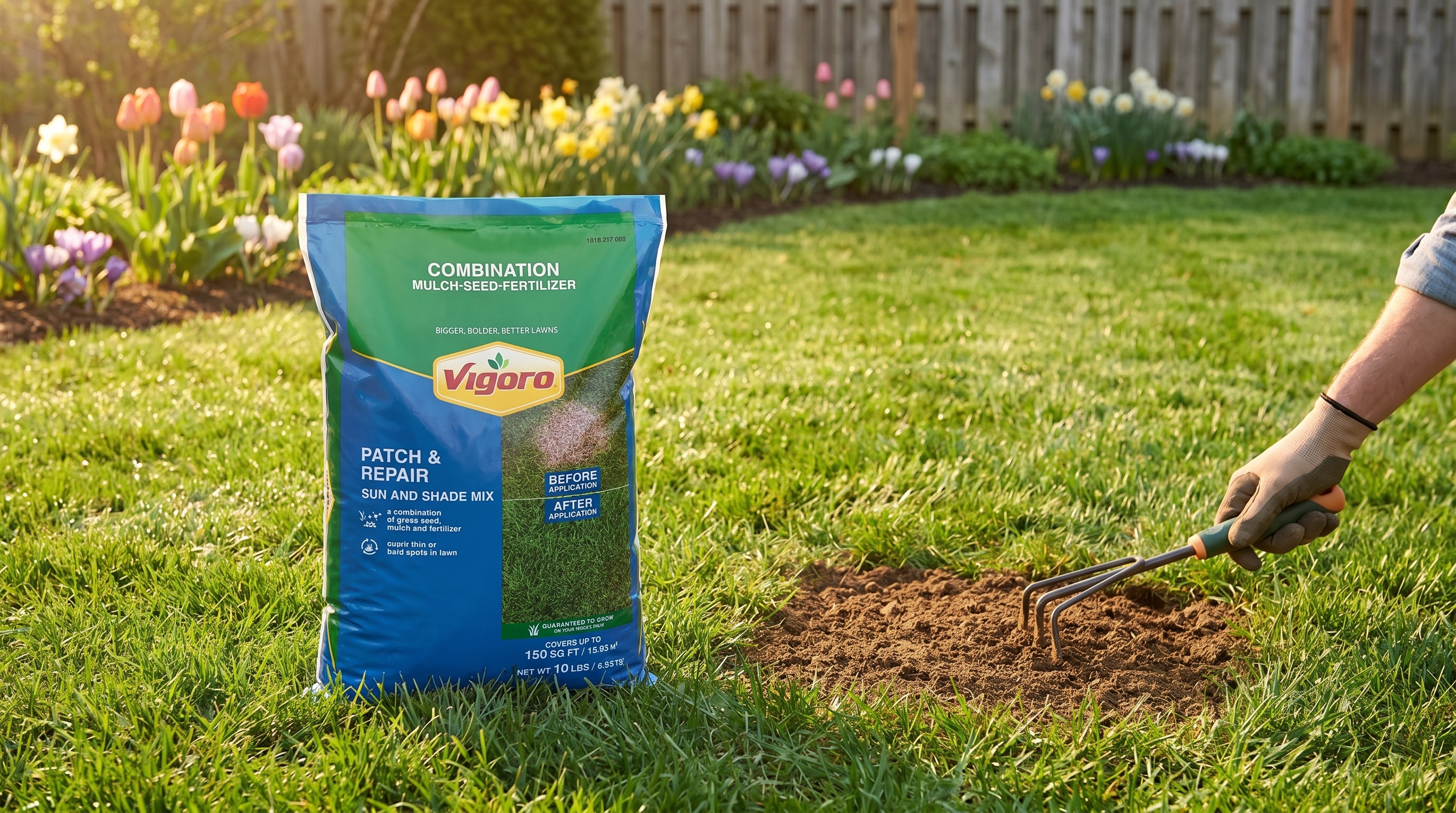
Bare spots are frustrating precisely because they seem like they should be easy to fix — and then they aren't. You spread seed, nothing comes up. Or something comes up thin and pale and dies in the first dry week. The issue is almost never the seed itself. It's the missing layers that support germination: moisture retention, soil contact, and early nutrition. Vigoro Patch and Repair Sun and Shade Grass Seed Mix addresses all three in a single bag — combining grass seed, wood mulch, and starter fertilizer in one all-in-one formula that covers up to 150 sq ft of bare or thin lawn. It's available at Liberty Farm, Home & Garden in Galion, Ohio, and it's one of the more practical solutions we carry for homeowners who want to get bare spots right without overcomplicating the process.
What's Inside the Bag: The Three-Part Formula
Most grass seed fails not because the seed itself is poor quality, but because the conditions around it aren't right for germination. Seeds need consistent moisture, good soil-to-seed contact, and nutrients available at the root zone in the first few weeks. A bag of bare seed scattered on dry, compacted soil satisfies none of these requirements on its own. That's why Vigoro built Patch and Repair as a three-component system:
- Grass seed. A sun-and-shade blend selected for performance across the range of light conditions found in typical residential lawns — from open sunny areas to areas under partial tree canopy. More on the specific seed blend in the next section.
- Wood mulch. Fine wood fiber mulch mixed into the product serves two functions. First, it helps lock in moisture around the seed by creating a layer of humidity at the soil surface — the germination microclimate that seeds need to soften their seed coat and begin rooting. Second, it marks where you've already applied product, which is practical when you're spreading by hand over multiple patches. The mulch also provides some protection from birds and light wind displacement.
- Starter fertilizer. Young grass seedlings don't have the root depth to access nutrients in lower soil layers. Starter fertilizer positioned at the surface and top inch of soil puts phosphorus and nitrogen exactly where new roots can reach in the first two to three weeks. This early nutrition is frequently the difference between germination that takes hold and germination that stalls into thin, pale grass that gives up in the first dry spell.
The key advantage here is calibration. When you buy three separate products — seed, mulch, and fertilizer — and combine them yourself, you have to make assumptions about the right ratios. Too much fertilizer relative to seed and you risk burning seedlings. Too little mulch and you lose the moisture retention effect. The Vigoro Patch and Repair formula is pre-proportioned, so the components arrive at the soil in the ratios that support germination without guesswork.
When Patch-and-Repair Makes More Sense Than Full Reseeding
There's a meaningful difference between patching bare spots and spots under an acre of thin lawn, and overseeding an entire lawn. Vigoro Patch and Repair is purpose-built for the former. Understanding when each approach is appropriate saves time, money, and the frustration of using the wrong tool for the job.
Patch-and-repair makes sense when:
- You have defined bare areas — dead patches from pet urine, drought stress, heavy foot traffic, grub damage, or disease. These areas are visible and discrete, not a uniform thinning across the whole lawn.
- The surrounding turf is reasonably healthy. If 60% or more of your lawn is thick and green, patch-and-repair will blend the repaired areas into the existing turf without requiring full-lawn intervention.
- You're addressing areas under 150 sq ft in total. A 10 lb bag of Vigoro Patch and Repair covers up to 150 sq ft — which is more than enough for most spot repairs on a typical residential lawn.
- Timing is off for a full overseeding. If you're in August and you've got a bare patch from a grub infestation, waiting until September for a full overseed might mean three more months of looking at bare dirt. A patch product lets you address the problem on its own timeline.
Full overseeding of an entire lawn makes more sense when thin turf is widespread, when you're transitioning from a weak turf base to a denser mix, or when you're establishing a new lawn from scratch. In those cases, a larger-format seed product broadcast with a spreader and followed by aeration is the better approach.
For most homeowners dealing with the aftermath of a tough Ohio winter — heaved ground, grub damage, dog spots, or traffic-worn paths — a 10 lb patch-and-repair bag handles the job efficiently.
Understanding the Sun and Shade Mix: What Grasses Are in Here
Ohio lawns are typically mixed environments. A suburban yard might have a fully sunny south-facing front lawn, a side strip that's shaded from 1 to 4 pm by a neighbor's tree, and a backyard with varying shade from a large maple. A seed blend that only thrives in full sun will fail in those shaded strips. A blend optimized purely for shade may struggle in the open sunny sections where it competes with weeds during establishment.
Sun-and-shade blends are designed to handle this variability. The mix typically contains two categories of grasses working in combination:
- Fine fescues — particularly creeping red fescue and chewings fescue — which are the primary shade-tolerant component. Fine fescues are cool-season grasses that perform well in moderate to significant shade, require less water once established, and have good tolerance for the root competition that typically occurs under trees. They germinate reliably in Ohio's spring and fall temperature windows.
- Perennial ryegrass or Kentucky bluegrass (or both) — which carry the mix in full-sun conditions. Perennial ryegrass germinates quickly (5–10 days under ideal conditions) and establishes fast, making it important for early coverage. Kentucky bluegrass germinates more slowly but spreads via rhizomes once established, filling in over time for a denser turf.
The practical implication: a sun-and-shade blend germinates and establishes across most typical residential conditions without requiring you to evaluate every repair zone for exact sun exposure. The blend self-selects — shade-tolerant components establish better in shaded patches, sun-preferring components thrive in open areas.
This adaptability is one of the primary reasons a sun-and-shade mix is the most practical choice for general lawn repair, as opposed to a full-sun or full-shade specialist blend.
How to Prepare Your Lawn Before Spreading
Preparation is where most DIY lawn repairs fall short. Dropping seed on top of compacted, thatch-covered, or debris-filled ground is the primary reason bare spots don't fill in — even with high-quality seed and good watering habits. A few minutes of prep makes a substantial difference in germination rate and long-term establishment.
Here's what to do before you open the bag:
- Remove dead material. In bare spots left by grub damage, drought, or disease, there's often a layer of dead turf — dry thatch, old root mass, or soil crust — sitting on the soil surface. Rake it out. This dead layer insulates the soil from the seed and prevents good soil-to-seed contact. A stiff metal rake works well for clearing a defined patch.
- Loosen the soil surface. Compact soil is a germination obstacle. Use a hand cultivator or the back of a rake to scratch the top ½ to 1 inch of soil before spreading the Patch and Repair mixture. You don't need to till deeply — just break the crust so roots can penetrate and the mulch component can bind to the soil surface rather than sitting on top of hardpack.
- Address the cause, not just the symptom. If the bare spot was caused by a grub infestation, apply a grub control product before reseeding — reseeding over an active grub population will produce a new patch in the same spot. If the patch is from pet urine, flush the area with water to dilute nitrogen salts before applying seed. If it's a compaction issue (from a path or heavy traffic), consider whether a physical barrier or alternative ground cover is a better long-term solution than repeated reseeding.
- Check soil moisture. Spreading seed into bone-dry soil on a hot day almost guarantees poor germination. If the soil is powder-dry, water the area lightly before spreading so the seed makes immediate contact with moist soil. Then water again after applying the product.
Step-by-Step Application: How to Use Vigoro Patch and Repair
Once the area is prepped, application is straightforward. The all-in-one format means you spread a single product rather than layering multiple applications in sequence:
- Shake or stir the bag before opening if it's been stored for a while. The wood mulch, seed, and fertilizer components can settle during shipping or storage. A quick mix ensures even distribution across the bag's contents.
- Apply at the recommended rate. The 10 lb bag covers up to 150 sq ft of bare area. For patches, you can spread by hand or use a small hand spreader. Apply generously enough to see the mulch component covering the soil surface — this is your visual indicator of adequate coverage.
- Rake lightly after spreading. A gentle pass with a leaf rake pushes the seed and fertilizer into slight contact with the loosened soil surface while leaving the mulch layer on top. Don't bury the product deeply — grass seed germinates best when it has minimal soil cover (¼ inch or less).
- Water immediately after application. Water thoroughly until the mulch layer is fully moistened and water has soaked in about an inch. This activates the starter fertilizer and begins the moisture-retention cycle that the mulch is designed to maintain.
- Water daily (or twice daily in hot, dry weather) until germination. The first two weeks are the critical window. Seeds need consistent moisture during germination — a day of complete drying can kill emerging seedlings before they've established roots. Don't rely on rain alone during this period unless it's consistent and heavy.
- Begin mowing once seedlings reach 3–4 inches. Don't mow the new grass until it reaches 3 to 4 inches in height, and keep the first mow height high (don't scalp the new growth). New seedlings have shallow roots — a premature or too-low first mow stresses the stand significantly.
What to Expect: The Timeline from Seed to Grass
Managing expectations around germination timing prevents the most common mistake: watering for 4 days, seeing nothing, and concluding the product failed. Germination rates depend on species, temperature, and moisture — and the timeline is longer than most people expect.
- Days 3–10. Perennial ryegrass (the fastest-germinating component in most sun-and-shade blends) typically shows the first green threads. In Ohio spring temperatures of 50–65°F, expect visible germination from ryegrass components in the 5–10 day range. In warmer conditions (65–75°F), germination may begin as early as 3–5 days for ryegrass.
- Days 10–21. Fescue components begin germinating through this window. Fescues are somewhat slower than ryegrass but will fill in significantly over weeks two and three, particularly in shadier patches where ryegrass is less competitive.
- Days 21–45. Kentucky bluegrass (if present in the blend) takes the longest — 21 to 28 days minimum under ideal conditions. If your repair area still has thin spots at 4 weeks, don't abandon the effort — the slower-germinating components may still be establishing.
- Weeks 6–8. A well-applied patch should be dense enough to begin blending visually with the surrounding turf. First mowing typically happens in this window. The root system is still developing during this period — avoid heavy foot traffic on new patches for 6 to 8 weeks after germination.
Cold soil temperatures are the most common reason germination takes longer than expected in Ohio's spring. When soil temps are below 50°F, even cold-season grasses germinate slowly or not at all. If you're applying in late March or early April and the soil is still cold from winter, germination may not begin in earnest for one to two weeks after application.
Ohio Lawn Repair Timing: When to Apply for Best Results
Ohio sits in the transition zone between warm-season and cool-season turf climates — and most residential Ohio lawns are planted with cool-season grasses. For cool-season species, there are two ideal windows for repair seeding:
Early fall (mid-August through September) is the single best window for lawn repair in Ohio. Soil temperatures are still warm from summer, which speeds germination, but air temperatures are moderate and don't stress new seedlings. Weed competition drops off sharply in fall, giving new grass seedlings a meaningful competitive advantage. And established turf heads into winter in stronger condition when seeding happens in early fall rather than spring.
Spring (mid-April through May) is the second-best window. Soil is warming, rainfall is generally reliable in central Ohio, and there's a good portion of the growing season ahead for new seedlings to establish before summer heat arrives. The downside of spring seeding is weed competition — spring-germinating annual weeds (crabgrass in particular) are aggressive and emerge in the same window as grass seedlings, competing for space and resources.
The important rule in spring: do not apply pre-emergent weed control (crabgrass preventer) to any area where you plan to overseed or patch. Pre-emergent herbicides stop germination indiscriminately — they will prevent your new grass seed from germinating just as effectively as they prevent crabgrass. If you're patching bare spots this spring, hold the crabgrass preventer on those zones and address the rest of the lawn with pre-emergent where you're not reseeding.
For immediate bare-spot repairs in summer — when normal timing windows have passed — Vigoro Patch and Repair can still produce reasonable results if watering is consistent. Summer seeding requires more irrigation effort to compensate for evaporation and heat stress, but it's a viable option for bare areas that need attention before the normal fall window arrives.
| Specification | Details |
|---|---|
| Product | Vigoro Patch and Repair Sun and Shade Grass Seed Mix |
| Weight | 10 lb |
| Coverage | Up to 150 sq ft of bare or thin lawn |
| Formula Components | Grass seed + wood mulch + starter fertilizer |
| Sun Exposure | Full sun to moderate shade |
| Grass Type | Sun and shade blend (cool-season mix) |
| Best Use | Bare spot repair, thin area patching, targeted reseeding |
| Best Planting Windows | Mid-April through May (spring) or mid-August through September (fall) |
| Brand | Vigoro |
| Available At | Liberty Farm, Home & Garden, Galion, Ohio |
Other Grass Seed and Lawn Care Options at Liberty Farm, Home & Garden
We carry a range of grass seed options at Liberty Farm, Home & Garden for different lawn conditions and repair needs. A few worth knowing about alongside the Vigoro Patch and Repair:
- Schultz Shady Lawn Mix Grass Seed (10 lb) — For repair areas under heavy tree canopy with limited sun, this dedicated shade mix is optimized for low-light conditions where a sun-and-shade blend would be at a disadvantage. If you have a bare spot under a dense oak or maple that gets fewer than 4 hours of direct sun daily, this is the more targeted option.
- Schultz Hardy Lawn Mix Grass Seed (10 lb) — A performance blend for Ohio lawns in full sun. The Hardy Mix is a good choice for sunny patches in high-traffic areas or lawns in open suburban yards with minimal shade. Hardy and durable once established.
- Schultz Sun & Shade Mix Grass Seed (10 lb) — An alternative sun-and-shade blend from Schultz for homeowners who prefer a straight seed product without the mulch and fertilizer included. Useful when you have your own mulch materials or are spreading with a drop spreader or rotary spreader across larger thin areas.
- Earthway Hand Crank Bag Spreader & Seeder — A hand-held crank spreader that makes even distribution of seed significantly easier, particularly when spreading across multiple small patches or narrow strips. Produces far more uniform coverage than hand-broadcasting, especially in windy conditions.
Stop in at Liberty Farm, Home & Garden in Galion or shop online at libertyfhg.com for the full grass seed selection. We can help you match the right seed to your specific lawn conditions, patch size, and timing so the repair takes hold the first time.
Frequently Asked Questions
Keep Reading
Plant Cover Crops Now: An Ohio Home Garden Guide
Plant fall cover crops in an Ohio vegetable garden with practical guidance on timing, species, seeding, winter care, and spring termination.

Save This Summer’s Garden: A Practical Ohio Seed-Saving Guide
Save tomato, bean, pea, lettuce, marigold, zinnia, and other garden seeds with this practical late-summer guide for Galion and north-central Ohio.