
The Bluebird House That Actually Brings Bluebirds: A Complete Guide to Attracting Ohio's Favorite Songbird
Proper entrance hole specs, mounting height, territory spacing, and why the Panacea Rustic Farmhouse Bluebird House hits every mark for Ohio bluebird nesting
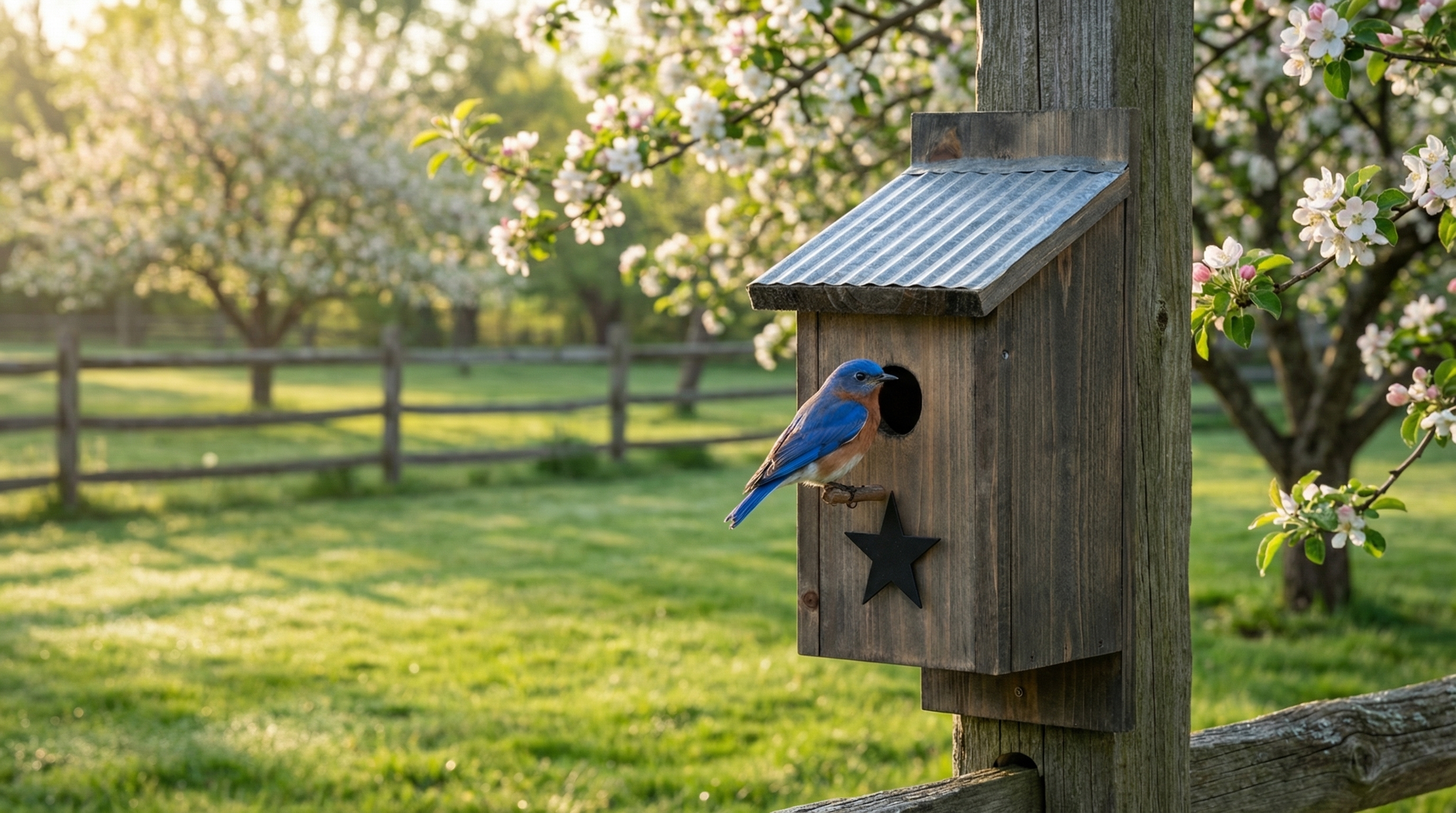
Of all the birds that backyard wildlife enthusiasts in Ohio try to attract, the Eastern bluebird holds a special place. Brilliant azure blue on the back and wings, warm chestnut at the breast, and a soft, warbling call that carries across open fields — bluebirds are genuinely stunning birds that happen to nest readily in well-placed boxes. But "well-placed" is doing a lot of work in that sentence. Bluebirds are cavity nesters that cannot excavate their own holes; they depend entirely on natural tree cavities or nest boxes provided by people who know what the birds actually need. Get the specs wrong — the wrong entrance hole diameter, the wrong mounting height, the wrong habitat — and you'll host house sparrows all summer while the bluebirds nest elsewhere. Get it right, and you'll have one of the most rewarding wildlife experiences your yard can offer. The Panacea Rustic Farmhouse Bluebird House gets the specs right while delivering a farmhouse aesthetic that earns its place in a well-tended yard or along a fence line. We carry it at Liberty Farm, Home & Garden in Galion, Ohio.
Why Eastern Bluebirds? Understanding the Appeal
Eastern bluebirds (Sialia sialis) are year-round residents across most of Ohio, though their numbers swell in spring as migratory populations return from their modest southern winter range. They are secondary cavity nesters — meaning they use existing cavities rather than creating new ones — and their natural nesting sites (old woodpecker holes in dead trees, gaps in fence posts) have declined significantly over the past century as agricultural practices changed and dead trees were removed from managed landscapes.
The good news is that bluebirds respond to nest boxes better than almost any other cavity-nesting species. In areas where suitable boxes have been provided consistently, bluebird populations have recovered dramatically. Across Ohio, networks of landowners maintaining bluebird trails — a series of boxes spaced across open habitat — have become a meaningful conservation contribution as well as a personal birding pleasure.
What bluebirds offer in return for the right box in the right location is considerable: they are insectivores, consuming enormous quantities of caterpillars, beetles, and grasshoppers during nesting season. A family of bluebirds raising two broods through the summer is a genuine asset to any yard, garden, or small farm. They're also remarkably tolerant of human presence at the nest box — regular monitoring, which is important for nest management, rarely disturbs them after the first few days of incubation.
What Makes a Bluebird House a Bluebird House
Not every birdhouse will attract bluebirds — and the specifications that make a box suitable are specific enough that it's worth understanding them before you commit to a location or a mounting strategy.
The entrance hole diameter is the most critical dimension. Eastern bluebirds need a hole of exactly 1.5 inches in diameter. A hole that is too large (1.75 inches or bigger) admits European starlings, which are aggressive cavity nesters that will kill bluebird eggs, nestlings, and even adult birds at the nest. A hole that is too small prevents bluebirds from entering. The 1.5-inch spec is not approximate — it is the product of decades of bluebird trail monitoring data and is the standard recommended by the North American Bluebird Society.
The interior cavity dimensions also matter. The floor of the box should be approximately 4 by 4 inches — large enough for the bluebird's cup-shaped nest of pine needles and fine grasses, but not so large that it becomes attractive to larger competitors. The depth from entrance hole to floor should be 5 to 6 inches, keeping the nest low enough that nestlings can fledge but deep enough that raccoons reaching through the entrance hole cannot easily reach eggs or young birds.
Ventilation and drainage are functional requirements that distinguish a quality nest box from a decorative piece. Ventilation holes or slots near the top of the box prevent heat buildup in summer; a box interior that reaches 107°F will kill nestlings. Drainage holes in the floor prevent moisture accumulation that can rot a nest or chill eggs during a cold spring rain.
Finally: access for monitoring and cleaning. A box that cannot be opened and cleaned between nesting attempts will accumulate parasites and nesting material that reduce the success of subsequent broods. Bluebirds raise two, sometimes three, broods per season in Ohio. Clean boxes between each attempt and you substantially improve total nesting success.
| Specification | Eastern Bluebird Requirement | Why It Matters |
|---|---|---|
| Entrance hole diameter | 1.5 inches | Excludes starlings; admits bluebirds |
| Floor dimensions | 4 × 4 inches | Right size for bluebird nest cup |
| Depth (hole to floor) | 5–6 inches | Protects nestlings from predator reach |
| Ventilation | Required near top | Prevents lethal heat buildup |
| Drainage | Required in floor | Prevents moisture and nest rot |
| Access panel | Required | Enables monitoring and cleaning between broods |
| Perches | Not recommended | Perches aid house sparrow access |
The Panacea Rustic Farmhouse Bluebird House: A Close Look
The Panacea Rustic Farmhouse Bluebird House is built to the right specs while bringing genuine aesthetic character to the mount. It combines natural wood construction with rustic tin roofing and barnboard accents — the kind of farmhouse detailing that suits a split-rail fence, a garden post, or a meadow edge as well as a suburban backyard.
The entrance hole is sized specifically for Eastern bluebirds at 1.5 inches — the correct dimension for bluebird admission and starling exclusion. The box features an easy-access front panel for cleaning and nest monitoring, which is the practical detail that makes the difference between a nest box that functions as a bluebird habitat tool and one that's purely decorative. Between first and second broods (typically late May into June in Ohio), the nest box should be cleaned out to remove the spent first-brood nest and any parasites. The front panel makes this a quick task rather than a project.
The tin roof is not just aesthetic — metal roofing sheds rain efficiently and doesn't absorb heat the way a painted wood roof does, which contributes to better interior temperature regulation. The barnboard accent panels add weathered character that actually looks better with age, making this a box that fits naturally into established landscapes rather than looking freshly purchased after the first season.
Where and How to Mount a Bluebird House in Ohio
Placement determines whether you get bluebirds or house sparrows more than any other factor after hole size. Bluebirds are birds of open country — they evolved in prairies, open forests, and agricultural landscapes, not in dense suburban plantings or wooded lots. Put a nest box in the middle of a shrubby, wooded yard and you've created a sparrow apartment.
The ideal bluebird location is at the edge of open habitat: a mowed field or lawn edge, a fence line separating two pastures, a garden border alongside a meadow, or a post at the edge of a vegetable garden. The box should face away from prevailing afternoon sun — a north- or east-facing entrance reduces interior heat on hot summer afternoons. Mounting height should be 4 to 6 feet off the ground: high enough that ground predators can't easily reach it, low enough for convenient monitoring.
Open space in front of the entrance hole is essential. Bluebirds perch on low branches, fence posts, and garden stakes to watch for insects on the ground before swooping to catch them. The area within 20 to 30 feet of the box should be relatively open — mowed lawn, garden beds, or short grass — so hunting bluebirds can easily spot prey. A box tucked into dense shrubbery is a sparrow box.
Mounting on a smooth metal pole with a predator baffle below the box is the gold standard for predator protection. A smooth metal pole — not a wood post — prevents raccoons, snakes, and cats from climbing. A stovepipe or cone-style baffle 3 feet below the box adds another layer of protection. If you mount on a wood fence post, a baffle becomes even more important.
| Placement Factor | Bluebird Preference | Notes |
|---|---|---|
| Habitat type | Open — mowed lawn, meadow, pasture edge | Avoid wooded or heavily shrubbed lots |
| Mounting height | 4–6 feet off ground | Within comfortable monitoring reach |
| Entrance facing | North or east preferred | Avoids overheating from afternoon sun |
| Open space in front | 20–30 ft open lawn or garden | Required for bluebird hunting behavior |
| Pole vs. post | Smooth metal pole with baffle | Hardest for predators to climb |
| Distance from trees | At least 50 feet from tree lines | Reduces house wren competition |
| Distance from human activity | Tolerant — 10 ft from foot traffic is fine | Bluebirds are not shy near people |
Setting Up a Bluebird Trail
A bluebird trail is simply a series of nest boxes placed across suitable habitat at regular intervals. Bluebirds are territorial — a pair will claim roughly 100 meters of territory around their nest box and will not allow other bluebird pairs within that zone. By spacing boxes appropriately, you can host multiple pairs across a larger property or along a fence line.
The standard spacing recommendation is 100 yards between boxes. At this spacing, adjacent boxes are far enough apart that neighboring pairs rarely come into conflict, but close enough that you build a meaningful population across a property. On a small suburban lot, a single box is appropriate. On a farm, acreage, or property with long fence lines and open habitat, three to five well-spaced boxes can host a thriving bluebird community.
One useful technique is pairing boxes — placing two boxes 15 to 20 feet apart rather than a single box at each location. This allows bluebirds to occupy one box while a competing tree swallow or Carolina chickadee occupies the second, reducing territorial conflicts without sacrificing bluebird nesting. Tree swallows and bluebirds can coexist at paired boxes where they would fight over a single box in close proximity.
Nest Monitoring: How to Check Without Disturbing
Regular nest monitoring is one of the most important practices in bluebird box management — and one of the most misunderstood. Many people avoid checking their boxes out of concern they'll disturb the birds. In practice, brief, weekly monitoring causes little stress to nesting bluebirds and provides information that dramatically improves nesting success.
Check boxes weekly from the time you put them up through the end of nesting season (typically late July or early August in Ohio). Use the Panacea Rustic Farmhouse Bluebird House's front access panel: open it, take a quick look, note what you see, and close it. A nesting female will typically flush from the box and return within minutes. She will not abandon a nest because of monitoring.
What you're watching for: nest construction (a cup of pine needles and fine grass is bluebird; a loose pile of twigs and grass is house wren; a coarse, bulky nest packed to the entrance is house sparrow); egg color (bluebird eggs are pale blue, unmarked; house sparrow eggs are speckled); and nestling development. Once you see eggs, count days: bluebird eggs hatch at 13 to 14 days; nestlings fledge at 17 to 21 days. Knowing where you are in the cycle tells you when to expect fledging and when to clean the box for the next brood.
Managing Competition: House Sparrows and House Wrens
Two species compete most actively with bluebirds for nest boxes in Ohio: the non-native House Sparrow (Passer domesticus) and the native House Wren (Troglodytes aedon). Managing each requires a different approach.
House Sparrows are an introduced species with no legal protection under the Migratory Bird Treaty Act. They are aggressive competitors that kill bluebird eggs, nestlings, and adults. The single most effective control measure is monitoring: if you find a house sparrow nest (a bulky, domed mass packed full to the entrance), remove it promptly. Repeated removal discourages house sparrows from persisting at the site. Placement in open habitat away from buildings (where house sparrows concentrate) is the best prevention.
House Wrens are native birds and legally protected — you cannot remove their nests once eggs are present. Prevention is the better strategy: mount boxes at least 50 feet from brushy or wooded edges where house wrens prefer to nest, and avoid placing boxes under tree canopy. In yards with high house wren pressure, boxes on metal poles in the middle of open lawn are substantially less likely to be claimed by wrens than boxes near shrub borders.
What Bluebirds Need Beyond the Box
A properly placed nest box is the starting point, but bluebirds benefit from a few additional yard features that make your property more attractive and support successful nesting through the season.
Water is high on the list. Bluebirds drink and bathe regularly, and a shallow birdbath or dish within sight of the nest box will be used frequently by nesting adults and by fledglings learning to forage. Keep the water fresh — bluebirds preferring shallow, clean water will skip a stagnant or algae-coated bath.
Low perches near the nest box support bluebirds' hunting style. They are "perch-and-pounce" foragers — they watch for insects from a perch, then drop to the ground to catch them. Garden stakes, fence posts, or a low wire strung near the box gives them the hunting platform they need. Mowed lawn or bare garden soil in the foraging area makes it easier to spot prey.
Supplemental feeding with mealworms is a powerful way to attract bluebirds and support nesting adults during cold snaps or early spring cold spells when insects are scarce. Live or dried mealworms placed in a shallow dish near the nest box will be discovered quickly once bluebirds are established on the territory. A Nature's Yard Triple Twist Tube Feeder or an Audubon Prairie Seed Feeder nearby attracts other backyard species and creates a multi-species yard habitat that benefits bluebirds and neighbors alike.
Cleaning and Winterizing the Bluebird House
After the final nesting brood of the season fledges — usually in late July through early August in Ohio — open the box, remove all nesting material, and let the interior air dry. A quick wipe with a dry cloth removes any remaining debris. Do not use cleaning chemicals or bleach inside nest boxes; residue can be harmful to the next season's nesting birds.
Once clean, you have two options for winter: leave the box up or store it until February. Leaving it up has advantages — cavity-nesting birds including bluebirds, chickadees, and titmice use nest boxes as winter roosting shelters on cold nights, potentially giving several birds a warmer night than they'd have in the open. If you leave it up through winter, do a fresh inspection and airing-out in late January before the nesting season begins again.
Related Products at Liberty Farm, Home & Garden
For a complete bluebird and backyard bird setup, these products are available at Liberty Farm, Home & Garden:
- Nature's Yard Triple Twist Tube Feeder (Red) — A three-port tube feeder well-suited for black oil sunflower or nyjer seed; pairs well with a bluebird box setup as part of a multi-species feeding and nesting station.
- Nature's Yard Triple Twist Tube Feeder (Yellow) — Same design in yellow; attracts American goldfinches and other finch species that coexist with bluebird territory in open-habitat yards.
- Nature's Way Squirrel Shield Hopper Feeder — A squirrel-resistant hopper feeder for black oil sunflower; a strong anchor for a full yard bird feeding station alongside the bluebird house.
- Audubon Prairie Seed Feeder — A seed feeder with classic styling that complements a farmhouse-aesthetic yard setup; good for mixed songbird blends and a natural visual pairing with the Panacea Rustic Farmhouse Bluebird House.
Frequently Asked Questions
Keep Reading
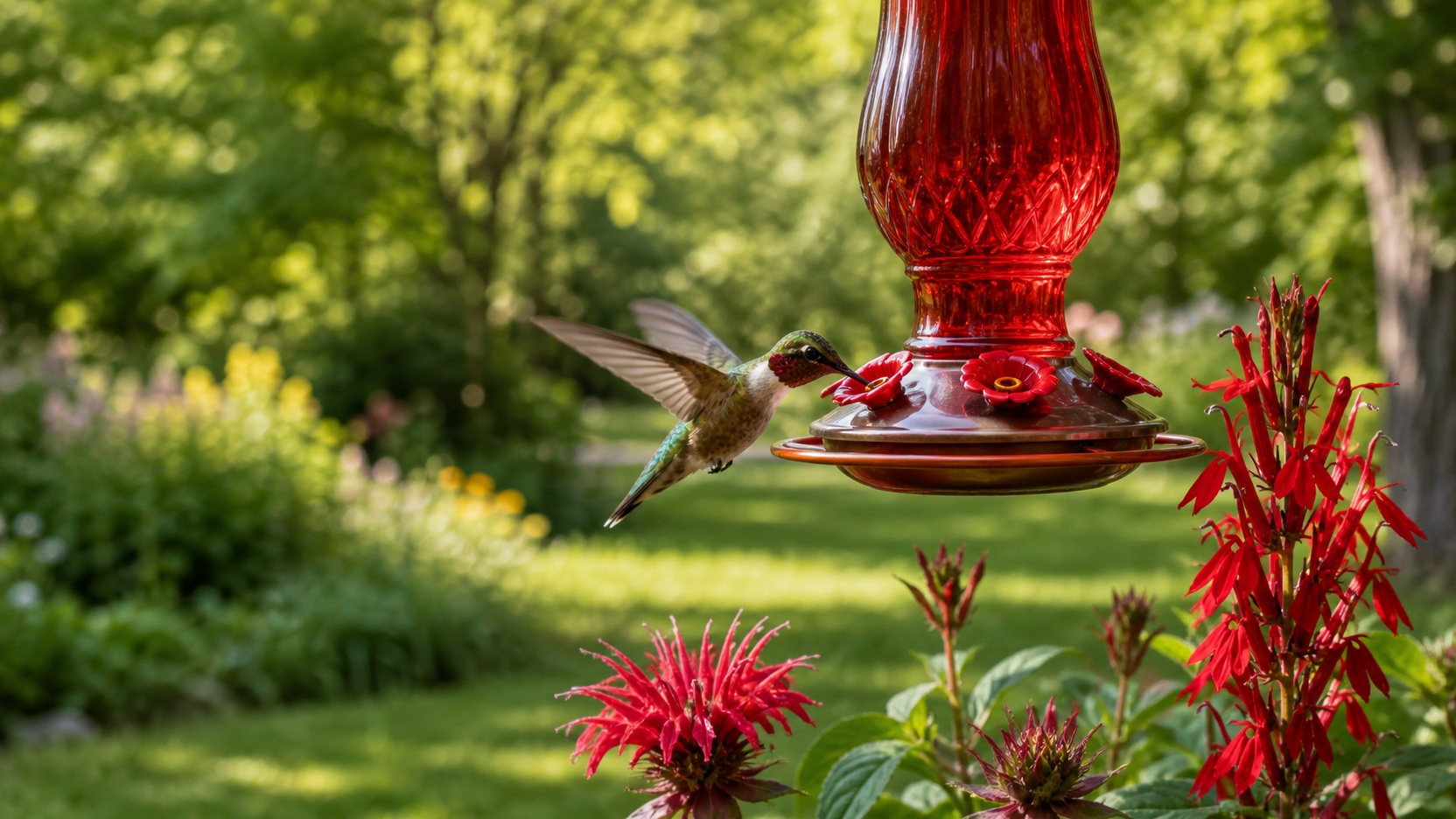
Keep the Feeder Up: An Ohio Guide to Fall Hummingbird Migration
Learn when to take down hummingbird feeders in Ohio, how to mix safe nectar, and how often to clean during late-summer migration near Galion.
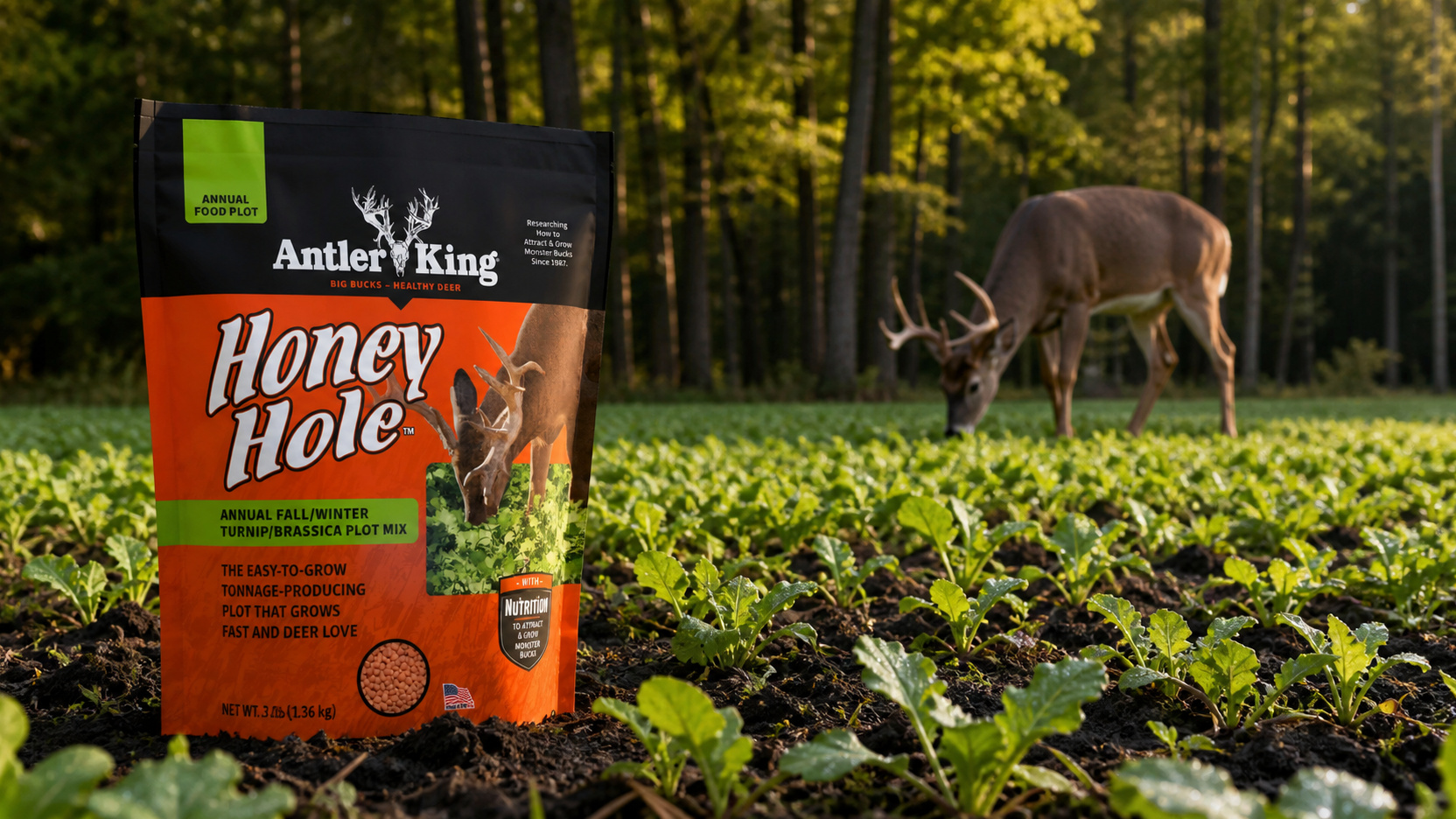
Planting Fall Deer Food Plots in Ohio: An August Field Plan
Plan an Ohio fall deer food plot with soil testing, smart seedbed prep, mix selection, and local tips from Liberty Farm, Home & Garden in Galion.