
The Cottage-Style Bird Feeder That Makes Your Garden Look as Good as It Sounds
A complete guide to the North States Village Collection Cottage-Style Bird Feeder — why decorative feeders attract birds and neighbors alike, and how to get the most from spring feeding season
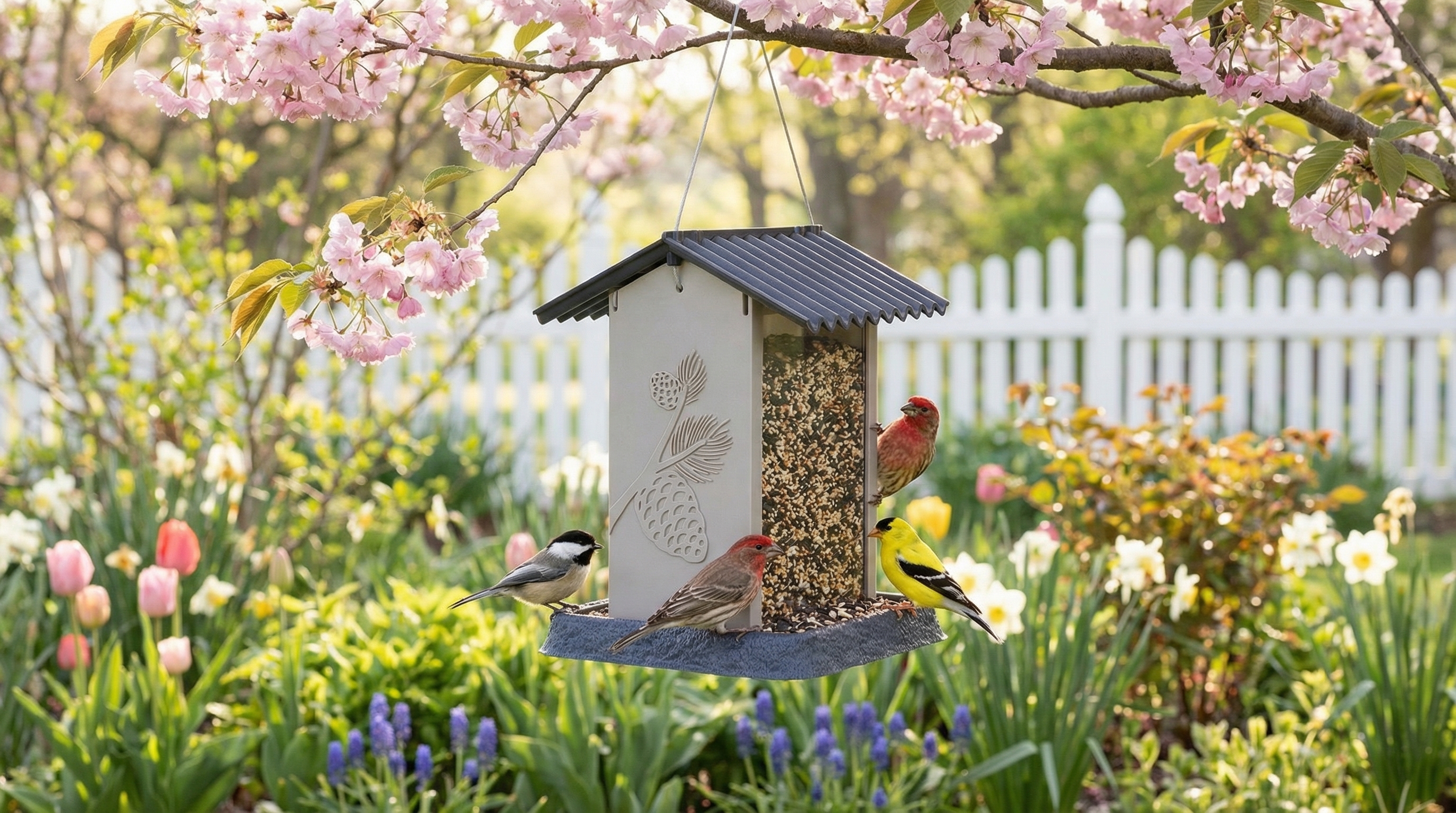
There's a particular kind of bird feeder that disappears into the garden — functional, yes, but visually unremarkable, something you stop actually seeing after the first week. And then there's a feeder that becomes part of the garden's personality. The North States Village Collection Cottage-Style Bird Feeder falls firmly into the second category. With its quaint cottage roofline, charming architectural detail, and 5 lb capacity, it's the kind of feeder that makes a garden look intentional — and still does everything a serious bird feeder needs to do. We carry it at Liberty Farm, Home & Garden in Galion, Ohio.
Why Decorative Feeders Work Just as Well (and Sometimes Better)
There's a common assumption that decorative feeders are trade-offs — that the design compromises function, or that birds care about looks and will be deterred by something that doesn't look like their usual plastic tube. Neither is true. Birds are attracted to feeders based on seed type, feeder placement, and feeder stability. A well-designed cottage-style feeder with the right seed in the right location will attract the same chickadees, house finches, cardinals, nuthatches, and goldfinches as any feeder of equivalent capacity.
What decorative feeders like the North States Village Collection line actually offer is a reason for you to invest in the setup. When a feeder is beautiful, you're more likely to place it prominently — in a good viewing spot from a kitchen window rather than tucked in a back corner — and more likely to keep it filled consistently. Both of those factors have a direct effect on bird visitation. Placement and consistency matter far more to birds than feeder aesthetics.
The Village Collection design also serves a practical function that many purely utilitarian feeders skip: the cottage roof provides meaningful shelter from rain. Seed that stays dry is seed that doesn't clump, mold, or develop the off-smell that causes birds to reject a feeder. A well-designed roof overhang keeps seed in better condition longer, which matters during Ohio's spring rain season when feeders need to hold up through days of intermittent showers.
What to Expect from the Village Collection Cottage-Style Feeder
The North States Village Collection Cottage-Style Bird Feeder is built around a 5 lb seed capacity — the right size for a backyard that gets regular bird traffic. Five pounds is enough that you're not refilling every two days, but not so large that seed sits long enough to go stale in humid weather. For a typical Ohio backyard with mixed small songbird traffic, a 5 lb fill lasts three to five days in peak season.
The feeder is part of North States' Village Collection, a line designed specifically to be garden-worthy rather than just functional. The cottage styling brings a classic English cottage feel — the kind of feeder that looks at home among climbing roses, a perennial border, or hanging beside a garden gate. It adds character to outdoor spaces in a way that standard tube or hopper feeders simply don't.
| Feature | Details |
|---|---|
| Capacity | 5 lbs of seed |
| Style | Cottage-style / Village Collection decorative line |
| Best Seed Types | Black oil sunflower, mixed songbird blend, safflower |
| Bird Types Attracted | Cardinals, chickadees, finches, nuthatches, sparrows |
| Best Placement | Hung from a branch or shepherd's hook, 5–6 ft high |
| Garden Fit | Cottage gardens, perennial borders, near garden structures |
| Available At | Liberty Farm, Home & Garden, Galion, Ohio |
Choosing the Right Seed for Spring Feeding
Spring is an excellent time to upgrade your seed selection, because the birds arriving in your yard in March and April are often different from your winter regulars. American goldfinches are transitioning from their drab olive winter plumage to bright yellow — and they're actively seeking nyjer and sunflower chips. Migratory warblers and orioles pass through Ohio in April and May. The resident chickadees, nuthatches, and cardinals are nesting and need high-calorie food.
For a hopper-style feeder like the Village Collection Cottage, the best all-around seed choice is black oil sunflower. It has a thin shell that almost every backyard bird species can crack, a high fat and protein content that benefits birds at all times of year, and it doesn't attract the pest species — starlings and grackles — that mixed cheaper blends often pull in. Black oil sunflower is the seed that gets the widest variety of desirable birds at one feeder.
A quality songbird blend is the second option — look for mixes that lead with sunflower and safflower rather than millet, which mostly attracts ground-feeding house sparrows. The worst choice for a decorative feeder like this one is a cheap mixed blend heavy with filler: red millet, wheat, and oats that most songbirds pick around, leaving a mess of rejected seed on the ground.
For safflower specifically: it's worth knowing that cardinals love it, house finches love it, and squirrels generally don't. If squirrel pressure is a problem at your feeder location, adding or switching to safflower is one of the most effective non-mechanical deterrents available.
Placement: Where Decorative Feeders Should Go
A cottage-style feeder like this one deserves placement that serves both you and the birds. The two aren't in conflict — the best bird-watching spots are also the best garden focal points.
The practical rules for feeder placement are well-established: five to six feet off the ground discourages ground predators while keeping the feeder accessible; proximity to cover (a shrub, tree, or hedge within ten feet) gives birds a safe retreat and makes them more comfortable approaching the feeder; and distance from windows matters — feeders should be either within three feet of a window (so a bird that hits it doesn't build up enough speed to be injured) or more than ten feet away.
For a decorative feeder specifically, think about sightlines. A feeder hung at eye level from a shepherd's hook near a garden path gives you a close-up view as you walk by. One hung from a flowering cherry or crabapple branch in spring becomes part of a scene — birds visiting the feeder while the tree blooms behind them is one of the best backyard views Ohio spring has to offer.
Consider pairing the Village Collection Cottage feeder with complementary items: a Nature's Yard Triple Twist Tube Feeder for nyjer seed to attract goldfinches, or an Audubon Prairie Seed Feeder for a second seed type. A multi-feeder setup in a garden corner creates a genuine bird-watching destination and attracts a wider variety of species than any single feeder can.
Squirrel Management Without Sacrificing the Look
Every decorative feeder faces the same challenge: squirrels aren't intimidated by charm. They're persistent, acrobatic, and motivated by the same calories that attract birds. For a cottage-style feeder hung from a branch or hook, a few strategies help without requiring you to surround it with hardware.
The most effective approach is a baffle — a dome or cone-shaped barrier mounted above a hanging feeder that prevents squirrels from descending to it. A shepherd's hook with a squirrel baffle is the standard solution for hanging feeders. The baffle blends into the garden context better than cage-style squirrel guards and doesn't compromise the feeder's appearance.
Safflower seed (as mentioned above) provides passive deterrence — most squirrels dislike the bitter taste and will leave a safflower-filled feeder alone after a few attempts. Combined with a baffle, it's a low-effort, high-effectiveness approach.
If squirrel pressure is severe enough that you want a dedicated solution, the Nature's Way Squirrel Shield Hopper Feeder integrates squirrel protection directly into the feeder design with a caged perimeter that allows small birds through while excluding squirrels. For a multi-feeder setup, dedicating one feeder to squirrel-proofing while letting the decorative cottage feeder serve its visual function is a practical middle ground.
Building a Cottage Garden Bird-Watching Station
The North States Village Collection line is designed to be used as a coordinated set. If the cottage feeder appeals to you, building out a small bird-watching station around it deepens both the garden aesthetic and the birding experience.
A classic cottage garden bird station includes: a primary seed feeder (the Village Collection Cottage in this case), a tube or finch feeder for nyjer, a water source (a simple glazed ceramic dish on a pedestal or a small pedestal birdbath), and nearby plantings that provide cover and natural food. Native Ohio plantings like coneflowers, black-eyed Susans, and serviceberry shrubs supply seed heads, berries, and insects that birds use alongside the feeder.
This kind of setup turns a functional bird feeder into a garden feature with real seasonal depth. In April, the birds visiting are different from the ones in June, which differ again from August. A well-placed, well-maintained feeding station gives you something interesting to watch from a kitchen window or back porch through most of the year.
Why Local Matters for Bird Feeding Supplies
Bird seed and feeders are available everywhere — big-box stores, online retailers, everywhere. But there's a real advantage to sourcing from a local store that knows what birds are actually in your area and what's actually working this season.
Ohio's bird population includes species you won't find in national bird feeding guides focused on coastal or southern regions. The seed blends and feeder styles that perform well for Ohio's birds — particularly the cardinal population, which is dense and year-round in central Ohio — aren't always what's highlighted in generic national marketing. At Liberty Farm, Home & Garden, we see what Ohio backyard birders are actually buying, what's working, and what questions they're asking. That context matters when you're setting up a new feeder station or troubleshooting why the birds aren't visiting.
We carry the North States Village Collection Cottage-Style Bird Feeder alongside a full selection of seed, feeders, and bird feeding accessories at our store in Galion. Stop in and we can help you put together the right setup for your yard and the birds you want to attract. You can also order online at libertyfhg.com.
Frequently Asked Questions
Keep Reading
Keep the Feeder Up: An Ohio Guide to Fall Hummingbird Migration
Learn when to take down hummingbird feeders in Ohio, how to mix safe nectar, and how often to clean during late-summer migration near Galion.
Planting Fall Deer Food Plots in Ohio: An August Field Plan
Plan an Ohio fall deer food plot with soil testing, smart seedbed prep, mix selection, and local tips from Liberty Farm, Home & Garden in Galion.