
How to Choose the Right Dog Food: A Buyer's Guide
Reading labels, understanding ingredients, and finding the right formula for your dog
Choosing a dog food sounds simple until you stand in front of the options and start reading labels. Every brand claims to be the best, the packaging is designed to impress, and the ingredient lists read like chemistry exams. The truth is that picking the right food comes down to a few practical considerations: your dog's life stage, activity level, any sensitivities, and the quality of the ingredients. This guide breaks it down.
How to Read a Dog Food Label
The front of the bag is marketing. The back of the bag is where the real information lives. Here is what to look for:
- Ingredient list: Ingredients are listed by weight before cooking. A named animal protein (chicken, beef, lamb, salmon) should be the first ingredient. Avoid foods where the first ingredient is a grain or unnamed meat source like "animal meal."
- Guaranteed analysis: This shows minimum percentages of crude protein and fat, plus maximum percentages of fiber and moisture. Active dogs need higher protein and fat. Senior or less active dogs do better with moderate levels.
- AAFCO statement: Look for a statement that the food is "complete and balanced" for a specific life stage. This means it meets established nutritional standards. Foods labeled "for intermittent or supplemental feeding" are not complete diets.
- Named protein sources: "Chicken meal" and "lamb meal" are concentrated protein sources and perfectly acceptable. The word "meal" just means the moisture has been removed. What you want to avoid is vague terms like "meat by-products" or "animal digest."
Protein Sources: What Matters
Protein is the foundation of any good dog food. Dogs are omnivores with a strong carnivorous lean, and they thrive on diets built around quality animal protein. The source matters because different proteins offer different amino acid profiles and digestibility.
Common quality protein sources:
- Chicken and chicken meal
- Beef and beef meal
- Lamb and lamb meal
- Salmon and ocean fish meal
- Bison and venison (novel proteins for sensitive dogs)
Diamond Naturals Beef & Rice is a solid example of a straightforward, protein-forward formula. Beef meal is the first ingredient, providing concentrated animal protein, followed by grain sorghum and ground rice for energy. It includes superfoods, probiotics, and omega fatty acids without unnecessary fillers.
For dogs that do well with lamb, Diamond Naturals Lamb & Rice offers the same quality foundation with a different protein base. Lamb is often recommended for dogs with chicken sensitivities.
The Grain vs. Grain-Free Debate
This topic has generated considerable discussion in recent years. Here is where things stand:
In 2018, the FDA began investigating a potential link between grain-free diets and dilated cardiomyopathy (DCM) in dogs. The investigation is ongoing, and no definitive causal link has been established. However, many veterinarians now recommend grain-inclusive diets as the safer default unless a dog has a diagnosed grain allergy.
The key takeaway: grains like rice, barley, and oats are not fillers. They provide digestible carbohydrates, fiber, and essential nutrients. Most dogs digest grains without any issue. If your dog does not have a specific grain sensitivity, a grain-inclusive formula is a perfectly sound choice.
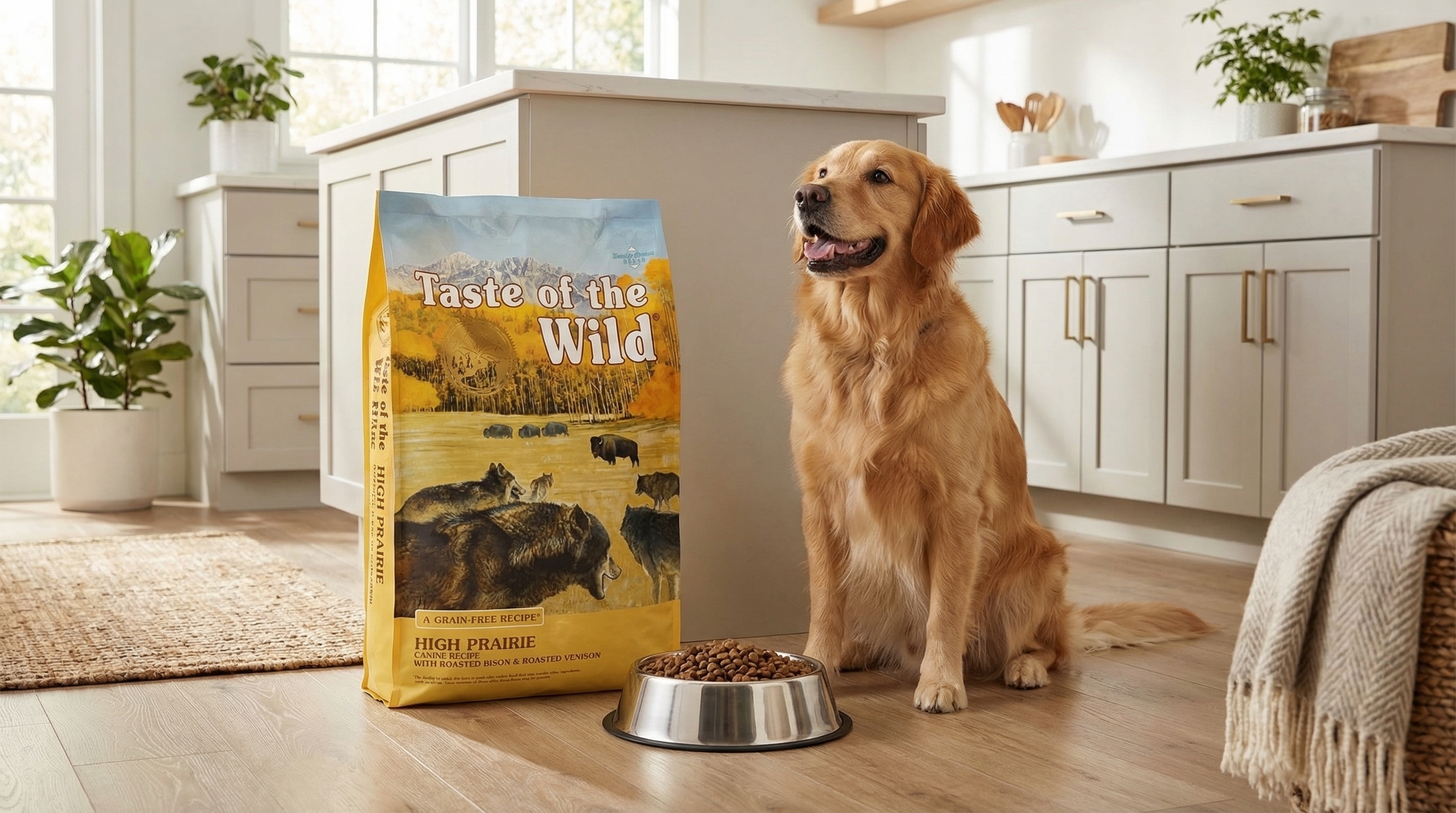
That said, some dogs genuinely do better on grain-free food. Taste of the Wild High Prairie uses buffalo, roasted bison, and roasted venison as its protein sources, with sweet potatoes and peas providing carbohydrates instead of grains. It is a well-formulated option for dogs that have been identified as grain-sensitive by their veterinarian.
Feeding by Life Stage
Dogs have different nutritional needs at different ages. Feeding the right formula for your dog's life stage ensures they get appropriate nutrition without excess.
| Life Stage | Key Nutritional Needs | What to Look For |
|---|---|---|
| Puppy (up to 12 months) | Higher protein and fat for growth, DHA for brain development | AAFCO puppy or all life stages formula |
| Adult (1-7 years) | Balanced protein and fat for maintenance | AAFCO adult maintenance formula |
| Senior (7+ years) | Moderate protein, joint support, lower calories | Senior formula with glucosamine and chondroitin |
| Active/Working Dogs | Higher protein (30%+) and fat (20%+) for sustained energy | Performance or sport formula |
Large breed puppies have specific needs as well. They require controlled calcium and phosphorus levels to support steady bone growth without developing joint problems. Always choose a formula specifically labeled for large breed puppies if your dog will exceed 50 pounds at maturity.
When to Switch Foods
There are several legitimate reasons to switch your dog's food:
- Life stage transition: Moving from puppy to adult food around 12 months (up to 18-24 months for large breeds), or transitioning to a senior formula around age 7
- Digestive issues: Persistent loose stools, gas, or vomiting that does not resolve may indicate a food sensitivity
- Skin and coat problems: Dull coat, excessive shedding, itching, or hot spots can sometimes be diet-related
- Weight management: If your dog is gaining or losing weight inappropriately on their current food
- Reduced interest: A dog that consistently refuses meals may benefit from a protein source change
When you do switch, transition gradually over seven to ten days. Start with 75 percent old food and 25 percent new food, then shift the ratio every two to three days. Abrupt switches commonly cause digestive upset.
Common Food Sensitivities
True food allergies in dogs are less common than many owners assume, but food sensitivities are real and worth understanding. The most common culprits are chicken, beef, dairy, wheat, and soy. Symptoms typically include:
- Chronic ear infections
- Excessive paw licking
- Red, irritated skin
- Recurring digestive issues
- Hot spots
If you suspect a food sensitivity, the gold standard is an elimination diet supervised by your veterinarian. Switch to a food with a single novel protein your dog has not eaten before, such as bison or venison. Taste of the Wild Southwest Canyon uses wild boar as its primary protein, making it a useful option for dogs working through an elimination process. Feed exclusively for eight to twelve weeks and monitor for improvement.
What We Carry and Why
At Liberty Farm, we focus on brands that deliver consistent quality without cutting corners. Our two main dog food lines are Diamond Naturals and Taste of the Wild, both manufactured by Diamond Pet Foods in facilities that meet strict quality and safety standards.
Diamond Naturals offers grain-inclusive formulas with real meat as the first ingredient, added probiotics for digestive health, and omega fatty acids for skin and coat. The Beef & Rice and Lamb & Rice formulas are reliable everyday options at a fair price point.
Taste of the Wild uses unique protein sources like bison, venison, and wild boar. The High Prairie and Southwest Canyon formulas are popular with owners looking for novel proteins or grain-free options.
Stop by our Galion location to discuss your dog's specific needs. We are happy to help you choose the right formula and can provide samples to make sure your dog approves before you commit to a full bag.
Frequently Asked Questions
Keep Reading

Back-to-School Routine Changes: Helping Dogs Adjust to More Time Alone
Prepare your dog for back-to-school schedule changes with gradual departures, safe enrichment, camera checks, and veterinarian-backed warning signs.

Ohio Flea Season Peaks in June — Why Your Small Dog Needs Protection on Before It's Too Late
June marks the annual turning point when Ohio's flea and tick populations reach peak activity. Here's what's happening in your yard right now, why small dogs are especially vulnerable, and why the Adams Plus Flea & Tick Collar for Small Dogs is the simplest way to stay ahead of an infestation before it starts.