
The Selective Seed That Only Bigger Birds Can Crack: A Complete Guide to Striped Sunflower for Cardinals, Grosbeaks, and Blue Jays
Striped sunflower's thick shell is the feature most people overlook — and it's the one that changes everything about backyard bird feeding. Here's how bulk striped sunflower lets you feed the birds you actually want, without the mess.
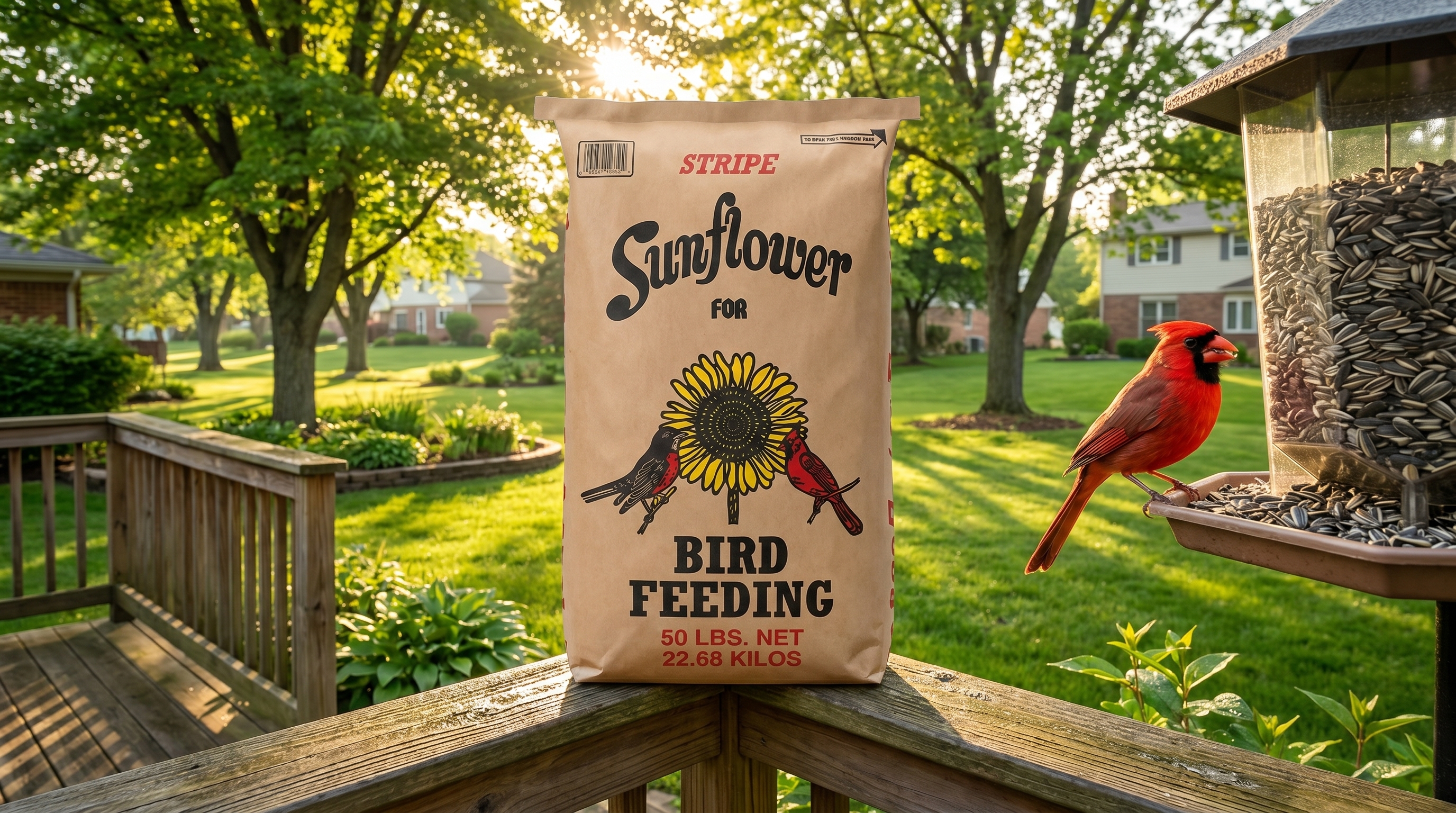
Most backyard bird feeders are a free-for-all. Toss in a generic mixed seed blend and you get every small bird in the neighborhood — sparrows, juncos, starlings, and house finches — dominating the feeder while the cardinals and blue jays you actually want to attract hover at the edges waiting for an opening. The fix is not a better feeder. The fix is a better seed. Striped sunflower — the thicker-shelled cousin of black oil sunflower — is the most effective natural selective seed in backyard bird feeding. Its hull is thick enough that small-beaked birds simply cannot crack it, which means your feeder fills with the birds built to handle it: Northern cardinals, rose-breasted grosbeaks, blue jays, red-bellied woodpeckers, and white-breasted nuthatches. Smaller birds leave it largely alone. The feeder stays available for the larger, more striking species that most Ohio bird feeders would love to see more of. Available in a 50 lb bulk bag at Liberty Farm, Home & Garden in Galion, Ohio, striped sunflower is one of the most practical investments you can make in a backyard feeding station — and the 50 lb format means you won't run out during peak late spring and summer feeding when resident birds are nesting and demanding the most nutrition.
What Is Striped Sunflower and How Does It Differ from Black Oil Sunflower?
Sunflower seed is the single most popular wild birdseed in North America — but not all sunflower seed is the same, and the difference matters significantly for backyard feeding strategy. There are two main types offered at bird feeding stations: black oil sunflower (Helianthus annuus varieties developed for high oil content) and striped sunflower (a larger-seeded, thicker-hulled variety of the same species grown for its seed rather than for oil production). The two seeds come from the same plant genus but have been selected for very different agricultural purposes, and those differences translate directly into different feeding outcomes at a backyard feeder.
Shell thickness. This is the defining difference. Black oil sunflower has a thin, soft shell that almost any bird with a bill can crack — chickadees, finches, sparrows, and even small warblers can open black oil seed without difficulty. Striped sunflower has a significantly thicker, harder hull with the distinctive white-and-dark striped pattern that gives it its common name. Cracking that hull requires a larger, more powerful bill — the kind of bill that cardinals, grosbeaks, and jays evolved specifically for cracking hard-shelled seeds. Small-beaked birds generally cannot break the hull efficiently and give up, leaving the seed for the larger species that can handle it.
Kernel size. The kernel inside a striped sunflower seed is larger than the kernel inside a comparable black oil seed, which means each individual seed delivers more food energy to the birds that can crack it. For large-beaked species like rose-breasted grosbeaks and cardinals, striped sunflower provides a higher-energy meal per seed than black oil does — and during nesting season, when energy demands are highest, that added nutrition per kernel matters.
Oil content. Black oil sunflower earned its name because it was bred for high oil content — it is used in the food industry to produce sunflower oil. Striped sunflower has somewhat lower oil content than black oil but is still nutritionally dense, providing the fat, protein, and calories that support sustained energy for large resident birds through the breeding and nesting season. The lower oil content does not meaningfully reduce its value as a feeding seed; it simply reflects that striped sunflower was bred for seed consumption, not oil extraction.
Seed size and feeder compatibility. Striped sunflower seeds are noticeably larger than black oil seeds. This size difference affects which feeders work well with striped sunflower — wide-hopper feeders, large-platform feeders, and large-port tube feeders all handle striped sunflower without issue. Feeders with very small ports designed specifically for fine seeds like nyjer may not work well with striped sunflower's larger kernel. Standard platform feeders and hopper feeders — the most common styles at Ohio backyard feeding stations — are ideal for striped sunflower.
Which Birds Eat Striped Sunflower — and Which Ones Don't
The practical value of striped sunflower is best understood through the lens of which birds are attracted to it versus which birds pass it by. This selectivity is the central feature that makes striped sunflower useful as a strategic feeding seed rather than just another option in the seed aisle.
Birds that readily eat striped sunflower: Northern cardinals are the prototypical striped sunflower bird — thick, conical bills built for exactly this type of hard-shelled seed, and a strong preference for larger seeds over tiny millet or nyjer. Rose-breasted grosbeaks (a spectacular black-and-white-and-rose migrant and summer breeder in Ohio) are equally enthusiastic about striped sunflower — the grosbeak name itself references the bird's grossly enlarged bill, which cracks large seeds effortlessly. Blue jays can handle striped sunflower and will cache the seeds in their territory for later retrieval. Red-bellied woodpeckers visit platform feeders for striped sunflower. White-breasted nuthatches carry striped sunflower seeds one at a time to a nearby branch, wedge them into bark crevices, and hammer them open with their chisel-like bills. Tufted titmice and Carolina chickadees — larger than sparrows, though still relatively small birds — can manage striped sunflower, though they may prefer black oil seed for its easier-to-crack shell.
Birds that generally pass on striped sunflower: House sparrows, common grackles, European starlings, house finches, and song sparrows — the species that tend to dominate feeders loaded with black oil or mixed seed — struggle with or ignore striped sunflower's thick hull. This is the feature most backyard birders don't realize they need until they've watched a flock of house sparrows spend three hours at a feeder and seen exactly zero cardinals the whole time. Switching to striped sunflower doesn't eliminate sparrows entirely, but it dramatically reduces their feeder dominance and gives larger species the access and confidence to use the feeder regularly.
The selective effect is not perfect — a determined house sparrow will sometimes persist at striped sunflower, and some individual birds within a species are more persistent than others. But the general effect is consistent and meaningful: compared to black oil sunflower or mixed seed, a striped sunflower feeder attracts more large-beaked species and fewer small-beaked opportunists.
Why Late May Is the Right Time to Switch to Striped Sunflower
Timing matters in backyard bird feeding, and late May is one of the most strategically important moments of the Ohio bird-feeding year to optimize your seed selection. By the third week of May, the major wave of neotropical migration through Ohio has largely passed — the warblers, orioles, and shorebirds that moved through in April and early May have reached their breeding grounds, and the birds that are staying in north-central Ohio for the summer are now settling into nesting territories, building nests, and beginning the intensive feeding cycle that sustains breeding and chick-rearing through July and August.
For the large-beaked residents that striped sunflower attracts best, late May is peak activity at the feeder. Northern cardinals are nesting — males are bringing food to incubating females and will make dozens of trips to a reliable seed source each day. Rose-breasted grosbeaks, which winter in South America and arrive in Ohio in early to mid-May, are now establishing territories and are highly active at feeding stations as they rebuild energy reserves after their long migration. Blue jays are caching food aggressively for the coming nesting season. Red-bellied woodpeckers are feeding growing nestlings in their tree cavity nests and making frequent feeder visits to supplement their insect foraging.
All of these birds benefit from a high-energy, large-seeded food source that is available reliably through the summer — and that is exactly what the 50 lb bag of Striped Sunflower from Liberty Farm, Home & Garden provides. Buying in the 50 lb bulk format at the start of the breeding season means you won't face the mid-summer empty-feeder problem that forces birds to find alternative food sources and disrupts the feeding habits that keep them reliably visiting your yard.
Late May is also when the seasonal pest pressure on black oil sunflower and mixed seed tends to increase: European starlings begin gathering in larger numbers, house sparrow populations peak as first clutches fledge, and common grackles become more aggressive and competitive at open feeders. Switching some or all of your feeder capacity to striped sunflower during this window is a practical way to reduce feeder competition from these more aggressive species while maintaining and even improving the appeal of your station to the resident large-beaked birds.
How to Set Up a Striped Sunflower Feeder Station
Setting up a striped sunflower station effectively requires thinking about feeder type, placement, and presentation in a way that maximizes comfort for larger birds while discouraging the aggressive small-bird competition that disrupts cardinal and grosbeak feeding.
Feeder type. Platform feeders and hopper-style feeders are the best choices for striped sunflower. Platform feeders (open trays mounted on a post or hung from a shepherd's hook) give larger birds like blue jays and cardinals the space and stability to land and feed without crowding. Hopper feeders with wide perch bars and a covered roof protect the seed from rain and provide enough surface area for multiple large birds to feed simultaneously. Tube feeders work if the ports are large enough to dispense striped sunflower's larger seeds, but many standard tube feeders are sized for black oil seed and will jam with striped sunflower. Check port size before using a tube feeder for this seed. The More Birds Silver Plastic Tube Bird Feeder is a solid option with enough capacity for regular use without constant refilling.
Feeder placement. Cardinals in particular are edge birds — they prefer feeding near cover (shrubs, brush piles, or tree lines) rather than in open exposed locations where they feel vulnerable. Place a striped sunflower feeder within 10 to 15 feet of shrub cover or a tree line for best cardinal attendance. Blue jays and grosbeaks are less particular about immediate cover but still prefer feeders that don't require long open-ground approaches. A location that is sheltered from prevailing wind reduces seed spillage and makes the feeder more comfortable for birds on cold late-season days.
Feeder height. Cardinals and grosbeaks feed readily at head height (5 to 6 feet off the ground) or lower. Blue jays and red-bellied woodpeckers are comfortable at higher locations. A platform feeder mounted on a 5 to 6-foot post is the most universally accessible configuration for the species that striped sunflower is designed to attract.
Multiple feeder stations. Blue jays are assertive birds that can displace cardinals and grosbeaks from a single feeder through sheer persistence. One practical solution is running two or three small feeders rather than one large one — this distributes birds across multiple locations, reduces the dominance of any one aggressive species, and allows shyer birds like rose-breasted grosbeaks to feed without constant interruption. Place secondary feeders far enough apart (30 feet or more) that a single blue jay cannot dominate all of them simultaneously.
Buying in Bulk: Why 50 lb Is the Right Format for a Serious Feeding Station
The 50 lb bag of striped sunflower from Liberty Farm, Home & Garden is specifically designed for bird feeders who are serious about maintaining a consistent, well-stocked station through the full feeding season. The bulk format delivers a meaningfully better per-pound value compared to smaller bags — and the difference in feeder attendance between a station that is always full and one that runs out regularly is more significant than most casual feeders realize.
Birds learn the locations of reliable food sources quickly and return to them habitually. A cardinal that finds a well-stocked striped sunflower feeder in late May will visit that feeder multiple times every day through the nesting season — the male feeding himself and carrying seed back to the nest or to a fledgling. If the feeder runs out and stays empty for several days, the bird begins to redirect its foraging to other locations, and its visiting frequency at your feeder drops even after you refill it. Consistency of supply, maintained by buying in a bulk format that doesn't require weekly resupply runs, is one of the most effective things you can do to keep large-species attendance high at your station.
A well-stocked station serving multiple cardinals, a pair or two of grosbeaks, and a small jay population can go through striped sunflower at 5 to 10 pounds per week during peak late spring and summer feeding. A 50 lb bag provides 5 to 10 weeks of continuous supply at that rate — enough to carry a station through the heart of nesting season without running short. Stored correctly (in a sealed metal container out of direct sunlight and moisture), bulk striped sunflower maintains its quality for several months without degradation.
Seasonal Feeding Strategy: Striped Sunflower Through the Ohio Year
A striped sunflower station is not just a summer proposition — the large-beaked residents that prefer it are year-round Ohio birds, and their feeding habits shift across the seasons in ways that affect how and when you should keep the feeder stocked.
Late spring through summer (May–August). Peak activity. Resident cardinals, blue jays, and red-bellied woodpeckers are nesting and feeding young — feeder visits are frequent, demand is high. This is the period to maintain the feeder at full capacity to capitalize on the established feeding habits of birds now tied to nesting territories within range of your yard. Rose-breasted grosbeaks are present through late summer before beginning their southward migration.
Fall (September–October). Migration adds visitor species to the mix. Some migrating sparrow species will attempt striped sunflower and fail (reinforcing the selective feature), while migrating grosbeaks and some woodpecker species passing through can make temporary feeder appearances. Resident cardinals and blue jays begin their fall foraging intensification, caching food in preparation for winter.
Winter (November–March). Cardinals are the stars of winter striped sunflower feeding in Ohio. A well-positioned feeder can attract multiple male and female cardinals — a striking visual against winter snow — and a reliable winter food source reduces their energy expenditure during cold snaps when natural foraging is difficult. Blue jays remain active at winter feeders and remember cached sunflower locations. White-breasted nuthatches and hairy woodpeckers round out the winter striped sunflower visitor list.
Early spring (April–May). The arrival of rose-breasted grosbeaks — typically first week of May in north-central Ohio — is one of the most anticipated moments of the feeding year. A feeder loaded with striped sunflower is among the most reliable ways to attract and hold returning grosbeaks in your yard through their spring stopover. Resident cardinals are at their highest coloration and singing activity, and a stocked feeder with striped sunflower brings them in reliably.
Combining Striped Sunflower with Suet and Other Feeders
Striped sunflower excels as a primary feeder seed, but it works best as part of a diversified feeding station that serves the full range of large-resident and visiting species throughout the season. Pairing it with suet — particularly a dense, high-fat suet cake — creates a station that covers the energy needs of both seed-eating and insect-eating species through the nesting season.
The C&S High Energy Large Suet Cake (3.5 lb) is an excellent complement to a striped sunflower station. Red-bellied woodpeckers, which regularly visit striped sunflower feeders, are even more reliably attracted to suet cages — suet mirrors the fat-rich insect larvae that woodpeckers forage for in tree bark. Hairy woodpeckers, downy woodpeckers, and Carolina wrens — which may not interact much with striped sunflower — will use a suet feeder reliably throughout the spring and summer. A Heath Bell Seed Cake Feeder provides another format option for presenting seed cake mixes and attracts a slightly different range of species than a standard suet cage.
For the broadest possible station appeal, consider a third feeder dedicated to a nectar source during the summer months — Perky-Pet Pure Ready-to-Use Sugar Bird Nectar in a hummingbird feeder attracts ruby-throated hummingbirds that would never interact with a sunflower station, and the combination of a striped sunflower hopper, a suet cage, and a hummingbird feeder creates a station that serves virtually every common backyard bird species in north-central Ohio through the summer season.
Managing Shell Mess Under Striped Sunflower Feeders
One of the commonly cited trade-offs of sunflower feeding — whether striped or black oil — is the accumulation of shells under the feeder. Unlike nyjer or safflower (seeds that birds consume whole), sunflower seeds are cracked open in place and the shells drop to the ground below the feeder. Over the course of a season, this creates a significant accumulation of spent hulls that can mat down, kill grass, and create a habitat for grain mites and other insects if not managed.
Striped sunflower's thicker shell actually produces fewer cracked-shell fragments per bird visit than black oil sunflower — the larger, sturdier hull breaks into fewer small pieces, and the larger kernel inside means fewer seeds are needed to satisfy a bird per visit. But shell accumulation is still real and requires periodic management.
The most practical approaches:
Regular raking. Raking up accumulated shells every two to four weeks prevents the mat from getting deep enough to smother grass. The spent hulls can be composted (they break down over a season) or simply bagged and discarded. Raking also reduces the grain mite and weevil population that develops in moist accumulated hulls during summer.
Strategic feeder placement. Place feeders over mulched areas, bare soil, or gravel rather than over lawn grass wherever possible. A mulched feeding station area under the feeder looks intentional, is easy to maintain, and completely eliminates the grass-smothering problem. It also absorbs shell accumulation into the existing mulch layer, reducing the visual evidence of the shells between cleanings.
Catch trays. Some feeders and aftermarket accessories include a catch tray below the seed port that collects shells and dropped seed before they hit the ground. Catch trays need to be emptied regularly — particularly after rain, when wet shell accumulation can become moldy quickly — but they substantially reduce ground litter for feeders mounted over lawn areas.
Ground feeding. Shells that drop to the ground attract ground-feeding species — mourning doves and dark-eyed juncos in particular will work the ground below a sunflower feeder for dropped shells containing residual kernel fragments. These ground foragers clean up some of the accumulation naturally, though not completely.
Storing 50 lb of Striped Sunflower Properly
The 50 lb format of Striped Sunflower from Liberty Farm, Home & Garden provides excellent per-pound value, but the cost savings only materialize if the seed stays fresh throughout the bag's use cycle. Proper storage preserves the nutritional quality of the seed, prevents mold and pest infestation, and keeps the seed palatable and attractive to birds throughout the season.
Metal storage containers. A galvanized steel garbage can or purpose-built metal seed storage can is the single best investment for a bulk seed buyer. Metal containers are rodent-proof (mice and squirrels cannot chew through steel as they can through plastic bags or plastic bins), they are relatively airtight when the lid is secured, and they protect the seed from moisture infiltration. A 10-gallon galvanized steel can holds approximately 20 to 25 pounds of striped sunflower; a 20-gallon can accommodates a full 50-pound bag. Store the can in a garage, barn, or outdoor shed out of direct sunlight and away from heat sources.
Cool, dry location. Heat and moisture are the primary enemies of stored seed quality. A garage that gets hot during summer days is acceptable if the seed is in a sealed metal container — the temperature swings inside a sealed can are much less extreme than ambient air temperature. Avoid storing seed in a location where rain or condensation can reach the container directly.
Use-by timeline. Striped sunflower stored correctly in a sealed metal container maintains quality for 4 to 6 months. A 50 lb bag used at the rate of a busy spring/summer feeding station (5 to 10 lb per week) will typically be gone in 5 to 10 weeks — well within the storage quality window. If you're a lighter feeder, plan to use the bag within 3 to 4 months of opening.
| Bird Species | Striped Sunflower Use | Peak Season in Ohio |
|---|---|---|
| Northern Cardinal | Primary food; male feeds female at nest | Year-round; peak May–August |
| Rose-breasted Grosbeak | Enthusiastic; one of the best striped sunflower birds | May–September (migrant/summer breeder) |
| Blue Jay | Regular visitor; caches seeds for later retrieval | Year-round; peak fall caching |
| Red-bellied Woodpecker | Visits platform feeders for large seeds | Year-round |
| White-breasted Nuthatch | Cracks seed at feeder or carries to bark crevice | Year-round |
| Tufted Titmouse | Manages striped sunflower; prefers black oil when available | Year-round |
| House Sparrow | Generally cannot crack thick hull — passes by | Avoided by shell thickness |
| European Starling | Cannot crack hull; naturally excluded | Avoided by shell thickness |
| Available At | Liberty Farm, Home & Garden — Galion, Ohio (50 lb bulk bag) | |
The Stripe Sunflower (50 lb) is available at Liberty Farm, Home & Garden in Galion, Ohio. Whether you're setting up a new station focused on attracting large-beaked species or supplementing an existing black oil sunflower feeder with a more selective option, the 50 lb bulk format gives you the supply to maintain consistent feeder attendance through the full spring and summer season. Pair it with the C&S High Energy Large Suet Cake and a hummingbird feeder loaded with Perky-Pet Pure Nectar for a complete three-feeder station that covers the full range of backyard bird species through the Ohio nesting season.
Frequently Asked Questions
Keep Reading
Keep the Feeder Up: An Ohio Guide to Fall Hummingbird Migration
Learn when to take down hummingbird feeders in Ohio, how to mix safe nectar, and how often to clean during late-summer migration near Galion.
Planting Fall Deer Food Plots in Ohio: An August Field Plan
Plan an Ohio fall deer food plot with soil testing, smart seedbed prep, mix selection, and local tips from Liberty Farm, Home & Garden in Galion.