
Attract More Backyard Birds This Summer With a Cottage-Style Feeder That Looks Beautiful Too
June is peak bird-feeding season in north-central Ohio, and the right feeder makes all the difference. This guide covers everything you need to know about attracting more birds, placing your feeder perfectly, and keeping it full and clean all summer long.
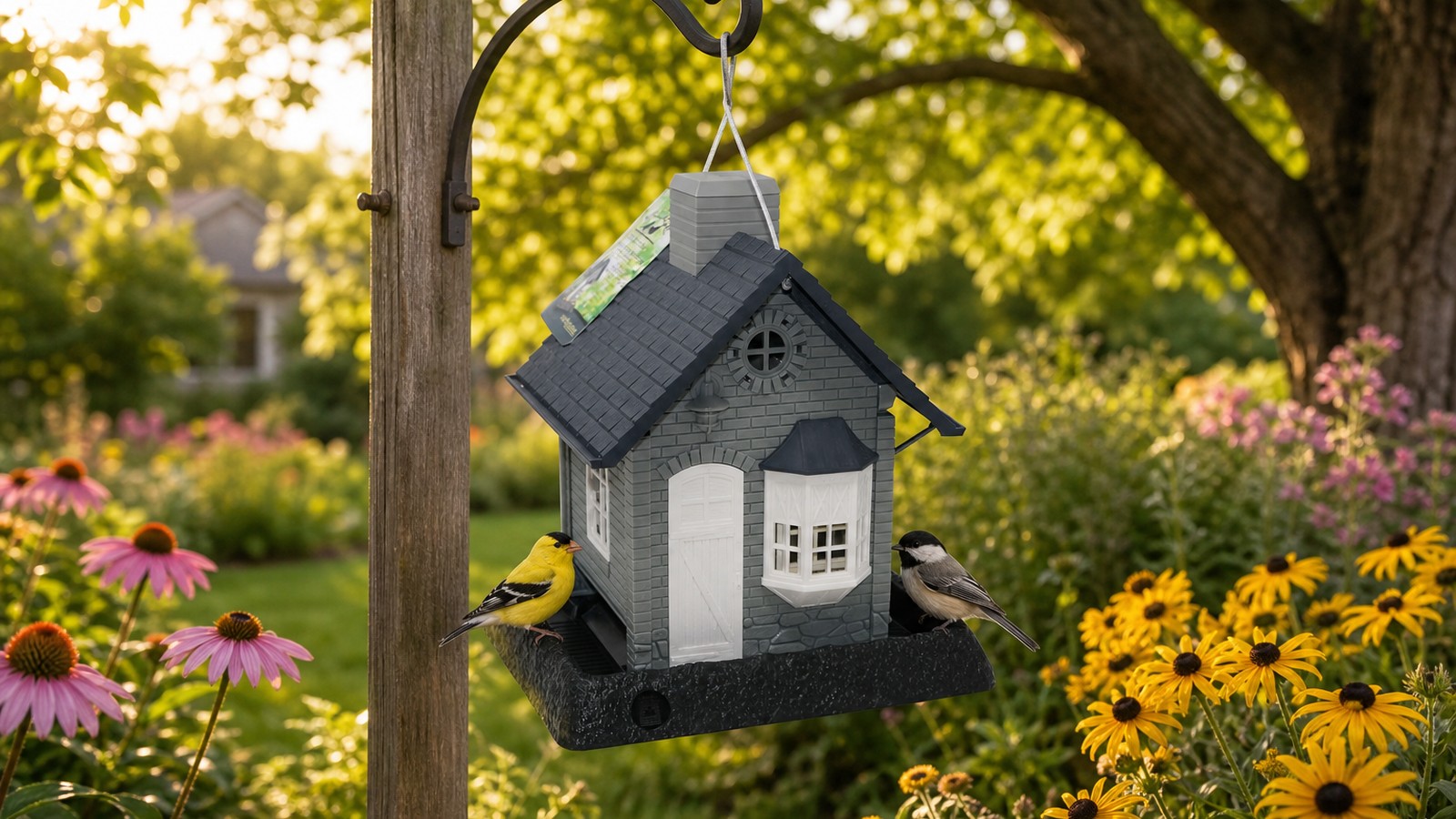
June in north-central Ohio is one of the most rewarding months you can spend watching your backyard — orioles are pushing through on their way to nesting grounds, goldfinches are hitting their brilliant summer yellow, house finches and chickadees are raising their first broods, and the hedgerows around Galion are absolutely alive with song. The problem most backyard bird enthusiasts run into this time of year isn't a lack of birds — it's a feeder that can't keep up, looks beat-up after a hard Ohio winter, or simply doesn't belong in a well-tended garden. The North States Village Collection Cottage-Style Bird Feeder answers all three of those complaints at once: it's a five-pound-capacity feeder with the charming, decorative look of a quaint cottage that actually enhances your yard rather than just hanging in it. This guide will walk you through why right now is the best time to set one up, how to place and mount it for maximum bird traffic, what to fill it with, and how to keep everything clean and safe through the heat of an Ohio summer.
Why June Is the Best Month to Set Up a New Bird Feeder in Ohio
There's a persistent myth among casual backyard birders that spring migration — April and May — is the season to get serious about feeders. In reality, by the time you hit mid-June, the bird activity in a typical Crawford County yard has shifted into something even better: resident breeding birds. Migration is mostly over, which means the birds visiting your feeder aren't just passing through. They're your neighbors for the next three or four months.
Here's what's happening in the trees and hedgerows around Galion right now:
- American goldfinches are at peak breeding color and visiting feeders heavily as they begin nesting — they're famously late nesters among Ohio songbirds, often not finishing nest construction until July.
- House finches and purple finches are feeding fledglings, which means adult birds are making frequent trips to reliable food sources.
- Black-capped chickadees and tufted titmice are teaching this year's young to forage, and a well-stocked feeder becomes part of that education.
- Rose-breasted grosbeaks, one of the most spectacular summer visitors to north-central Ohio, peak at feeders in June before they settle into forest breeding territories.
- Northern cardinals are on their second or even third nesting attempt by now, and males visit feeders constantly to maintain their energy.
Beyond bird biology, there's a practical gardening reason to get your feeder set up in June rather than waiting: garden context. Your perennials are in bloom or about to be. Your hanging baskets are filling out. Coneflowers, black-eyed Susans, and daylilies are opening up all over Galion yards right now. A feeder with genuine cottage-style visual character fits into that peak-season garden scene in a way that a plain utilitarian tube feeder simply doesn't. Setting it up now means you get the full visual payoff of the feeder as a garden accent during the most beautiful weeks of the year.
Finally, June is the month before the true heat of an Ohio summer sets in. Getting your feeder positioned, cleaned, and stocked while temperatures are still comfortable — before the oppressive humidity and heat waves of late July — means you've established good routines before the season gets demanding.
What Makes the North States Village Collection Cottage-Style Feeder Different
Walk through the bird feeder section of any big-box home improvement store and you'll see dozens of feeders that all look more or less the same: cylindrical plastic tubes, plain wooden boxes, or green powder-coated metal cages. They do the job of holding seed, but they don't do much else for your yard's appearance.
The North States Village Collection Cottage-Style Bird Feeder is built around a different idea. It belongs to North States' Village Collection — a line specifically designed to add decorative character to outdoor spaces beyond the standard feeder function. The cottage-style design gives it the look of a miniature house: the kind of quaint, storybook cottage aesthetic that looks at home among climbing roses, cottage garden perennials, and the kind of planted borders that Galion gardeners put serious effort into every spring.
The practical specs back up the decorative appeal. With a 5 lb seed capacity, this feeder holds enough to keep a busy summer yard supplied for several days between fills — you're not out there topping it off every morning. That's a meaningful advantage in June and July when bird traffic is at its peak and evaporation and humidity can affect seed quality if a small feeder empties and sits.
A few things worth understanding about how this feeder fits into a real backyard setup:
- The cottage design functions as a true garden accent, meaning placement decisions matter both for birds and for aesthetics. This isn't a feeder you hide; it's one you feature.
- The Village Collection line is built with the understanding that feeders live outdoors year-round in variable weather — Ohio's freeze-thaw cycles, summer humidity, and UV exposure are real stresses on any outdoor product.
- At 5 lbs of seed capacity, this feeder sits in a practical sweet spot: large enough to serve a busy yard without requiring daily refills, but not so large that seed sits long enough to spoil in July heat.
If you've been feeding birds with whatever feeder happened to be on sale and you're ready to actually invest in the experience — both for the birds and for the look of your yard — this is the kind of upgrade that pays off every time you look out your kitchen window.
Choosing the Perfect Spot: Placement Rules That Maximize Bird Traffic
Where you hang your feeder matters more than almost any other decision you'll make. Get the placement right and birds will find the feeder within hours. Get it wrong and you can go days wondering why nobody's showing up — or worse, you'll draw in the wrong visitors.
Distance from windows
The most important placement rule for any feeder: position it either within 3 feet of a window or more than 10 feet away from one. This isn't arbitrary — it's about bird safety. Birds that flush from a feeder hit windows, and the physics of the collision depend on how much speed they've built up. A bird that flies 3 feet can't reach lethal velocity. A bird that flies 30 feet can. The dangerous middle ground is roughly 4–10 feet from glass, which is unfortunately where most feeders end up by default.
Given that the cottage-style design makes this feeder a visual centerpiece, positioning it close to a window — where you can watch birds from inside — is actually a smart choice that also protects the birds.
Height and mounting
For a feeder with cottage-style proportions, a shepherd's hook or garden post at 5–6 feet is ideal. This puts the feeder at comfortable viewing height, gives birds a clear flight path, and keeps it accessible for refilling without a stepladder. A dedicated feeder pole with a baffle (more on that below) is the gold standard for squirrel management.
Cover and open space balance
Birds want a food source near cover — a shrub, small tree, or dense perennial border within 10–15 feet where they can retreat when spooked. But they also want to see predators coming, so they won't visit a feeder hemmed in on all sides. Aim for cover on one or two sides, open sightlines on the others. A feeder positioned near a lilac, viburnum, or ornamental grass planting in a typical Galion backyard hits this balance naturally.
Shade in summer
This is the June-specific consideration most people miss: seed in direct July sun spoils quickly. A feeder that gets morning sun and afternoon shade will keep seed fresher and reduce the frequency of cleaning emergencies. East-facing placements near the shadow line of a house or garage work well for Ohio yards.
The Best Seeds for June and July Bird Feeding in North-Central Ohio
A beautiful feeder filled with the wrong seed is a waste of everyone's time. Understanding what Ohio's summer birds actually prefer — and what seed types perform well in summer heat — will make your setup dramatically more effective.
Black-oil sunflower seed: the universal answer
If you fill the North States cottage feeder with nothing but black-oil sunflower seed, you'll attract the vast majority of species you're hoping to see in a Crawford County yard: cardinals, chickadees, titmice, nuthatches, house finches, purple finches, rose-breasted grosbeaks, and many more. The thin shell makes it easier for smaller birds to crack, and the high fat content is exactly what breeding birds need to fuel the metabolic demands of raising young. Black-oil sunflower is also relatively resistant to spoilage compared to mixed blends full of millet and milo that birds push aside anyway.
Nyjer (thistle) for goldfinches
If your primary goal is goldfinches — and in June, why wouldn't it be? — nyjer seed is the dedicated choice. Note that nyjer typically requires a feeder with smaller ports designed for the tiny seed. If your cottage feeder is set up with standard ports, consider pairing it with a separate nyjer sock or tube feeder nearby to cover both bases.
What to avoid in summer
- Cheap mixed seed blends with high proportions of red milo, wheat, and cracked corn. Birds mostly ignore these in summer when natural food is abundant, and the uneaten seed molds rapidly in Ohio's summer humidity.
- Peanuts in the shell in bulk during heat waves — they go rancid faster than sunflower and can harbor aflatoxin mold in high heat and humidity.
- Overfilling in July. At 5 lbs capacity, your feeder can hold enough for several days of heavy use — but in a heat wave, consider filling it only halfway so seed cycles through before it can spoil.
Seed freshness tips for Ohio summers
Buy seed in quantities you'll use within four to six weeks and store it in a sealed metal or hard plastic container in a shaded, cool location — a garage or shed is fine, but not in direct sun against a south wall where temperatures can exceed 120°F on an Ohio summer day. Fresh seed is more aromatic and more attractive to birds than stale seed that's been sitting in a humid bag.
You'll find quality seed options to pair with your feeder at Liberty Farm, Home & Garden in Galion, where staff can help you match the right seed type to the birds you're hoping to attract.
Managing Squirrels, Starlings, and Other Feeder Challenges
No bird feeder guide is complete without an honest conversation about the animals that will try to eat you out of house and home. In a typical Galion neighborhood or rural property in Crawford County, you'll be dealing with at least some of the following.
Gray and fox squirrels
Ohio squirrels are athletic, persistent, and surprisingly creative problem-solvers. The most effective deterrent system combines two elements:
- A squirrel baffle on the pole — either a dome baffle below the feeder on a pole, or a torpedo-style baffle. Position the pole at least 10 feet from any surface a squirrel can launch from (fences, trees, rooflines, lawn chairs). Squirrels can easily clear 8–9 feet horizontally from a jump.
- Appropriate feeder height — 5 to 6 feet off the ground, which is low enough for your baffle to be effective but high enough that squirrels can't reach up from below.
Capsaicin-treated seed (hot pepper suet or hot pepper sunflower mixes) is another option — birds can't taste capsaicin, but squirrels find it unpleasant. This works reasonably well as a supplemental measure.
European starlings and house sparrows
These invasive species are a fact of life in Ohio and can dominate a feeder, excluding the native species you're trying to attract. Some strategies that help:
- Avoid corn and bread-type foods that disproportionately attract starlings.
- Use feeders with smaller perches or weight-sensitive mechanisms when possible.
- Accept that some starling traffic is unavoidable and focus on having enough feeder capacity so native birds still get their share — which is another argument for the 5 lb capacity of the North States cottage feeder.
Raccoons and opossums
Both are nocturnal and both will clean out a feeder overnight given the chance. Bringing feeders in at night is the most reliable solution if you're having issues — or deploy the same pole baffle that stops squirrels, which is generally effective against raccoons as well.
Ants and wasps
In July and August, sugar ants and yellow jackets can become a real nuisance around feeders. An ant moat — a small water-filled cup that mounts above the feeder and interrupts the ant highway — handles most ant problems. For wasps, avoid anything with sugar water nearby and keep the feeder clean of spilled seed.
Cleaning and Maintenance: Keeping Your Feeder Safe All Summer
This is the section that separates serious bird enthusiasts from casual ones — and the birds can tell the difference. A dirty feeder in Ohio's summer heat isn't just unattractive; it's a genuine health hazard for birds. Mold, wet seed, and accumulated droppings can spread avian diseases including salmonellosis and aspergillosis, both of which can move through a backyard bird population quickly.
Cleaning schedule for June through August
| Situation | Recommended Cleaning Frequency | Notes |
|---|---|---|
| Normal June weather (65–80°F) | Every 1–2 weeks | Standard maintenance cleaning |
| Hot spell (85–95°F, high humidity) | Every 3–5 days | Seed spoils faster; check for clumping |
| After heavy rain | Within 24 hours | Wet seed molds quickly in summer temps |
| After disease outbreak in yard | Immediately; take feeder down 1–2 weeks | ODNR sometimes issues advisories; follow guidance |
| Ground under feeder | Weekly | Rake hulls and fallen seed to prevent rodent attraction and mold |
| Full deep-clean (bleach solution) | Monthly, or if visible mold appears | 1 part bleach to 9 parts water; rinse thoroughly and dry completely |
| Product | North States Village Collection Cottage-Style Bird Feeder (5 lb Capacity) | |
| Available At | Liberty Farm, Home & Garden - Galion, Ohio | libertyfhg.com | |
Step-by-step cleaning process
- Empty all remaining seed — don't just top it off over old seed. Discard stale or clumped seed; never return it to the feeder.
- Disassemble as much as your feeder design allows to access interior surfaces.
- Scrub with a stiff bottle brush and hot soapy water, paying attention to corners, perches, and the seed ports where wet seed compacts.
- Rinse thoroughly — soap residue can deter birds.
- Disinfect monthly with a 10% bleach solution (1 part household bleach to 9 parts water); soak for 2–3 minutes.
- Rinse again, very thoroughly.
- Dry completely before refilling — this is the step most people skip, and it's the most important one. A wet feeder re-filled immediately will have moldy seed within days.
Set aside a dedicated feeder-cleaning brush and basin that you don't use for anything else — cross-contamination from pet or kitchen items is an unnecessary risk.
Creating a Complete Backyard Bird Habitat Around Your Feeder
A feeder is the starting point, not the whole answer. Birds — especially the breeding residents of a Crawford County yard in June — need more than food. They need water, shelter, and nesting resources. Building even a modest habitat around your cottage feeder dramatically increases both the number of species you'll attract and the amount of time individual birds spend in your yard.
Water: the underrated magnet
In June and July, a clean birdbath within 10–20 feet of your feeder will attract more birds than the feeder itself on some days. Many species that won't visit seed feeders at all — warblers, thrushes, catbirds — will reliably visit water. Keep the bath to 1–2 inches deep (birds need to stand in it, not swim), change the water every 2–3 days to prevent mosquito breeding, and add a small solar-powered dripper or agitator if you want to supercharge the attraction factor. Moving water catches light and sound in ways that draw birds from a surprising distance.
Native plants for food and shelter
Ohio native plants in the beds around your feeder aren't just pretty — they're functional. Consider adding or encouraging:
- Purple coneflower (Echinacea purpurea) — goldfinches and chickadees eat the seed heads in fall; the plants are spectacular right now in bloom across north-central Ohio.
- Black-eyed Susan (Rudbeckia hirta) — another seed-head favorite that peaks in late July.
- Serviceberry (Amelanchier) — berries ripen in June and attract over 40 species of birds in Ohio.
- Native viburnums — dense enough to provide nesting cover, berries that persist into fall migration.
Nesting boxes
If you want to turn your backyard from a restaurant into a full neighborhood, add species-appropriate nest boxes. Eastern bluebirds are actively using nest boxes throughout Crawford County right now and are on their second brood by mid-June. Carolina wrens will nest in almost any covered cavity. Pair a nest box program with your feeder setup and you'll be watching fledglings visiting your cottage feeder by mid-July — one of the most rewarding experiences a backyard birder can have.
Stop by Liberty Farm, Home & Garden on S. Liberty Street in Galion to browse nest boxes, birdbaths, and accessories that round out the habitat you're building around your new feeder.
Feeder Placement Ideas That Make the Cottage Style Shine in Your Garden
Because the North States Village Collection feeder is explicitly designed as a decorative garden accent, it deserves thoughtful placement that lets the cottage aesthetic do its job. Here are specific scenarios that work well in the kinds of properties common around Galion and Crawford County.
The cottage garden vignette
Position the feeder on a shepherd's hook at the back corner of a perennial border filled with coneflowers, salvias, and daylilies. Let the cottage feeder act as the vertical focal point that ties the planting together. From inside, this composition looks like a painting. From the birds' perspective, the dense perennial border provides the nearby cover they want.
The front porch anchor
A feeder visible from your front porch or sitting area extends the functional use of those spaces. Morning coffee tastes better when there's a cardinal at the feeder. The cottage-style design suits front-yard aesthetics far better than utilitarian feeders — it looks intentional rather than incidental.
The kitchen window view
As discussed in the placement section, positioning within 3 feet of a kitchen or dining room window is both safe for birds and deeply rewarding for you. A cottage-style feeder that complements window box plantings or shutters creates a coherent visual story from inside.
The rural property setting
For hobby farm properties outside of town — the kind of small acreages common throughout Crawford County — a cottage feeder mounted near the farmhouse garden rather than in a field or near outbuildings keeps the bird activity close to where you actually spend leisure time. The decorative quality of the Village Collection line is particularly well-suited to the intentional, well-maintained garden spaces that farm property owners create near their homes as a counterpoint to working agricultural areas.
Pairing with trellises and fences
The cottage aesthetic pairs naturally with painted garden fences, wood or metal trellises with climbing roses or clematis, and arbor gate structures. If your yard already has any of these elements, mounting the feeder nearby creates a cohesive garden design language that makes the whole space feel more considered.
Frequently Asked Questions
Keep Reading
Keep the Feeder Up: An Ohio Guide to Fall Hummingbird Migration
Learn when to take down hummingbird feeders in Ohio, how to mix safe nectar, and how often to clean during late-summer migration near Galion.
Planting Fall Deer Food Plots in Ohio: An August Field Plan
Plan an Ohio fall deer food plot with soil testing, smart seedbed prep, mix selection, and local tips from Liberty Farm, Home & Garden in Galion.