
Attract More Deer This Summer: A Complete Guide to Cotton Candy Liquid Attractant
Summer is prime time to establish deer patterns before archery season opens. Antler King Cotton Candy Liquid's Aroma-Burst Technology carries that irresistible sweet scent on the wind — here's how to use it strategically across north-central Ohio properties.
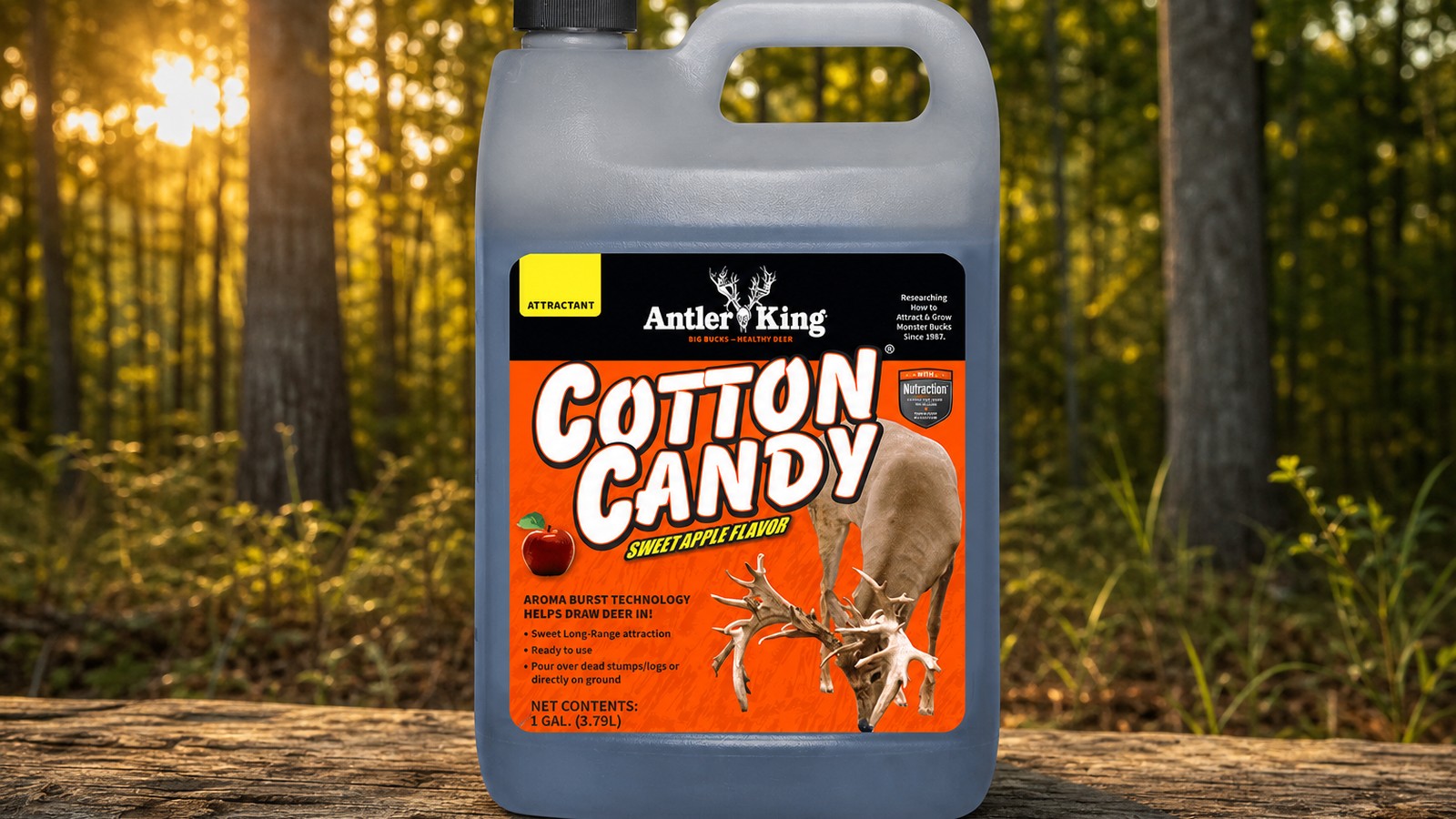
The window between now and Ohio's September archery opener is one of the most underutilized stretches in a deer hunter's calendar — and one of the most valuable. Bucks are in full velvet, does are raising fawns, and deer are moving in predictable, low-pressure summer patterns that you can actually read and influence. Antler King Cotton Candy Liquid is a concentrated liquid deer attractant built for exactly this kind of pre-season work: pour it on the ground, saturate a stump, or blend it into corn, and its micro-encapsulated Aroma-Burst Technology carries that sweet cotton candy scent far downwind to pull deer in and keep them coming back. Start now, and by the time September rolls around you won't be guessing where the deer are — you'll already know.
Why Late June and July Is the Right Time to Start Using a Deer Attractant in Ohio
Most hunters think attractants are a fall tool. They're not — or at least, they don't have to be. Using a liquid attractant like Antler King Cotton Candy Liquid during the summer months gives you a significant tactical edge, and here in north-central Ohio, the timing right now is close to ideal.
In late June, Ohio bucks are roughly halfway through velvet antler development. They're feeding heavily — sometimes more than at any other point in the year — to fuel that rapid bone growth. Does are nursing fawns and need serious caloric intake as well. Deer are creatures of summer habit: they visit the same food sources, travel the same corridors, and drink from the same water sources day after day, often at predictable times. That consistency is exactly what you want to exploit before hunting season disrupts it.
There's another practical reason to start now: Ohio's archery season typically opens in late September, and the 60-to-90 day window beforehand is when you want your attractant sites established, your trail cameras positioned, and your understanding of local deer movement locked in. If you wait until the week before season, you're starting from scratch. If you start now, you're three months ahead.
Crawford County and the surrounding north-central Ohio landscape — a mix of grain fields, woodlots, creek drainages, and brushy fencerows — is genuinely good deer country. The deer are here. Getting them patterned to specific locations on your property is what separates a productive season from a frustrating one.
What Antler King Cotton Candy Liquid Is and How It Works
Antler King Cotton Candy Liquid is a concentrated liquid deer attractant in a 1-gallon jug. The flavor profile is sweet cotton candy — an unconventional choice that turns out to be highly effective because deer, like most animals, have a strong preference for sweet, calorie-dense foods, particularly during the summer energy demands of antler growth and fawn rearing.
What separates this product from a simple flavored pour is the Aroma-Burst Technology. The attractant uses micro-encapsulated scent molecules — tiny capsules that rupture over time and release fragrance in waves rather than all at once. This means the scent doesn't just dissipate immediately after application. Instead, it continues drifting on air currents and thermals over an extended period, working the wind for you even when you're not there.
The practical implication is reach. A deer doesn't have to stumble directly onto your site to discover it. If wind conditions carry that sweet cotton candy aroma 100, 200, or even 300 yards through timber or across a field edge, a deer that was never headed your way might change course entirely. That's the whole point of a long-range attractant versus a simple bait pile.
Application is straightforward:
- Direct pour: Apply directly onto bare soil or dirt to create a licking or sniffing spot at ground level.
- Stump soak: Saturate a cut stump or log, which absorbs and slowly releases the scent over multiple days.
- Feed mix: Stir into shelled corn or other deer feed to enhance palatability and draw deer to an established feed station.
The 1-gallon size provides enough volume for multiple applications across several sites, which means you can treat more than one location on your property rather than concentrating everything in one spot.
Scouting and Site Selection: Setting Up for Success on Ohio Properties
A deer attractant works best when it's placed where deer already want to be — or very close to it. Pouring Cotton Candy Liquid in the middle of a cornfield or an open pasture with no cover won't get the results you're looking for, because deer will feel exposed. You want sites that align with how deer naturally use your land.
High-Value Site Types in North-Central Ohio
On most Crawford County properties, the most productive attractant locations share a few common characteristics:
- Woodland edges and field margins: The transition zone between timber and open ground is a classic deer travel corridor. A stump or dirt patch along this edge, within 20–30 yards of cover, is a natural draw.
- Creek crossings and drainages: Deer follow creek bottoms and cross at shallow riffles. A site near a known crossing can intercept deer from multiple directions.
- Natural funnels: Fence gaps, brushy hedgerows between fields, saddles in terrain changes — anywhere deer are channeled into a narrower travel path is ideal.
- Existing scrapes or rubs from last season: These locations were meaningful to deer before. They're often meaningful again. A summer attractant application can re-activate these spots early.
- Water sources: During summer heat, deer prioritize water. A site near a pond edge, stream bank, or stock tank — without being directly in a farmer's active area — can be productive through August.
How Many Sites to Establish
For a property in the 40–100 acre range, two to four attractant sites is a reasonable starting point. You want enough coverage to capture deer moving through different parts of the property, but not so many that you're diluting your observation data. Place sites at least 200–300 yards apart so you're drawing deer to distinct locations rather than creating one vague scent cloud.
Smaller parcels of 10–20 acres might work well with just one or two carefully chosen sites, focusing on the highest-traffic natural pinch points you can identify.
Step-by-Step Application Guide for Cotton Candy Liquid
Once you've identified your sites, application is simple but worth doing deliberately so you get the most out of each treatment and don't burn through your supply faster than necessary.
- Prepare the site: If you're doing a ground pour, clear away leaf litter and expose bare soil in a 12–18 inch diameter area. Deer engage more readily with exposed dirt they can nose, paw, and lick at. If you're using a stump, make sure it's relatively fresh-cut or still has some absorbency — old dry stumps work but may need a heavier initial application.
- Apply the liquid: Pour or drizzle Antler King Cotton Candy Liquid directly onto your prepared ground area or stump. You don't need to drench it — a slow, deliberate pour that soaks in rather than runs off is more effective. For a ground site, a generous pour of 4–8 ounces is a reasonable starting treatment.
- For corn mixing: If you're running a corn feeder or bait pile alongside your site, pour Cotton Candy Liquid directly over the corn and mix thoroughly so the flavor coats the kernels evenly. This enhances the feed's appeal and gives deer both a scent draw from a distance and a taste reward up close.
- Mark your sites: Note GPS coordinates or sketch a simple map. You'll want to return on a consistent schedule for re-application, and it's easy to forget exact spots in dense timber.
- Re-apply on a schedule: Depending on rainfall and temperatures, plan to refresh your sites every 7–14 days. After heavy rain, re-apply sooner. In dry stretches, the micro-encapsulated scent may hold longer, so you can extend the interval slightly.
- Minimize human scent: Wear rubber boots to your sites and use scent-elimination spray or rubber gloves when handling the jug and treating the area. The whole point is to draw deer in without associating the attractive smell with human activity.
- Set your trail camera: Position a camera 10–15 yards from the site, angled so it captures deer approaching from downwind. Set it to video mode if possible during summer — watching how deer interact with the site tells you far more than a still photo.
Using Trail Cameras Alongside Your Attractant Sites
Liquid attractants and trail cameras are a natural pairing, and summer is the best time of year to run cameras in Ohio. Here's why: deer pressure is zero. There's no hunting season, no orange vests in the woods, no shooting pressure. Deer are moving naturally and predictably, and the inventory data you collect now is genuinely representative of what's living on or near your property.
Set your camera to capture activity around your attractant site and check it every 7–14 days — ideally on the same schedule as your re-application visits, so you're only making one disturbance trip. When you check the camera and re-apply in the same visit, you minimize the number of times human scent enters the area.
What to look for in your summer camera data:
- Velvet bucks: This is the most exciting part of summer scouting. Velvet antlers in July and August are still forming, but you can already assess beam length, tine count, and rough mass. A buck you can identify now by a distinctive rack shape or unique tine configuration is a buck you can plan for come fall.
- Doe groups and fawns: Does with fawns tell you where core family groups are living. These areas often hold bucks nearby during the rut, months later.
- Time stamps: Note what time deer are visiting the site. Consistent morning or evening activity patterns reveal travel corridors and bedding areas you can use to plan stand placement.
- Visit frequency: If deer are hitting a site multiple times per week, that's a site worth investing in for the fall. If visits are sparse, evaluate whether the location or the access route needs adjustment.
Summer Deer Behavior in Ohio: What You're Working With
Understanding deer behavior in June and July helps you set realistic expectations and make smarter decisions about where and how you deploy attractants.
By late June, Ohio's bucks are well into their summer bachelor group behavior. Mature bucks, yearlings, and 2.5-year-olds often travel and feed together during summer — a behavior that largely disappears as velvet hardening and testosterone increases approach in August. Seeing two or three bucks at a single attractant site in late June is not unusual, and it's an excellent indicator of local buck density.
Does in late June are nursing fawns that are typically 4–6 weeks old. Fawns start accompanying does to food sources at roughly 4 weeks, so by early July you may start seeing fawns appear on camera at attractant sites. Their presence isn't a concern — it just confirms that does are using the area, which is meaningful information for understanding population distribution on your property.
Summer deer in Ohio are also heavily influenced by heat. During July and August, midday movement drops sharply as temperatures climb. The most active feeding periods shift toward the final 60–90 minutes of daylight in the evening and the first hour of light in the morning. Set your camera's sensitivity and battery schedule accordingly, and expect your attractant sites to see most of their action during those windows.
Water availability matters more in summer than most hunters appreciate. Properties with reliable water sources — even a small spring-fed pond or a low-lying area that stays moist — hold deer more consistently through hot spells. If your attractant site is near water, you have a natural advantage.
| Scenario | Recommended Application Method | Re-application Interval |
|---|---|---|
| Woodland edge scouting site | Direct ground pour on bare soil, 4–8 oz per application | Every 7–10 days; sooner after rain |
| Cut stump or log | Saturate stump surface; allow to soak in before first rain | Every 10–14 days; stumps retain scent well |
| Corn feeder or bait pile | Mix into shelled corn for even coating of kernels | With each corn replenishment |
| Multiple sites (2–4 locations) | Divide 1-gallon jug across sites; treat sequentially | Rotate visits to minimize disturbance |
| Field edge funnel | Ground pour at natural pinch point, 20–30 yds from timber | Every 7–10 days during summer heat |
| Pre-season stand site | Combine ground pour + stump soak near planned stand location | Every 7 days beginning 6 weeks before opener |
| Product | Antler King Cotton Candy Liquid (1-Gallon) | |
| Available At | Liberty Farm, Home & Garden - Galion, Ohio | libertyfhg.com | |
Pairing Cotton Candy Liquid With Other Attractant Strategies
Liquid attractants work well in isolation, but they work even better as part of a layered approach. If you're serious about building a productive summer pattern that carries into fall, consider how Cotton Candy Liquid fits alongside these complementary strategies.
Mineral and Salt Supplementation
Summer is the peak demand period for deer minerals. Bucks growing velvet antlers require calcium, phosphorus, and trace minerals at rates the natural forage in Ohio's woodlots often can't fully supply. A mineral station located within 50–100 yards of your Cotton Candy Liquid site creates a multi-attraction zone — the sweet scent draws deer in, and the mineral station gives them another reason to linger and return. Mineral blocks, loose granular minerals, or mineral-laced salt are all compatible companions to a liquid attractant setup.
Food Plots
If you have the ground and the equipment to manage even a small food plot — half an acre of clover, chicory, or brassicas — a liquid attractant placed at the plot's edge can turbo-charge traffic during the establishment phase when plant growth is still sparse. As the plot matures through July and August, the combination becomes a self-reinforcing deer magnet that builds consistent use before the season.
Corn Feeders
Mixing Antler King Cotton Candy Liquid directly into your corn supply is one of the most effective and low-effort applications. The sweet coating makes the corn immediately more attractive on approach, and the Aroma-Burst scent diffusing outward from a feeder location extends the effective draw radius well beyond the feeder itself. If you're running a gravity feeder or a spin feeder with a corn load, adding Cotton Candy Liquid to the corn supply at each refill is a simple habit that pays consistent dividends.
Stand Prep and Approach Routes
By late August, you should start transitioning your attractant work from pure scouting to stand preparation. Place your primary attractant site within ethical bow range of your planned stand — typically 20–35 yards — and begin trimming shooting lanes and clearing your approach route without over-disturbing the area. The goal is a site that deer are already conditioned to visit, now positioned where you can hunt it effectively.
Responsible Attractant Use: Ohio Regulations and Best Practices
Before you start pouring attractant, take ten minutes to review the current Ohio Department of Natural Resources (ODNR) deer hunting regulations for your specific situation. Regulations can vary by county, by hunting method, and by season, and they do change from year to year.
A few general points worth noting:
- Baiting and feeding rules: Ohio has had varying regulations regarding the use of bait and feed in deer hunting over the years, including CWD (Chronic Wasting Disease) management zones with specific restrictions. Always check the current ODNR Deer Hunting Regulations booklet for the county you're hunting before placing attractants.
- Non-hunting use is generally unrestricted: Using attractants for wildlife observation, photography, and general property management — rather than in conjunction with active hunting — typically falls outside hunting bait regulations. If you're using Cotton Candy Liquid purely for summer scouting and trail camera work with no intent to hunt over the site, that's a different context than deploying bait during the hunting season.
- CWD awareness: Crawford County is in north-central Ohio. Stay informed about any CWD monitoring or management zones in your area and follow ODNR guidance regarding carcass transport and supplemental feeding in affected areas.
- Neighbor and landowner communication: If your attractant sites are near property lines, a quick conversation with neighboring landowners about your setup is good practice. Deer don't know fence lines, and building goodwill with neighbors often leads to better shared information about deer activity in the broader area.
When in doubt about local regulations, call the ODNR Wildlife District Office or check the current regulation booklet. Responsible use protects both your hunting privileges and the deer herd.
Get Started This Weekend: Where to Find Cotton Candy Liquid Locally
The deer that will walk past your stand this October are living their most predictable, patternable lives right now — in late June, through July, through August. Every week you delay setting up attractant sites is a week of valuable trail camera data and behavioral conditioning you don't get back.
The good news is that getting started is simple. Pick up a jug of Antler King Cotton Candy Liquid, identify two or three promising spots on your property this weekend, and get your first application down. Set a camera, mark your calendar for re-application in 10 days, and let the product work for you.
Stop by Liberty Farm, Home & Garden at 222 S. Liberty St. in Galion to pick up a jug along with any other supplies you need for the season — mineral blocks, corn, trail camera batteries, or scent elimination gear. The staff there can answer questions about what's been working locally and point you toward anything else that fits your setup. You can also browse and order online at libertyfhg.com if you'd rather plan ahead from home.
Three months goes faster than you think. Start now, and go into September with a plan instead of a guess.
Frequently Asked Questions
Keep Reading
Keep the Feeder Up: An Ohio Guide to Fall Hummingbird Migration
Learn when to take down hummingbird feeders in Ohio, how to mix safe nectar, and how often to clean during late-summer migration near Galion.
Planting Fall Deer Food Plots in Ohio: An August Field Plan
Plan an Ohio fall deer food plot with soil testing, smart seedbed prep, mix selection, and local tips from Liberty Farm, Home & Garden in Galion.