
Does Your Horse Need a Mineral Salt Block? Here's How to Tell
Signs of mineral deficiency, why plain white blocks aren't enough, and how a flavored trace mineral block keeps horses healthier year-round
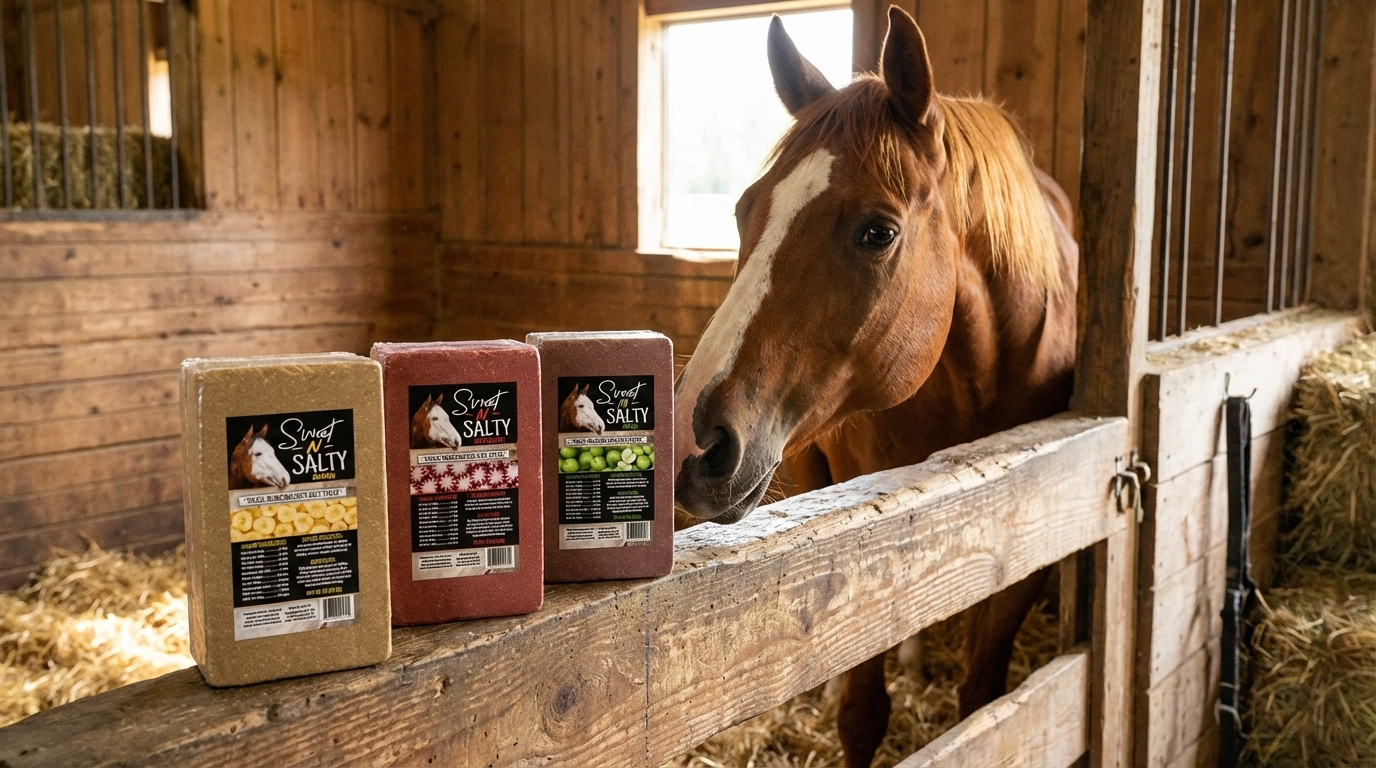
Salt is the one nutrient horses can't get enough of from hay and grain alone. Unlike other minerals that accumulate in the body, sodium and chloride are lost daily through sweat, urine, and normal metabolism — and horses have no way to stockpile them. A mineral salt block is the simplest, most reliable way to fill this gap. But not all salt blocks are equal, and the wrong choice (or no choice at all) can lead to dehydration, poor performance, and subtle deficiencies that compound over time. Here's everything you need to know about choosing and using mineral salt blocks for your horses.
Why Horses Need Salt (More Than You Think)
The average 1,000-pound horse at rest needs roughly one to two ounces of salt per day just to maintain normal body functions. That requirement jumps significantly with exercise, hot weather, or lactation. Salt regulates fluid balance, supports nerve and muscle function, and drives the thirst response that keeps horses drinking enough water.
Here's the problem: commercial horse feeds and hay contain very little sodium. Even a well-formulated grain ration typically covers less than half of a horse's daily sodium requirement. The rest has to come from supplemental salt — and if it isn't available, the horse simply goes without.
Signs Your Horse Isn't Getting Enough Minerals
Mineral deficiencies in horses develop gradually, which makes them easy to miss until they've become a real problem. Watch for these common signs:
- Licking dirt, wood, or metal — Horses craving salt or minerals will lick fence posts, barn walls, or the ground. This is one of the earliest and most obvious signs.
- Decreased water intake — Without adequate sodium, the thirst response weakens. A horse that isn't drinking enough in warm weather is a horse at risk.
- Dull coat and dry skin — Zinc and copper deficiencies show up in coat quality before almost anything else. A horse on good feed that still looks rough may be short on trace minerals.
- Muscle stiffness or cramping — Electrolyte imbalances from low sodium and chloride affect muscle function, especially after exercise.
- Poor hoof quality — Zinc, copper, and manganese all play roles in hoof wall integrity. Chronic deficiency leads to cracking, chipping, and slow growth.
- Lethargy or reduced performance — Sometimes the only sign is that a horse just seems "off" — less energy, less willingness to work, slower recovery.
If you're seeing any of these signs and your horse doesn't have access to a mineral salt block, that's the first thing to add.
Plain White Salt vs. Trace Mineral Blocks
The most basic option — a plain white salt block — provides sodium and chloride and nothing else. It's better than nothing, but it misses the trace minerals that many horses need in addition to salt.
Trace mineral salt blocks add small but important amounts of manganese, copper, zinc, cobalt, and iodine to the base salt. These minerals support everything from immune function and coat health to hoof growth and reproductive performance. For most horses in Ohio, a trace mineral block is the better choice because local forages can be low in copper and zinc depending on soil conditions.
| Block Type | What It Provides | Best For |
|---|---|---|
| Plain white salt | Sodium, chloride only | Horses already on a complete mineral supplement |
| Trace mineral (red/brown) | Salt + manganese, copper, zinc, cobalt, iodine | Most horses on hay and basic grain |
| Flavored trace mineral | Same minerals + flavor to encourage intake | Picky horses, horses that ignore plain blocks |
Kalmbach Sweet-N-Salty Peppermint: A Closer Look
The Kalmbach Sweet-N-Salty Peppermint (4 lb) is a flavored trace mineral salt block designed to make mineral intake effortless. At $4.99 for a 4-pound block, it's one of the most affordable and effective supplements you can offer.
| Specification | Details |
|---|---|
| Weight | 4 lb block |
| Flavor | Peppermint |
| Salt (NaCl) | 94–99% |
| Trace Minerals | Manganese, Copper, Zinc, Cobalt, Iodine |
| Intended For | Horses |
| Price | $4.99 |
The peppermint flavor isn't just marketing — it serves a practical purpose. Horses are naturally drawn to peppermint, and a flavored block encourages regular licking in horses that might otherwise ignore a plain mineral block. Consistent voluntary intake means consistent mineral levels, which is the entire point of offering free-choice salt.
Kalmbach Feeds has been manufacturing animal nutrition products in Upper Sandusky, Ohio — just about 30 miles from Galion — since 1963. They understand Ohio forages, Ohio water, and Ohio horses. That regional knowledge matters when formulating mineral supplements.
How to Offer a Salt Block Correctly
Simply tossing a block on the ground works in a pinch, but there are better ways to get the most out of your mineral salt block:
- Use a block holder — A wall-mounted or fence-mounted block holder keeps the block off the ground, out of mud, and positioned at a comfortable licking height. Ground blocks dissolve faster from rain and manure contact.
- Place it near water — Horses that lick salt will immediately want to drink. Placing the block within sight of the water source encourages both salt and water intake.
- One block per group — In pastures with multiple horses, dominant animals may guard a single block. Provide at least one block per two to three horses, spread apart to give everyone access.
- Check it regularly — Replace blocks when they get small enough to become a choking hazard (roughly fist-sized or smaller). A 4-pound block typically lasts one horse three to six weeks depending on individual intake and weather.
- Keep it dry when possible — Rain accelerates dissolving. If your block is outdoors, a simple overhang or covered mineral feeder extends its life significantly.
Salt Blocks Through the Seasons
Mineral needs aren't static — they shift with the seasons, and your approach should shift too.
Spring (March–May): As horses transition from hay to fresh pasture, mineral intake patterns change. Spring grass is high in potassium, which can interfere with magnesium absorption. Maintaining constant access to a trace mineral block helps balance the dietary shift. This is also when horses start sweating more during riding, so salt needs increase.
Summer (June–August): Peak salt demand. Horses in moderate work can easily need three to four ounces of salt daily in hot weather. A single 4-pound block may only last two to three weeks per horse. Consider offering loose salt alongside the block for heavy sweaters.
Fall (September–November): Salt needs decrease slightly as temperatures cool, but trace mineral intake remains important as horses build winter coats. Copper and zinc are especially relevant for coat quality heading into cold months.
Winter (December–February): The biggest risk in winter isn't sweating — it's reduced water intake. Horses often drink less in cold weather, and adequate salt intake is the primary driver of thirst. A flavored block like the Kalmbach Peppermint can be especially valuable in winter because the flavor encourages licking even when horses might ignore a plain block in the cold.
Building a Complete Equine Nutrition Program
A mineral salt block is one piece of the nutrition puzzle. For horses in regular work or with specific health needs, pairing the salt block with a balanced feed program makes a significant difference.
Here are some complementary products available at Liberty Farm, Home & Garden:
- Tribute Constant Comfort Plus (40 lb) — $38.99 — A low-starch, high-fiber feed designed for horses with metabolic concerns or sensitive digestive systems. Pairs well with free-choice mineral salt for complete nutritional coverage.
- Tribute Senior Sport Textured Horse Feed (50 lb) — $26.99 — For older horses in moderate work, this textured feed delivers balanced nutrition in a palatable form. A trace mineral block fills any remaining gaps.
- Hansen-Mueller Steam Rolled Oats (50 lb) — $23.19 — A classic energy source for working horses. Because oats are low in minerals, supplementing with a trace mineral salt block is especially important when oats make up a significant part of the diet.
- Buckeye GRO 'N WIN Ration Balancer (50 lb) — $39.99 — A concentrated vitamin and mineral pellet for horses on forage-heavy diets. Even with a ration balancer, free-choice salt remains essential because balancers don't provide enough sodium for most horses.
Common Mistakes with Salt Blocks
Even experienced horse owners sometimes get salt supplementation wrong. Here are the most common mistakes and how to avoid them:
- Assuming grain provides enough salt — It almost never does. Even premium feeds typically supply less than half the daily sodium requirement. Always offer free-choice salt in addition to feed.
- Using cattle mineral blocks for horses — Cattle mineral blocks may contain levels of copper or other minerals that are formulated for ruminants, not horses. Always use blocks labeled for equine use.
- Removing blocks in winter — Some owners take salt blocks away in cold months, thinking horses don't need salt when they're not sweating. This is exactly when reduced water intake makes salt most important.
- Placing only one block for a large group — Herd dynamics mean the dominant horse gets the block and everyone else goes without. Spread multiple blocks across the pasture.
- Ignoring a horse that never touches the block — If a horse completely ignores a salt block, don't assume they don't need salt. Try a flavored block, switch to loose salt, or add salt directly to feed. Every horse needs sodium — some just need it offered differently.
Frequently Asked Questions
Keep Reading
Late-Summer Pasture Checkup: Repair, Reseed, or Rest Your Ohio Fields?
A practical late-August pasture guide for Ohio livestock owners: assess plant cover, soil fertility, weeds, grazing pressure, and whether to repair or reseed.
Molting Season Prep: How to Support Your Chickens Through the August Transition
Learn how to recognize and support your chickens through their annual molt in late summer and early fall. This seasonal guide from Liberty Farm, Home & Garden in Galion, Ohio covers nutrition, management, and timing for north-central Ohio flocks.