
Why Galvanized Steel Storage Cans Are a Farm and Garden Essential
Rodent-proof, weather-resistant, and built to last — the case for ditching plastic bins
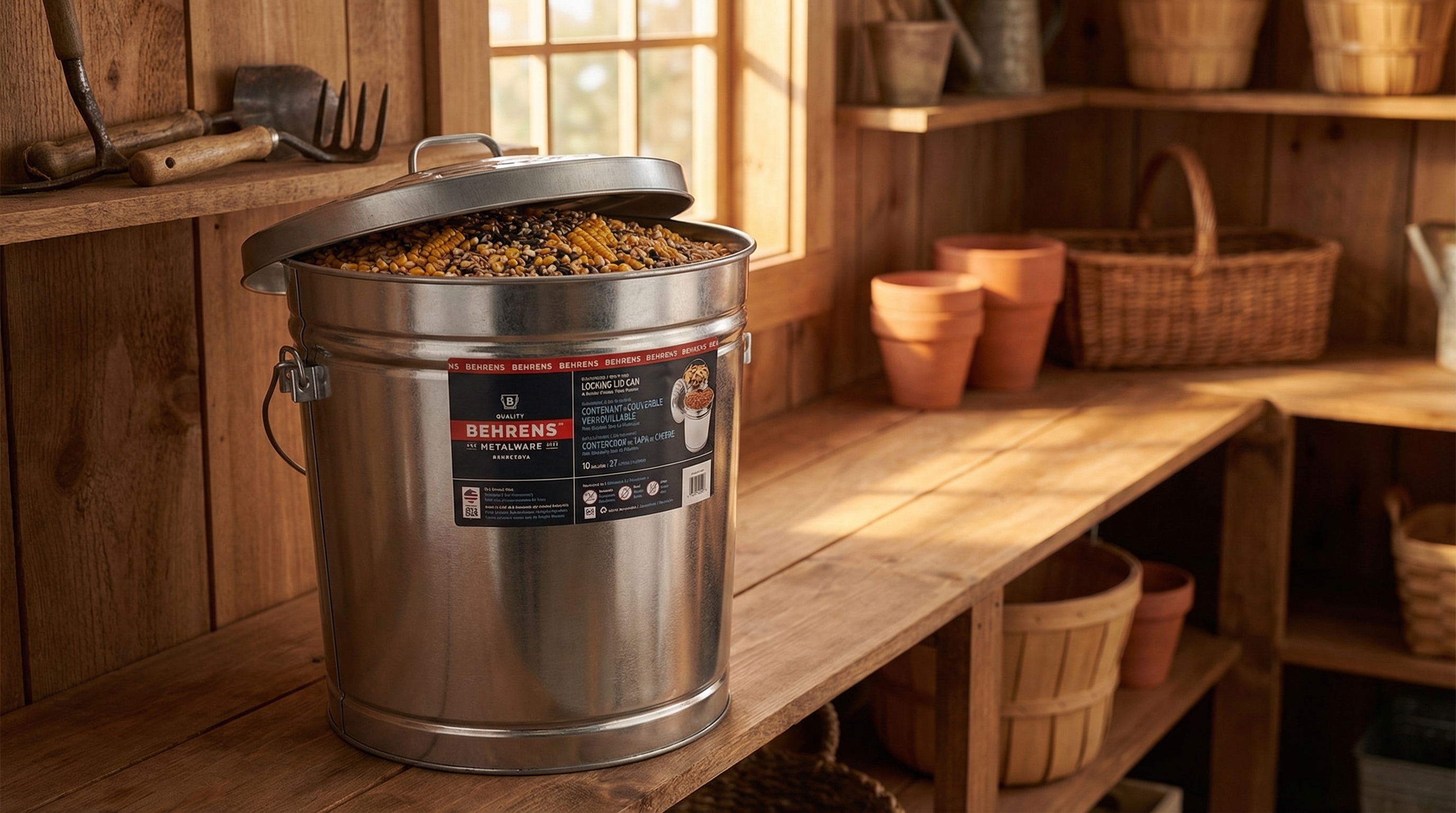
If you store birdseed, livestock feed, pet food, or garden supplies in plastic bins, you already know the problem. Mice chew through plastic overnight. Lids crack in cold weather. Moisture seeps in and ruins a $40 bag of feed. Galvanized steel storage cans solve all of these problems at once — and a quality American-made can will outlast a dozen plastic totes. Here's everything you need to know about choosing and using them.
The Problem with Plastic Storage
Plastic storage bins have their place, but they fail at the one job that matters most in a barn, garage, or garden shed: keeping rodents out. Mice and rats can gnaw through even thick-walled plastic containers in a single night when they smell feed or seed inside. Once they're in, they contaminate the entire contents with droppings and urine, turning a full container into waste.
Beyond rodents, plastic bins degrade in sunlight, become brittle in Ohio's cold winters, and trap moisture inside when temperatures swing. A cracked lid on a February morning means your spring birdseed is already moldy before the first robin arrives.
Why Galvanized Steel Works
Galvanized steel — steel coated with a layer of zinc — has been the standard for agricultural storage for over a century. The zinc coating prevents rust, and the steel itself is impervious to gnawing, clawing, and chewing by rodents of any size. A tight-fitting lid completes the seal, keeping out moisture, insects, and pests.
The Behrens Galvanized Steel Utility Can (10-Gallon) is a perfect example. Made in the USA from 100% galvanized steel, it features a snug friction-fit lid and an offset bottom that lifts the can off wet floors — a small detail that prevents the rust that kills cheaper cans from the bottom up. Wire bail handles make it easy to carry even when full.
| Feature | Galvanized Steel | Plastic Bin |
|---|---|---|
| Rodent resistance | Impervious | Easily chewed through |
| Weather durability | Decades outdoors | Cracks in cold, warps in heat |
| Moisture seal | Tight metal-on-metal lid | Gaps develop as plastic warps |
| UV resistance | Excellent | Degrades over time |
| Recyclability | 100% recyclable | Often not accepted |
| Typical lifespan | 10-20+ years | 2-5 years |
What to Store in Galvanized Cans
Galvanized steel cans are versatile enough for just about any dry storage need around the farm, home, or garden. Here are the most common uses:
- Birdseed and suet — Mice and squirrels are relentless raiders of birdseed storage. A galvanized can in the garage or shed keeps your supply fresh and intact all season.
- Livestock and poultry feed — Whether you're storing chicken layer feed, horse grain, or goat pellets, a steel can keeps it dry and rodent-free between feedings.
- Pet food — Dog food and cat food attract mice just as much as livestock feed. A 10-gallon can holds a full 30-40 pound bag with room to spare.
- Garden amendments — Bone meal, blood meal, and other organic fertilizers are irresistible to animals. Steel storage keeps them from being dug up or scattered.
- Ice melt and de-icer — Hygroscopic products like calcium chloride absorb moisture from the air. A sealed steel can keeps them free-flowing and ready for the next freeze.
Sizing Guide: Choosing the Right Can
Galvanized cans come in sizes ranging from small 6-gallon models up to large 31-gallon cans. The right size depends on what you're storing and how much space you have. The 10-gallon size hits the sweet spot for most home and small farm applications — large enough to hold a full bag of feed or seed, but small enough to carry when full.
| Can Size | Approximate Capacity | Best For |
|---|---|---|
| 6 gallon | 20-25 lbs of feed | Small quantities, garden amendments |
| 10 gallon | 35-40 lbs of feed | Birdseed, pet food, one bag of feed |
| 20 gallon | 70-80 lbs of feed | Larger flocks, multiple feed types |
| 31 gallon | 100+ lbs of feed | Bulk storage, livestock operations |
For most backyard chicken keepers, bird feeders, and pet owners in the Galion area, the Behrens 10-Gallon Utility Can at $29.99 is the ideal starting point. Buy two — one for feed and one for birdseed — and you've eliminated your rodent storage problem for under $60.
Spring Cleaning and Organization
Spring is the perfect time to upgrade your storage setup. As you clean out the garage, barn, or garden shed, assess what's been getting into your supplies over the winter. Chew marks on bags, droppings near feed, or moldy seed are all signs that your current storage isn't cutting it.
A simple spring storage upgrade looks like this:
- Audit what you're storing — Pull everything out and toss anything that's been contaminated or has gone stale over winter.
- Transfer bulk items to steel cans — Feed, seed, pet food, and garden amendments all belong in sealed steel containers.
- Elevate cans off the floor — The Behrens offset bottom helps, but placing cans on a wooden pallet or shelf adds even more protection against standing water in spring.
- Seal entry points — While you're at it, check for gaps where mice enter your shed or garage. Steel wool stuffed into gaps is a quick temporary fix.
If you're tackling a bigger spring cleanup, grab some 30 Seconds Outdoor Cleaner for the exterior surfaces of your shed, garage, or barn. A clean space makes it easier to spot pest activity early.
Care and Maintenance
Galvanized steel is low-maintenance by design, but a few simple habits will maximize the lifespan of your cans:
- Wipe the interior dry before refilling if condensation has formed — this is rare but can happen during big temperature swings in spring and fall.
- Don't store directly on bare concrete in persistently damp areas. Concrete wicks moisture and can accelerate bottom rust even with the offset base.
- Avoid denting the lid — a warped lid compromises the rodent seal. Set heavy items on top at your own risk.
- Clean with mild soap and water if needed. Avoid harsh chemicals that can strip the zinc coating.
- If surface rust appears after many years, sand lightly and touch up with a cold galvanizing spray.
Made in America, Built to Last
Behrens has been manufacturing galvanized steel products in the United States since 1911. Their utility cans are 100% recyclable at end of life — though "end of life" for a well-maintained galvanized can is measured in decades, not seasons. When you compare the true cost per year against plastic bins that crack and fail every few winters, steel wins by a wide margin.
At $29.99 for the 10-gallon model, it's one of the best investments you can make for your barn, shed, or garage. Stop by Liberty Farm, Home and Garden in Galion to pick one up — or grab a few. Once you switch to steel, you won't go back.
Frequently Asked Questions
Keep Reading
Bring Houseplants Indoors Before the Chill: An Ohio Fall Transition Guide
Learn when and how to bring houseplants indoors in Ohio, inspect for pests, acclimate light, reset watering, and avoid common fall mistakes.
When Are Apples Ready? A North-Central Ohio Harvest and Storage Guide
Know when Ohio apples are ripe, how to pick them correctly, which fruit to store, and how to keep a backyard harvest crisp longer.