
The Yard and Garden Wagon Built for Real Work: A Complete Guide to the FARM-TUFF Plastic Deck Wagon with Flat-Free Tires
How the FARM-TUFF Plastic Deck Wagon's 300 lb capacity, flat-free foam tires, and rugged poly deck hold up to real farm and garden hauling — and why it belongs in every Ohio homesteader's equipment lineup
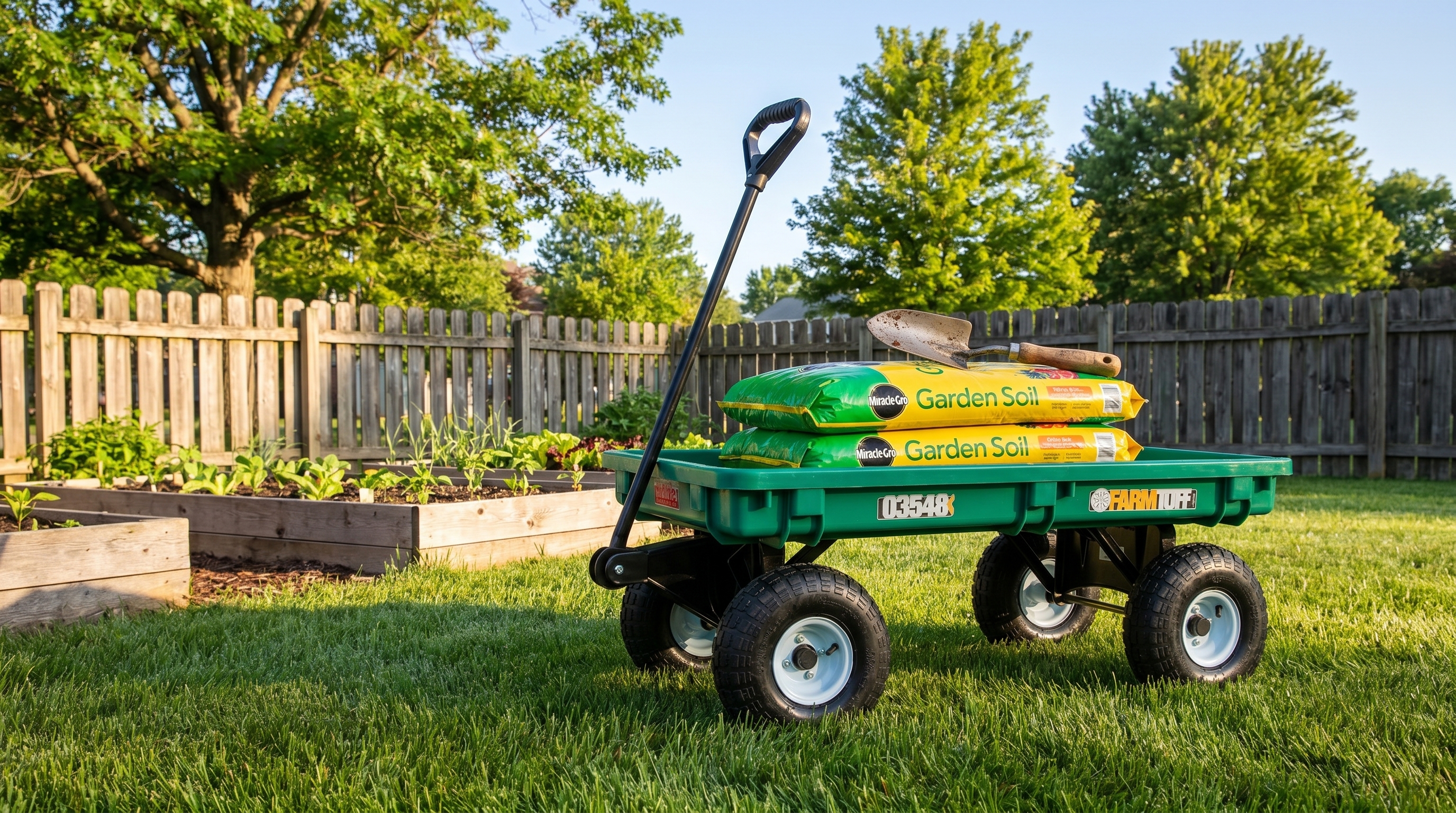
Every farm, homestead, and serious home garden eventually reaches the same bottleneck: hauling. You can grow more than you planned, amend more beds than you expected, and accumulate more debris in one fall cleanup than any single trip to the compost pile should have to handle — and it all comes down to how well you can move heavy loads efficiently across your property. The wheelbarrow is fine for some of it. But wheelbarrows tip, have limited capacity, demand constant attention to balance, and leave you making three trips where a proper wagon would do the job in one. The FARM-TUFF Plastic Deck Wagon with Flat-Free Tires, available at Liberty Farm, Home & Garden in Galion, Ohio, is built around the specific demands of farm and garden hauling: a 300 lb payload capacity, a 20" × 38" poly deck large enough to carry bags of soil, pots, or lumber, a 4" cargo lip that keeps loads contained, and flat-free foam tires that eliminate the perpetually-flat problem that puts most utility wagons out of service for weeks at a time. If you haul things on your property — and every Ohio homeowner, gardener, and hobby farmer does — this is a piece of equipment worth understanding before you buy.
Why Most Utility Wagons Let You Down After a Season or Two
Walk through any storage shed in north-central Ohio after two or three growing seasons and you'll find at least one utility wagon that's no longer in regular service. It's not because the owner stopped needing to haul things. It's because the wagon stopped being dependable, and a tool you can't rely on stays in the corner.
The most common failure modes for utility wagons fall into a handful of predictable categories:
- Flat tires. The overwhelming majority of wagons sold at mass retail price points use pneumatic (air-filled) tires. Pneumatic tires offer a slightly smoother ride on rough terrain — but they puncture on thorns, roots, wire, gravel edges, and the thousand other sharp objects that populate farm and garden environments. A wagon with a flat tire is a wagon that sits in the corner. Over a 3–5 year ownership period, tire maintenance and flat repairs consistently rank as the top reason people stop using utility wagons.
- Frame failure under load. Budget utility wagons are typically rated for loads that look impressive on the packaging but are achieved with flimsy steel tube frames and poorly welded joints. The first time you load 200 lb of bagged compost and hit a root crossing your garden path, you find out what the frame is actually made of. Bent frames, cracked welds, and collapsed beds are common failure points at the lower end of the market.
- Deck degradation. Canvas and fabric beds — common on "folding" utility wagons — deteriorate quickly when exposed to UV, moisture, and the abrasive action of rough-bottomed loads. After two or three seasons of Ohio weather, the fabric rots, tears, or becomes structurally inadequate. Hard poly decks are much more resistant to this kind of degradation.
- Undersized capacity. Many utility wagons sold as garden carts are rated for 150–200 lb and have decks so small they can't carry a standard-size bag of potting soil without the bag overhanging the sides. The result is a tool that's technically functional but practically too small for the jobs that matter most.
The FARM-TUFF Plastic Deck Wagon addresses each of these failure modes directly rather than accepting them as inherent to the product category. That's the right starting point for evaluating whether it belongs in your lineup.
What Sets the FARM-TUFF Plastic Deck Wagon Apart
The FARM-TUFF wagon isn't positioned as a lifestyle accessory — it's a work tool, and its specifications reflect that. Understanding what the key features actually contribute to day-to-day performance helps you evaluate whether those features match how you'll use it.
Heavy-duty 20" × 38" poly deck. The deck dimensions are the first thing to benchmark against competing products. A 38" long deck gives you the room to carry four standard 40 lb bags of soil side by side, stack lumber or fence posts without them hanging off the end, or load large containers and equipment that a short-deck wagon simply won't accommodate. The hard plastic construction resists UV degradation, moisture absorption, and surface abrasion from rough-bottomed loads. Unlike fabric-bottom wagons, the poly deck doesn't absorb fertilizer, herbicide, or soil moisture that can accelerate corrosion of the underlying frame.
4" high cargo lip. The cargo lip around the deck perimeter serves a specific and important function: it keeps loads contained during transport across uneven terrain. Without a containment lip, bags shift and slide, tools roll off, and small items bounce out the moment you hit a root or rut. The 4" lip isn't decorative — it's the feature that makes this wagon usable on the actual terrain of Ohio farms and gardens, not just on paved paths.
300 lb rated capacity. At 300 lb, the FARM-TUFF wagon handles the loads that matter: four bags of 60 lb concrete, six bags of 40 lb potting mix, a full load of firewood, a small engine or piece of equipment, or a heavy harvest from a market garden. This is a load rating appropriate to serious farm and garden work, not a number inflated for marketing purposes.
Powder-coated D-shape handle. The D-shape handle design allows you to grip, pull, and steer the wagon with a natural wrist position, which reduces fatigue during extended hauling sessions. The powder coat protects the steel handle from corrosion — a practical necessity on a tool that will be left in a barn or shed and used in wet conditions for the full growing season.
The Real Advantage of Flat-Free Foam Tires
The flat-free specification on the FARM-TUFF wagon deserves dedicated attention, because it's the feature that most directly affects whether you actually use the wagon through its full service life.
Flat-free solid foam tires use a dense cellular foam construction in place of air. There's no tube, no valve stem, and no air pressure to maintain or check. The tire cannot puncture because there's nothing inside it to deflate. A nail, a thorn, a piece of wire, a sharp rock — none of these affect a foam-filled tire. You load the wagon, pull it over whatever terrain your property offers, and put it away without thinking about the tires.
The comparison to pneumatic tires is real and measurable. Pneumatic tires on a farm or garden wagon — used in the environments where thorns, wire, nails, and sharp debris are routine — go flat regularly. When that happens, you have a wagon that doesn't roll properly or at all. Fixing a flat on a utility wagon requires locating the puncture, patching or replacing the tube, reinflating, and hoping the patch holds. In a farm or garden context where you're dealing with hawthorn thorns, landscape staples, wire offcuts, and rocky soil, this cycle repeats itself predictably throughout the season.
Flat-free tires give up a small amount of ride quality compared to properly inflated pneumatic tires on smooth surfaces. On rough terrain, the difference is minimal — and the trade-off is completely worthwhile for a work tool that needs to be ready every time you reach for it.
Understanding the 300 lb Capacity: What It Means in Real Hauling Scenarios
Load ratings on utility wagons can be misleading if you don't translate them into the actual loads you'll be moving. Here's how the 300 lb capacity maps to common farm and garden hauling tasks:
- Bagged soil and amendments. A 40 lb bag of potting mix weighs 40 lb. Five bags fit within the 300 lb limit with room to spare, and the 20" × 38" deck accommodates them without overhang. Loading up for a full day of container gardening or bed amendment is a single-trip job.
- Bagged concrete and construction materials. A 60 lb bag of concrete weighs 60 lb. Four bags fit comfortably within the 300 lb limit — enough for setting a fence post or small footing without multiple trips to the mixing area. The deck dimensions accommodate the length of the bags without them hanging over the lip.
- Firewood. A cord of firewood weighs roughly 2,000–3,000 lb depending on species and moisture content. At 300 lb capacity, you're moving approximately one-eighth to one-tenth of a cord per trip — a practical and meaningful load for restocking a wood rack from a woodpile 200 feet away.
- Harvest loads. Vegetable harvest weights vary by crop, but a full wagon of winter squash, pumpkins, or sweet corn ears is easily within the 300 lb limit. For market gardeners and large home gardens, single-trip harvests that would require three or four wheelbarrow trips become straightforward.
- Equipment and tools. Moving a small engine tiller, a gas-powered sprayer, a coil of drip tape, or a collection of garden tools across the property is the kind of miscellaneous hauling task that a wagon handles and a wheelbarrow doesn't. The flat deck gives you a platform for items that won't fit in a wheelbarrow bowl.
It's worth noting that 300 lb is a rated maximum, not a recommended sustained load. For everyday use, staying within 200–250 lb extends the working life of the wagon significantly, particularly for the axle and wheel components that take the most stress on rough terrain.
Where the FARM-TUFF Wagon Gets Used on Ohio Farms and Gardens
The FARM-TUFF Plastic Deck Wagon earns its place in the equipment lineup across a wide range of Ohio property types and seasonal tasks. The common thread is any situation where you're moving material over distance and a wheelbarrow's round bowl, single wheel, and balance requirements make the job harder than it needs to be.
Vegetable garden work. Garden season involves a continuous flow of materials in and out: bags of compost and soil amendment going in, harvest coming out, pots and transplants moving from greenhouse to bed, irrigation equipment being deployed and retrieved at season's end. A wagon that can hold multiple full bags, large containers, or a complete harvest load makes each of these tasks a single trip rather than a series of back-and-forth runs.
Landscaping and yard maintenance. Mulch, rock, topsoil, and landscape fabric all move in heavy quantities during landscaping projects. The 300 lb deck capacity handles bags of material efficiently, and the flat deck accommodates the long rolls, boards, and tools that landscaping work tends to require. The Daconil Fungicide Concentrate and similar lawn and garden spray products are easy to transport in the wagon alongside a Hudson Battery-Operated Handheld Sprayer for efficient property treatments.
Small-scale hobby farming. Hobby farmers moving feed bags from storage to animal areas, hauling bedding material to coops and pens, or transporting equipment between buildings benefit enormously from a reliable flat-deck wagon. The flat-free tires handle the mixed terrain of farm properties — gravel, grass, packed dirt, loose soil — without maintenance interruptions.
Lawn care and fall cleanup. Moving clippings, leaf debris, and yard waste from collection points to compost is one of the most repetitive hauling tasks on any Ohio property. A wagon with a contained deck makes this cleaner and faster than wheelbarrow hauling, and the cargo lip keeps light debris from blowing off during transport.
Construction and fencing projects. Setting fence posts, building garden structures, and completing basic property improvements all involve moving concrete, lumber, and tools to specific locations. The wagon's flat deck handles these irregular loads better than a wheelbarrow and keeps tools organized and accessible at the work site.
Tips for Getting Maximum Use Out of Your Deck Wagon
A quality wagon maintained well will outlast the property it serves. The FARM-TUFF's poly deck and flat-free tires reduce maintenance requirements considerably compared to fabric-deck, pneumatic-tired alternatives — but a few basic practices extend service life and keep the wagon performing at its best.
- Clean the deck after each use. Fertilizer, pesticide, and organic materials left to sit on the deck accelerate corrosion of the frame and hardware below. A quick rinse or wipe-down after hauling chemicals or organic materials takes less than a minute and prevents the slow accumulation of residue that eventually damages the deck attachment points and floor supports.
- Store out of direct sunlight when possible. The poly deck material is UV-stabilized, but prolonged direct sun exposure accelerates surface oxidation over years. Storing the wagon in a shed or barn between uses extends the deck's appearance and surface integrity.
- Inspect the axle and wheel nuts periodically. Wheel nuts can work loose under repeated heavy loading and rough-terrain use. A quick check and retighten every few months of active use prevents wheel wobble and the eventual damage that comes from running a wagon on a loose wheel hub.
- Lubricate the axle annually. A light application of grease or oil to the wheel axle once per season keeps the wheels rolling freely and prevents the corrosion that makes wheels difficult to remove for inspection or replacement after years of service.
- Load weight toward the center and rear. Centering the load on the deck distributes weight evenly across both wheels and prevents the nose-heavy imbalance that makes a wagon harder to control on slopes. When loading heavy individual items, position them over the axle rather than in the front or rear corners of the deck.
- Avoid dragging the wagon sideways. Utility wagons are designed to track straight behind the operator. Dragging a loaded wagon sideways to reposition it — rather than picking up the handle and steering it — stresses the wheel hub and axle in ways that accelerate wear. Take the extra step to walk the wagon around rather than sidewise-dragging it into position.
Deck Wagon vs. Wheelbarrow: When to Reach for Which
The FARM-TUFF wagon doesn't replace every wheelbarrow use case — and a well-equipped farm or garden property typically has both. Understanding which tool matches which task saves time and protects both tools from misuse.
Reach for the wagon when:
- You're moving multiple bags of material and want to do it in one trip.
- You're hauling long or flat items — lumber, fence posts, rolled materials — that don't fit in a wheelbarrow bowl.
- You're moving tools and equipment to a work site and need a flat platform to keep them organized and accessible.
- You're working with two people and one person will pull the wagon while the other does something else — a wagon can be pulled and walked alongside naturally, while a wheelbarrow requires both hands and continuous operator attention.
- You're navigating terrain that's challenging for a single-wheel wheelbarrow — soft soil, slight side slopes, uneven grass — where the four-wheel stability of a wagon is significantly easier to manage.
Reach for the wheelbarrow when:
- You're mixing concrete, mortar, or potting soil in the bowl and need the vessel to serve as both mixing container and transport.
- You're dumping a load by tipping — loose soil, compost, mulch — where the wheelbarrow's tipping mechanism puts the load exactly where you want it without shoveling it out.
- You're working in very narrow paths or tight spaces where a four-wheeled wagon's turning radius doesn't fit.
On most Ohio farm and garden properties, the wagon handles the majority of hauling volume while the wheelbarrow handles the specific jobs that benefit from the tipping-vessel design. Having both available means you're reaching for the right tool every time rather than forcing a task onto the wrong one.
Pairing the FARM-TUFF Wagon with the Right Garden Supplies
The wagon's usefulness multiplies when you have the right products to put in it. A few categories of garden supply pair naturally with the hauling work the FARM-TUFF wagon handles best:
Plant treatments and sprayers. The Hudson 1-Gallon Plastic Battery Operated Handheld Sprayer is a natural companion for the wagon — load the sprayer, concentrate bottles, and whatever else you need for a spray treatment session, then pull the wagon to each work area rather than carrying everything by hand. Tree and shrub treatments like BioAdvanced Tree and Shrub Protect and Feed Concentrate involve moving between individual plants across the property — having the product and applicator in the wagon makes that kind of treatment practical for large properties.
Fungicide and disease control products. Products like Daconil Fungicide Concentrate (16 oz) are used across multiple areas of the garden during disease pressure events — having a loaded spray kit in the wagon means you can move efficiently from bed to bed rather than making separate trips with each product.
Trimmer line and lawn maintenance supplies. Equipment supplies like Ugly Twist .105" Spooled Trimmer Line (180 ft) and other consumables are the kind of supplies that tend to get hauled along with equipment when you're covering a large property during mowing and trimming sessions. The wagon carries what you need to keep working rather than sending you back to the shed mid-job.
| Specification | Details |
|---|---|
| Product Name | FARM-TUFF Plastic Deck Wagon with Flat Free Tires |
| Brand | FARM-TUFF |
| Deck Material | Heavy-duty plastic (poly) |
| Deck Dimensions | 20" × 38" |
| Load Capacity | 300 lb |
| Cargo Lip Height | 4" |
| Tire Type | Flat-free solid foam |
| Tire Size | 4" × 10" |
| Number of Tires | 4 |
| Handle Style | Powder-coated D-shape |
| Category | Garden Supplies / Utility Wagons |
| Available At | Liberty Farm, Home & Garden, Galion, Ohio |
Shop the FARM-TUFF Wagon at Liberty Farm, Home & Garden
The FARM-TUFF Plastic Deck Wagon with Flat-Free Tires is available at Liberty Farm, Home & Garden in Galion, Ohio, along with the garden supplies, plant treatments, and lawn care products that make the most of a well-equipped hauling setup. If you've been working around the limitations of a wheelbarrow or a budget wagon that's no longer reliable, the FARM-TUFF is the product worth upgrading to.
Stop in at Liberty Farm, Home & Garden in Galion or shop online at libertyfhg.com to see the full range of garden carts, wagons, and outdoor equipment we carry. Our team can help you figure out which hauling solution fits your property and how to pair it with the right garden supplies for the season.
Frequently Asked Questions
Keep Reading
Plant Cover Crops Now: An Ohio Home Garden Guide
Plant fall cover crops in an Ohio vegetable garden with practical guidance on timing, species, seeding, winter care, and spring termination.

Save This Summer’s Garden: A Practical Ohio Seed-Saving Guide
Save tomato, bean, pea, lettuce, marigold, zinnia, and other garden seeds with this practical late-summer guide for Galion and north-central Ohio.