
Why Most Weed Fabric Fails in 3 Years — and What Makes DeWitt's 15-Year Fabric Different
A complete guide to woven weed control fabric, how to install it correctly, where it works best, and why DeWitt's Standard 15-Year Weed Control Fabric is the right choice for Ohio garden beds, borders, and pathways
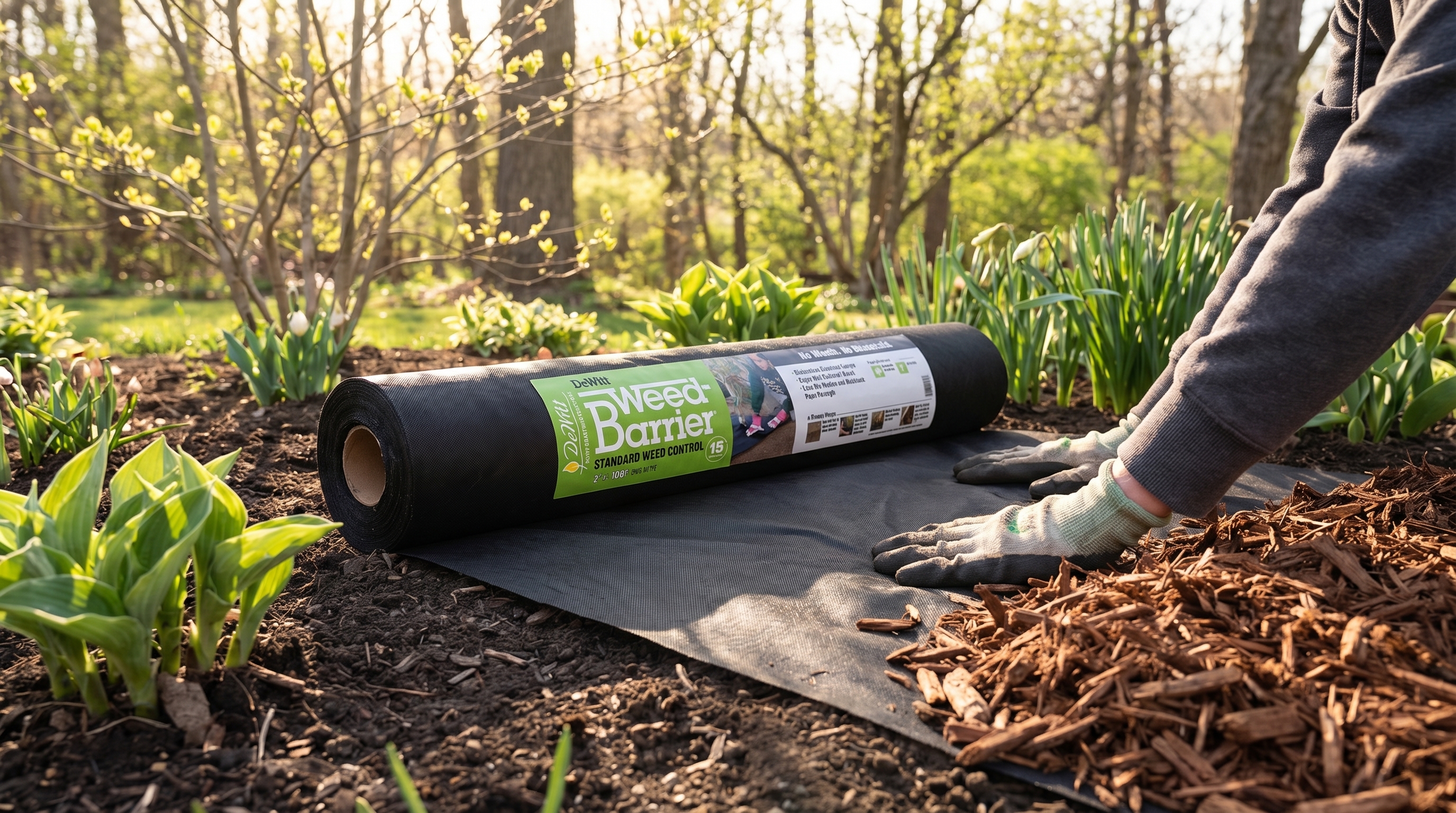
Most gardeners have had the experience: you install weed fabric in the spring, top it with mulch, and think you've solved the weeding problem for good. By year two, weeds are growing through the fabric. By year three, the fabric itself is tearing, weaving into your mulch, and becoming harder to deal with than bare soil ever was. The difference between that experience and a genuinely useful weed barrier comes down almost entirely to material quality and installation. DeWitt Standard 15-Year Weed Control Fabric (3' x 50') is woven polypropylene rated for 15 years of performance — the kind of material that actually delivers on what landscape fabric is supposed to do. It's available at Liberty Farm, Home & Garden in Galion, Ohio.
Why Cheap Weed Fabric Fails
Not all weed fabric is the same, and the difference is visible — and measurable — within two to three seasons. Most of the landscape fabric sold in big-box stores at low prices is made from nonwoven spunbond polypropylene: essentially matted fibers pressed together, similar to the material in cheap reusable grocery bags. It's light, inexpensive, and easy to cut. It's also fragile.
Nonwoven landscape fabric degrades under UV exposure faster than woven material, which means it starts breaking down within a few years of outdoor use. As it degrades, the fibers become brittle, tear during cultivation or planting, and begin to fragment into the soil. The fragments are nearly impossible to fully remove once they've mixed with mulch and soil organic matter, leaving you with a garden that's half-contaminated with plastic shreds for years afterward.
Worse, nonwoven fabric's structure can compact over time, reducing water and air permeability — meaning the soil underneath becomes compressive and dry even as it's supposedly being "protected." Plant roots in beds installed with cheap landscape fabric often show signs of stress after several years as the soil environment below deteriorates.
Woven fabric takes a different approach. The regular over-under weave of polypropylene filaments creates a mechanically stable structure that resists tearing, maintains consistent porosity for water and air movement, and holds up to UV exposure for years rather than seasons. DeWitt's 15-year rating isn't marketing — it reflects the actual durability advantage of woven construction over nonwoven alternatives.
How Woven Weed Control Fabric Actually Works
Weed control fabric operates on a straightforward principle: most weed seeds require light to germinate. Buried in soil under an opaque barrier, the vast majority of weed seeds never sprout. The fabric doesn't kill existing weeds — it prevents new generations from establishing.
The permeable woven structure serves two functions simultaneously. The tight weave blocks enough light to inhibit germination while the open pore structure between filaments allows water and air to pass freely to plant roots below. This is the balance that separates good landscape fabric from both cheap nonwoven fabric (which can become impermeable over time) and solid plastic sheeting (which blocks water entirely and creates anaerobic soil conditions).
For plants already in the bed — established shrubs, perennials, trees — the fabric goes around them, not over them. Cuts are made in the fabric to accommodate existing plants, and the fabric is pinned flat against the soil surface before mulch or gravel covers it. The combination of the fabric layer and the covering layer creates a zone where weed seeds that land on top of the mulch can't reach soil to germinate, and seeds already in the soil can't reach light to sprout.
Where Weed Fabric Performs Best — and Where to Skip It
Weed fabric is one of the most useful tools in landscape management, but it's most effective in specific applications and genuinely counterproductive in others:
Where it works well:
- Ornamental shrub beds and foundation plantings. These are stable, semi-permanent beds where you're not digging or adding plants frequently. Laying fabric under mulch around established shrubs dramatically reduces maintenance for years.
- Under gravel or stone pathways. Fabric beneath decorative gravel keeps weeds from growing up through the stone and prevents the gravel from gradually mixing into soil below. This may be the single highest-value application for landscape fabric.
- Under wood chip or bark mulch in stable borders. A mulched border along a fence line, driveway, or property edge stays cleaner far longer with fabric underneath than without.
- Beneath rock or gravel in dry creek beds or drainage features. The fabric keeps gravel in place, soil out, and weeds suppressed in decorative drainage installations.
Where to skip it:
- Vegetable gardens. Annual vegetable beds require frequent digging, transplanting, and soil amendment. Fabric makes all of these harder and provides minimal benefit over good mulching practice in a heavily managed bed.
- Beds with heavy organic mulch that you turn annually. If you're refreshing mulch every year and incorporating it into soil, fabric becomes a barrier to that process. Skip it and mulch deeply instead.
- Anywhere aggressive perennial weeds (bindweed, ground ivy, nutsedge) are already established. These weeds push through fabric from below and root above it. Fabric won't control them — they need to be addressed before any suppression layer goes down.
How to Install Weed Control Fabric Correctly
Most weed fabric failures are installation failures. The product performs as rated when installed properly — and underperforms badly when installed carelessly:
- Start with a clean bed. Remove all existing weeds, including roots, before laying fabric. Annual weeds can be hoed or pulled. Perennial weeds with deep root systems — dandelion, thistle — need to be dug out fully. Do not lay fabric over living weeds expecting the fabric to kill them; it won't, and they'll emerge through edges or cuts.
- Grade and level first. The fabric follows the contour of whatever is beneath it. If the ground is uneven, holes, bumps, and voids under the fabric become weed-germination pockets. Rake the bed smooth and firm before rolling out fabric.
- Overlap seams by at least 6 inches. If you need multiple strips to cover a wide bed, the overlap between strips must be significant. A 2-inch overlap is not enough — weeds will find the gap. Six inches minimum; 12 inches is better.
- Pin edges and seams every 12–18 inches. Landscape fabric pins (wire staples) hold the fabric flush against the soil at edges and seams. Un-pinned edges lift, shift, and allow wind-blown seeds underneath. Pins are inexpensive and the step is non-negotiable for quality installation.
- Cut precisely around plants. Use scissors or a utility knife to cut X or star-shaped openings for existing plants. Keep cuts as tight as possible around the plant base — large gaps are entry points for weeds. A little extra care here pays off for years.
- Cover immediately with 2–3 inches of mulch or gravel. Exposed fabric degrades much faster than covered fabric. The cover layer also adds additional weed suppression for seeds landing on the surface. Apply your mulch or stone as soon as the fabric is pinned and cut.
How Much Ground Does a 3' x 50' Roll Cover?
| Project | Coverage Needed | Rolls Required |
|---|---|---|
| Foundation planting bed (3' wide x 50' long) | 150 sq ft | 1 roll |
| Gravel pathway (3' wide x 40' long) | 120 sq ft | 1 roll |
| Mixed shrub bed (10' x 15') | 150 sq ft | 1 roll (with minimal overlap) |
| Large ornamental bed (20' x 15') | 300 sq ft | 2 rolls |
| Driveway border (2' wide x 80' each side) | 320 sq ft | 2–3 rolls |
When in doubt, buy slightly more than you think you need. Seam overlaps, edge wrapping, and cuts around plants all consume material. Running short mid-project and needing to patch is both frustrating and leaves a seam where weeds can establish.
Pairing Weed Fabric with Mulch or Gravel
The covering material you choose affects both appearance and weed control performance:
- Wood chip or shredded bark mulch (2–3 inches): The most common pairing for garden beds. Natural mulch softens the look, moderates soil temperature, and adds organic matter as it breaks down. Apply 2–3 inches — thin layers don't suppress weeds landing on top; thick layers can impede water infiltration.
- Pea gravel or river rock (2 inches): Excellent for pathways, utility areas, and contemporary landscape designs. Stone doesn't decompose, so once installed it rarely needs refreshing. The weight of stone also helps keep fabric pinned in place.
- Decorative stone or crushed granite: Good for xeriscaping and low-water landscape designs. Finer stone fills tightly and is particularly effective at blocking surface weed germination. Harder to remove if you ever want to change the planting, so plan accordingly.
Avoid using landscape fabric under wood mulch in areas where you plan to do significant future planting. The fabric becomes a barrier every time you try to dig or add new plants, and the combination of degrading mulch and fabric eventually creates a tangled mess that's harder to manage than bare mulch would have been.
Other Yard and Garden Supplies at Liberty Farm, Home & Garden
We stock the supplies that complement good landscape management at Liberty Farm, Home & Garden in Galion. A few worth knowing about alongside your weed control project:
- Hudson 1-Gallon Battery Operated Handheld Sprayer — Battery-powered sprayer for pre-emergent herbicides, post-emergent spot treatments, or fungicide applications on the beds you're managing. No pumping required, consistent spray pressure throughout the tank.
- BioAdvanced Tree and Shrub Protect and Feed Concentrate (32 oz) — A combination insect control and fertilizer product for the ornamental shrubs and trees in the beds you're mulching. Applied as a soil drench, it moves systemically into the plant and provides protection without repeated spraying.
- Daconil Fungicide Concentrate (16 oz) — A broad-spectrum fungicide for ornamental plants prone to leaf spot, blight, or other fungal issues. Spring mulching stirs up soil and can increase spore exposure in susceptible plants — useful to have on hand at the start of the season.
- Ugly Twist .105" Spooled Trimmer Line (180 ft) — Keep your trimmer loaded and ready for edge cleanup around the beds you're installing. Clean, defined bed edges are half the visual impact of fresh mulch and weed fabric.
Stop in at Liberty Farm, Home & Garden in Galion for weed control fabric, landscape pins, and the rest of your spring garden setup supplies. We're here to help you build the kind of garden that stays manageable through the full season.
Frequently Asked Questions
Keep Reading
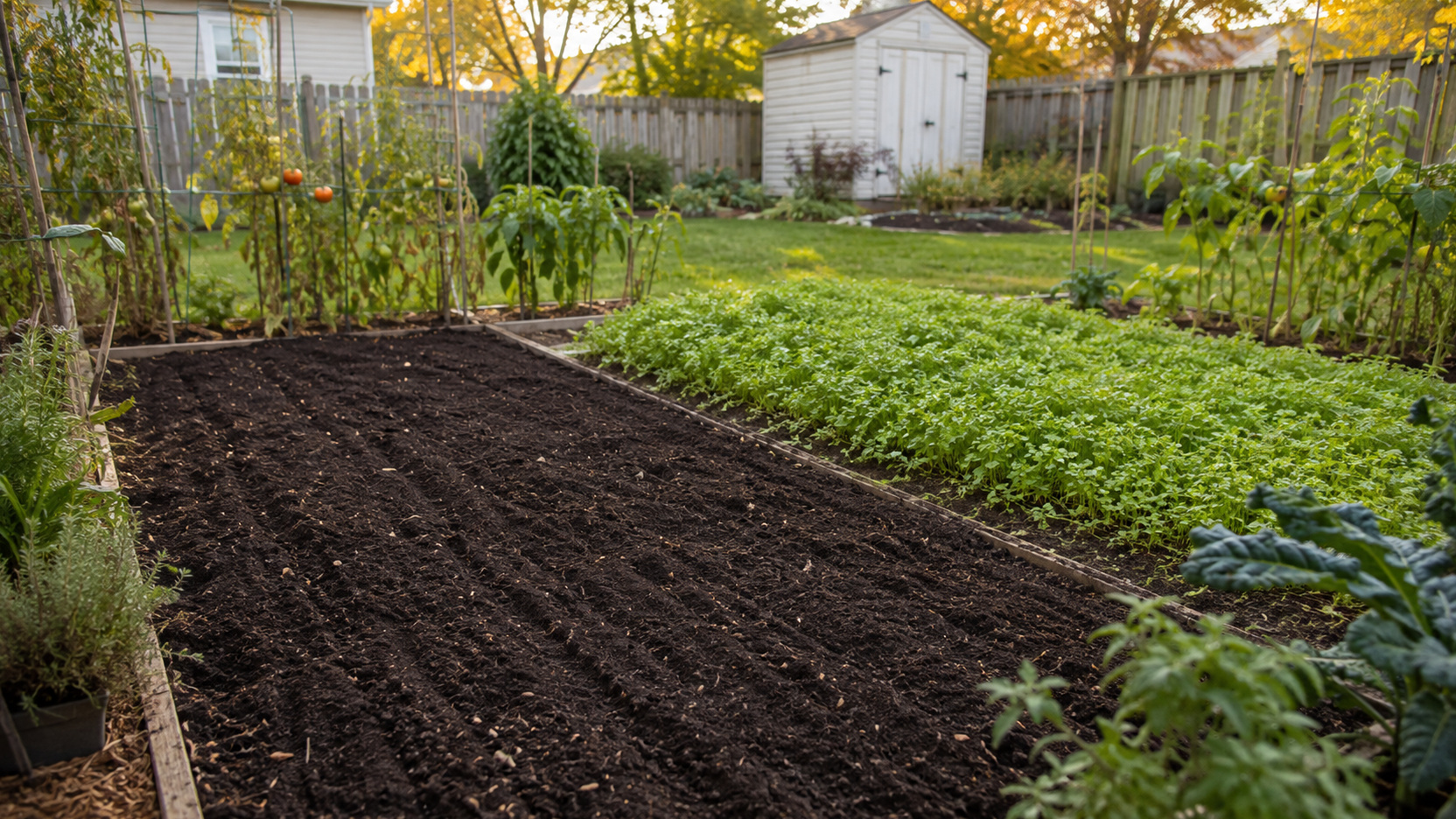
Plant Cover Crops Now: An Ohio Home Garden Guide
Plant fall cover crops in an Ohio vegetable garden with practical guidance on timing, species, seeding, winter care, and spring termination.
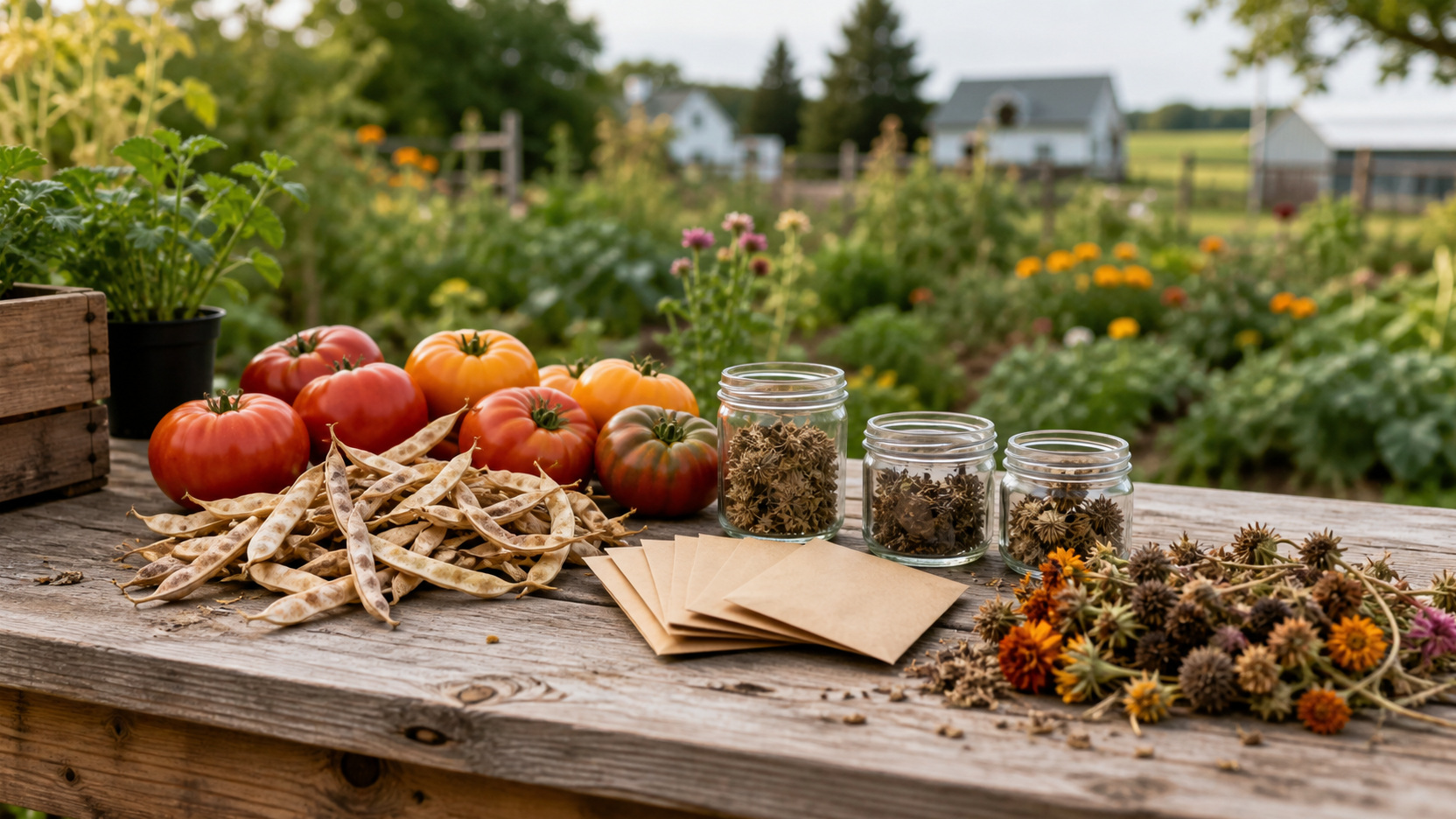
Save This Summer’s Garden: A Practical Ohio Seed-Saving Guide
Save tomato, bean, pea, lettuce, marigold, zinnia, and other garden seeds with this practical late-summer guide for Galion and north-central Ohio.