
The Last Weed Fabric You'll Need to Replace: A Complete Seasonal Installation Guide for DeWitt 15-Year Weed Control Fabric
June is the ideal month to install weed control fabric in Ohio garden beds — annual weeds are actively germinating, perennial weeds are pushing hard, and the window before summer's peak weed pressure is still open. DeWitt Standard 15-Year Weed Control Fabric gives Ohio homeowners a permeable, durable, professionally rated barrier that blocks weed-germinating light, passes water and air to plant roots, and holds up under mulch or gravel for a decade and a half without degrading into shreds the way bargain landscape cloth does.
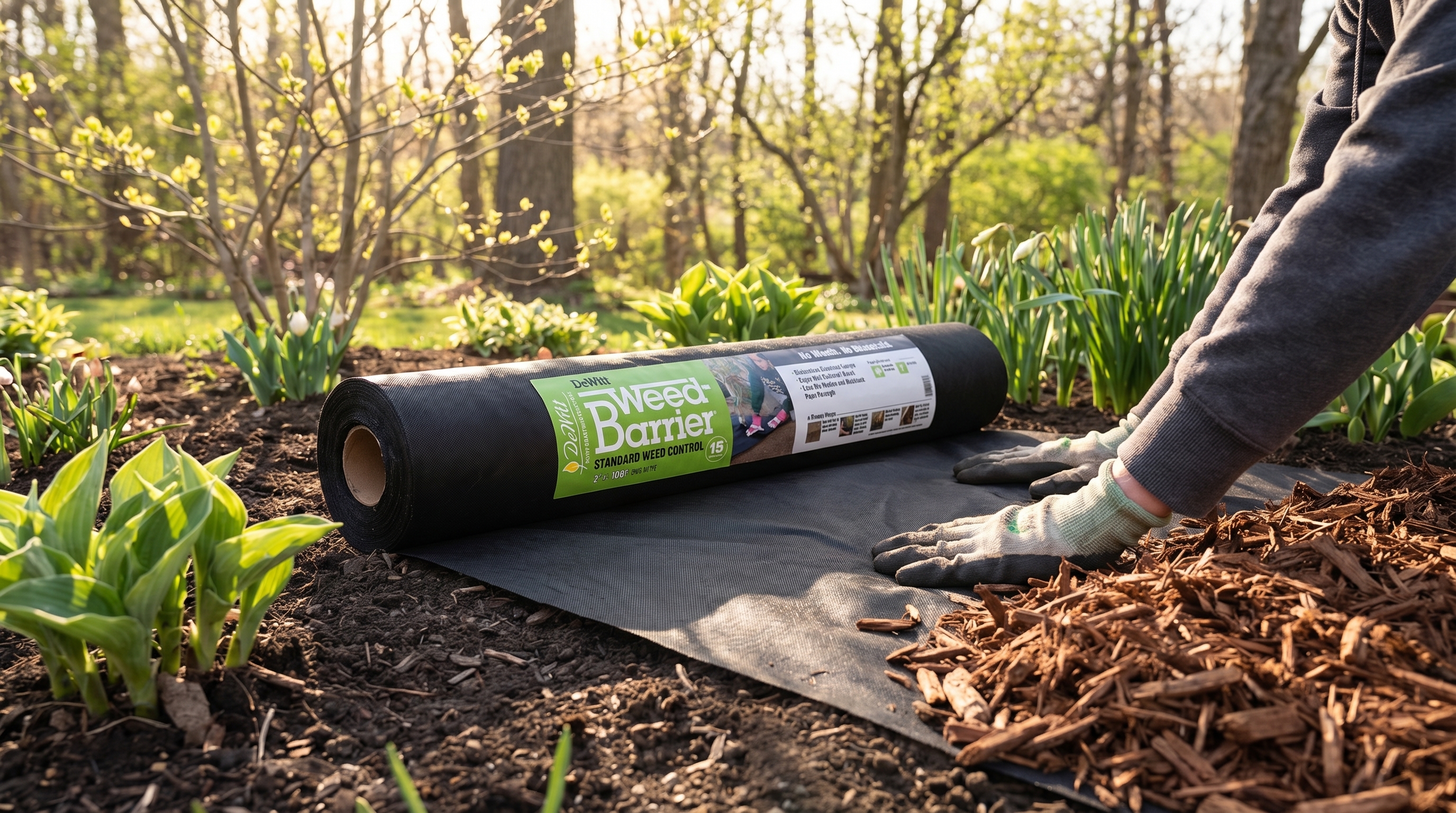
There is a brief window in late spring and early June when the Ohio garden calendar lines up in your favor: the soil is warm enough to work, annual weeds have only just begun to establish, perennial weeds are actively pushing above ground, and the mulch or gravel you lay now will sit over fabric that holds through summer, fall, and many seasons beyond. Miss this window and the weeds win — not catastrophically, but incrementally, until hand-weeding becomes a weekly obligation and your beds look half-finished by August. The straightforward solution is a quality weed control fabric installed correctly before summer's peak germination pressure arrives. DeWitt Standard 15-Year Weed Control Fabric in the 3-foot by 50-foot roll is the professional-grade barrier rated for exactly this kind of long-term bed and border protection — woven for permeability, built to last, and available at Liberty Farm, Home & Garden in Galion, Ohio for homeowners who want to reduce weeding time significantly all season long and across many seasons to come.
Why June Is the Right Window for Weed Fabric Installation in Ohio
Installing weed control fabric in June is not arbitrary timing — it aligns with several conditions in Ohio that make the effort both practical and maximally effective. First, annual weeds including crabgrass, purslane, and spurge are actively germinating through the warm soil of late May and early June. Installing fabric now cuts off their light supply at the critical moment when they would otherwise establish a root hold in your beds. Covering fabric with two to three inches of mulch immediately after installation creates a combined physical and light-blocking barrier that prevents germination at the surface level as well.
Second, Crawford County soil is workable in June without the mud of early spring or the concrete-dry hardness of late July. Bed preparation — pulling existing weeds, light grading, edge-trimming — is physically easier at this time of year than at nearly any other point in the Ohio growing season. The ground yields to a hand cultivator or hoe without soaking your boots or exhausting you fighting clay-dry crust.
Third, any perennial weeds already established in a bed are most visible and easiest to remove now, before they set new seed. Taking the time to pull existing weeds thoroughly before laying fabric is a one-time investment that the fabric then protects. Fabric laid over established perennial weeds — particularly aggressive spreaders like ground ivy, creeping Charlie, or nutsedge — will not kill them; they will find a way around or through cuts and seams in the fabric over time. A clean bed before installation is what makes the 15-year rating meaningful in practice.
How DeWitt's Woven Construction Outperforms Standard Landscape Cloth
Not all landscape fabric is equivalent, and the failure of cheap fabric in three to five years is common enough that many Ohio gardeners have stopped using fabric entirely — which is the wrong conclusion to draw from the wrong product. The problem with low-cost woven or spunbond landscape cloth is that it is engineered for short-term applications where price per square foot is the only metric that matters. The fibers degrade under UV exposure, break down in contact with moist soil, and eventually shred into strips that surface through mulch and create more work removing fragments than they ever saved in weeding.
DeWitt's Standard Weed Control Fabric is built to a different specification. The woven polypropylene construction is UV-stabilized to resist photodegradation over its rated service life. The woven structure creates a fabric that maintains its integrity under the freeze-thaw cycling that Ohio soil imposes every winter — expanding and contracting with the soil rather than cracking and splitting under it. Permeability is engineered into the weave, not punched into a film after the fact: water and air move through the fabric by design, reaching plant roots below and preventing the anaerobic, waterlogged conditions that can develop under impermeable materials like plastic sheeting.
The 15-year durability rating is not a marketing figure — it reflects the specification to which the fabric is manufactured and tested. For a product that you install once, cover with mulch or gravel, and expect to perform reliably through multiple Ohio growing seasons, the higher quality standard is the economical choice when measured over the installation's actual service life.
Preparing the Bed Before the Fabric Goes Down
Weed fabric installed over an unprepared bed is weed fabric that will underperform from day one. The preparation step is where most of the long-term results are determined, and it is worth doing completely rather than rushing past to get to the fabric installation. The goal of bed preparation is a clean, level, weed-free soil surface that the fabric can lie flat against without gaps, bridges, or buried weed crowns that will push through over time.
Start with a thorough hand-weeding of the bed, removing every visible weed by the root rather than cutting at the stem. Perennial weeds like dandelion, dock, and thistle will regrow from root fragments left in the soil. For established beds with significant perennial weed pressure, take extra time with a narrow hand cultivator to excavate root systems rather than just pulling the visible top growth. Annual weeds are less critical — their roots are shallow and will not regrow once severed — but they should still be removed from the surface before fabric goes down.
After weeding, rake the bed surface level and remove any rocks, sticks, or debris that would create high points under the fabric. High points create bridges in the fabric that lift it off the soil surface, allowing weeds to germinate in the gap between fabric and soil. A flat fabric surface that lies in close contact with the soil everywhere blocks light effectively; a lumpy surface with gaps does not. Finish by tamping any loose, high areas lightly with the back of the rake to settle the soil before cutting and laying the fabric.
Step-by-Step Fabric Installation for Ohio Garden Beds and Borders
With the bed prepared, installation of the DeWitt weed fabric follows a straightforward sequence that produces a professional result when each step is executed properly. The 3-foot by 50-foot roll is a manageable single-person working format for most home garden beds — wide enough to cover a standard border bed in a single pass, and long enough to run a 50-foot bed without a seam.
Begin by unrolling the fabric along one edge of the bed, holding the roll at one end and walking it to the other while keeping tension even so the fabric does not bunch or fold. Let the fabric overlap the bed edge by two to three inches on each side — you can trim to final width after anchoring rather than trying to cut perfectly before the fabric is positioned. Once the fabric is laid roughly in position, secure one end with landscape staples or fabric pins before adjusting and smoothing the rest of the run. Anchor the center of the run next, then work outward toward both ends and edges, inserting staples every 18 to 24 inches along the perimeter and at any points where the fabric does not lie flat against the soil surface.
For beds wider than 3 feet, a second run of fabric is laid alongside the first with a 4 to 6 inch overlap at the seam. The overlap is critical: a butt seam with no overlap will eventually separate as the fabric settles and anchors shift slightly over time, creating a narrow light channel that weeds will exploit. Overlap seams by at least 4 inches and anchor through both layers to prevent separation. For beds with a strong slope, orient fabric runs perpendicular to the slope direction so water does not channel along an overlapping seam; run parallel to the slope and the seam becomes a small dam that can redirect water off the bed edge.
Once the fabric is laid and anchored, trim the edges to final position with heavy scissors or a utility knife, cutting along the bed edge or just inside the edging material. Tuck cut edges under mulch or gravel rather than leaving them exposed at the edge — exposed fabric edges lift and curl over time, especially with Ohio's freeze-thaw cycle working on them each winter.
Cutting Around Established Plants, Trees, and Shrubs
Most permanent garden beds contain established plants that the fabric must accommodate. Cutting the fabric around existing plants correctly determines whether the installation looks finished and performs as intended or creates gaps that undermine the weed suppression goal. The two common cutting approaches are the X-cut and the slot cut, each appropriate for different plant base configurations.
For upright shrubs and perennials with a defined crown, cut an X-shape in the fabric positioned over the plant crown, then fold back the four triangular flaps and work the fabric down around the plant base. Press the flaps back flat against the soil as close to the crown as the plant allows. For larger shrubs or trees with a significant base diameter, cut a larger X with arms long enough to reach past the drip line of the root flare, then trim the excess flap material to leave a clean circular opening around the base. The goal is to leave as little exposed soil as possible while still allowing the plant crown to breathe and expand.
For running perennials that spread by rhizomes — ornamental grasses, hostas, black-eyed Susans — allow slightly more room in the cut than the current plant size suggests. These plants will expand their crown diameter over the next two to three growing seasons, and fabric that is cut too tightly now will either restrict the plant or require re-cutting in future seasons. Cutting conservatively now produces a slightly larger soil exposure circle initially, but that area will be covered by the expanding plant canopy within one to two seasons anyway.
Covering with Mulch or Gravel: Making the System Work Long-Term
Weed fabric installed without a cover layer is a compromised system. Ultraviolet exposure degrades even UV-stabilized fabric faster than a covered installation, and the exposed fabric surface collects windblown soil and organic debris that becomes a germination medium for weed seeds at the surface — defeating the purpose of the barrier below. The cover layer is not optional; it is what completes the system and protects the fabric's rated service life.
Triple-processed hardwood mulch at a depth of 2 to 3 inches is the standard choice for ornamental beds in Ohio. Two inches is the minimum for effective weed suppression at the surface layer; three inches provides additional moisture retention and a more finished appearance. Apply mulch over the fabric after the fabric is fully anchored and all plant cuts have been made — do not try to slide mulch under an unanchored fabric edge. Spread mulch with a flat-tined garden fork rather than a leaf rake, which tends to snag fabric edges and lift anchored sections. Triple Brown Mulch, available in bulk by the cubic yard at Liberty Farm, Home & Garden, is the most economical choice for beds where volume matters and a consistent, dark-toned finish is the aesthetic goal.
For gravel and decorative rock applications, 2 inches of material provides the minimum effective coverage layer. Washed river rock, pea gravel, and larger decorative stone all perform well over weed fabric. The key difference from mulch is that gravel does not decompose and does not need annual replenishment — it is a one-time application with a very long service life that pairs well with the 15-year fabric rating. For gravel applications, use a heavier staple pattern than for mulch applications — gravel is heavier and does not interlock the way mulch fibers do, so it does not help hold fabric edges down the way a mulch layer does. Extra staples at edges and seams keep the fabric from shifting under gravel before the weight of the rock load settles it in place.
Maintaining Your Weed Barrier Through Multiple Ohio Seasons
A correctly installed DeWitt fabric system requires very little ongoing maintenance, which is the point. The maintenance that is required falls into two categories: dealing with surface weeds that germinate on top of the mulch or gravel layer, and monitoring for any areas where the fabric has been disturbed, lifted, or where plant growth has created new gaps over time.
Surface weeds — those germinating in the mulch or gravel layer rather than through the fabric itself — are shallow-rooted and easy to pull because their roots have not penetrated into the soil below. A quick pass through the beds every few weeks through summer is typically sufficient to remove these before they set seed. The critical step is pulling them when they are small, before they build a root mass in the mulch layer that becomes difficult to remove cleanly. A Hudson 1-Gallon Battery-Operated Handheld Sprayer loaded with a selective spot herbicide is useful for treating persistent surface weeds in gravel applications where hand-pulling is difficult — but always read label directions carefully before applying near established ornamental plants.
For mulch beds, replenish the cover layer every one to two years as the mulch breaks down and decomposes. Do not remove and reinstall the fabric when adding fresh mulch — simply add the new layer on top of the existing decomposed mulch. The decomposed mulch layer between the fresh mulch and the fabric does not compromise the fabric's performance and actually provides an additional physical barrier. Only remove and reinstall the fabric if it has been significantly disturbed, torn, or if major replanting of the bed is planned.
Annual inspection of fabric edges, seam overlaps, and cut points around plants is good practice at the start of each season. Re-staple any edges or seams that have lifted over winter. Extend the plant-crown cuts on any perennials that have expanded their crowns significantly. These minor adjustments take minutes but extend the effective performance of the installation materially.
Using Weed Fabric in Paths, Under Gravel Driveways, and Around Landscape Structures
The DeWitt 15-Year Weed Control Fabric is not limited to garden bed applications. Several common Ohio homesteading and landscaping projects benefit from a quality weed barrier, and the same 3-foot by 50-foot format works well in each. Understanding the installation requirements for these alternative applications expands the return on the product significantly.
Gravel garden paths lined with weed fabric stay cleaner, shed weeds more effectively, and require far less annual maintenance than paths laid directly on bare soil. For a garden path application, dig out the path to a depth of 3 to 4 inches below the desired finished grade, lay the fabric with generous overlap up the path edges and against any edging material, then fill with pea gravel or crushed stone to the finished grade. The fabric prevents weeds from pushing up through the gravel and keeps path stone from migrating into the soil below over time — a benefit that reduces path maintenance substantially over multiple seasons.
Around raised bed perimeters and the bases of fence posts, freestanding structures, and retaining walls, weed fabric tucked into the gap between the structure and surrounding soil prevents the aggressive annual and perennial weeds that establish in these narrow, hard-to-weed margins. These areas are often neglected because they are difficult to hand-weed, which allows weeds to set seed and spread into surrounding beds. A narrow strip of fabric — even 6 to 12 inches wide — pinned along the base of a fence line eliminates this margin maintenance almost entirely.
| Application | Fabric Width Needed | Anchor Spacing | Cover Material & Depth |
|---|---|---|---|
| Ornamental flower bed borders | Single 3 ft pass or overlap two passes for wider beds | 18–24 in along perimeter; 24–30 in in field | Triple-processed hardwood mulch, 2–3 in |
| Foundation planting beds | One 3 ft pass minimum; overlap for wide beds | 18 in at edges; extra pins at plant cuts | Shredded hardwood or decorative stone, 2–3 in |
| Gravel garden paths | Match path width; 3 ft accommodates most residential paths | Every 12 in at edges; 18–24 in in center | Pea gravel or crushed stone, 2–3 in |
| Decorative rock landscapes | Full coverage with 4–6 in seam overlaps | 12 in at edges; 18 in at seams; 24 in field | River rock, pea gravel, or decorative stone, 2–3 in |
| Under mulch in vegetable garden paths | 3 ft matches most 2-bed-system path widths | Every 12 in perimeter; 18–24 in field | Wood chip or shredded bark mulch, 2–3 in |
| Fence lines and structure margins | Trim to 6–18 in as needed | Every 12 in against structure base | Gravel or narrow mulch strip, 1–2 in |
| Product | DeWitt Standard 15-Year Weed Control Fabric — 3 ft x 50 ft roll | ||
| Available At | Liberty Farm, Home & Garden — Galion, Ohio | libertyfhg.com | ||
The DeWitt Standard 15-Year Weed Control Fabric (3' x 50') is available at Liberty Farm, Home & Garden in Galion, Ohio, alongside landscape staples, bulk mulch, and a full range of garden supplies for every bed and border project on your property. Whether you are covering a single foundation bed or tackling a full-property gravel landscape conversion, the team at Liberty Farm, Home & Garden can help you calculate how many rolls you need and what cover material pairs best with your specific application.
Frequently Asked Questions
Keep Reading
Plant Cover Crops Now: An Ohio Home Garden Guide
Plant fall cover crops in an Ohio vegetable garden with practical guidance on timing, species, seeding, winter care, and spring termination.
Save This Summer’s Garden: A Practical Ohio Seed-Saving Guide
Save tomato, bean, pea, lettuce, marigold, zinnia, and other garden seeds with this practical late-summer guide for Galion and north-central Ohio.