
The Complete Chicken Cat Package: A Full Guide to the Temptations Tasty Chicken Flavor Bundle
Why matching your cat's dry food and treats to the same protein makes sense, what the bundle actually includes, and how to use treats effectively without turning mealtime into a negotiation
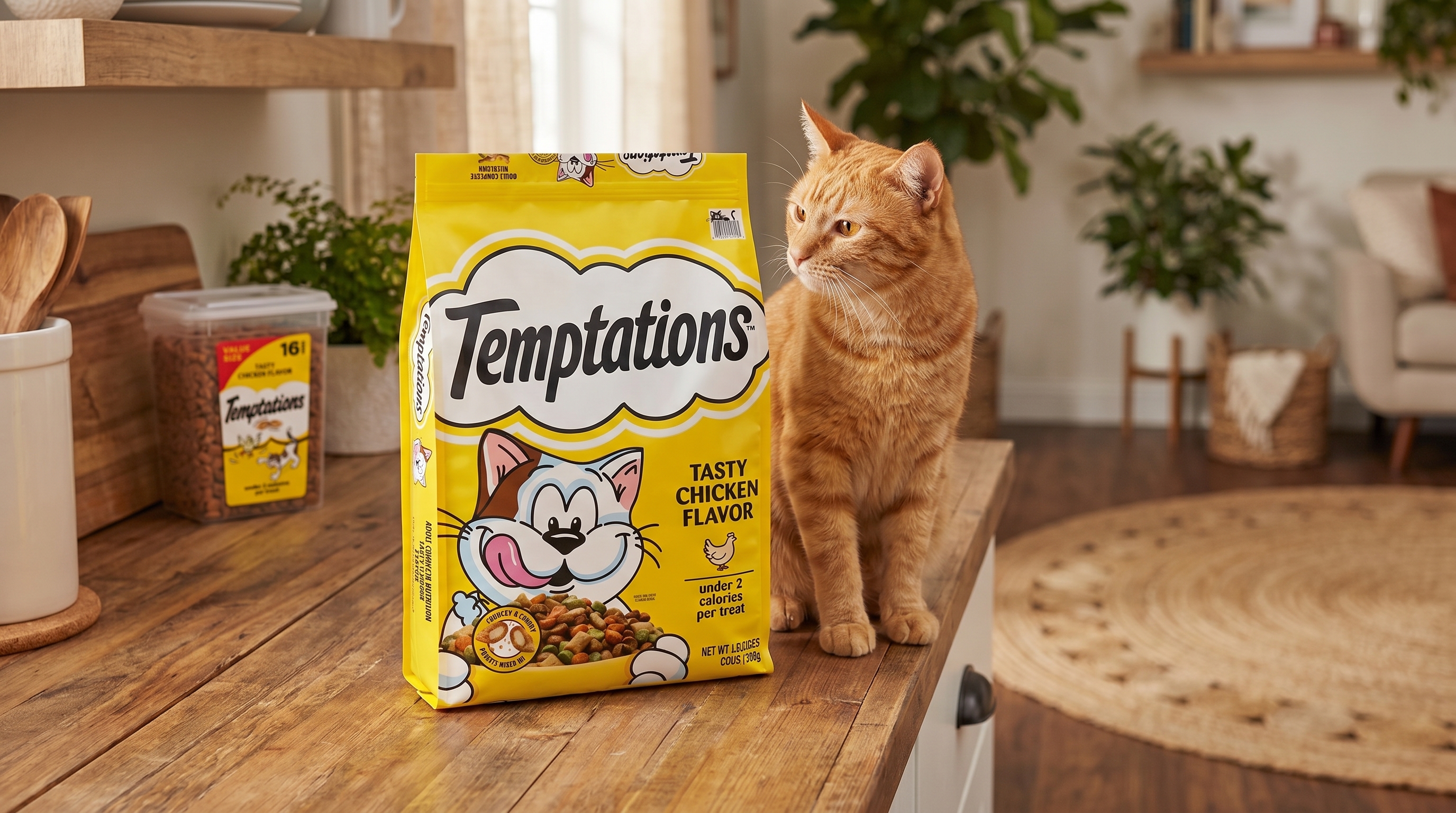
Most cat food purchases and cat treat purchases happen separately — different buying decisions, different brands, different shopping trips. The result is a common household situation where a cat is eating a chicken-flavored dry food and getting duck-flavored treats, or eating salmon-based kibble and being rewarded with beef treats, with no particular logic behind the combination. For households with a cat who has clearly established chicken as their protein of preference, the Temptations Tasty Chicken Flavor Bundle (20 lb Dry Food + 16 oz Treats) packages a full daily diet and a matching treat supply in one deliberate combination. The bundle pairs a 20-pound bag of Temptations chicken-flavored dry cat food with a 16-ounce container of Temptations Tasty Chicken Flavor Treats — everything a chicken-preference household needs in a single purchase. Available at Liberty Farm, Home & Garden in Galion, Ohio.
Why Cats Develop Strong Protein Preferences — and What to Do When They Do
Unlike dogs, which are broadly omnivorous and adaptable in their food preferences, cats are obligate carnivores whose dietary instincts are narrowly calibrated around animal protein. They evaluate food almost entirely on the basis of protein source, fat content, and aroma — the flavor compounds they respond to most strongly are all derived from the breakdown of animal muscle tissue, not from plant or grain ingredients. This narrow sensory focus means that when a cat locks onto a particular protein, the preference tends to be remarkably stable.
Chicken is the most common protein preference in domestic cats, for a straightforward reason: it is the most consistently offered protein in commercial cat food, so most cats develop their early food imprinting around chicken flavor. By the time a cat is a fully established adult, many of them have a hierarchy of protein preferences that puts chicken at the top — not because chicken is objectively superior to salmon or duck or beef, but because it is the flavor they have the most positive experience with.
This creates an interesting management question for cat owners. On one hand, a cat who reliably eats a chicken-based food is simpler to feed than a picky eater who rejects everything. On the other hand, a cat who has been exclusively eating the same single formula for years can develop an inflexibility that causes real problems if that product is ever unavailable or discontinued. The practical response is to embrace the chicken preference while ensuring the cat is eating a high-quality, nutritionally complete version of it — and to supplement the diet with treats that reinforce the same positive association rather than working against it.
The Temptations Tasty Chicken Flavor Bundle is designed for exactly this type of committed chicken household. It doesn't try to diversify away from the preference that's already working — it doubles down on chicken as the throughline flavor across both food and treats, providing consistency, quality, and value for owners who know their cat and are done experimenting.
What's in the Temptations Tasty Chicken Flavor Bundle
The bundle is straightforward: a 20-pound bag of Temptations chicken-flavored dry cat food and a 16-ounce container of Temptations Tasty Chicken Flavor Treats, packaged together as a complete chicken-focused cat nutrition package. Buying them as a bundle saves compared to purchasing each item separately — a meaningful consideration for a household that would be buying both products anyway.
The 20-pound dry food bag is a substantial supply. For a single adult cat eating approximately one-half cup of dry food per day, a 20-pound bag provides roughly 80 days of feeding — nearly three months of daily meals from one purchase. For a two-cat chicken household, the same bag covers approximately 40 days. The large bag format is practical for households that go through food regularly and prefer less frequent restocking runs.
The 16-ounce treat container is similarly generous. Temptations treats are small — each piece is approximately two calories — and the recommended daily maximum is around 15 treats for an average adult cat. At that rate, a 16-ounce container provides a substantial treat supply to run alongside the 20-pound food bag. The intent is clearly that the two products are consumed over a similar time horizon, giving you a roughly coordinated restocking cadence where food and treats run out around the same time and can be repurchased together.
Temptations Dry Cat Food: The Complete Nutrition Side of the Bundle
Temptations dry cat food is a complete and balanced formula formulated to meet the AAFCO Cat Food Nutrient Profile for adult cat maintenance. Complete and balanced is not a marketing claim — it is a specific nutritional standard that requires the food to provide all essential nutrients in the amounts an adult cat needs for long-term health, without supplementation from other sources. A cat eating Temptations dry food as their primary diet is receiving complete daily nutrition from that food alone.
The chicken-flavored formula uses chicken as its primary flavoring and protein source, with the nutrient profile built to support the core biological requirements of adult cats: adequate protein for muscle maintenance, appropriate fat levels for energy and coat health, and essential nutrients including taurine (an amino acid cats cannot synthesize themselves and must obtain from food). Taurine deficiency causes dilated cardiomyopathy and retinal degeneration in cats — serious conditions that are entirely preventable when the diet is nutritionally adequate. A complete and balanced formula like Temptations dry food addresses this directly.
The kibble format offers practical advantages for daily feeding. Dry food can be left out for extended periods without spoiling, making it well-suited to free-feeding approaches where food is available throughout the day and the cat regulates their own intake. The mechanical action of chewing dry kibble provides some degree of dental texture benefit — not a substitute for professional dental care or brushing, but a meaningful difference from a diet composed entirely of wet or soft foods. For a multi-cat household, a 20-pound bag also standardizes the feeding experience: everyone is eating the same formula, from the same bag, and the household's daily feeding routine is as simple as it can be.
The large 20-pound bag should be stored in a sealed container or with the bag tightly rolled and clipped between uses. Dry kibble absorbs moisture and ambient odors, which can reduce palatability over time. An airtight storage container preserves the chicken-forward aroma that cats find appealing and keeps the food at its best from first serving to last.
What Temptations Treats Are — and Why Cats Go Wild for Them
Temptations treats are one of the most consistently accepted cat treats on the market, and the reason is specific: they are engineered around the precise flavor compounds that cats find irresistible. Each piece has a crunchy outer shell with a soft, creamy center — a texture contrast that produces a different sensory experience from regular kibble and that cats reliably respond to with elevated enthusiasm. The inside of a Temptations treat is specifically formulated to deliver concentrated savory flavor in a way that a dry kibble piece, even a high-quality one, does not replicate.
From a nutritional standpoint, Temptations treats are designed as a supplement to the diet, not a meal replacement. Each piece is approximately two calories, which is small enough that a meaningful number of treats — five to ten — can be given in a day without significantly affecting the total caloric intake. This is what makes them practical as a training reinforcement tool, a behavior-shaping mechanism, a medication delivery vehicle, and a general-purpose positive reinforcer throughout the day.
The chicken flavor in the 16-ounce treat container in this bundle directly mirrors the chicken-forward flavor of the dry food. For a cat who has established chicken as their preferred protein, there is no transition required between food and treat — both products speak the same flavor language, and the cat's positive response to the treat reinforces their positive association with the food's protein source. This consistency is not coincidental; it is the explicit design of the bundle.
Why Matching Food and Treat Flavors Matters More Than You'd Think
The idea of flavor consistency between food and treats is rarely discussed in cat nutrition, but it has both behavioral and practical dimensions worth understanding.
On the behavioral side, a cat's positive associations with food and treats are partially flavor-specific. When a cat who loves chicken food is given a chicken treat, the treat reinforces the same flavor preference that makes the food a success. The treat functions as a high-intensity version of the food's flavor profile — the same protein source, the same aroma compounds, but concentrated and delivered in a small, exciting package. This creates a reinforcing loop: the food is good, the treat is great, and both of them taste like chicken. The cat's enthusiasm for chicken as a flavor category grows with each positive experience across both product types.
On the practical side, feeding a treat with a completely different protein from the staple food introduces a potential digestive variable — particularly in cats with food sensitivities. A cat who does well on chicken-based food but occasionally gets treats from a fish or beef formula is consuming two different protein sources, and if a digestive issue arises, isolating which ingredient caused it is more complicated. Keeping food and treats within the same protein category simplifies the ingredient picture and makes dietary troubleshooting more straightforward if something goes wrong.
There is also a value argument: when you purchase a food-and-treat bundle that shares the same brand and flavor profile, you know exactly what's in the treat and how it relates to the staple diet. There are no hidden protein surprises, no ingredient incompatibilities, no trial-and-error across different brands. The bundle is a coherent package, not a random combination.
How to Use Treats Effectively Without Overfeeding Your Cat
Cat treats are a wonderful tool when used within appropriate caloric limits. The widely cited guideline is that treats should not exceed ten percent of a cat's total daily caloric intake — for an average adult cat consuming around 200–250 calories per day, that is 20–25 treat calories, or approximately ten to twelve Temptations pieces. This is a reasonable daily treat budget that supports behavioral training, routine reward, and bonding without displacing the nutritional contribution of the staple food.
The risk of overfeeding treats is real and specific. Treats are typically calorie-dense relative to their volume, and cats who receive treats beyond their daily budget will compensate by eating less of their staple food — which is lower-calorie and more nutritionally complete per unit eaten. The net effect is that a cat who is overfed treats is eating less complete nutrition from their dry food and more incomplete nutrition from treats, which is the opposite of what a treat supplement is supposed to accomplish. Maintaining the ten-percent guideline keeps treats in their appropriate supporting role.
Practical strategies for staying within the treat budget:
- Portion treats at the start of the day: Count out the day's allotment — say, ten pieces — into a small container. Once the container is empty, the treat budget is spent. This prevents the gradual escalation that happens when treats are taken directly from an open container multiple times per day without counting.
- Use treats for high-value moments: Medication administration, veterinary examination preparation, nail trimming, or carrier training are high-value moments where treat motivation is most useful. A cat who receives treats only during these specific moments will approach them more calmly over time because the treat predicts a manageable interaction rather than arbitrary reward.
- Adjust food portions on heavy treat days: If a training session or stressful event requires more treats than usual, reduce the dry food portion slightly to keep the overall caloric intake consistent. The treats and food together constitute the day's total intake — treating them as a unified daily budget rather than separate categories prevents accidental overfeeding.
- Avoid making treats a hunger-management strategy: A cat that meows persistently and receives treats as a result has learned that vocalization produces treats — a pattern that escalates over time. Treats should be delivered on the human's schedule and terms, not in response to cat demands, to prevent trained begging behavior that's difficult to reverse.
Which Cats Are the Best Fit for This Bundle
The Temptations Tasty Chicken Flavor Bundle is not designed for every cat household. It is specifically designed for committed chicken-preference households where the feeding decision has already been made and the goal is to execute it well and economically. The clearest fits:
- Cats who have been eating chicken-based food reliably for months or years and show consistent enthusiasm for it. If your cat eats their meals promptly, maintains good body condition, and hasn't shown any signs of food sensitivity on a chicken formula, a larger format purchase of the same protein category is the right direction. The 20-pound bag rewards your cat's consistency with better value per pound.
- Households where treats are already part of the daily routine. If you're already giving treats every day and buying them separately, the bundle coordinates the food and treat purchase and saves the separate buying decision. The 16-ounce treat container is a generous supply that won't run out within a week of opening the food bag.
- Multi-cat households where all cats are chicken-oriented. Two cats eating from the same chicken formula means the 20-pound bag is consumed in a reasonable timeframe without freshness concerns, and the 16-ounce treat container serves both cats within their individual daily treat budgets.
- Cat owners who use treats for training or behavior management. If you're working on carrier training, nail trimming tolerance, or any other behavioral goal, having a large, high-quality treat supply on hand makes the training process easier to maintain consistently. The Temptations chicken treats are effective enough as training reinforcers that having a larger container means the training doesn't have to stop because the treats ran out.
- Households where simplicity matters. A bundle that covers both food and treats in one purchase means one fewer thing to keep track of, one fewer buying decision, and one fewer out-of-stock problem when one of the products is purchased separately from different sources. For busy households, simplifying the cat-feeding supply chain is a legitimate quality-of-life improvement.
Comparing Chicken-Focused Cat Food Options at Liberty Farm, Home & Garden
| Product | Format | Size | Best For |
|---|---|---|---|
| Temptations Chicken Bundle | Dry food + treats | 20 lb + 16 oz treats | Committed chicken households, treat-routine cats, multi-cat |
| IAMS ProActive Health Urinary Tract Health Chicken (16 lb) | Dry food | 16 lb | Adult cats with urinary health concerns, chicken preference |
| IAMS ProActive Health Urinary Tract Health Chicken (7 lb) | Dry food | 7 lb | Smaller households, first-time IAMS buyers, trial purchase |
| Cat Chow Complete with Real Chicken (25 lb) | Dry food | 25 lb | Large multi-cat households, value-focused chicken feeding |
| Taste of the Wild Canyon River Feline (14 lb) | Dry food (grain-free) | 14 lb | Grain-free preference, fish-protein cats, premium step-up |
Related Products at Liberty Farm, Home & Garden
Cat owners building out a complete feeding setup alongside the Temptations bundle will find useful complementary products at Liberty Farm, Home & Garden in Galion, Ohio:
- IAMS ProActive Health Urinary Tract Health Chicken (16 lb) — A chicken-based dry food specifically formulated to support urinary tract health through controlled mineral content and optimal moisture encouragement. For cats who are healthy on a chicken diet but have a vet recommendation to support urinary function, this is a targeted upgrade within the chicken-protein category.
- Cat Chow Complete with Real Chicken Cat Food (25 lb) — The 25-pound format is the right choice for large multi-cat households where food consumption is high enough that the larger bag is used up well within its freshness window. Real chicken as the primary protein, complete and balanced for adult cats.
- Taste of the Wild Canyon River Feline (14 lb) — A grain-free formula for cat owners who want a premium step-up from standard dry food. Canyon River features fish protein (trout and smoked salmon) rather than chicken, making it an excellent rotation partner for a chicken-primary household that wants to periodically introduce a different protein without abandoning their cat's familiar baseline.
Stop in at Liberty Farm, Home & Garden in Galion, Ohio to pick up the Temptations Tasty Chicken Flavor Bundle and browse our full cat food and treat selection. Our team can help you find the right complement products based on your cat's age, health history, and eating habits.
Frequently Asked Questions
Keep Reading
Protect Your Cat's Urinary Health This August: A Complete Guide to Urinary Support Nutrition
Learn why August heat puts indoor cats at higher risk for urinary problems and how Diamond CARE Urinary Support for Adult Cats can help — available at Liberty Farm, Home & Garden in Galion, Ohio.

The Small Pet Bed That Actually Washes Clean: A Complete Guide to the Vibrant Life Dog & Cat Bed (Blue & White, 19" × 15")
Why a soft plush bed with a non-slip bottom and machine-washable construction makes more practical sense for small dogs and cats than people expect — and how to pick the right size and style for your home