
Trace Mineral Salt Blocks: Why Your Cattle and Horses Need More Than Plain Salt
How a 50 lb trace mineral salt block delivers the sodium and essential minerals that forage alone can't provide — and why it belongs in every pasture
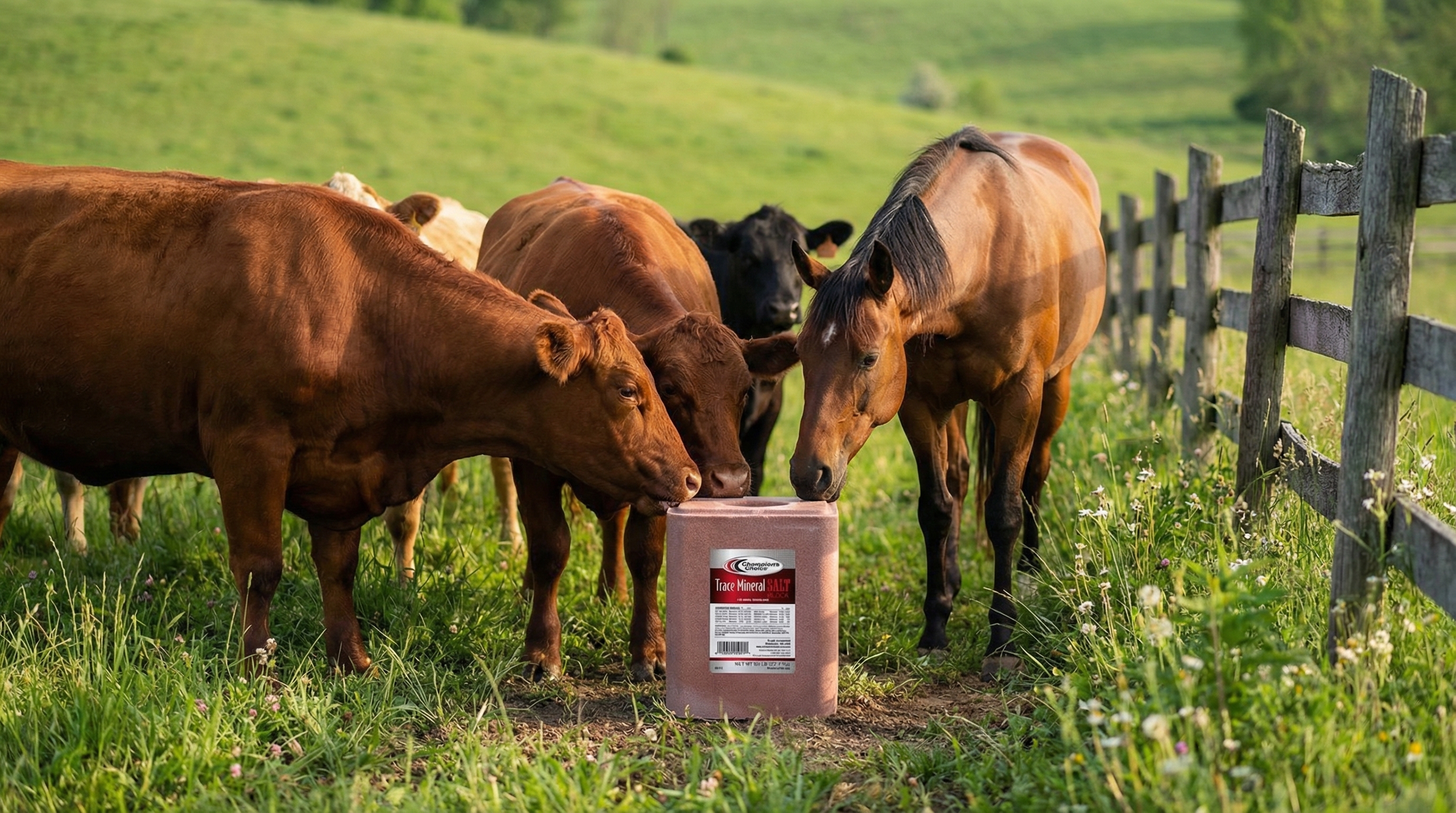
Every livestock owner knows animals need salt. It is one of the most fundamental facts of animal nutrition — sodium drives fluid balance, nerve function, and muscle activity in every mammal. But knowing animals need salt and understanding what they actually need from a mineral supplement are two different things. Plain white salt blocks handle the sodium. They do almost nothing for the trace minerals — copper, zinc, manganese, cobalt, iodine — that animals require in small but critical amounts every day. The Trace Mineral Salt Block 50 lb addresses both needs in a single, heavy-duty 50-pound block designed for cattle, horses, sheep, and goats — durable enough for outdoor pasture use and formulated to cover the trace mineral gaps that forage alone consistently leaves open.
Why Salt Alone Is Not Enough
Sodium chloride — table salt, white salt blocks — is genuinely essential. Animals cannot produce it internally, they lose it continuously through sweat, urine, and normal metabolism, and without it serious health problems develop quickly. Salt is the one nutrient that all livestock will seek out and self-regulate when given the opportunity, which is exactly why free-choice salt supplementation has been standard practice in animal husbandry for centuries.
The problem is that the nutritional story does not stop at sodium and chloride. Forage — hay, pasture grass, browse — is variable. It reflects the mineral content of the soil it grew in, the species of plant, the time of year, and how it was harvested and stored. In Ohio and much of the Midwest, soils are often naturally low in copper and zinc. Animals grazing or browsing these forages pick up whatever minerals the plants contain, which may be less than what they need.
Trace minerals are called "trace" because the required amounts are tiny — measured in parts per million rather than percentages. But tiny requirements do not mean optional. Copper is essential for enzyme function, coat quality, and iron metabolism. Zinc drives skin and hoof integrity, immune response, and reproduction. Manganese supports bone development and enzyme systems. Cobalt is necessary for vitamin B12 synthesis in ruminants. Iodine regulates thyroid function and metabolism. Deficiencies in any of these minerals cause problems that are often subtle at first — a slightly dull coat, softer hooves, marginally lower conception rates — before becoming obvious health crises.
What the Trace Mineral Salt Block Provides
The Trace Mineral Salt Block 50 lb combines the salt that animals actively seek with the trace minerals they may not be getting from forage. The base is sodium chloride — the driver of intake that ensures animals come to the block and lick consistently. Mixed into that salt base are carefully balanced trace mineral additions that address the most common deficiencies in livestock diets.
| Nutrient | Primary Role in Animal Health | Signs of Deficiency |
|---|---|---|
| Sodium (Salt) | Fluid balance, nerve function, thirst response | Reduced water intake, muscle weakness, licking unusual surfaces |
| Copper | Coat quality, enzyme function, iron metabolism | Dull or discolored coat, poor growth, reproductive issues |
| Zinc | Hoof integrity, immune function, reproduction | Rough skin, cracked hooves, increased disease susceptibility |
| Manganese | Bone development, enzyme systems, reproduction | Weak bones, joint stiffness, poor fertility |
| Iron | Oxygen transport, energy metabolism | Pale membranes, fatigue, poor growth |
| Cobalt | Vitamin B12 synthesis (ruminants) | Weight loss, weakness, pale membranes |
| Iodine | Thyroid function, metabolism, reproduction | Goiter, reproductive failure, weak newborns |
This mineral profile addresses the nutrients most likely to be inadequate in Midwestern forage-based diets. It will not replace a complete mineral program for high-production animals, but for general-purpose livestock management the 50 lb block covers the essentials efficiently and economically.
The 50 lb Block Format: Practical for Large Livestock
The 50-pound block format is the standard for cattle and horse operations, and for good reason. A single 50 lb block placed in an open pasture or paddock can serve a small herd for weeks to months depending on group size and season. The weight and density of the block also means it holds up to outdoor exposure far better than smaller salt products — it resists rapid dissolution from rain, sits stable on the ground or in a mineral feeder without tipping, and does not disappear in a few days from heavy use.
For cattle, the large block is appropriately sized for the animal's tongue and the volume of mineral they need. A 1,200-pound beef cow covering a lot of ground in a summer pasture may lick significantly more salt than a goat or small ruminant — the 50 lb block is sized for that reality. It also reduces how often you need to check and restock mineral stations, which matters on a busy farm where daily trips to every pasture corner are not always practical.
Which Animals Benefit Most
The Trace Mineral Salt Block 50 lb is appropriate for a wide range of large livestock species. The block size and mineral profile make it particularly well-suited for the following:
- Cattle: Beef and dairy cattle have significant trace mineral needs, especially copper and zinc. Cow-calf pairs are particularly vulnerable to copper deficiency, which can cause poor growth rates in calves and reproductive inefficiency in cows. A trace mineral block in the pasture is a low-labor way to support mineral intake year-round for the whole herd.
- Horses: Horses benefit from trace mineral salt and will use a pasture block readily. They are not ruminants and process minerals differently, but the base mineral profile in a trace mineral salt block supports hoof quality, coat condition, and general metabolic function in horses on forage-based diets.
- Goats: Goats are notoriously prone to copper deficiency on diets designed for sheep. For goat operations or mixed herds where goats have their own supplementation station, a trace mineral block provides the copper and zinc that goats consistently need. The 50 lb size works well for a small goat herd sharing a single station.
- Sheep: Use with caution. Sheep are highly sensitive to copper toxicity, and trace mineral blocks formulated for general livestock may contain copper levels that are unsafe for sheep over time. If your operation includes sheep, confirm the product copper level is appropriate for ovine use or use a sheep-specific mineral supplement.
Placement and Management in the Field
Getting the most out of a trace mineral salt block comes down to placement and consistency. Here are the key principles:
- Position near water: Animals that lick salt will want to drink immediately after. Placing the block within sight of the water source encourages both mineral intake and hydration — a dual benefit that matters especially in summer heat and winter cold.
- Provide one station per group: Dominant animals in a herd will guard a single mineral source. For groups of four or more animals, distribute blocks across the pasture so every animal has access without competition from herd hierarchy.
- Use a block holder or elevate: Blocks sitting in mud and standing water dissolve rapidly and can be wasted. A simple rubber mat, wooden pallet, or purpose-built block holder keeps the base dry and extends block life significantly.
- Check regularly: Inspect the block every one to two weeks. Replace it when the block becomes small enough to be a hazard — small remnants can be a risk for horses and cattle. Track consumption rate; a sudden spike can indicate a dietary gap or seasonal mineral stress.
- Keep available year-round: Trace mineral needs do not disappear in any season. Year-round access is more effective than seasonal supplementation, and in winter the salt also supports the thirst response that drives adequate water intake during cold months.
Trace Mineral Needs by Season
Animals do not have the same mineral needs year-round, and understanding the seasonal shifts helps you manage supplementation more effectively.
Spring (March–May): As livestock move to fresh pasture after winter hay feeding, mineral intake patterns shift. Spring grass is high in potassium but may be low in zinc and copper. This is also when breeding season begins for many operations — adequate trace mineral status directly affects conception rates and early embryo survival.
Summer (June–August): Heat stress increases salt and water needs significantly. Animals sweating heavily in summer heat may consume more salt than usual, which is normal. Consistent access to a trace mineral block ensures that elevated salt consumption also brings elevated trace mineral intake during the period of peak demand.
Fall (September–November): Livestock building winter condition and getting ready for the bred season benefit from good copper and zinc status heading into cold months. For cattle, fall is the period of peak body condition work before winter — trace mineral availability through this period supports the fat deposits and immune reserves animals need to survive cold weather.
Winter (December–February): Cold weather reduces voluntary salt and water intake in some animals. However, adequate sodium intake is the primary driver of the thirst response — animals that do not take in enough salt in winter may drink less water than they need. Maintaining a trace mineral block through winter keeps sodium available and supports the drinking behavior that matters most when water can freeze.
Trace Mineral Blocks vs. Loose Mineral Mixes
Salt blocks and loose mineral mixes both have their place in a mineral program. Understanding the tradeoffs helps you decide when each makes sense.
| Format | Advantages | Limitations |
|---|---|---|
| Trace mineral salt block (50 lb) | Easy to place, weather-resistant, animals self-regulate intake, low labor, economical per pound | Lower concentration than loose mineral; intake is passive, not measured |
| Loose trace mineral mix | Higher mineral concentration, can target specific deficiencies, intake can be tracked | Requires a covered feeder, can be wasted, more expensive per unit |
| Loose salt + separate mineral | Maximum flexibility to balance each nutrient separately | Most complex to manage; requires multiple feeders and consistent monitoring |
For most farms, hobby livestock operations, and pasture situations, the trace mineral salt block is the right choice: practical, low-maintenance, and effective for general mineral supplementation. High-production dairy or beef operations, animals with diagnosed deficiencies, or situations with known regional mineral problems may benefit from a more targeted loose mineral program in addition to free-choice salt.
Related Products at Liberty Farm, Home & Garden
For a more complete mineral and nutrition program, Liberty Farm, Home & Garden carries additional livestock and salt products to support your animals:
- Trace Mineral Salt Brick 4 lb — The compact version of the same trace mineral formula, ideal for smaller animals, individual horse stalls, or small goat and sheep pens where a 50 lb block is too large.
- White Salt Block 50 lb — Pure sodium chloride without added trace minerals. Use when you are supplementing trace minerals separately and just need to meet the basic sodium requirement.
- Roto Salt Trace Mineral Salt Spool — A spool-shaped trace mineral salt block designed to fit rotating salt feeders. A good option for wildlife feeding stations and pasture setups with rotating feeder equipment already in place.
Frequently Asked Questions
Keep Reading
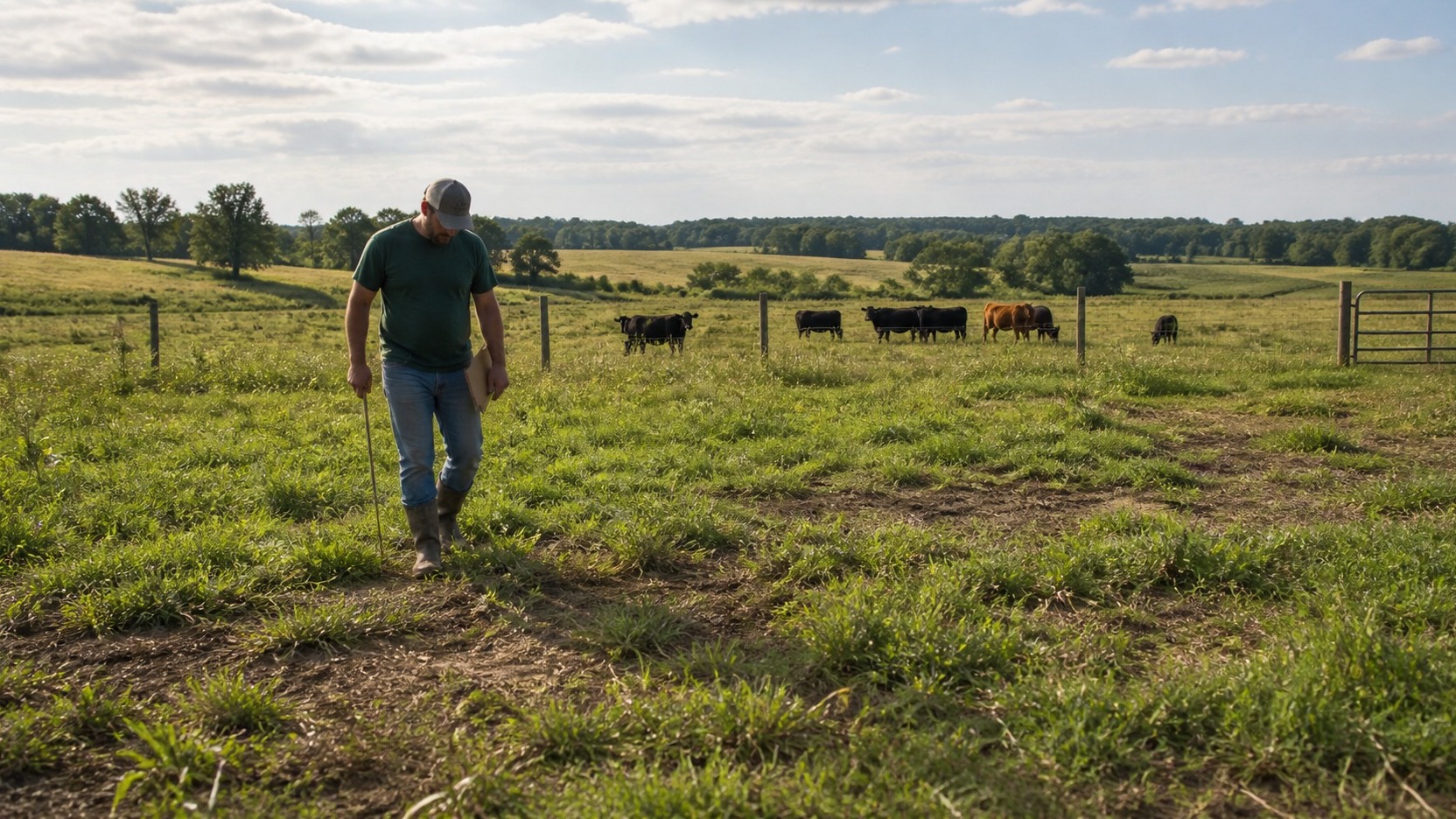
Late-Summer Pasture Checkup: Repair, Reseed, or Rest Your Ohio Fields?
A practical late-August pasture guide for Ohio livestock owners: assess plant cover, soil fertility, weeds, grazing pressure, and whether to repair or reseed.
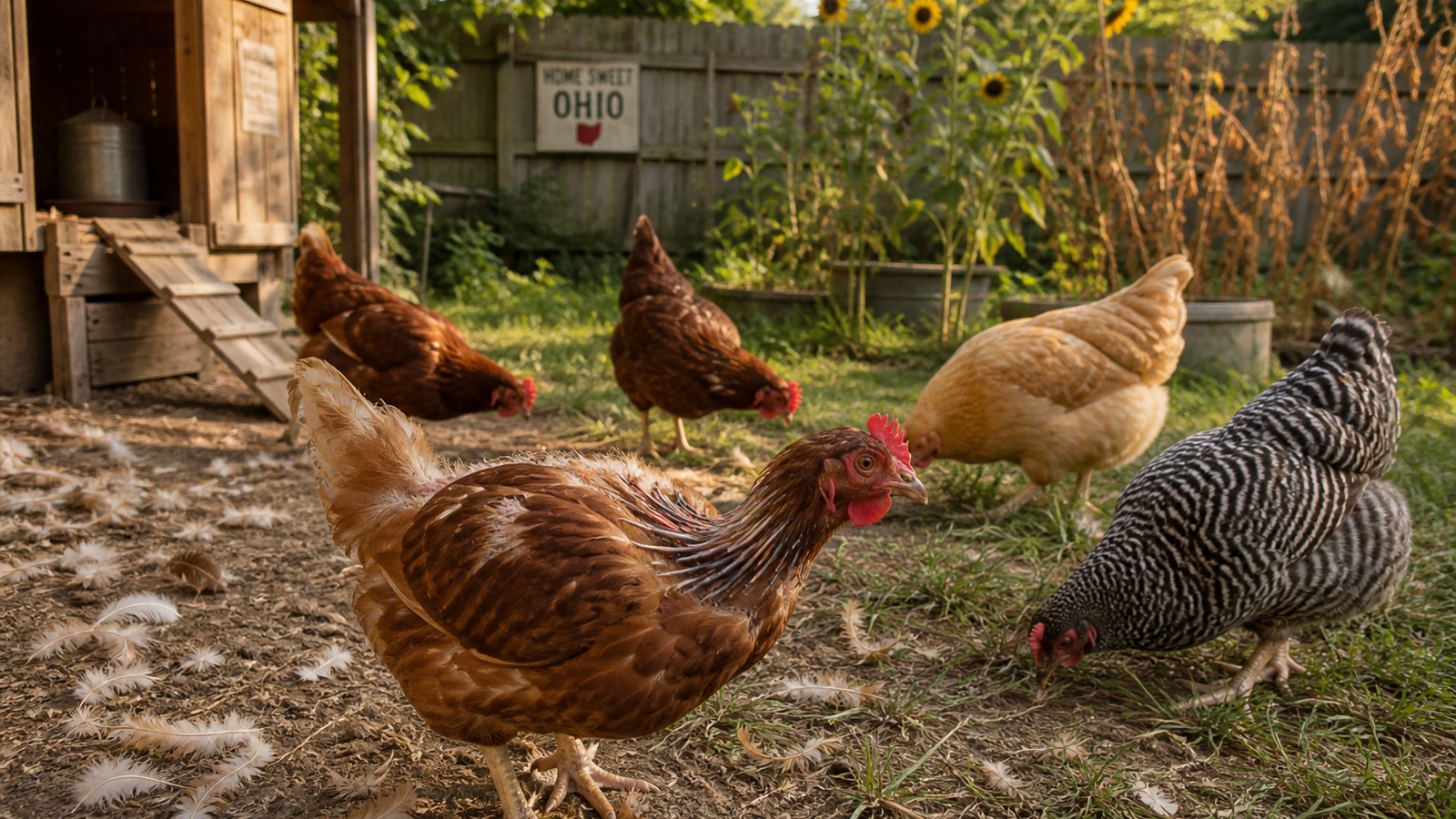
Molting Season Prep: How to Support Your Chickens Through the August Transition
Learn how to recognize and support your chickens through their annual molt in late summer and early fall. This seasonal guide from Liberty Farm, Home & Garden in Galion, Ohio covers nutrition, management, and timing for north-central Ohio flocks.