
The Natural Bedding That Keeps Cages Smelling Better Longer: A Complete Guide to PetsPick Red Cedar Bedding
What makes red cedar an effective small animal bedding, which animals it's safe for, how to use it correctly, and why the 141-liter bulk size matters for rabbit and hutch owners
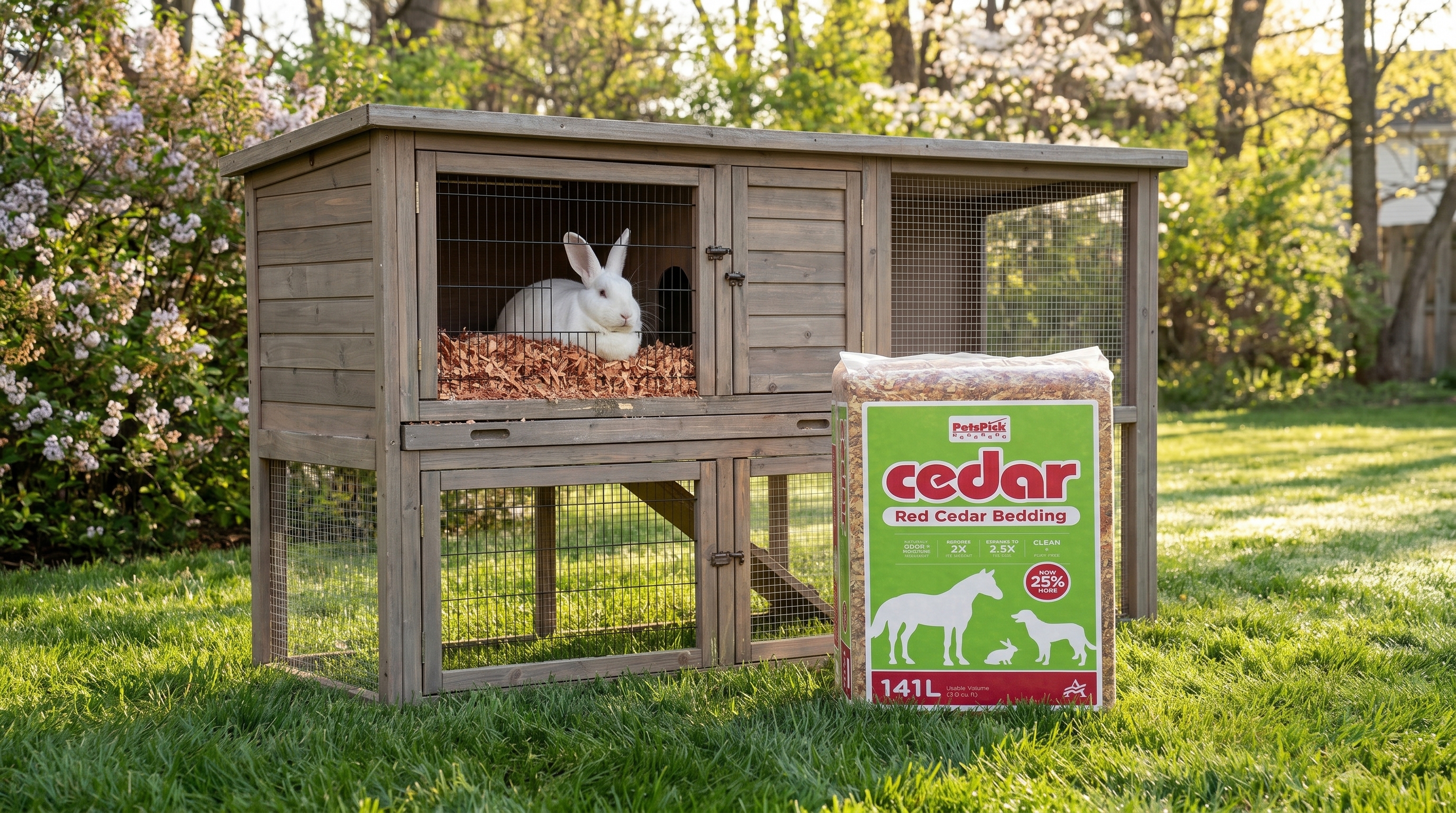
Bedding is one of those small animal care decisions that compounds over time. The wrong choice means constant odor, more frequent cage cleanings, and — in some cases — respiratory irritation for sensitive animals. The right choice keeps cages smelling noticeably better between changes and reduces the maintenance burden for owners who are managing multiple animals or a larger hutch setup. PetsPick Red Cedar Bedding (141 L) takes a different approach from paper or pine alternatives — it uses natural aromatic compounds present in red cedar to suppress odor at the source and naturally deter insects without synthetic additives. The 141-liter bulk size is purpose-built for larger setups, outdoor hutches, and owners who don't want to reorder constantly. It's available at Liberty Farm, Home & Garden in Galion, Ohio, and it's worth understanding both what it does well and where its limitations lie before you add it to your setup.
What Makes Red Cedar Different: The Chemistry Behind Cedar's Natural Properties
Cedar's reputation as a bedding material isn't based on marketing — it's based on the natural chemistry of the wood itself. Red cedar (Juniperus virginiana, the Eastern red cedar common across the eastern United States) contains a group of aromatic oils — primarily cedrol and thujopsene — that are concentrated in the heartwood and give cedar its distinctive scent. These compounds do two things that matter directly to small animal owners:
- Odor suppression. Cedar's aromatic oils inhibit the bacterial activity that produces ammonia and other odor compounds from urine and waste. This is a fundamentally different mechanism from paper bedding, which primarily absorbs moisture and odors without actively suppressing bacterial activity. Cedar's natural compounds slow the bacterial breakdown process, which is why cedar-bedded cages tend to stay noticeably fresher between cleanings compared to absorbent-only alternatives.
- Insect deterrence. Cedar oils are well-documented as natural insect repellents. The same compounds responsible for the scent are effective at deterring moths, fleas, and various insects that can be problems in outdoor hutch environments. For rabbits or other animals kept outdoors where fly and insect pressure is real, cedar bedding provides a passive layer of protection that synthetic bedding materials don't offer.
The shavings format — fine, dry wood shavings — also provides good physical absorption for urine, complementing the odor-suppression chemistry. Cedar shavings don't become as rapidly saturated as some paper-based products in high-use areas of a cage, which extends the time between full bedding changes.
It's worth being direct about one thing: the same aromatic oils that make cedar effective at odor control and insect deterrence are also what makes it potentially problematic for certain sensitive species. Cedar is not a universal bedding — it's an excellent choice for compatible animals and a poor choice for others. That species compatibility question is the most important thing to understand before using any cedar bedding.
Species Compatibility: Which Animals Are Safe with Cedar Bedding
This is the most critical section of this guide. Cedar is not appropriate for all small animals, and using it with incompatible species can cause respiratory and liver problems over time. Understanding which animals are confirmed safe — and which are not — is essential before you purchase any cedar bedding product.
Generally compatible with cedar bedding:
- Outdoor hutch rabbits. This is the primary use case for PetsPick Red Cedar Bedding. Outdoor rabbits in hutch settings benefit from cedar's insect-deterrent properties, and the ventilation in most outdoor hutch designs significantly reduces the concentration of cedar aromatic compounds that animals are exposed to. Cedar is widely used for outdoor rabbit hutches by experienced breeders and hobbyists. Always ensure the hutch is well-ventilated.
- Guinea pigs (with caution). Guinea pigs are somewhat more sensitive than rabbits, and recommendations vary. Some guinea pig owners and breeders use cedar successfully in well-ventilated enclosures; others prefer to avoid it. If you choose cedar for guinea pigs, prioritize maximum ventilation and monitor for any signs of respiratory irritation (sneezing, labored breathing, nasal discharge).
- Chinchillas (occasionally, in well-ventilated hutches). Similar guidance applies — chinchillas are sensitive but can tolerate cedar in small amounts in well-ventilated environments. Many chinchilla owners prefer kiln-dried pine or paper bedding as a safer default.
- Outdoor poultry and rabbit nest boxes. Cedar chips are commonly used in nest boxes for chickens and in breeding rabbit nest boxes for insect deterrence. The animals aren't spending continuous time in close contact with the bedding in the same way as cage animals, reducing exposure concerns.
NOT recommended for cedar bedding:
- Hamsters. Hamsters are among the most sensitive small animals to cedar's aromatic compounds. Their smaller respiratory systems and the typical cage sizes mean they live in close, concentrated contact with bedding fumes. Cedar is consistently flagged by veterinary and small animal care sources as inappropriate for hamsters.
- Gerbils. Same concern applies. Gerbils are similarly sensitive to aromatic wood compounds and should be housed on paper or aspen bedding instead.
- Rats and mice kept indoors in enclosed cages. While rats and mice used in research settings are sometimes housed on cedar, it has been associated with liver enzyme changes in controlled studies at sustained exposure levels. For companion rats and mice in standard indoor cages, paper or aspen is the safer recommendation.
- Small birds. The aromatic oils in cedar can be harmful to birds in enclosed spaces. Do not use cedar bedding in bird cages or aviaries.
The takeaway: if you're buying PetsPick Red Cedar Bedding for outdoor hutch rabbits or a similar application where the enclosure is large and well-ventilated, you're in the right use case for this product. If you're buying bedding for a hamster or gerbil cage, choose a different product.
Why the 141-Liter Bulk Size Makes Practical Sense
141 liters is a substantial volume of bedding — and that's the point. This bulk format is designed for setups where smaller bags become an ongoing expense and inconvenience. A few scenarios where the 141-liter size pays for itself quickly:
- Multiple rabbit hutches. If you're running two, three, or more outdoor rabbit hutches — whether for breeding, 4-H projects, or a larger rabbitry — a single 141-liter bag may cover one or more complete bedding changes across your entire setup. Buying in individual small bags for a multi-hutch operation adds up rapidly.
- Large individual hutches. Commercial-style rabbit hutches or large custom-built hutch systems require significantly more bedding per change than a small pet cage. A 141-liter bag provides meaningful volume for a large enclosure without the need to open and combine multiple small bags.
- 4-H and youth animal projects. Ohio has an active 4-H small animal program, and many participants maintain rabbits through the show season. Having a bulk supply on hand means consistent bedding throughout the project year without repeated trips to restock.
- Seasonal storage. Cedar's natural properties make it stable for storage — unlike some organic bedding materials that can develop mold or pest problems in storage, cedar actively deters insects and stays dry and fresh in a properly sealed storage environment. Buying in bulk and storing the bag is a realistic option for cedar in a way that it isn't always for other bedding types.
The math is simple: more volume per bag means fewer purchases over the course of a year and less frequent trips to restock. For owners who are cleaning hutches regularly and burning through bedding, the 141-liter format is the practical choice.
How to Set Up a Hutch with Cedar Bedding
Proper use of cedar bedding in an outdoor hutch isn't complicated, but a few setup decisions affect how well it performs and how long it lasts between changes.
- Ventilation first. Before putting any cedar bedding in a hutch, confirm that the enclosure has adequate airflow. An outdoor hutch with wire mesh sides or open slat construction provides natural ventilation that dilutes aromatic compound concentration. A fully enclosed wooden hutch with poor airflow concentrates cedar fumes — address ventilation before adding bedding.
- Bedding depth matters. A layer of 2–3 inches of cedar shavings provides effective coverage for most hutch flooring. Too thin a layer and urine passes through quickly to the tray or floor below without adequate absorption. Too deep and you're using more product than necessary without proportional benefit.
- Use a litter corner if your rabbit is litter-trained. Many domesticated rabbits prefer a consistent corner for urination. If yours does, concentrate fresh cedar in that zone more heavily between full changes and spot-clean the primary urination area every 2–3 days. This extends the time between full bedding replacements significantly.
- Full changes on a regular schedule. Even with cedar's natural odor suppression, bedding doesn't last indefinitely. Plan for full bedding changes every 1–2 weeks depending on the number of animals, hutch size, and weather. In hot summer weather, increase change frequency — high temperatures accelerate bacterial activity faster than cedar's natural properties can suppress.
- Store unused bedding properly. Keep the bag sealed between uses. Cedar's aromatic compounds are volatile — an open bag left in a hot shed will lose some of its potency over time. A sealed bag stored in a cool, dry location preserves the product effectively for months.
Cedar Bedding vs. Other Common Small Animal Bedding Types
Understanding how cedar compares to alternatives helps you make the right bedding choice for your specific situation and species.
- Cedar vs. paper bedding (recycled paper, paper pulp). Paper bedding is the most universally safe option for sensitive species — it's appropriate for hamsters, gerbils, guinea pigs, rabbits, and most other small animals. Paper bedding offers excellent absorption and dust levels are typically very low. The tradeoff: paper doesn't actively suppress odor-producing bacteria, so it tends to smell noticeably more at the same interval between changes. Paper also doesn't provide any insect-deterrent benefit. For outdoor hutch applications where insect deterrence matters, cedar has a meaningful practical advantage.
- Cedar vs. aspen shavings. Aspen is the primary safe wood shaving alternative to cedar — it's appropriate for most small animals, including hamsters and gerbils, because it doesn't contain the aromatic oils that cause sensitivity. Aspen absorbs well and has mild natural odor control. Cedar outperforms aspen on odor suppression and insect deterrence, but aspen is the right choice for sensitive species where cedar is contraindicated.
- Cedar vs. pine shavings. Raw pine shavings have some of the same aromatic compound concerns as cedar, though generally considered less intense. Kiln-dried pine shavings are widely used because the drying process drives off most of the volatile aromatic compounds, leaving a more neutral product. Cedar's natural odor control and insect deterrence are stronger than kiln-dried pine, but so is its aromatic intensity — making it a more targeted choice for appropriate applications rather than a general-purpose replacement for pine.
- Cedar vs. straw. Straw is commonly used in outdoor livestock and hutch settings for warmth but provides minimal odor absorption compared to cedar shavings. Cedar is the stronger performing choice for odor and insect control in a hutch setting. Straw combined with a cedar base layer is used by some rabbit breeders — cedar for the bedding function and straw layered on top for warmth in colder months.
Seasonal Considerations: Cedar Bedding Through Ohio's Seasons
Ohio's climate creates different bedding management challenges depending on the time of year, and cedar's natural properties interact with those conditions in specific ways worth planning around.
Spring and summer: Insect pressure is at its peak from late spring through August in central Ohio. Flies are the primary concern for outdoor rabbit hutches — fly strike (flystrike) is a serious risk in warm months, particularly if bedding is left wet or soiled too long. Cedar's natural insect-deterrent properties are most valuable in this season, making warm-weather months the strongest argument for cedar over other bedding types in outdoor hutch settings. Increase change frequency in hot, humid weather — wet, soiled bedding in summer temperatures creates conditions that accelerate bacterial and ammonia buildup faster than any bedding's natural properties can counteract.
Fall: Cooling temperatures reduce insect pressure and slow bacterial activity in soiled bedding — fall is generally the easiest season for bedding management. Cedar performs consistently well in fall conditions. This is also a good time to stock up on bulk bedding before winter.
Winter: Cold temperatures significantly reduce odor and insect concerns in outdoor hutches, but introduce a different challenge: animal warmth. Cedar shavings provide some insulation value — a thicker layer of dry cedar in a cold hutch helps retain body heat. Some outdoor rabbit owners increase bedding depth significantly in winter and supplement with straw over the cedar layer for added insulation. Make sure the hutch is protected from wind and precipitation, which can wet bedding rapidly and eliminate its thermal and odor-control benefits.
Other Small Animal Products at Liberty Farm, Home & Garden
We carry a range of small animal bedding and care products at Liberty Farm, Home & Garden for different species, enclosure types, and owner needs. A few worth knowing about alongside PetsPick Red Cedar Bedding:
- Fresh News Recycled Small Animal Paper Bedding (40 L) — If you're housing hamsters, gerbils, or other species that aren't appropriate for cedar, this paper bedding is a dust-free, high-absorption alternative. Paper bedding is safe for virtually all small animal species and a good choice when cedar is contraindicated.
- Fromm Salmon À La Veg Cat Food (4 lb) — For households managing both small animals and cats, we carry a range of quality cat food options at Liberty Farm, Home & Garden, including Fromm's grain-free salmon formula.
- Home Pro All Purpose Lawn Mix (5 lb) — For homeowners with both outdoor pets and lawns to maintain, we stock a full range of lawn care products alongside our pet supply selection.
Stop in at Liberty Farm, Home & Garden in Galion or shop online at libertyfhg.com. We're happy to help you find the right bedding for your specific setup, species, and seasonal needs.
| Specification | Details |
|---|---|
| Product | PetsPick Red Cedar Bedding |
| Volume | 141 liters |
| Material | Natural red cedar wood shavings |
| Primary Benefits | Natural odor suppression, insect deterrence, absorption |
| Compatible Animals | Outdoor hutch rabbits, compatible species in well-ventilated enclosures |
| NOT Compatible With | Hamsters, gerbils, indoor rodents in enclosed cages, birds |
| Best Use | Outdoor hutch rabbits, multi-hutch setups, 4-H projects, bulk buyers |
| Brand | PetsPick |
| Available At | Liberty Farm, Home & Garden, Galion, Ohio |
Frequently Asked Questions
Keep Reading
Keeping Rabbits Cool in Ohio: A Practical Summer Heat-Safety Guide
Help rabbits handle Ohio summer heat with practical shade, ventilation, water, cooling, travel, outage, and emergency-readiness steps for responsible owners.
Why Your Rabbit's Salt Lick Keeps Ending Up in the Bedding — and the Simple Wire Fix That Solves It
Salt spools are one of the most common small animal accessories in any rabbitry or guinea pig setup — and one of the most commonly misused. The Little Giant Salt Spool Hanger clips to wire cages in seconds, keeps the spool elevated and clean, and costs almost nothing. Here is everything you need to know.