
When Your Dog Struggles to Get Up: A Complete Guide to Orthopedic Dog Beds for Senior and Large Breed Dogs
Why the surface your dog sleeps on directly affects their joints, mobility, and quality of life — and how the Ophanie Orthopedic Dog Bed addresses the problems that standard beds and floor sleeping can't
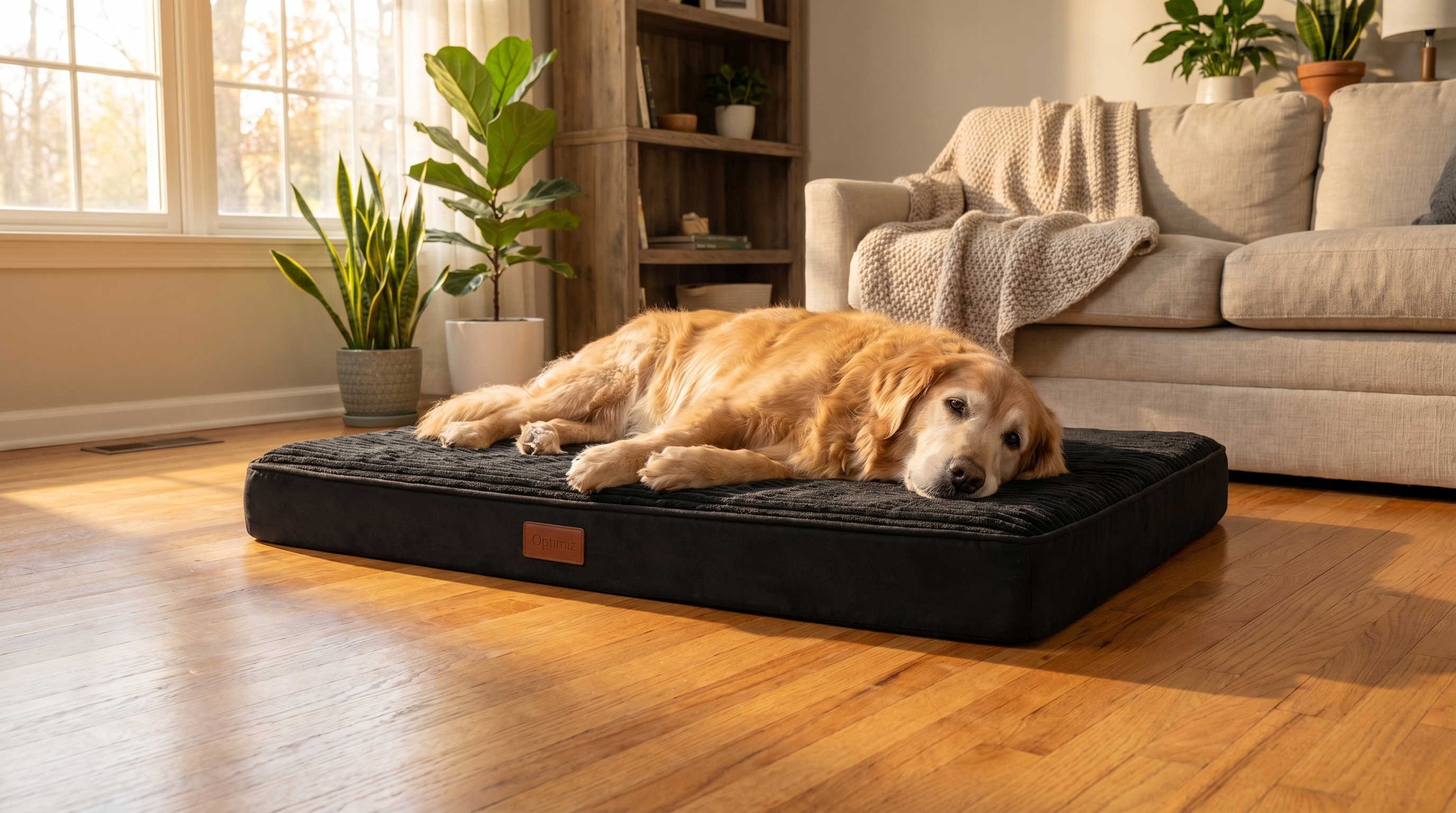
The dog bed in the corner of your living room or bedroom might look comfortable enough — but for a senior dog with arthritic hips, a large breed carrying significant body weight, or any dog whose joints are feeling the effects of age and wear, a standard fiberfill or foam slab bed is often doing more harm than good. Inadequate support under a sleeping dog means pressure concentrates at bony prominences — elbows, hips, shoulders — compressing tissue, restricting circulation, and forcing the dog's body into a position that amplifies joint discomfort rather than relieving it. The Ophanie Orthopedic Dog Bed (Black) is built specifically around the mechanics of this problem: orthopedic foam that distributes body weight across the full surface contact area to eliminate concentrated pressure points, combined with a removable, machine-washable cover that makes the bed practical for actual daily use. If your dog is stiff when they get up, hesitates at the stairs, or has been diagnosed with arthritis or joint disease, this is a bed worth looking at closely. Available at Liberty Farm, Home & Garden in Galion, Ohio.
Why Your Dog's Sleeping Surface Matters More Than You Think
Dogs sleep a lot. Depending on age, breed, and activity level, most dogs spend somewhere between twelve and sixteen hours a day resting or sleeping — and senior dogs often push toward the higher end of that range. That means the surface your dog lies on is not a minor detail in their daily life. It is the environment they spend the majority of their time in, and its quality directly affects how they feel when they wake up, how their joints function during active periods, and how their discomfort levels evolve over weeks and months.
The core problem with inadequate sleeping surfaces is pressure. When a dog lies on a surface that doesn't conform to the shape of their body, body weight becomes concentrated at whatever points are in direct contact with the surface — typically the hips, elbows, and shoulder blades in a sleeping dog. For a healthy young dog, this concentrated pressure is a manageable inconvenience: they shift position regularly, their tissues are resilient, and their joints have adequate cartilage and fluid cushioning to tolerate the stress. For a senior dog with thinning cartilage, reduced joint fluid, and arthritic inflammation, that same concentrated pressure is a genuine source of pain. The sleeping surface that felt fine at age two is contributing to a miserable morning at age nine.
The secondary problem is the floor itself. Many dogs, particularly large and giant breeds, default to sleeping on hard floors — tile, hardwood, concrete — when their bed isn't comfortable enough to be preferred. Hard floors eliminate the pressure-point problem in one sense (the dog spreads their weight across the whole contact surface) but create a different one: there is zero give, zero temperature buffer, and zero conforming support. A dog lying on a hard floor for eight hours is experiencing something analogous to a person sleeping on pavement. Their joints bear the full weight without any material absorbing or distributing it, and the thermal conductivity of the floor draws body heat away continuously, which is particularly hard on arthritic tissues that are sensitive to cold.
An orthopedic bed bridges these problems by providing a surface that is both conforming (it shapes itself to the dog's body) and supportive (it doesn't simply compress under the dog's weight, leaving them essentially on the floor with a thin foam layer under them). The distinction between those two properties — conforming versus supportive — is what separates orthopedic foam from standard foam or fiberfill, and it's the central reason that orthopedic beds work where standard ones fall short for dogs with joint problems.
What Is Orthopedic Foam and How Is It Different from Regular Foam
The term "orthopedic" in dog bed marketing gets applied loosely — sometimes to beds that are merely thick, or simply made from basic polyurethane foam. Genuine orthopedic foam is a specific material category with a defined performance characteristic: it responds to pressure and body heat by conforming to the shape of the object pressing into it, distributing the load across the contact surface rather than pushing back uniformly like a spring. This property is what makes it effective for pressure relief.
The Ophanie Orthopedic Dog Bed uses orthopedic foam designed to relieve joint pressure through this weight distribution mechanism. When a dog lies down on it, the foam doesn't simply compress under the heaviest points of contact — it contours to the dog's body, spreading the weight across a much larger surface area. This reduction in concentrated pressure at the hips, elbows, and shoulders is the direct mechanism by which an orthopedic bed reduces the pain signals that make a senior dog stiff, reluctant to lie down, or slow to get up after resting.
Standard polyurethane foam — the type used in basic dog beds and most budget bedding — has a more uniform spring-back characteristic. It compresses under load, but it resists that compression somewhat evenly across its surface. The result is that pressure concentration under bony prominences is not significantly reduced compared to a firm surface. A dog lying on a thick piece of regular foam is experiencing noticeably less joint relief than a dog on orthopedic foam of comparable thickness, because the foam's material properties aren't doing the pressure distribution work that orthopedic foam performs.
Fiberfill beds — the pillow-style, stuffed beds that are common in pet stores — compress and shift under the dog's weight, migrating away from the areas of greatest pressure over time. A fiberfill bed that looked fluffy when your dog first lay down has, within minutes, shifted its fill away from the hip and shoulder areas where the dog's weight is concentrated, leaving those areas with effectively no support. They also flatten permanently over weeks and months. Orthopedic foam retains its shape and continues performing its pressure-distribution function throughout the life of the bed.
The Signs Your Dog Needs an Orthopedic Bed
Some dogs communicate their discomfort clearly. Others are stoic in ways that make it easy to miss what they're experiencing. Knowing the behavioral and physical signs that correlate with inadequate sleeping surface support helps you identify whether an orthopedic bed upgrade is warranted before your dog's condition progresses.
The most telling sign is difficulty rising after rest. A dog that lies down for a few hours and then takes multiple attempts to stand, uses furniture or a wall for assistance, or vocalizes when rising is experiencing pain during the transition from recumbent to standing. The pressure accumulated during rest — concentrated at joint-adjacent tissues — is manifesting as stiffness and pain that needs time to work out as the dog begins moving. This pattern is particularly notable when it's most pronounced first thing in the morning after a full night of rest.
Hesitation at stairs or reluctance to jump onto furniture the dog previously used freely is another significant indicator. The musculoskeletal effort required to navigate stairs or jump involves the same joints — hips, knees, elbows, shoulders — that are stressed during poor-support rest. A dog avoiding these activities is often self-limiting because they've learned the association between those movements and pain. This behavioral avoidance is a pain signal, not a training or motivation issue.
Visible changes in how the dog lies down can also indicate joint stress. A dog that used to drop readily into a lying position but now lowers themselves carefully and slowly is compensating for pain during the descent. Dogs with sore hips or knees will often collapse the last portion of the way down rather than controlling the descent fully — this is a protective reflex against the pain of a slow, muscle-controlled descent into a position that loads the sore joint.
Other signs worth noting include licking or chewing at specific joints (a localized pain behavior), changes in sleep position (avoiding positions that load the sore joint), and general reduction in activity or willingness to engage in play. All of these can have multiple causes, and veterinary evaluation is always appropriate when you notice them. But when a dog shows any combination of these signs, the sleeping surface is a meaningful variable to address as part of the overall management approach.
Large Breeds and Orthopedic Beds: Why Size and Weight Change Everything
The physics of body weight distribution on a sleeping surface scale dramatically with size. A 15-pound terrier mix lying on a mediocre foam bed generates modest pressure at any given contact point. A 90-pound Labrador Retriever lying on the same bed generates pressure that is many times greater at the hip and elbow contact points — and the foam that adequately supported the lighter dog simply bottoms out under the heavier one, providing little more pressure relief than the floor beneath it.
This is why large and giant breed dogs disproportionately benefit from proper orthopedic foam, and why the foam specification matters more for larger dogs than for small ones. Orthopedic foam designed for large dogs must maintain its pressure-distributing properties under the actual weight loads a 70-, 90-, or 120-pound dog places on it. Foam that meets this requirement for a large dog has to be dense enough that it doesn't collapse through to its lower limit under the dog's weight while remaining conforming enough to distribute that weight across the full contact area.
Large breeds are also disproportionately prone to the joint conditions that orthopedic beds address. Hip dysplasia, elbow dysplasia, degenerative joint disease, and osteochondrosis are all more prevalent in large and giant breeds than in small ones. The developmental stresses of rapid growth in puppyhood, the long-term cumulative load on joint structures from carrying a large body frame, and the genetic predispositions common in many large breeds create a population where orthopedic joint support during rest isn't a luxury — it's part of appropriate husbandry for the species-size category.
Senior large breeds are the combination that calls most clearly for an orthopedic bed. An eight-year-old German Shepherd, a ten-year-old Rottweiler, or a nine-year-old Golden Retriever is carrying a large body through joints that have experienced a decade of load-bearing wear, often with some degree of arthritis already present. The nightly rest period for these animals is both the longest period of joint loading and, if the sleeping surface is right, the best opportunity in their daily cycle for joint pressure relief and tissue recovery.
The Washable Cover: Why It's Not Optional
An orthopedic dog bed's functional performance depends on the foam core — but its long-term practicality depends entirely on the cover. The Ophanie Orthopedic Dog Bed features a removable cover that can be washed in a standard washing machine, and this feature matters more than it might initially seem for dogs that need orthopedic support.
The demographic that most needs an orthopedic bed — senior dogs with joint conditions — is also the demographic most likely to have secondary issues that affect cleanliness. Senior dogs with arthritis may have reduced mobility that makes it harder to fully get up to relieve themselves in time. Older dogs are more prone to incontinence, urinary tract issues, and the kind of low-level skin and coat changes that increase how much a dog's bed requires regular washing. A bed cover that cannot be removed and machine washed quickly becomes a hygiene liability for the dogs that depend on it most.
Beyond senior dog specifics, large dogs simply generate more of everything that makes a dog bed dirty over time — shedding, drool, paw dirt, outdoor debris tracked in from play. A thick, non-washable fabric cover on a large dog bed will accumulate an impressive amount of dander, fur, and organic material over a few months of daily use, creating both an odor problem and an allergen environment that isn't good for the dog or the household. The removable washable cover on the Ophanie bed eliminates this accumulation: pull the cover, run it through the machine, replace it, and the bed is functionally clean again.
The black colorway of this specific model is also a practical consideration for dark-coated dogs and for high-traffic areas where a lighter-colored bed would show soiling quickly. For households with black, brown, or dark-coated dogs, a black cover means the bed maintains a clean appearance between washes even with the normal level of shedding that comes with daily use.
Choosing the Right Size and Placement
An orthopedic bed only delivers its pressure-relief benefit if the dog is actually using it. Dogs choose where to rest based on comfort, temperature, proximity to family activity, and habit — and a bed that is undersized, awkwardly placed, or positioned in a spot the dog doesn't find appealing will be ignored regardless of its foam quality.
Size selection starts with your dog's actual stretched-out dimensions, not their curled-up sleeping position. Dogs sleep in multiple positions — curled, sprawled on their side, stretched fully prone — and the orthopedic benefit is most significant when the dog is lying on their side or fully prone, which is also when they take up the most surface area. Measure your dog from nose to tail and shoulder to shoulder in a relaxed extended position, then choose a bed with enough surface area for your dog to lie fully stretched out without any limbs hanging off the edges. A dog with limbs dangling off the bed is experiencing exactly the kind of pressure-point concentration at the edge of the foam that the bed is meant to prevent.
For large breeds, this often means selecting a bed size that looks oversized for the dog when they're in their usual sleeping position. That's correct — the relevant measurement is the fully extended one, even if the dog primarily sleeps curled. Dogs change positions during sleep, and the transition to a stretched position should land fully on the supportive surface.
Placement matters as much as size for adoption. The ideal location for a dog's orthopedic bed is wherever the dog currently chooses to rest most frequently — because that's the spot that meets whatever combination of social, thermal, and environmental factors the dog finds optimal. Placing the new bed in a location the dog doesn't naturally gravitate toward and expecting them to abandon their preferred spot requires training effort that isn't necessary if you simply put the bed where they already want to be. For senior dogs that currently rest on hard floors in a main living area, putting the orthopedic bed in that exact spot gives them the surface upgrade without asking them to change any of their other preferences.
For dogs that use a crate as their sleeping space, a flat orthopedic crate mat or a crate-sized orthopedic pad is the appropriate form factor. A Mclovin's Single Door 18" Folding Metal Pet Crate paired with an appropriately sized orthopedic pad gives a dog the denning comfort of a crate with the joint-support benefit of the orthopedic surface — a combination that works well for dogs that prefer an enclosed sleeping environment.
Orthopedic Bed vs. Standard Bed: Is It Worth the Upgrade
The case for an orthopedic bed is clearest for the dogs at highest need: senior animals with diagnosed joint disease, large breeds already showing mobility changes, or any dog that has been observed straining to rise after rest. For these animals, the question isn't really whether the orthopedic surface provides measurable benefit — the mechanics of pressure distribution are straightforward physics, and the clinical correlation between supportive sleeping surfaces and reduced joint pain in dogs is well-established in veterinary rehabilitation practice. The question is whether the practical differences between specific beds justify the selection.
For younger, healthy dogs of any size, the calculus is different. A healthy three-year-old medium-sized dog with no joint issues is not going to show dramatic quality-of-life changes from switching to an orthopedic bed, because their joints aren't under the kind of chronic stress that makes the pressure-relief benefit decisive. They'll use a comfortable orthopedic bed happily, and the washable cover and durable foam will serve them well over years of use — but the urgency isn't the same as for an older dog with joint problems.
The middle category — dogs that are aging into the joint-concern zone, large breeds that haven't yet shown symptoms but are breeds predisposed to hip and elbow issues, dogs with any history of joint injury or surgery — is where the proactive case for an orthopedic bed is strongest. Joint damage accumulates. The stress of inadequate sleeping surface support doesn't create an acute injury event; it creates a background of chronic low-level wear that contributes to the overall trajectory of joint health over months and years. Starting with proper orthopedic support before the clinical signs appear is a much better position than trying to catch up after the damage has already compounded.
| Feature | Details |
|---|---|
| Product | Ophanie Orthopedic Dog Bed (Black) |
| Brand | Ophanie |
| Foam Type | Orthopedic foam — distributes weight evenly to reduce pressure points |
| Best For | Senior dogs with arthritis, large breeds prone to joint issues, any dog with mobility concerns |
| Cover | Removable, machine-washable for easy cleaning and hygiene maintenance |
| Color | Black — practical for dark-coated dogs and high-traffic areas |
| Key Benefit | Reduces concentrated pressure at hips, elbows, and shoulders during rest |
| Available At | Liberty Farm, Home & Garden, Galion, Ohio |
Complementary Products for Senior Dog Comfort and Care
An orthopedic bed addresses the sleeping surface, which is the single highest-impact variable in a senior or large breed dog's daily joint experience. But a complete approach to keeping an aging dog comfortable involves a few other practical items that pair naturally with the bed upgrade.
Hydration is one of the most underappreciated factors in joint and overall health for senior dogs. Adequate water intake supports joint lubrication, kidney function, and the circulation that delivers oxygen and nutrients to arthritic tissues. For dogs that drink inconsistently from a standard bowl, the API Blue Plastic Heated Pet Bowl For Dogs (5 qt) is particularly useful in cooler seasons — water that stays at an appealing temperature rather than going cold encourages more consistent drinking in dogs that have become reluctant drinkers. The 5-quart capacity means a large dog has access to adequate water without constant refilling, and the heated element keeps water from going cold in garages, mudrooms, or covered porches where outdoor dogs rest.
For dogs with joint conditions, minor wounds or skin abrasions around bony prominences — elbows and hocks especially — are common, particularly if the dog has been sleeping on harder surfaces. The Wrap-It-Up Flexible Bandage (4 in x 5 ft) is a practical first-aid item for managing these minor wounds between veterinary visits. Flexible bandaging provides light protection and compression without the rigidity of standard bandages, and it self-adheres without adhesives, making it easier to apply and remove on arthritic dogs that may resist handling of sore limbs.
For senior dogs that spend any time outdoors, ear health is an easily overlooked maintenance area. Older dogs with reduced immune function and dogs that swim or spend time in humid environments are more susceptible to ear mite infestation and ear infections. Adams Ear Mite Treatment (0.5 fl oz) is a targeted treatment for ear mites — a common source of discomfort that contributes to the overall irritability and rest disruption in affected dogs. Keeping senior dogs free of parasitic irritants is part of keeping their overall comfort level high.
Getting Set Up at Liberty Farm, Home & Garden
Whether your dog has been diagnosed with arthritis, is showing early signs of joint stiffness, or is simply entering the age range where joint support becomes a meaningful part of good husbandry, the sleeping surface is one of the most direct variables you can improve. The Ophanie Orthopedic Dog Bed (Black) delivers the core functionality that matters: genuine orthopedic foam that distributes pressure rather than concentrating it, and a removable washable cover that makes the bed practical to maintain for the dogs that need it most.
Liberty Farm, Home & Garden in Galion, Ohio carries the Ophanie Orthopedic Dog Bed along with a range of complementary pet supplies including the API Heated Dog Bowl, the Mclovin's Folding Metal Pet Crate, and first-aid supplies for everyday dog care. Browse the full selection online at libertyfhg.com or stop in and our team can help you find the right setup for your dog's age, size, and specific needs. Your dog spends more time on their bed than almost anywhere else — it's worth getting right.
Frequently Asked Questions
Keep Reading
Back-to-School Routine Changes: Helping Dogs Adjust to More Time Alone
Prepare your dog for back-to-school schedule changes with gradual departures, safe enrichment, camera checks, and veterinarian-backed warning signs.

Ohio Flea Season Peaks in June — Why Your Small Dog Needs Protection on Before It's Too Late
June marks the annual turning point when Ohio's flea and tick populations reach peak activity. Here's what's happening in your yard right now, why small dogs are especially vulnerable, and why the Adams Plus Flea & Tick Collar for Small Dogs is the simplest way to stay ahead of an infestation before it starts.