
Mulch Guide: Which Type is Right for Your Ohio Landscape?
Compare mulch types, calculate how much you need, and get the timing right
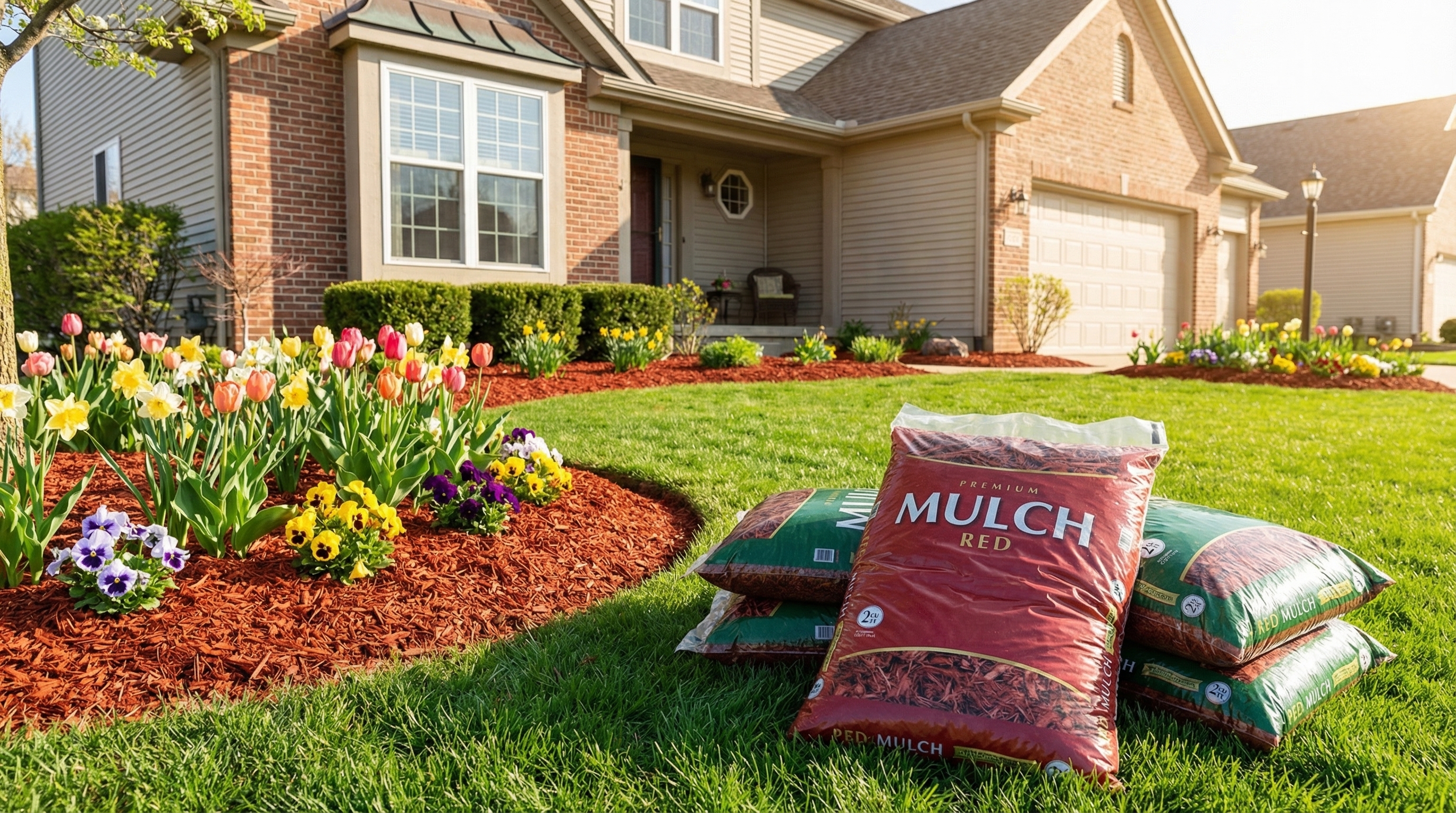
Mulch is one of those landscaping basics that seems straightforward until you start shopping. Red, brown, or black? Bags or bulk? Two inches or four? The choices matter more than most people realize, and getting it right the first time saves money and produces better results. Here is a practical guide to mulching in Ohio, from choosing the right type to calculating how much you actually need.
Types of Mulch and Their Best Uses
Not all mulch is created equal. Different types serve different purposes, and what works in one part of your landscape may not be ideal for another.
Hardwood Mulch
Shredded hardwood is the most popular mulch in Ohio for good reason. It knits together as it decomposes, resisting washout on slopes and staying put in heavy rain. It breaks down over one to two seasons, adding organic matter to the soil as it goes. Hardwood mulch is an excellent all-purpose choice for garden beds, around trees, and along walkways.
Colored Mulch (Dyed)
Colored mulch is hardwood mulch that has been dyed to maintain a consistent color through the season. The three standard options are red, brown, and black. The dyes used in quality colored mulch are vegetable-based or iron oxide-based and are safe for plants, pets, and soil.
- Red Mulch creates bold contrast against green foliage and lighter-colored homes. It works well with brick exteriors and southwestern-style landscaping.
- Brown Mulch is the most natural-looking option and blends well with virtually any landscape style. It is the most popular choice for Ohio homes and the safest bet if you are unsure which color to choose.
- Black Mulch provides a clean, modern look that makes plant colors pop. It pairs well with lighter exteriors and contemporary landscaping. Black mulch can absorb more heat than lighter colors, so keep that in mind for heat-sensitive plantings.
Cedar Mulch
Cedar mulch has natural insect-repellent properties and breaks down more slowly than standard hardwood. It is a good choice around home foundations where you want to discourage insects. Cedar costs more per cubic foot but lasts longer, making the long-term cost comparable.
Pine Bark Mulch
Pine bark nuggets and mini nuggets are popular for ornamental beds. They are lightweight, long-lasting, and slightly acidic, which benefits acid-loving plants like azaleas, rhododendrons, and blueberries. Pine bark nuggets can float and wash away in heavy rain, so they work best in flat beds rather than slopes.
| Mulch Type | Lifespan | Best For | Notes |
|---|---|---|---|
| Shredded Hardwood | 1-2 seasons | General landscaping, slopes | Knits together, resists washout |
| Red Dyed | 1-2 seasons | Bold contrast, warm-toned homes | Color fades gradually over season |
| Brown Dyed | 1-2 seasons | Universal choice, natural look | Most popular color in Ohio |
| Black Dyed | 1-2 seasons | Modern look, lighter homes | Absorbs more heat than lighter mulch |
| Cedar | 2-3 seasons | Foundation beds, insect deterrence | Natural pest-repellent properties |
| Pine Bark Nuggets | 2-3 seasons | Ornamental beds, acid-loving plants | Can float in heavy rain |
How Much Mulch Do You Need?
Buying the right amount of mulch saves you a second trip to the store and prevents waste. The calculation is straightforward:
Step 1: Measure the area in square feet (length times width for rectangular beds, or estimate for irregular shapes).
Step 2: Decide on depth. For most Ohio landscaping, 2-3 inches is ideal. Use 2 inches for refreshing existing mulch and 3 inches for new installations.
Step 3: Calculate cubic feet needed: square footage multiplied by depth in feet. For example, a 200 square foot bed at 3 inches deep needs 200 times 0.25 = 50 cubic feet.
Step 4: Convert to bags or cubic yards. A standard bag is 2 cubic feet. A cubic yard is 27 cubic feet.
| Bed Size (sq ft) | At 2 inches deep | At 3 inches deep |
|---|---|---|
| 100 | 17 cu ft (9 bags) | 25 cu ft (13 bags) |
| 200 | 33 cu ft (17 bags) | 50 cu ft (25 bags) |
| 500 | 83 cu ft (42 bags) | 125 cu ft (63 bags) |
| 1,000 | 167 cu ft (84 bags) | 250 cu ft (10 cu yd) |
Bulk vs. Bag: Which Should You Buy?
This decision comes down to the size of your project and how you plan to move the material.
Bags are convenient for small jobs, easy to transport in a car or SUV, and simple to store if you do not use them all at once. They are ideal for refreshing a few small beds or touching up spots. The per-cubic-foot cost is higher than bulk, but for small quantities the convenience outweighs the premium.
Bulk (by the cubic yard) is the economical choice for larger projects. One cubic yard covers about 100-160 square feet at 2-3 inches deep. You will need a truck or trailer to haul it, or you can arrange delivery. For anything over about 10 bags worth of mulch, bulk pricing saves significant money.
When to Apply Mulch in Ohio
Timing your mulch application correctly maximizes the benefits and reduces wasted effort.
Spring (mid-April through May): This is the primary mulching season in Ohio. Wait until the soil has warmed up and spring rains have subsided before applying. Mulching too early over cold soil delays warming and can slow plant emergence. Late April through mid-May is the sweet spot for most of Ohio.
Fall (October through November): A fall application of mulch insulates plant roots heading into winter and suppresses late-season weeds. Apply after the first hard frost but before the ground freezes. Fall mulching is especially beneficial for perennial beds and around newly planted trees and shrubs.
Summer touch-ups: If your spring mulch has broken down or thinned by midsummer, a light top-dressing of an inch or so helps maintain weed suppression and moisture retention during the hottest months.
Benefits of Proper Mulching
Mulch does far more than make your landscape look tidy:
- Moisture retention: Mulch reduces soil moisture evaporation by up to 70 percent, cutting your watering needs significantly during Ohio's dry summer stretches
- Weed suppression: A 2-3 inch layer blocks sunlight from reaching weed seeds, dramatically reducing weed growth in your beds
- Temperature regulation: Mulch insulates soil, keeping roots cooler in summer and warmer in winter
- Soil improvement: As organic mulch decomposes, it adds nutrients and improves soil structure over time
- Erosion control: Mulch protects soil from heavy rain impact and reduces erosion on slopes
Common Mulching Mistakes
Even experienced homeowners make these errors. Avoiding them protects your plants and makes your mulch investment last:
- Volcano mulching around trees: Piling mulch up against tree trunks is the most common and most damaging mulching mistake. It traps moisture against the bark, promotes rot, and invites insects and disease. Keep mulch 3-4 inches away from tree trunks and create a flat, donut-shaped ring instead of a volcano.
- Applying too thick: More than 4 inches of mulch restricts air and water movement to the soil. Stick to 2-3 inches for the best balance of weed suppression and soil health.
- Mulching over landscape fabric: Landscape fabric under mulch sounds like a good idea, but as the mulch decomposes, weeds root in the decomposed layer on top of the fabric. The fabric also prevents mulch from enriching the soil below. In most situations, a proper 3-inch layer of mulch alone provides sufficient weed suppression.
- Using fresh wood chips around plants: Fresh, uncomposted wood chips can temporarily rob nitrogen from soil as they begin to decompose. Aged or composted mulch products avoid this issue.
Stop by Liberty Farm, Home and Garden in Galion for bagged and bulk mulch in red, brown, and black. We offer local delivery for bulk orders and can help you calculate exactly how much you need for your project.
Frequently Asked Questions
Keep Reading
Plant Cover Crops Now: An Ohio Home Garden Guide
Plant fall cover crops in an Ohio vegetable garden with practical guidance on timing, species, seeding, winter care, and spring termination.
Save This Summer’s Garden: A Practical Ohio Seed-Saving Guide
Save tomato, bean, pea, lettuce, marigold, zinnia, and other garden seeds with this practical late-summer guide for Galion and north-central Ohio.