
Stop Making Pickles with the Wrong Cucumber: A Complete Guide to Growing Livingston Seed Boston Pickling Cucumber
Why pickling cucumbers are a different plant entirely, how the Boston Pickling variety became the standard for home canners, and what you need to know to grow a productive crop in Ohio
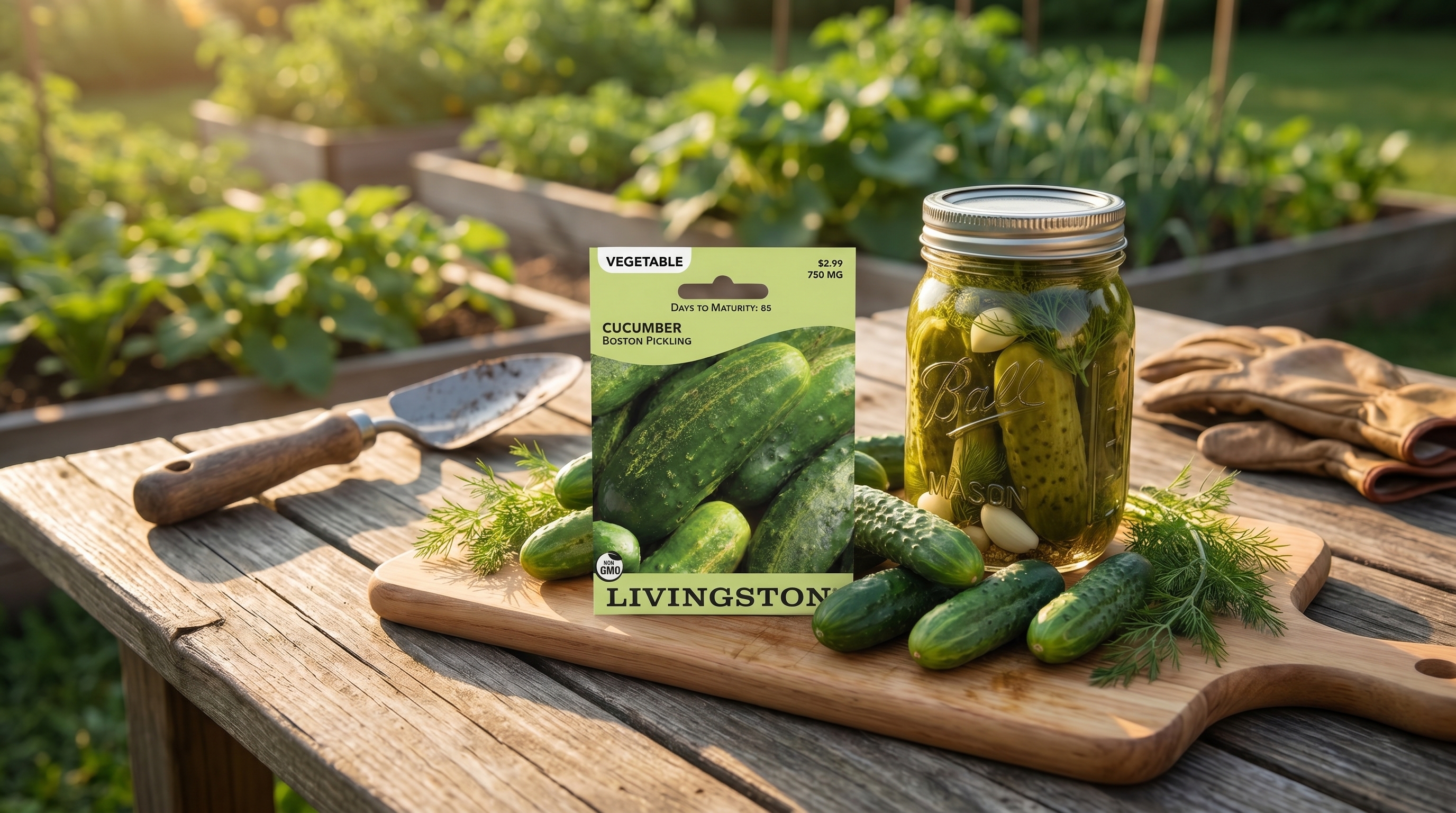
Most gardeners have grown cucumbers. Far fewer have grown the right cucumber for the thing they actually want to do with them. If your goal is fresh slicing — cucumber in a salad, on a vegetable tray, sliced alongside a summer sandwich — a slicing variety is the correct tool. But if what you're after is a jar of genuinely crisp, properly textured homemade pickles, you need a pickling variety, and the Livingston Seed Cucumber (Boston Pickling) 750 mg is one of the most reliable pickling varieties you can grow in an Ohio garden. Bred specifically for the characteristics that make a good pickle — thin skin, firm flesh, compact fruit size, and a vine that produces prolifically across a long harvest window — it's the variety home canners and pickle enthusiasts have been planting for generations. We carry it at Liberty Farm, Home & Garden in Galion, Ohio.
Why Pickling and Slicing Cucumbers Are Not Interchangeable
The assumption that any cucumber can become a pickle is understandable — they're all cucumbers, after all. But the differences between a pickling variety like Boston Pickling and a slicing variety like Straight Eight or Marketmore are real and consequential, and they explain why homemade pickles made with slicing cucumbers so often disappoint.
Slicing cucumbers are bred for fresh eating. Their skin is thicker and waxier — developed to slow moisture loss and extend shelf life after harvest. That wax coating, which gives grocery store cucumbers their polished appearance, resists brine absorption. When you try to pickle a slicing cucumber, the brine has difficulty penetrating the flesh evenly, and you end up with pickles that are salty on the outside but bland in the center, or that turn soft and waterlogged from sitting in liquid they can't properly absorb.
Slicing cucumbers also tend to have a higher water content in the flesh itself and softer cell walls than pickling varieties. In a pickle jar, those soft cells collapse further under the acid and salt of the brine, producing a texture that is mushy rather than crisp — the single most common complaint about homemade pickles made with the wrong variety.
Pickling cucumbers like the Boston Pickling variety are bred from the ground up for brine compatibility. The skin is thinner and more permeable, allowing the brine to penetrate evenly throughout the fruit. The flesh is denser and has a firmer cell structure that holds up under the acidity of vinegar-based brines and the heat of water-bath canning. The fruit size — 3 to 6 inches at harvest — is proportioned to fit efficiently in wide-mouth mason jars without extensive trimming. Every characteristic of a pickling variety is a design choice aimed at producing a better finished pickle.
This distinction matters not because slicing cucumbers are inferior vegetables — they're excellent for their intended purpose — but because using the wrong variety for pickling is one of the most common reasons home canners end up with disappointing results despite doing everything else right.
What Makes the Boston Pickling Cucumber a Classic
The Livingston Seed Cucumber (Boston Pickling) is one of the oldest named pickling cucumber varieties in American home gardening — a variety that earned its reputation over more than a century of use by home canners who needed a cucumber that consistently produced good pickles and didn't require a lot of specialized care.
The plants produce abundantly and continuously throughout the growing season, setting fruit on compact vines that can be grown on a trellis or allowed to sprawl depending on your garden layout. The fruits are dark green with distinctive light-colored spines — the traditional pickling cucumber appearance — and are best harvested young, at 3 to 4 inches, for gherkins or small dill pickles, or allowed to reach 5 to 6 inches for full-size dills or bread-and-butter pickle slices.
The skin is thin enough that brine penetrates efficiently without preliminary steps like peeling or scoring. The flesh is firm-textured and holds that texture through water-bath canning better than most slicing varieties — which means your shelf-stable pickles come out of the jar with snap rather than mush. The seed cavity is proportionally smaller than in slicing varieties, giving you a higher flesh-to-seed ratio that produces a more solid, satisfying pickle.
As a non-GMO open-pollinated variety, the Boston Pickling cucumber is also seed-saveable. Gardeners who want to extend their seed supply year over year can select the best fruits at the end of the season, allow the seeds to fully mature, and save them for the following spring — a practical benefit for those who prefer not to buy new seed every season.
| Feature | Details |
|---|---|
| Type | Pickling cucumber (vining) |
| Days to Maturity | Approximately 55–60 days from transplant |
| Fruit Size at Harvest | 3–4 inches for gherkins; 5–6 inches for dill pickles |
| Skin | Thin, permeable — ideal for brine absorption |
| Flesh | Firm, dense — holds texture through canning process |
| Seed Type | Non-GMO, open-pollinated; seed-saveable |
| Growth Habit | Vining — can be trellised or allowed to sprawl |
| Packet Size | 750 mg |
| Available At | Liberty Farm, Home & Garden, Galion, Ohio |
When and How to Plant in Ohio
Cucumbers are a warm-season crop with essentially zero frost tolerance. A light frost that barely injures tomatoes or peppers will kill cucumber seedlings outright, and seeds sown in cold soil rot rather than germinate. In central Ohio — including the Galion area — the safe planting window for cucumbers outdoors begins around May 15, after the risk of late frost has passed and soil temperatures have had time to warm consistently.
Soil temperature is the real trigger for cucumber germination: seeds need a minimum of 60°F to germinate at all, but sprout most reliably and quickly when the soil is 70°F or warmer. In Ohio's spring, soil at those temperatures often doesn't arrive until mid-to-late May, which aligns well with the frost-free planting window. If you're impatient and want to get a head start, you can start seeds indoors 3 to 4 weeks before the outdoor transplant date — roughly late April. Cucumbers grow quickly once they're established outdoors and don't actually benefit from a very long indoor head start.
Direct seeding into warm garden soil is equally effective and avoids the transplant shock that cucumbers can be somewhat sensitive to. Sow seeds 1 inch deep in hills (3 to 4 seeds grouped together) or rows, spacing hills 4 to 6 feet apart to give the vines room to spread. If you're trellising, plants can be spaced closer — as tight as 12 inches apart in a single row along a trellis — since vertical growing reduces the ground footprint.
For Ohio gardeners, a planting date of May 15 to June 1 gives cucumbers enough warm-season growing time to produce a full harvest before the plants naturally decline in late summer. A second planting in late June can extend the harvest into September if your first planting shows signs of powdery mildew or vine decline by mid-August, which is common in Ohio's humid summers.
Growing Cucumbers in Ohio: Soil, Water, and Support
Cucumbers are heavy feeders and heavy drinkers — they produce large amounts of fruit quickly and need consistent inputs to sustain that production. Understanding what they need from soil, water, and structure sets you up for a significantly more productive season than treating them like low-maintenance plants.
Soil: Cucumbers grow best in loose, well-drained, fertile soil with a pH between 6.0 and 7.0. They do not tolerate compacted or waterlogged soil — the roots need oxygen, and standing water creates anaerobic conditions that quickly lead to root rot and vine collapse. If your garden soil is heavy clay, amending it generously with compost before planting is one of the single most impactful investments you can make for cucumber yield. Raised beds with a quality planting mix are ideal for cucumbers: excellent drainage, good fertility, and the loose structure that lets roots establish quickly.
Watering: Consistent moisture is essential, especially from flower set through fruit development. Cucumbers are roughly 96% water by weight, and the plant needs water to build every fruit it produces. Inconsistent moisture — wet spells followed by dry spells — leads to bitter-tasting cucumbers (the plant produces cucurbitacins in response to stress) and can cause blossom-end soft spots. Aim for about 1 to 2 inches of water per week in dry weather. Drip irrigation or soaker hoses are ideal because they deliver water at the root zone without wetting foliage, which reduces the risk of fungal diseases. Overhead watering late in the day in Ohio's humid summers is one of the fastest ways to encourage powdery mildew.
Fertilizing: Cucumbers benefit from a balanced start-up fertilization at planting and a boost of nitrogen once the vines start running. Side-dressing with a balanced vegetable fertilizer when the vines reach 12 inches long is a standard approach. Avoid over-fertilizing with nitrogen once flowering begins — excess nitrogen at that stage drives vegetative growth at the expense of fruit production.
Trellising: While Boston Pickling cucumbers can be grown as sprawling ground-level vines, trellising provides real practical advantages. Fruit grown off the ground is straighter (gravity keeps hanging cucumbers uniform), better air circulation around the vines reduces fungal disease pressure, and harvesting is dramatically easier when you can see the fruit instead of hunting through ground-level vines. A simple cattle panel, wire fencing, or a dedicated cucumber trellis works well. The vines climb by tendrils and need only light guidance to stay on the trellis rather than sprawling sideways.
Harvesting Boston Pickling Cucumbers for the Best Pickles
Harvest timing is the most important variable in making genuinely good pickles, and it's where a significant number of home canners make their first mistake. The goal is to harvest cucumbers when they are young — smaller fruits, firm flesh, seeds barely formed. The longer a pickling cucumber stays on the vine past its optimal size, the more the seeds develop, the flesh softens, and the bitterness increases. Overripe pickling cucumbers make genuinely mediocre pickles regardless of how good your brine is.
For gherkins and small dill pickles — the style that produces the crunchiest, most pickle-forward result — harvest at 2 to 4 inches. For bread-and-butter pickles or standard dill spears, harvest at 4 to 6 inches. At 6 inches or larger, the Boston Pickling cucumber is past its ideal window: the seeds have grown noticeably and the flesh is beginning to soften. These larger fruits can still be pickled but won't produce the same crisp result as younger harvests.
Like all cucumbers, Boston Pickling fruits grow remarkably fast in warm summer weather — a 3-inch cucumber on Monday can be a 6-inch cucumber by Thursday in July heat. Check your plants every 2 to 3 days at minimum during peak production. Missing a single harvest interval during a hot week will leave you with oversized, over-mature fruit that sets your pickle quality back significantly. Consistent, frequent harvesting also signals the plant to keep producing — cucumbers that are allowed to fully mature and yellow on the vine reduce or stop flower production entirely, as the plant shifts its energy to seed maturation rather than continued fruiting.
From Garden to Jar: A Brief Overview of Home Pickling
Growing the right cucumber is the foundation of good homemade pickles, but a few other factors determine whether your finished product is excellent or merely acceptable. This section isn't a full canning tutorial — USDA guidelines and tested recipes should be your primary reference for safe water-bath canning — but it covers the variables that most directly affect pickle quality.
Blossom-end removal: Before pickling, slice a thin disc off the blossom end of each cucumber — the end opposite the stem. The blossom end contains enzymes that contribute to softening during the pickling process. Removing it takes seconds and makes a measurable difference in final texture, particularly in quick-process pickles that aren't cooked.
Vinegar choice: Standard white distilled vinegar at 5% acidity is the most commonly used and the safest choice for water-bath canning because its acidity is consistent and clearly labeled. Cider vinegar at 5% acidity produces a more complex, slightly sweet flavor and works equally well from a safety standpoint but darkens the brine and the cucumber. Vinegar with an acidity lower than 5% is not safe for water-bath canned pickles without recipe adjustments and should be avoided.
Pickle crispness additives: If texture is a priority — and for most pickle enthusiasts it is — there are several traditional and commercial options for improving crispness. Grape leaves, oak leaves, or horseradish leaves added to the jar contribute tannins that inhibit softening enzymes. Ball Pickle Crisp granules (calcium chloride) are a reliable commercial option that adds no significant flavor but firms the cell structure of the cucumber. Keeping the cucumbers ice-cold right up to the moment they go into the jar also helps.
Salt selection: Use canning salt or pickling salt — plain sodium chloride without iodine or anti-caking agents. Iodized table salt can produce dark, cloudy pickles and is not recommended for canning. The amount of salt affects both flavor and preservation, and tested recipes give specific measurements that should be followed accurately.
Common Growing Problems and How to Handle Them
Cucumbers in Ohio face a predictable set of pest and disease pressures. Knowing what to watch for makes the difference between catching a problem early and watching it ruin a planting.
Cucumber beetles: Both striped and spotted cucumber beetles are major pests in Ohio, and they cause damage in two ways. The adults feed on leaves, flowers, and young fruit, causing direct damage. More seriously, they spread bacterial wilt, a disease caused by Erwinia tracheiphila that colonizes the vascular system of the plant and causes rapid vine collapse. Once a plant shows bacterial wilt — leaves that wilt progressively and don't recover overnight — there is no treatment; remove and dispose of the plant to prevent spread. Management focuses on exclusion and prevention: floating row covers applied at planting keep beetles off the plants during their most vulnerable early stage. Remove the covers once plants begin flowering to allow pollination.
Powdery mildew: By August in Ohio, nearly every cucumber planting will show some powdery mildew — the white powdery coating on the upper leaf surface that indicates fungal infection. Mildew doesn't kill plants immediately but progressively reduces the foliage's ability to photosynthesize, shortening the production window. Good air circulation (trellising helps significantly), watering at the root zone rather than overhead, and not crowding plants all reduce mildew pressure. Organic copper-based fungicides applied at the first signs of mildew can slow progression. Resistant varieties exist if mildew is a severe and consistent problem in your garden.
Bitter cucumbers: Bitterness is a stress response — cucumbers produce cucurbitacin compounds when the plant is under heat, drought, or nutrient stress. The solution is consistent watering and fertility rather than any post-harvest fix. Bitter cucumbers remain bitter; they can't be fixed in the jar. Consistent soil moisture throughout the season is the most important single factor in preventing bitterness.
Poor fruit set: Cucumbers produce separate male and female flowers. Male flowers appear first and drop off without producing fruit — this is normal and not a problem. Female flowers, which have a tiny proto-fruit at their base, need to be pollinated by bees to set fruit. If you're seeing many flowers but little fruit, poor pollination is usually the cause. Avoid applying insecticides during flowering hours. If you're growing under row covers for pest control, remove them when plants begin flowering to allow bee access, then reapply if pest pressure continues.
What to Grow Alongside Your Pickling Cucumbers
Cucumbers fit naturally into a kitchen garden alongside other vegetables that share their warm-season requirements and complement their culinary uses. A few pairings that work especially well in an Ohio summer garden:
Seed potatoes are a classic companion crop — not planted in the same bed, but timed similarly and harvested in the same general summer window. Kennebec Seed Potatoes are a reliable Ohio choice: a mid-season variety with high yields, good disease resistance, and excellent storage. The creamy, thin-skinned Yukon Gold Seed Potato is another option, well-suited for both fresh cooking and storage. Both go in the ground around the same time as cucumbers — after the last frost — and their harvest in mid-to-late summer lines up with the height of cucumber season.
For pollinator support — which directly improves cucumber fruit set — planting Livingston Seed Nasturtium (Alaska Dwarf) nearby is a practical strategy. Nasturtiums are excellent bee attractors, they produce edible flowers and leaves with a peppery flavor that's useful in the kitchen, and the Alaska Dwarf variety stays compact enough to work in raised beds or borders without crowding out vegetable plantings. More pollinators in your garden means better cucumber pollination and higher yields.
Dill is the one herb worth growing specifically for pickle-making. Fresh dill at the flowering stage — known as dill heads — is the classic flavoring for dill pickles, and growing your own ensures you have it at the right stage when your cucumbers are ready. Dill can be direct-seeded alongside cucumbers in early May (it tolerates cool soil better than cucumbers) and will be at the flowering stage right when your cucumber harvest begins in late July.
Growing Pickling Cucumbers at Liberty Farm, Home & Garden
The Livingston Seed Cucumber (Boston Pickling) is exactly the kind of garden seed that rewards the decision to plant the right variety rather than the closest available substitute. If you've made pickles with slicing cucumbers and been underwhelmed, growing Boston Pickling cucumbers this season is the simplest possible fix — same brine, same process, dramatically better results in the jar.
We carry the Livingston Seed Cucumber (Boston Pickling) at Liberty Farm, Home & Garden in Galion, Ohio, along with the companion seeds and supplies mentioned in this guide. Stop in and we can help you think through planting timing, soil preparation, and variety selection for your full summer vegetable garden. You can also browse available seeds and garden supplies online at libertyfhg.com.
Frequently Asked Questions
Keep Reading
Plant Cover Crops Now: An Ohio Home Garden Guide
Plant fall cover crops in an Ohio vegetable garden with practical guidance on timing, species, seeding, winter care, and spring termination.
Save This Summer’s Garden: A Practical Ohio Seed-Saving Guide
Save tomato, bean, pea, lettuce, marigold, zinnia, and other garden seeds with this practical late-summer guide for Galion and north-central Ohio.