
Why Your Rabbit's Hay Keeps Ending Up on the Cage Floor — and How to Finally Stop the Waste
Why feeding hay and pellets directly on the cage floor is one of the costliest mistakes small animal owners make, and how the Kaytee Hay & Food Bin Feeder fixes it with one simple, wall-mounted solution
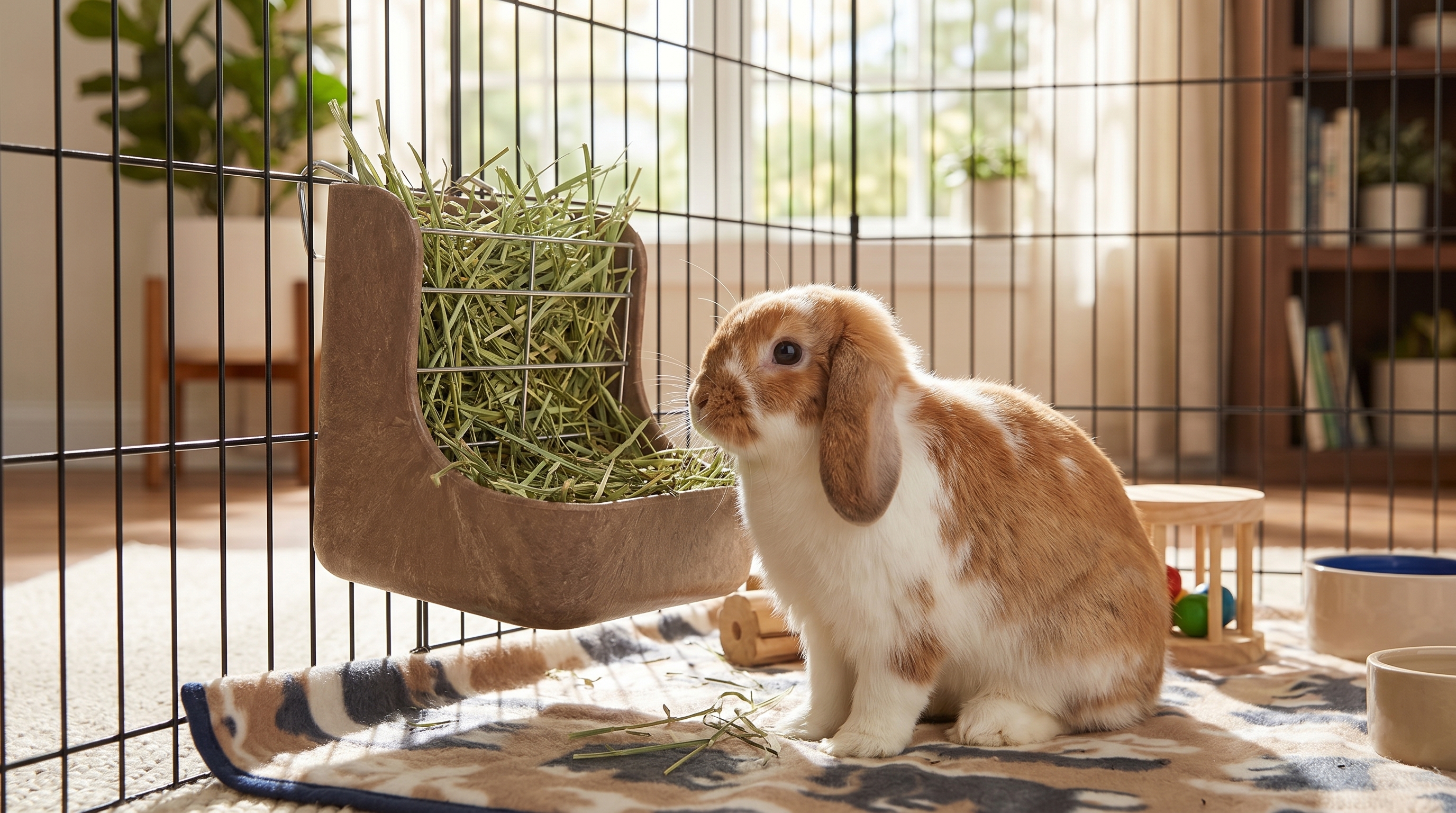
If you've kept a rabbit, guinea pig, or chinchilla for any amount of time, you've probably watched the same frustrating scene play out every day: you put fresh hay in the cage, and within an hour a large portion of it is on the floor, soiled with urine or feces, and completely ignored by the animal that needed it. Small animals waste enormous amounts of hay this way — not out of pickiness, but because their natural feeding instincts weren't designed for floor-level feeding in a confined cage. Once hay or food touches soiled bedding, the animal simply won't eat it. The result is a cycle of waste that costs you money, creates extra cleaning work, and — if the animal isn't getting enough fiber — quietly compromises their digestive health. The Kaytee Hay & Food Bin Feeder With Quick Locks is a direct fix: a wall-mounted feeder that attaches to wire cages with quick-lock clips, holds both hay and pellets elevated off the cage floor, and keeps everything clean, accessible, and in front of the animal where it belongs. Liberty Farm, Home & Garden in Galion, Ohio carries the Kaytee Hay & Food Bin Feeder so you can stop the waste cycle for good.
The Real Cost of Feeding Hay on the Cage Floor
Hay isn't cheap when you're going through it at the rate a rabbit or guinea pig consumes it. A healthy adult rabbit should have access to unlimited hay around the clock — hay makes up approximately 80% of a rabbit's diet and is essential for both their digestive health and their dental health. Guinea pigs are similarly hay-dependent, requiring constant access to grass hay as the foundation of their diet. Chinchillas, degus, and other small herbivores have the same need.
When that hay goes directly on the cage floor, it doesn't stay clean for long. Small animals use their cage floor as a bathroom. Hay that contacts soiled bedding absorbs urine, picks up fecal pellets, and becomes unpalatable — and in some cases, unsafe — within a short window. The animal may pick through it selectively at first, pulling out cleaner strands from the top, but the lower portion quickly becomes unusable. You end up discarding large amounts of hay that technically was never consumed, adding to your supply costs every week.
The waste compounds when you consider food pellets. Pellets poured into a dish or directly on the floor are subject to the same contamination risk, and the small, round pellets roll into bedding easily, becoming difficult to find and likely to be soiled before they're eaten. A wall-mounted bin feeder removes both problems — hay and food stay off the floor entirely, in a contained space that the animal can access without your having to create a clean zone in an inherently soiled environment.
Why Small Animals Refuse to Eat Soiled Hay
The instinct that makes a rabbit or guinea pig reject soiled hay is the same instinct that keeps them alive in the wild. Prey animals are highly attuned to contamination in their food sources. In a natural environment, grass or hay that smells of urine or feces is either fouled by another animal — a potential disease vector — or contaminated by the animal's own waste, which they've learned to avoid as a basic sanitation behavior.
This instinct doesn't disappear in captivity. A rabbit that has soiled the hay in their cage will continue pulling clean hay from the top for a while, but once the concentration of soiled material becomes significant, most rabbits simply stop eating from that pile. They don't make exceptions because the hay is expensive or because you just put it in. Their instincts override any other consideration.
This is a particularly important issue because hay deprivation — even partial — is one of the more serious dietary problems a small animal can experience. Rabbits and guinea pigs have continuously growing teeth that require the physical act of chewing coarse hay fiber to wear down properly. Insufficient hay intake leads to dental malocclusion, a painful condition where teeth grow unevenly and interfere with eating. It also disrupts gut motility, which in rabbits can escalate to GI stasis — a potentially life-threatening slowdown of the digestive tract. The difference between an animal eating freely from a clean hay feeder and one picking reluctantly through a soiled pile on the cage floor is not trivial from a health standpoint.
How the Kaytee Hay & Food Bin Feeder Works
The Kaytee Hay & Food Bin Feeder is a dual-compartment bin feeder designed specifically for wire cage attachment. The feeder mounts on the outside of a wire cage wall and presents hay and food through the cage wire so the animal can pull hay strands through and eat pellets from the bin without the feeder taking up floor space inside the cage. This wall-mount design is the key feature that separates a proper hay feeder from simply tossing hay into a corner of the cage.
The design allows the animal to forage naturally from the bin — reaching through the cage wire, selecting hay strands, and eating at their own pace — while the feeder keeps the supply contained, clean, and off the soiled cage floor. The bin holds enough hay for extended feeding sessions without requiring constant refilling, and the food compartment below or alongside the hay section keeps pellets similarly accessible and off the floor.
The unit is made of durable plastic construction that tolerates the chewing and pawing that small animals inevitably direct at anything within reach. It's designed to be used daily, cleaned regularly, and withstand the sustained attention of animals that will invariably test it with their teeth. The solid construction holds up to regular use without cracking or deforming.
Quick-Lock Attachment: What It Is and Why It Matters
The defining mechanical feature of the Kaytee Hay & Food Bin Feeder is the quick-lock clip attachment system. Standard feeder attachments use wire ties, zip ties, or simple hooks that require threading through cage bars — functional, but slow and often frustrating to remove and reattach when you need to clean the feeder.
Quick-lock clips work differently. They snap into position on the cage wire bars with a single motion and release just as easily. You don't need tools, and you don't need to work around awkward angles with wire ties. The feeder goes on in seconds and comes off in seconds — a practical difference when you're cleaning the feeder weekly or repositioning it on the cage as your setup changes.
The quick-lock system also makes it easier to remove the feeder for thorough cleaning, which matters for sanitation. A feeder that is difficult to remove tends to stay in place longer between cleanings, allowing feed residue and moisture to accumulate inside the bin. A feeder that releases quickly gets cleaned more often, which keeps the feed inside fresher and the feeder itself from developing mold or bacterial growth in the corners and seams.
For households with multiple small animals in multiple cages, quick-lock attachment means moving feeders between cages during cleaning or cage rearrangement is fast rather than a project. That practical ease of use changes how often the feeder actually gets removed and properly cleaned versus how often it gets wiped down in place because removal feels like too much effort.
Which Animals Can Use This Feeder
The Kaytee Hay & Food Bin Feeder is designed for the full range of small herbivorous and omnivorous small animal pets kept in wire cages. The most common users are:
- Rabbits. The primary market for hay feeders. Rabbits eat more hay than any other small animal and are the most likely to be kept in wire-sided cages that accept a wall-mounted feeder. The foraging behavior of rabbits — pulling hay strands through the cage wire one by one — is exactly what the feeder accommodates.
- Guinea pigs. Like rabbits, guinea pigs require constant access to grass hay. They tend to be less discriminating foragers than rabbits, but they still benefit substantially from elevated feeding that keeps their hay clean and dry.
- Chinchillas. Chinchillas eat hay daily and are kept in wire cages. Their smaller size means they may work through hay more slowly than a rabbit, but the same floor-contamination problem applies. The feeder works well for chinchilla cages with standard wire bar spacing.
- Hamsters and gerbils. While hamsters and gerbils are omnivores with different dietary needs than strict herbivores, the food compartment portion of the feeder is useful for keeping pellets or seed mixes off the cage floor and out of bedding.
- Degus, rats, and other wire-cage small animals. Any small animal kept in a wire cage that requires a clean, accessible food source benefits from wall-mounted feeding. The Kaytee feeder's bin design accommodates a variety of dry foods beyond hay.
The key requirement is a wire cage — this feeder is designed to clip directly to wire bars and doesn't work with solid-sided enclosures like glass aquariums or plastic tubs without wire panels.
Hay Selection: What You Put in the Feeder Matters Too
A good hay feeder solves the contamination and waste problem, but the quality and type of hay you fill it with determines whether your animal actually thrives. Not all hay is the same, and the nutritional differences between hay types are significant enough to matter for your pet's long-term health.
The main types of hay for small animals and how they differ:
- Timothy hay. The gold standard for adult rabbits and guinea pigs. Timothy is a grass hay with an ideal ratio of fiber to protein — high in indigestible fiber for gut motility and dental wear, moderate in protein, and low in calcium (excess calcium can contribute to urinary tract issues in rabbits). Adult rabbits and guinea pigs should eat primarily timothy hay throughout their lives.
- Orchard grass hay. A softer grass hay with a slightly different texture and taste than timothy. Some animals prefer it. Nutritionally similar to timothy — an appropriate everyday hay for adult animals. Useful for encouraging hay consumption in picky eaters who have rejected timothy.
- Meadow hay and botanical blends. Mixed grass hays that include a variety of grass species and sometimes dried flowers or herbs. These add sensory variety to the diet and can encourage foraging behavior. Not a replacement for a primary hay like timothy but a useful supplement.
- Alfalfa hay. A legume hay rather than a grass hay — significantly higher in protein, calcium, and calories. Appropriate for young animals (under six months), pregnant or nursing females, and underweight animals that need to gain condition. Not recommended as an everyday hay for healthy adult rabbits and guinea pigs due to excess calcium and calorie content.
The Kaytee Hay & Food Bin Feeder accommodates all of these hay types. The bin size works well with standard flake-cut hay from bales or compressed bags. Hay with very long strands may require a slight adjustment in how you pack the bin, but the feeder handles typical commercial small animal hay packaging without difficulty.
Using the Food Compartment for Pellets
The dual-purpose design of the Kaytee feeder — hay in one section, food in another — is a practical convenience that simplifies feeding management. Rather than maintaining a separate food dish on the cage floor for pellets (where it inevitably gets tipped, soiled, and buried in bedding), the food compartment on the feeder keeps pellets contained and elevated in the same unit the animal is already visiting for hay.
A few practical notes on using the food compartment effectively:
- Portion the pellets intentionally. Pellets should not be offered in unlimited quantities for most adult rabbits and guinea pigs. An appropriate pellet portion for an adult rabbit is roughly one-quarter cup per five pounds of body weight per day. The food compartment helps with portioning because you fill it with a measured amount rather than pouring into a bowl and losing track. When it's empty, it's empty — a clear signal that the daily allotment is gone.
- Choose the right pellet. Look for pellets where hay or grass is the first ingredient, with minimal additions of seeds, dried fruits, or colored puffs. Mixed "muesli" style diets encourage selective feeding — animals pick out the high-sugar, high-carbohydrate pieces and leave the nutritious pellets. A plain, uniform pellet is a better choice nutritionally and works better in the bin compartment because it doesn't separate into layers the animal can pick through.
- Keep the compartment dry. Pellets that absorb moisture from the animal's mouth or from humidity can clump and mold in the compartment. Check the food compartment at each fill and remove any clumped, wet, or discolored pellets before refilling with fresh food.
Placement, Setup, and Getting Your Animal Used to the Feeder
Installing the Kaytee Hay & Food Bin Feeder takes under a minute. Clip the quick-lock attachments onto the wire bars at a comfortable height for your animal — the bin should be positioned low enough that the animal doesn't have to strain upward to reach the hay or food, but high enough that the floor level remains below the bottom of the bin. For rabbits and guinea pigs, this is typically at floor level against the lower cage bars, angled slightly so the animal can access the contents comfortably from inside the cage.
Most animals discover the feeder within a few hours of installation, particularly if they were previously fed hay or pellets from the area of the cage where you've installed the feeder. You can encourage early discovery by placing a small amount of hay directly on the floor near the feeder for the first day — as the animal investigates, they'll find the feeder and begin pulling hay from the bin naturally.
If your animal initially ignores the feeder, try placing a particularly fragrant hay variety — fresh orchard grass or a botanical blend — in the bin. The stronger smell attracts attention and encourages investigation. Once the animal has pulled hay from the bin a few times, the behavior becomes habitual.
Positioning note for multi-animal cages: if you keep a bonded pair of rabbits or guinea pigs together, consider installing two feeders on opposite sides of the cage. Some animals are territorial about resources, and a second feeder eliminates competition that might discourage a subordinate animal from eating freely.
Cleaning and Maintenance
The quick-lock removal system makes cleaning the Kaytee Hay & Food Bin Feeder practical rather than a chore. A basic maintenance routine keeps the feeder sanitary and the food inside fresh:
- Daily check. Remove any soiled, wet, or clumped hay from the bin. Small animals can deposit fecal pellets directly into the hay bin while eating — a normal behavior that should be cleared out each day. Check the food compartment and remove any clumped or wet pellets. Top off both sections as needed.
- Weekly washing. Remove the feeder using the quick-lock clips. Empty any remaining hay and food. Wash the bin with warm water and mild, unscented soap. Use a small bottle brush to clean corners and seams where food residue accumulates. Rinse thoroughly and allow to dry completely before refilling and reattaching. A feeder returned to the cage while still damp encourages mold growth in the hay.
- Inspect for chew damage. Small animals chew on their feeders. Inspect the feeder periodically for cracked plastic, sharp edges, or structural damage that might injure the animal or allow the feeder to come loose from the cage wall. Replace the feeder if significant structural damage is present.
- Clean the attachment points. Hay chaff and food dust accumulate at the clip attachment points over time. A quick wipe during weekly cleaning keeps the clips operating smoothly and the contact points on the cage bars free of buildup.
| Specification | Details |
|---|---|
| Product | Kaytee Hay & Food Bin Feeder With Quick Locks |
| Brand | Kaytee |
| Attachment Type | Quick-lock clips — attaches to wire cage bars without tools |
| Compartments | Dual — hay and food/pellet sections |
| Material | Durable plastic |
| Cage Compatibility | Wire cage construction (standard bar spacing) |
| Best For | Rabbits, guinea pigs, chinchillas, hamsters, and other small animals in wire cages |
| Key Benefit | Keeps hay and food elevated off cage floor — eliminates floor contamination waste |
| Cleaning | Removable via quick-lock clips; wash with warm water and mild soap |
| Available At | Liberty Farm, Home & Garden, Galion, Ohio |
Stop by Liberty Farm, Home & Garden in Galion, Ohio to pick up the Kaytee Hay & Food Bin Feeder With Quick Locks. Our team can help you find the right hay, pellets, and small animal supplies to go with it — everything you need in one stop to set your rabbit, guinea pig, or chinchilla up with a clean, waste-free feeding station.
Frequently Asked Questions
Keep Reading
Keeping Rabbits Cool in Ohio: A Practical Summer Heat-Safety Guide
Help rabbits handle Ohio summer heat with practical shade, ventilation, water, cooling, travel, outage, and emergency-readiness steps for responsible owners.
Why Your Rabbit's Salt Lick Keeps Ending Up in the Bedding — and the Simple Wire Fix That Solves It
Salt spools are one of the most common small animal accessories in any rabbitry or guinea pig setup — and one of the most commonly misused. The Little Giant Salt Spool Hanger clips to wire cages in seconds, keeps the spool elevated and clean, and costs almost nothing. Here is everything you need to know.