
Joint Support Your Dog Will Actually Take: A Complete Guide to Fromm Nutritionals Mobility Functional Dog Treats
Why the treat format solves the supplement compliance problem, how glucosamine and chondroitin protect aging joints, and which dogs benefit most from making mobility treats part of the daily routine
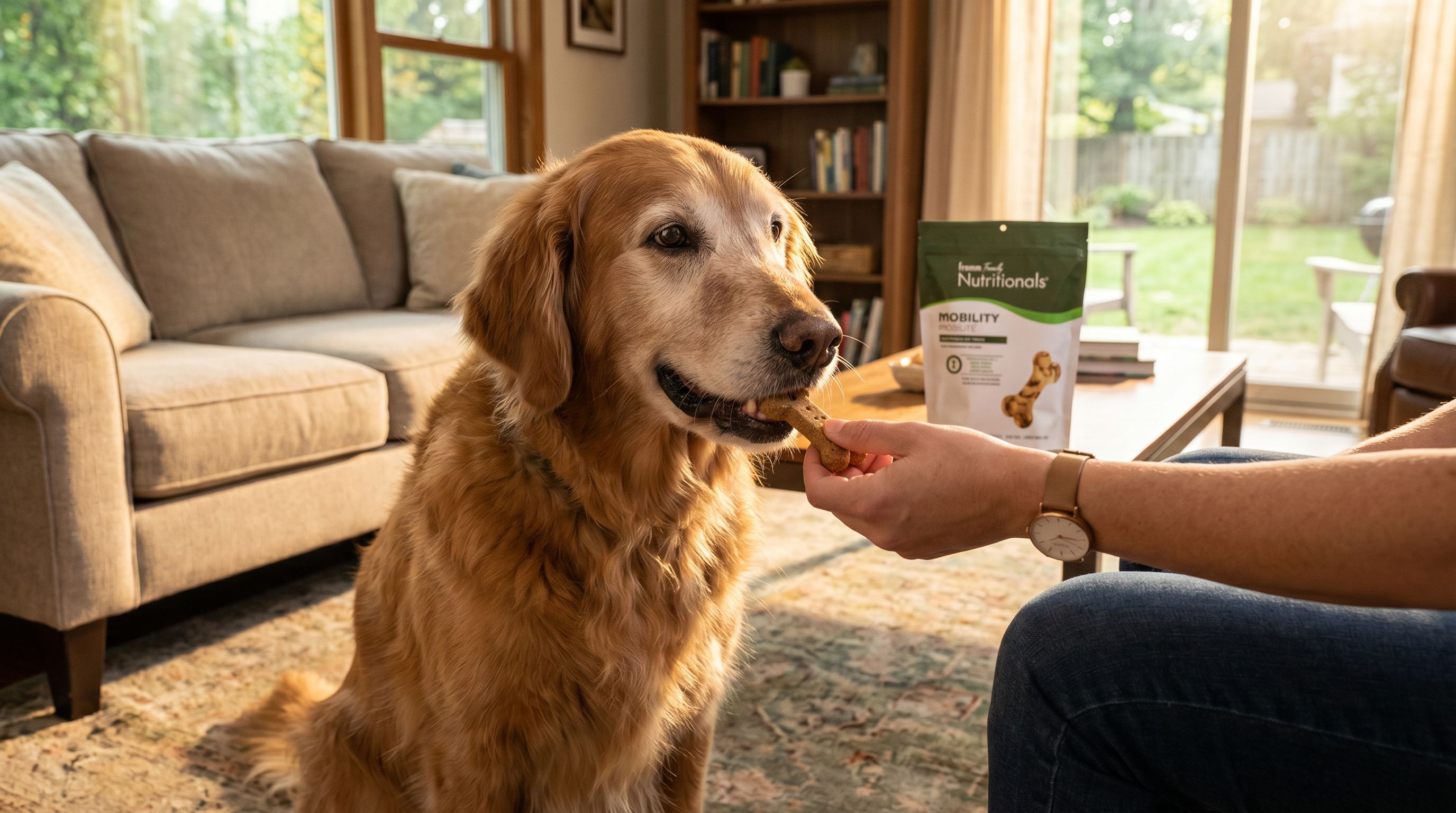
There is a particular kind of frustration that dog owners know well: the daily struggle of convincing a dog to take a supplement. Hide it in peanut butter — the dog eats around it. Crush it into food — dinner gets abandoned. Force it down the throat — you lose a finger. Joint disease affects a significant portion of dogs over age seven, and veterinarians consistently recommend glucosamine and chondroitin as foundational support, yet daily compliance is where most well-intentioned supplement routines fall apart. Fromm Nutritionals Mobility Functional Dog Treats (6 oz) solve this problem by delivering the same joint-supporting ingredients in a treat format dogs actively seek out — no hiding, no crushing, no wrestling.
Why Joint Health Is the Most Overlooked Senior Dog Priority
Canine joint disease follows a quiet, gradual trajectory that makes it easy to miss until it's significantly advanced. A dog that was bounding up the stairs at age four may hesitate at age eight, but the hesitation gets attributed to laziness, weather, or simply getting older — not to the arthritic changes that have been developing slowly in the joint cartilage for years. By the time stiffness or limping is obvious enough to prompt a veterinary visit, the degenerative process is often well established.
Osteoarthritis — the most common form of joint disease in dogs — is a progressive deterioration of articular cartilage, the smooth tissue that cushions the surfaces where two bones meet. Healthy cartilage acts as a shock absorber and a friction reducer, allowing joints to move fluidly without bone-on-bone contact. As cartilage breaks down, the joint becomes inflamed, movement becomes painful, and the dog's activity level decreases — which in turn allows muscle mass to atrophy, placing more mechanical stress on the compromised joint. It's a self-reinforcing cycle.
Large and giant breeds are at higher risk simply because more mass means more load on every joint. But even medium and small breeds develop joint disease with age, and some breeds carry a genetic predisposition. German Shepherds, Labrador Retrievers, Golden Retrievers, Rottweilers, and Bernese Mountain Dogs are among the breeds most frequently affected, but mixed breeds are not exempt. Any dog that was highly active in youth — working dogs, sporting dogs, dogs that spent years jumping and running hard — has put cumulative stress on joints that will express itself in middle age and beyond.
Glucosamine and Chondroitin: What They Actually Do Inside a Dog's Joint
Glucosamine and chondroitin are the two most studied and most consistently recommended nutritional supports for joint health in dogs. Understanding what they do — and what they don't do — sets realistic expectations and explains why consistent daily dosing matters so much.
Glucosamine is a naturally occurring compound that serves as a building block for glycosaminoglycans, the molecular scaffolding of cartilage. In a healthy joint, the body produces adequate glucosamine for cartilage maintenance and repair. As dogs age, that synthesis slows, and the balance tips toward net cartilage loss rather than maintenance. Supplemental glucosamine provides the raw material the body needs for repair activity, supporting the joint's own regenerative processes.
Chondroitin is a large molecule that forms part of the proteoglycan structure of cartilage, giving it its ability to absorb water and maintain its cushioning properties. Chondroitin also inhibits certain destructive enzymes that degrade cartilage matrix — an anti-catabolic effect that helps slow the breakdown process. In combination, glucosamine and chondroitin address joint health from two directions: supporting new cartilage synthesis while slowing existing cartilage destruction.
Neither compound is a cure for existing joint disease, and neither provides immediate pain relief the way an anti-inflammatory medication would. They work over time — which is precisely why daily consistency matters and why the treat format is such a practical advantage. The benefit of glucosamine and chondroitin is cumulative: dogs given these supplements consistently over months show measurably better joint function and comfort than dogs given them sporadically.
Which Dogs Benefit Most from Daily Mobility Treats
While any adult dog can benefit from joint support as a long-term investment in structural health, certain groups have more immediate and pressing reasons to start:
- Senior dogs (7+ years, or 5+ for large breeds): The threshold for "senior" shifts based on size — a Great Dane is considered senior at five, while a Chihuahua may not show age-related changes until nine or ten. Large and giant breeds experience accelerated joint wear and benefit from earlier intervention. If your senior dog is slowing down on walks, reluctant to jump, or stiff after resting, mobility support is appropriate now.
- Large and giant breeds at any age: Dogs over 50 pounds carry a disproportionate joint load throughout their lives. Starting joint support in middle age — before clinical signs appear — is a valid preventive strategy that many veterinarians advocate. Waiting for symptoms means the joint has already sustained significant wear.
- Dogs showing early stiffness or mobility changes: Dogs that hesitate before getting up, are slow to warm up on walks, or avoid stairs they previously climbed easily are signaling early joint discomfort. This is the ideal window for starting supplementation — the earlier support begins relative to the disease process, the more cartilage there is to protect.
- Dogs recovering from orthopedic injury or surgery: Dogs that have had ligament repairs (such as TPLO surgery for cruciate tears), fracture repairs, or other orthopedic procedures often have accelerated joint wear in the affected structures. Joint support during and after recovery is commonly recommended by veterinary rehabilitation specialists.
- Working and sporting dogs: Dogs that run, jump, turn, and perform athletic activities regularly are putting consistent mechanical stress on their joints. Prophylactic joint support for working herding dogs, hunting dogs, agility competitors, and similar athletes is an established part of performance dog care.
The Compliance Problem: Why Treats Win Over Pills and Powders
Ask any dog owner who has tried to supplement a skeptical dog and you'll hear variations on the same story. The pill that worked in cream cheese for three days until the dog figured it out. The powder that got eaten enthusiastically for a week, then left untouched at the bottom of the bowl after the smell grew familiar. The liquid that turned every meal into a stressful negotiation. The compliance problem with dog supplements is real and well documented — and it's the primary reason joint supplements that owners start rarely become supplements that dogs receive consistently.
The treat format sidesteps all of this. A dog that is excited to receive a treat does not require disguise, hiding, mixing, or convincing. The act of giving the treat is already part of most dogs' daily routine — there's an established behavioral script around treat time that makes the supplement delivery a positive event rather than a daily confrontation. Dogs that aggressively resist pill administration will walk up and take a Fromm Mobility treat directly from the hand.
This is not a trivial advantage. The best joint supplement in the world provides no benefit if it stays in the bottle. The treat format converts intent into actual daily delivery — and for a supplement category where consistency over months is what produces results, that conversion is the whole game.
What the Fromm Brand Represents
Fromm is a family-owned company with roots in Wisconsin that goes back four generations. In the pet industry — where brands are frequently acquired, reformulated, and repositioned based on market trends — Fromm's independent ownership is genuinely unusual. The company controls its own manufacturing, does not outsource production, and has maintained consistent quality standards without the reformulation cycles that occur when brands change ownership.
Fromm's core reputation was built on dry dog food — particularly its Four-Star Nutritionals line and its Fromm Gold formulas — which are known for high-quality protein sourcing, thoughtful formulation, and consistency batch to batch. The Nutritionals supplement treat line extends that quality commitment to functional nutrition: products that deliver specific health benefits through carefully sourced ingredients rather than dressing up generic ingredients with marketing claims.
For dog owners who already feed Fromm food, the Mobility treats are a natural extension of the same sourcing and manufacturing philosophy. For owners who don't feed Fromm food but are looking for a trusted source of functional joint treats, the brand's track record in the premium pet food segment provides meaningful assurance about ingredient quality and production consistency.
Comparing Joint Supplement Formats
| Format | Daily Compliance | Dog Acceptance | Flexibility | Best For |
|---|---|---|---|---|
| Pill / capsule | Challenging — requires hiding or pilling | Low — most dogs resist | High — precise dosing | Dogs with no aversion to pilling |
| Powder (food topper) | Moderate — requires food mixing | Variable — some dogs pick around it | High — adjustable dose | Dogs that eat all their food reliably |
| Soft chew / treat | High — dogs seek out the treat | High — treat-taking is a positive behavior | Moderate — per-treat dose | Most dogs, especially those who resist pills |
| Liquid | Moderate — must be added to food or water | Variable — depends on palatability | High — adjustable dose | Very small dogs where treat size is impractical |
How to Build a Joint Support Routine That Lasts
Starting a joint supplement routine is easy; maintaining it for years is where most owners fall short. Here's how to build a routine that holds:
- Anchor the treat to an existing daily event: Don't make the mobility treat a standalone thing you have to remember separately. Tie it to morning feeding, evening feeding, the end of the last walk, or any other daily anchor. The treat becomes part of the routine automatically rather than relying on willpower and memory.
- Keep the bag visible: Supplements that live in a cabinet stay in the cabinet. Keep the Fromm Mobility treat bag somewhere you'll see it during the routine you've anchored it to — on the counter near the food bowls, on the hook with the leash, wherever the daily dog care activities happen.
- Track early wins: Joint support doesn't produce overnight changes, but owners who watch closely often notice early improvements within four to eight weeks of consistent use — easier mornings, less hesitation on steps, more willingness to engage in play. Noting these changes reinforces the habit by connecting the daily action to observed outcomes.
- Tell your veterinarian: Let your vet know you've started joint supplement treats. This information is relevant to orthopedic assessments and can factor into decisions about whether additional interventions — prescription anti-inflammatories, physical therapy, laser therapy — are needed alongside nutritional support.
- Keep up with exercise: Joint support supplements work best in a dog that is maintaining lean muscle mass. Gentle daily movement — even short walks for dogs with significant limitations — supports joint health by maintaining circulation, strengthening stabilizing muscles, and preventing the stiffness that comes from prolonged inactivity. Don't reduce exercise when starting supplements; maintain it.
Related Products at Liberty Farm, Home & Garden
For dog owners building a complete joint and mobility support plan, Liberty Farm, Home & Garden carries complementary products alongside the Fromm Nutritionals Mobility treats:
- Bil-Jac America's VetDogs® Treats (10 oz) — A soft training treat from Bil-Jac, made with a vet-trusted brand commitment and ideal for dogs that need a softer chew option alongside their daily functional treat. Useful for training sessions that complement a healthy active lifestyle for joint-health dogs.
- Bil-Jac Grain Free Treats (10 oz) — A grain-free soft treat option for dogs with dietary sensitivities who need supplemental treating options without compromising their grain-free diet alongside a functional mobility treat routine.
Stop in at Liberty Farm, Home & Garden in Galion, Ohio to pick up Fromm Nutritionals Mobility Functional Dog Treats and ask us about our full selection of joint support and senior dog products. We're happy to help you find the right routine for your dog's age, breed, and activity level.
Frequently Asked Questions
Keep Reading

Back-to-School Routine Changes: Helping Dogs Adjust to More Time Alone
Prepare your dog for back-to-school schedule changes with gradual departures, safe enrichment, camera checks, and veterinarian-backed warning signs.

Ohio Flea Season Peaks in June — Why Your Small Dog Needs Protection on Before It's Too Late
June marks the annual turning point when Ohio's flea and tick populations reach peak activity. Here's what's happening in your yard right now, why small dogs are especially vulnerable, and why the Adams Plus Flea & Tick Collar for Small Dogs is the simplest way to stay ahead of an infestation before it starts.