
The Brooder Feeder Problem Nobody Talks About: Why Size Matters More Than You Think
How using the right-sized feeder in the brooder keeps feed fresh, reduces waste, and gives your chicks the best possible start — and why the Durvet 1 lb Poultry Feeder is designed specifically for this job
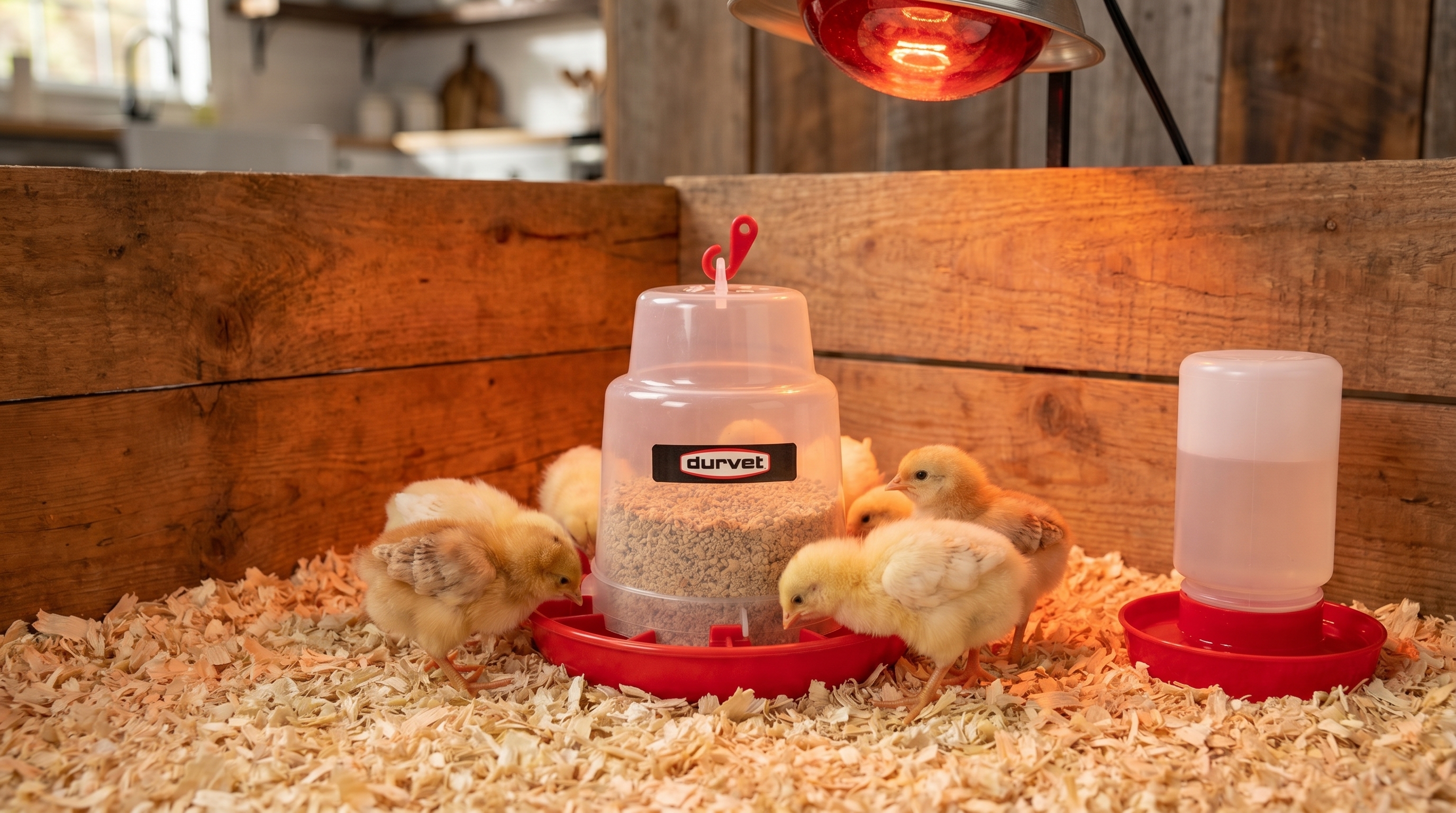
Here's a mistake that new chick raisers make more often than almost any other: they buy a full-sized feeder for the brooder. It seems practical — buy the equipment you'll use long-term, get it set up, done. But in practice, running a large feeder in a brooder with a small flock of day-old chicks creates a set of problems that undermine feed quality and chick health right from the start. Feed sits in a feeder sized for twenty adult birds, oxidizing and picking up brooder litter and droppings for days before the chicks eat through it. By the time the bottom of the feeder is cleared, the feed at the bottom is days old and anything but fresh. The solution is to match feeder size to the stage — and for the brooder, the Durvet Poultry Feeder (1 lb) is exactly what that stage calls for. It holds roughly one pound of chick starter, gravity-feeds consistently, gives you a clear view of remaining feed, and cleans up easily between refills. Liberty Farm, Home & Garden in Galion, Ohio carries the Durvet Poultry Feeder so you can set up your brooder right from day one.
Why the Brooder Stage Is Different — and Why Your Feeder Should Be Too
The brooder is where chicks spend their first several weeks of life — from hatch until they're fully feathered enough to handle outdoor temperatures. During this window, chicks are growing at a rate that won't be repeated at any other point in their lives. Proper nutrition during the brooder stage is foundational: chicks need consistent access to high-quality chick starter feed with the right protein content (typically 18–20%) to support skeletal development, feathering, and immune function.
The challenge is that the brooder environment creates specific pressures that a properly designed feeder needs to address:
- Small flock, small consumption. A brooder typically holds a small number of chicks — anywhere from six to twenty-five depending on your setup. These chicks eat far less feed per day than a mature laying flock. A large feeder that holds several pounds of feed will sit mostly full for days at a time.
- High contamination risk. Chicks are brooder-bound and active. They scratch, they dust-bathe if allowed, they walk through the feed. Litter, droppings, and wood shavings end up in open feeders constantly. The longer a batch of feed sits in the feeder, the more contaminated it becomes.
- Heat and moisture accelerate spoilage. Brooder temperatures run warm — 90–95°F in week one, stepping down gradually. That warmth, combined with any humidity in the brooder, accelerates feed degradation. Fresh chick starter loses quality faster in a warm brooder than in a cool storage bin.
- Chick starter is pelleted or crumbled, not loose grain. Unlike whole grains that keep well in the presence of air, milled chick starter with added vitamins and minerals begins to lose some nutritional quality as it oxidizes and is exposed to heat and light over time. Keeping batches small means each refill is fresher.
The result of all this: a feeder that holds only about one pound of feed is the right answer for most brooder setups. That quantity gets cleared by a small flock in a day or two, which means you're always refilling with fresh feed rather than waiting for a large reservoir of aging feed to be consumed. The Durvet 1 lb Poultry Feeder is built for exactly this calculus.
How Gravity Feeding Works — and Why It's Right for Baby Chicks
The Durvet Poultry Feeder uses a gravity-feed design: the feed reservoir (the jar portion) sits inverted over a base tray with a small gap that allows feed to flow by gravity into the tray as chicks eat. As the tray empties, more feed flows down from the reservoir to replenish it — automatically, without any mechanical parts, power, or adjustment required.
Gravity feeding is the appropriate mechanism for baby chicks for several reasons:
- Consistent availability. The tray stays supplied at all times without your intervention between refills. Chicks have access to feed whenever they want it, which matters during the first weeks when frequent eating supports rapid growth.
- Minimal feed depth in the tray. Because the tray only fills as chicks eat from it, the feed depth in the tray stays shallow — which means chicks don't wade through or sleep in deep piles of feed. This reduces contamination and waste.
- No mechanical failure points. Gravity feeders have no moving parts that can jam, break, or malfunction. The feeder works as long as it's filled.
- Appropriate pace for small flocks. The 1 lb reservoir is sized so that a small flock of chicks eats through the feed within one to two days — fast enough that the tray never sits with old feed in it for long, slow enough that you're not refilling every few hours in the early weeks when chick consumption is low.
The gravity design does require that the feeder sit level to function correctly. A tilted feeder will either flood one side of the tray with feed or block flow on the low side. In practice, a flat brooder floor surface is all that's needed — the feeder is lightweight enough that it stays put without fastening.
The Translucent Jar: Why Being Able to See Feed Level Matters
The Durvet Poultry Feeder uses a translucent (clear or semi-clear) jar for the reservoir rather than an opaque container. This detail is more useful than it sounds in daily brooder management.
In a busy brooder setup — especially during the first week when you're checking temperature, watching chick behavior, monitoring heat lamp height, and adjusting bedding — the last thing you want is to discover an empty feeder when you look in. Chicks that run out of feed and water during the first weeks of life experience stress that can set back development and suppress immune function.
With the translucent jar, a quick glance from outside the brooder tells you the feed level. You don't need to open the brooder, disturb the chicks, or pick up the feeder to check. You can see at a distance that the feeder is one-quarter full and plan your next refill accordingly. This is a small thing in isolation, but across days and weeks of brooder management it adds up — fewer surprises, faster checks, and peace of mind that the chicks always have what they need.
The translucent jar also lets you monitor feed quality at a glance. If feed in the jar starts to look wet, clumped, or discolored — indicating moisture intrusion, mold, or contamination — you can catch it before it gets to the tray and the chicks. That early visual catch is harder with an opaque container.
Cleaning Between Refills — and Why Easy Cleaning Matters in a Brooder
The Durvet feeder's base twists on and off, which is the correct design for a brooder feeder. Brooder conditions are inherently messy: chicks are curious and walk through everything, bedding material works its way into feeders, and moisture from the waterer can migrate to the feed tray. A feeder that's difficult to disassemble and clean will get dirty and stay dirty — which means chicks are eating from a contaminated surface regardless of how fresh the feed in the reservoir is.
The twist-off base makes a full feeder cleaning fast and practical:
- Invert the feeder (hand over the tray to trap remaining feed), then twist off the base.
- Dump any remaining feed, rinse the tray and jar with warm water, and scrub off any deposits.
- Let dry completely before reassembling and refilling — moisture in the feeder promotes mold growth in the feed.
- A quick clean between every second or third refill keeps contamination from building up in the tray and around the feed opening.
Full weekly cleaning with a diluted poultry-safe sanitizer is good practice during the brooder period. The simple two-piece construction means the feeder disassembles fully for thorough scrubbing without any hard-to-reach corners or components that trap debris.
Pairing the Feeder with the Right Waterer for a Complete Brooder Setup
The Durvet 1 lb Poultry Feeder is designed to pair with the Durvet 1-liter drinker (poultry waterer) to create a matched brooder setup — feeder and waterer at the same scale for the same stage. This matters because the same problems that plague oversized feeders in the brooder affect oversized waterers too: too much water sitting in a warm environment, harder to keep clean, and easy for chicks to walk through and contaminate.
A 1-liter waterer at the same scale as the 1 lb feeder creates a brooder setup where both feed and water are managed at the right volume for a small flock of chicks. You're refilling both on the same cadence — daily or every couple of days — which simplifies the brooder management routine.
If you're looking for a gravity waterer that scales up as the flock grows, the Lixit Chicken Feeder or Waterer with Reversible Base is worth considering as a step-up option. The reversible base design means it functions as either a feeder or waterer depending on configuration — useful if you're expanding your flock or setting up a second brooder space and want flexible equipment that serves multiple purposes.
Transitioning Out of the Brooder: When to Move to a Larger Feeder
The Durvet 1 lb Poultry Feeder is a brooder tool, not a long-term coop feeder. Understanding when and how to transition helps you get full value from the smaller feeder without trying to stretch it past its useful range.
The brooder period runs roughly six to eight weeks depending on breed and climate. As chicks feather out and approach coop-readiness, the signs that they're outgrowing the brooder feeder include:
- Refilling daily or more frequently. If you're filling the 1 lb feeder twice a day, the flock has grown beyond what the feeder is designed to support. This is the right time to move up to a larger hanging feeder or trough feeder sized for your full flock.
- Crowding at the feeder. If multiple chicks are constantly competing at the tray with others waiting, feeder access has become a bottleneck — which creates stress and uneven feed access across the flock.
- Physical size mismatch. Older chicks can topple a small gravity feeder or displace it by bumping into it. If the feeder is no longer stable because the chicks are larger than it's designed for, it's time to move to a floor or hanging feeder with more footprint and weight.
The 1 lb Durvet Poultry Feeder continues to be useful after the main flock transitions out — it's an excellent brooder feeder for subsequent batches of chicks, an isolation pen feeder for sick or injured birds, or a supplemental feeder in a small run where you want to offer a specific supplement or feed separate from the main flock feeder.
Diatomaceous Earth in the Brooder: Managing Mites and Litter Quality
While the feeder handles nutrition, litter management is the other major variable in brooder health. One product worth having on hand during the brooder period is Red Lake Diatomaceous Earth with Calcium Bentonite (20 lb). Diatomaceous earth is used in poultry keeping for a few related purposes:
- Litter treatment to reduce moisture and odor. Sprinkling DE lightly into brooder litter helps absorb moisture, which reduces ammonia odor and the wet conditions that promote bacterial growth. In a warm brooder where moisture from droppings and the waterer accumulates quickly, DE in the litter is a useful management tool.
- External pest deterrence. Northern fowl mites and poultry lice can affect young chicks. DE applied in the environment (bedding, dust bath areas) provides a physical barrier against soft-bodied insects and mites by damaging their exoskeletons.
- Dust bath supplement. As chicks get older and you provide a dust bathing area, mixing DE into the dust bath material helps chicks self-treat for external parasites — the same behavior adult chickens use instinctively.
The Red Lake formula includes calcium bentonite alongside the diatomaceous earth, which adds clay-based moisture absorption and additional benefits for litter management. Use food-grade DE (Red Lake meets this standard) and apply lightly — a heavy dusting creates a respiratory irritant. Think light topdressing rather than full coverage.
Supporting Chick Health After the Brooder
Once chicks are out of the brooder and integrated into the coop, their health management needs shift but don't disappear. One useful tool for mature birds and the occasional musculoskeletal issue that comes with active flock life is Absorbine® Veterinary Liniment Gel (12 oz). While primarily a large animal and equine product, Absorbine liniment gel is used by experienced poultry keepers for topical support on sore or inflamed leg and foot areas in mature birds — particularly in heavy breeds prone to bumblefoot or leg strain.
It's also worth thinking about water management at scale as your flock grows. For operations with multiple flocks or livestock sharing a property, the Tuff Stuff Heavy Duty Oval Tank (140 Gallon) is a practical large-volume water storage solution for filling waterers during dry periods or providing a central water source for larger poultry or livestock operations. Having consistent, clean water access at scale is one of the foundations of healthy flock management that often gets underplanned when a backyard flock starts small and grows quickly.
| Specification | Details |
|---|---|
| Product | Durvet Poultry Feeder |
| Capacity | 1 lb (chick starter feed) |
| Feed Mechanism | Gravity-fed — no moving parts |
| Jar Material | Translucent — feed level visible from outside |
| Base Design | Twist-on/off for easy cleaning and refilling |
| Best Use Stage | Brooder — day-old to approximately 4–6 weeks |
| Ideal Flock Size | Small brooder flocks (6–20 chicks) |
| Pairs With | Durvet 1L Poultry Drinker for complete brooder setup |
| Brand | Durvet |
| Available At | Liberty Farm, Home & Garden, Galion, Ohio |
Setting Up Your Brooder: A Practical Checklist
The Durvet Poultry Feeder is one piece of a brooder setup that needs several components working together. If you're preparing to receive chicks — either from Liberty Farm, Home & Garden's chick days or from a hatchery — a practical brooder checklist:
- Heat source. A heat lamp with a red bulb or a radiant heat plate (the plate type is safer in terms of fire risk). Target 90–95°F at chick level in week one, reducing by 5°F per week.
- Brooder enclosure. Cardboard ring, stock tank, plastic tote, or purpose-built brooder box — large enough for chicks to move away from the heat source when they need to cool down.
- Bedding. Pine shavings work well — avoid cedar in the first weeks as aromatic oils can irritate respiratory systems. At least 2–3 inches deep.
- Feeder. The Durvet 1 lb Poultry Feeder — sized for the brooder stage, gravity-fed, easy to clean.
- Waterer. A matched small waterer — the Durvet 1L drinker pairs with the 1 lb feeder for a complete setup. Clean and refill daily.
- Chick starter feed. An 18–20% protein medicated or non-medicated crumble depending on whether your chicks were vaccinated for coccidiosis. Keep the bag sealed and stored away from the brooder heat.
- Thermometer. You need actual temperature readings, not estimates. A simple dial or digital thermometer placed at chick level is essential.
Stop in at Liberty Farm, Home & Garden in Galion, Ohio for the Durvet Poultry Feeder and all the brooder supplies you need to get your chicks started right. Our team can point you to everything from the feeder to chick starter feed to heat lamp options — all in one stop.
Frequently Asked Questions
Keep Reading

Late-Summer Pasture Checkup: Repair, Reseed, or Rest Your Ohio Fields?
A practical late-August pasture guide for Ohio livestock owners: assess plant cover, soil fertility, weeds, grazing pressure, and whether to repair or reseed.
Molting Season Prep: How to Support Your Chickens Through the August Transition
Learn how to recognize and support your chickens through their annual molt in late summer and early fall. This seasonal guide from Liberty Farm, Home & Garden in Galion, Ohio covers nutrition, management, and timing for north-central Ohio flocks.