
When Beef Bones Don't Cut It: A Complete Guide to Nature's Own Smoked Pork Bones for Dogs
Why some dogs simply prefer pork, how natural smoking creates a safer and more appealing bone, what the 8-inch size is right for, and how to give any bone safely and responsibly
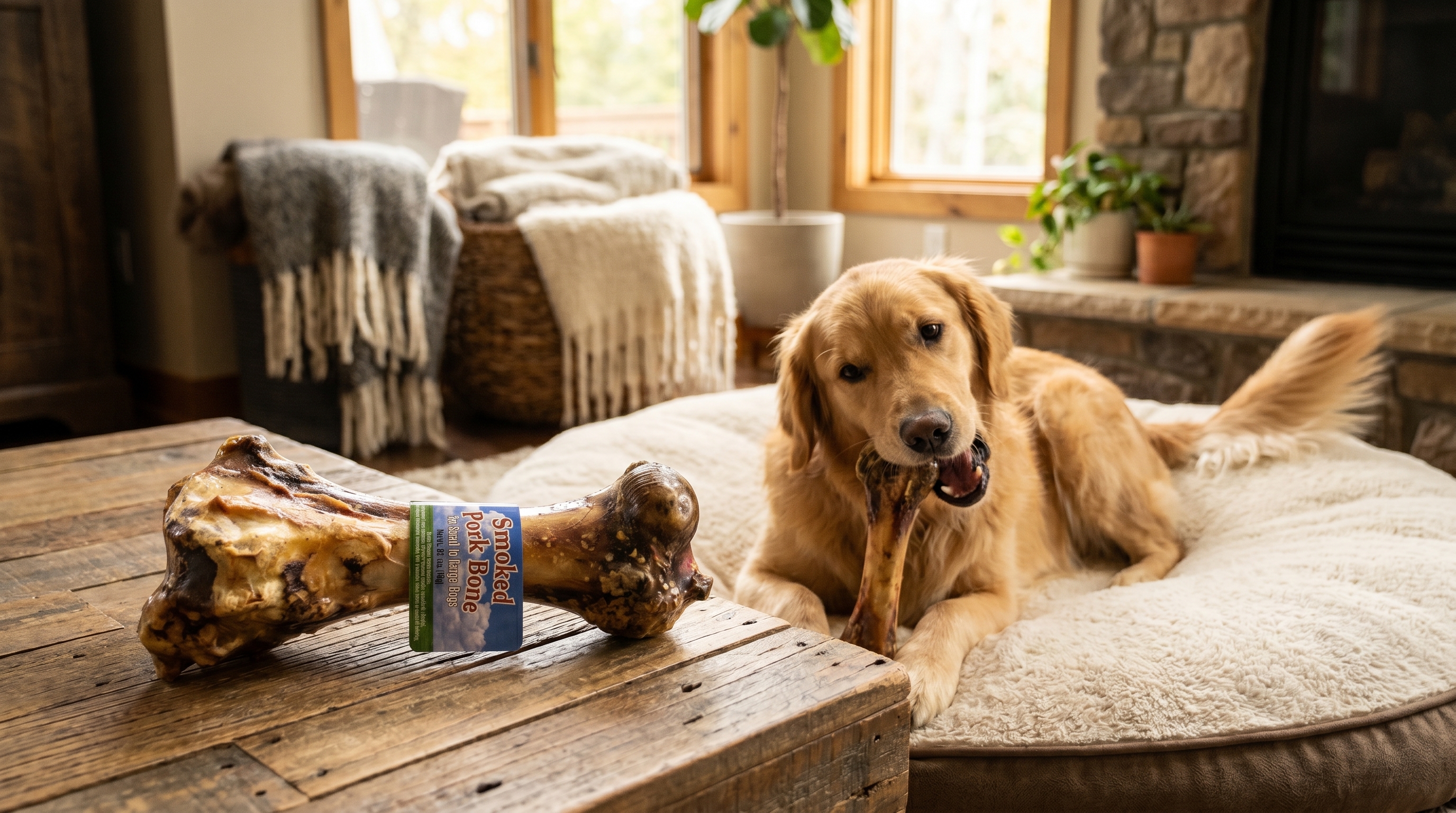
Walk into any pet store and the bone aisle is dominated by beef. Beef femurs, beef knuckles, beef marrow bones — every product competes on the same flavor profile, as though no dog on earth prefers anything else. But talk to anyone who has owned multiple dogs and a different reality emerges: some dogs go wild for beef and some dogs walk right past it, sniff once, and head back to their corner. Flavor preference is real in dogs, just as it is in people, and pork often lands differently than beef — in ways that some dogs genuinely prefer. Nature's Own Smoked Pork Bone (8 in) is built for exactly those dogs: the ones that lose interest in beef, the ones that never showed interest in the first place, or the ones whose owners simply want to rotate flavors to keep the chewing habit fresh and engaging.
Why Some Dogs Simply Prefer Pork Over Beef
Canine food preferences are more nuanced than most owners realize. Dogs have fewer taste buds than humans — around 1,700 compared to a human's roughly 9,000 — but their olfactory system makes up for it with extraordinary sensitivity. A dog evaluates a food item far more through scent than through taste, and the aromatic compounds produced by different protein sources vary dramatically. Beef and pork have genuinely distinct scent profiles at the molecular level, and individual dogs respond to those profiles differently based on their own sensory wiring.
Some of the variation in preference comes from early exposure. Dogs that ate pork-based foods or received pork treats during their developmental period often show a stronger preference for pork as adults. This is the same imprinting phenomenon that shapes food preferences in other species — early experience with a flavor creates a lasting neural association between that flavor and reward. A dog that grew up on beef-based kibble may find beef bone aromas unremarkable because they're simply background noise in its feeding experience, while pork carries novelty and intensity.
There's also the matter of dogs that have eaten so much beef that the novelty has simply worn off. Dogs are neophilic to a degree — they're drawn to novel stimuli — and a dog that has received beef bones for two years may be far less motivated by a beef bone than a dog encountering one for the first time. Rotating the protein in chews and bones is a legitimate strategy for maintaining engagement, and pork is the most natural first rotation from beef.
Finally, some dogs with mild beef sensitivities may do better with pork-based proteins in their chews. While chews are treats rather than dietary staples, a dog with a beef protein sensitivity that shows mild digestive sensitivity after beef chews may find pork sits considerably more comfortably — worth noting before assuming the problem is "bones in general" rather than the specific protein source.
What Natural Smoking Does — and Why It Matters
The word "smoked" on pet products carries baggage. Plenty of dog treats are flavored with artificial smoke flavoring — a liquid applied after processing that mimics the aroma of smoking without the actual thermal process. Natural smoking, by contrast, is the real thing: the bone is exposed to wood smoke at controlled temperatures for a period of time that transforms the outer surface through Maillard reaction chemistry and dehydration, creating a product that's genuinely different in structure and aroma from an unsmoked bone.
Natural smoking serves several functional purposes that matter for the dog and the owner:
- Preservation through dehydration and smoke compounds: The smoking process drives moisture out of the outer layers of the bone and infuses natural antimicrobial compounds from wood smoke — phenols, aldehydes, and organic acids — that inhibit bacterial growth. This means a naturally smoked bone can sit in a dry environment without refrigeration and remain stable in a way that a fresh or lightly processed bone cannot.
- Flavor penetration through the bone surface: Smoke compounds don't just coat the surface — they penetrate into the porous outer bone layer over the course of the smoking process. Dogs are experienced at stripping and accessing scent throughout a chew item, and a bone where flavor compounds have genuinely penetrated is more rewarding to investigate over time than one where the flavoring is only on the surface.
- Modified surface texture: Smoking slightly hardens and firms the outer surface of the bone, which affects how a dog initially engages with it. A properly smoked bone offers firm resistance that satisfies the chewing instinct without the bone being so rock-hard that it poses a fracture risk — though supervising any bone chew and following safety guidelines is always essential regardless of product type.
- Extended aromatic interest: Because smoke compounds are embedded in the bone's structure, the aroma profile that draws a dog to the bone and keeps them engaged doesn't fully dissipate after the first ten minutes of chewing. The scent renews as the dog works through successive layers, maintaining motivation for a longer session.
The 8-Inch Size: Which Dogs It's Right For
Sizing a bone chew to a dog's size and chewing style is one of the most important and most frequently overlooked aspects of bone safety and satisfaction. The 8-inch Nature's Own Smoked Pork Bone is a mid-to-large format chew — not a small novelty treat and not an oversized bone intended for working breeds and mastiffs. Understanding where an 8-inch bone fits in the sizing landscape helps owners make the right choice for their specific dog.
As a general framework:
- Dogs under 25 pounds: An 8-inch pork bone is generally oversized for a small dog and may be difficult to position and manipulate comfortably. A smaller format chew would be a better fit for dogs in this weight range. The concern isn't danger — it's that a bone too large for a dog's jaw to work comfortably won't get used effectively.
- Dogs 25–50 pounds: Medium-sized dogs in this range are typically good candidates for an 8-inch bone, particularly if they are moderate to enthusiastic chewers. The bone provides length that extends the chewing session and width that the dog can work around. Breeds like Beagles, Cocker Spaniels, Border Collies, and similar-sized dogs fit well in this category.
- Dogs 50–80 pounds: This is probably the sweet spot for an 8-inch pork bone. Dogs in this range — Labrador Retrievers, Golden Retrievers, Australian Shepherds, Boxers, Siberian Huskies, and similar mid-large breeds — have jaw size and chewing strength that engages an 8-inch bone effectively without making short work of it too quickly.
- Dogs over 80 pounds: Large and giant breeds with strong jaws and aggressive chewing habits may go through an 8-inch bone faster than their owners expect, or may be better served by a larger format. That said, moderate chewers in this size range often do well with the 8-inch — it depends more on the individual dog's chewing style than on weight alone.
Chewing style matters as much as size. A 60-pound dog that barely mouths bones and prefers to carry them around will get far more use from an 8-inch bone than a 45-pound dog that attacks chews with sustained, powerful jaw action. Know your dog's chewing intensity, not just their weight, when selecting a bone size.
Pork Bone vs. Beef Bone: Understanding the Differences
| Attribute | Smoked Pork Bone | Smoked Beef Bone |
|---|---|---|
| Flavor profile | Lighter, sweeter pork aroma — distinct from beef | Rich, savory beef aroma — familiar and widely used |
| Fat content | Generally leaner than beef marrow bones | Higher marrow fat content in femur and knuckle cuts |
| Best for | Dogs that ignore beef, pork-preferring dogs, flavor rotation | Dogs that are enthusiastic about beef and marrow |
| Digestibility | Generally similar; pork is well-digested by most dogs | Generally similar; beef is the most common protein in dog diets |
| Novelty value | High — less common in chew aisles, often preferred by dogs bored with beef | Lower for dogs exposed to beef chews frequently |
| Supervision required | Yes — always | Yes — always |
Bone Safety: What Every Dog Owner Should Know Before Starting
Natural bones are among the most nutritionally appropriate and behaviorally satisfying things a dog can chew — they've been part of canine life for tens of thousands of years. They are also one of the treat categories that requires the most active owner involvement to use safely. The risks associated with bone chewing are real but manageable through consistent supervision and a few straightforward practices.
The primary safety rules for any bone chew:
- Never leave a dog alone with a bone. The most common serious bone incidents occur when owners aren't present to monitor the chewing session and intervene when the bone reaches a size or shape that poses a swallowing or choking risk. Active supervision doesn't mean hovering — it means being in the same room and checking in frequently enough to catch when the bone has diminished to the discard threshold.
- Discard the bone when it becomes small enough to swallow. This is the single most important safety rule. A bone that a dog could potentially swallow whole or lodge in their throat needs to come out of rotation regardless of how much good chewing is still on it. Replace it with a fresh bone rather than pushing past the safe threshold.
- Do not give bones to dogs that have dental disease or crack teeth on hard items. Some dogs — particularly those with prior tooth fractures or known dental fragility — are not good candidates for hard bone chews. Consult your veterinarian if your dog has dental history that might make bone chewing inadvisable.
- Introduce bones gradually if your dog is new to bone chewing. A dog that has never had a natural bone may experience mild digestive upset the first few sessions simply from the novelty of the fat and protein content. Short supervised sessions with breaks help the dog's system adjust before transitioning to full chewing sessions.
- Keep fresh water available at all times during a chewing session. Bone chewing is work, and dogs that are actively engaged with a bone for extended periods need access to water. Dehydration during extended chewing sessions is a secondary concern that's easily managed by keeping a water bowl nearby.
How Chewing Supports Your Dog's Daily Life
A dog that chews regularly is a dog that is meeting a deeply wired behavioral need. Chewing is not merely an oral fixation — it's an ancestral behavior tied to feeding, stress regulation, and cognitive engagement that persists in domestic dogs regardless of how their diet is delivered. Understanding what chewing actually does for a dog helps owners see bones not as treats but as enrichment tools that serve the dog's whole-animal wellbeing.
The dental benefits of regular chewing are real and frequently cited by veterinarians as one of the most accessible forms of at-home dental hygiene. Mechanical abrasion as a dog works around a bone scrapes soft plaque deposits from tooth surfaces, particularly from the upper premolars and molars where tartar accumulation tends to be most problematic. No chew replaces professional dental cleaning for dogs with established tartar, but consistent chewing as part of a daily routine contributes meaningfully to the slower accumulation of plaque between cleanings.
The stress-management dimension of chewing is perhaps less discussed but equally important. Chewing triggers the release of calming neurochemicals — serotonin levels have been observed to rise during extended chewing sessions in canine research. Dogs that chew regularly often show lower levels of destructive behavior, anxiety-related behaviors, and restlessness. A dog that has an appropriate, satisfying outlet for the chewing drive is less likely to redirect that drive to furniture, baseboards, shoes, or other household items.
Cognitive engagement during bone chewing is another underappreciated benefit. A dog investigating a complex item — working around the contours, stripping smaller pieces, repositioning to get at different angles — is engaged in sustained problem-solving that exercises the brain along with the jaw. This mental component of chewing is part of why the chewing session often produces a calm, settled dog afterward: the dog has been genuinely busy and genuinely satisfied, not just physically tired.
Related Products at Liberty Farm, Home & Garden
For owners building out a chew and treat rotation for their dogs, Liberty Farm, Home & Garden carries a range of complementary options alongside the Nature's Own Smoked Pork Bone:
- Bully Stick 12 in — A single-ingredient, fully digestible chew for dogs that need a long-lasting option that's gentler on teeth than a hard bone. Bully sticks are an excellent companion to bone chewing in a rotation — softer in structure, digestible end-to-end, and highly palatable. Good for dogs that need more frequent chewing sessions than bones allow.
- Wholesomes Rewards Variety Medium (3 lb) — A mixed bag of training treats and reward bites for everyday use. Ideal for households that want a high-quality daily soft treat alongside a harder bone chew routine — the soft treats cover training and reward moments while the bone covers the long chewing sessions.
For multi-pet households, Liberty Farm, Home & Garden also carries cat enrichment options. If you're shopping for dogs and cats in the same household:
- Cat Candy Silver - Catnip & Silver Vine (1 oz) and Cat Candy Original - Leaf & Flower Catnip (1 oz) — Premium single-herb and blended cat enrichment options for feline companions. A fun enrichment treat for cats while the dog gets their bone session.
Stop in at Liberty Farm, Home & Garden in Galion, Ohio to see the Nature's Own Smoked Pork Bone and our full selection of natural dog chews. We're happy to help you match the right chew to your dog's size, chewing style, and dietary needs.
Frequently Asked Questions
Keep Reading
Back-to-School Routine Changes: Helping Dogs Adjust to More Time Alone
Prepare your dog for back-to-school schedule changes with gradual departures, safe enrichment, camera checks, and veterinarian-backed warning signs.
Ohio Flea Season Peaks in June — Why Your Small Dog Needs Protection on Before It's Too Late
June marks the annual turning point when Ohio's flea and tick populations reach peak activity. Here's what's happening in your yard right now, why small dogs are especially vulnerable, and why the Adams Plus Flea & Tick Collar for Small Dogs is the simplest way to stay ahead of an infestation before it starts.