
Beat the Summer Slump: How to Keep Your Ohio Vegetable Garden Thriving in July Heat
Ohio summers turn brutal fast. Here's how to protect your vegetable garden through the heat of July, keep the soil from baking, and make sure you're still picking produce in August and September.
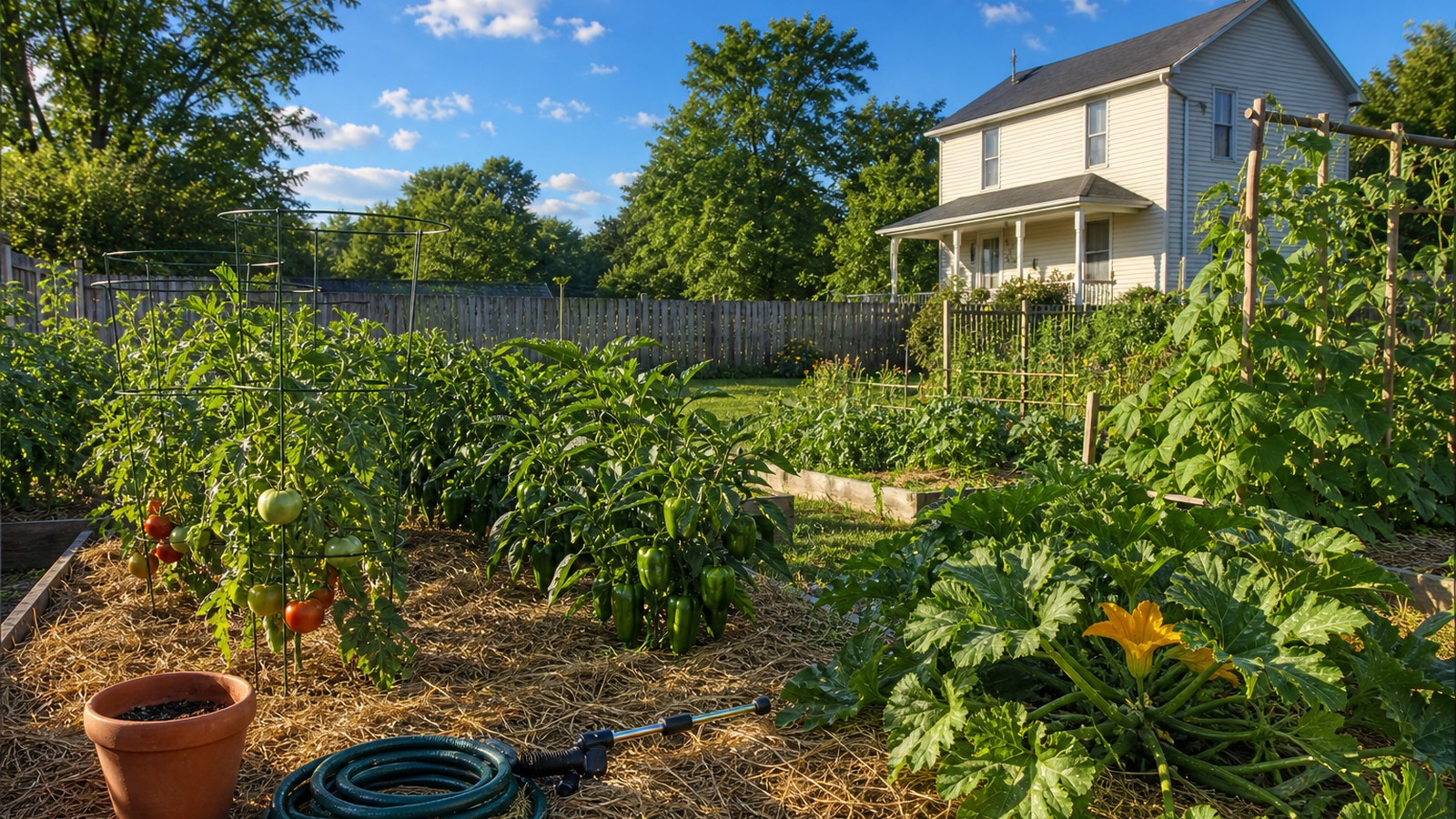
Mid-June in north-central Ohio is the moment the vegetable garden peaks — and also the moment things can quietly start going wrong. Soil temperatures at Galion-area gardens push past 80°F, rainfall turns inconsistent, Japanese beetles arrive on schedule, and plants that looked perfect a week ago suddenly drop blossoms, wilt by noon, and stall out. The good news is that July heat doesn't have to mean a July harvest drought. With the right mulching strategy, watering adjustments, quick succession planting decisions, and a clear-eyed approach to pest and disease pressure, you can carry real production all the way through August and into September. This guide walks you through exactly what to do right now, during the third week of June, and what to line up for the next six weeks.
Why Ohio Summers Are Hard on Vegetable Gardens (and What's Actually Happening to Your Plants)
USDA Hardiness Zone 6b, which covers Galion and most of Crawford County, gets its character not just from cold winters but from volatile summers. Average high temperatures in July routinely reach 83–87°F, but heat index values on humid days frequently push into the mid-90s. That matters because vegetable crops aren't responding to air temperature — they're responding to soil temperature, root zone moisture, and leaf surface temperature, all of which can be significantly hotter than what your thermometer reads in the shade.
Here's what heat stress actually does to common vegetable crops:
- Tomatoes drop blossoms when nighttime temperatures stay above 70°F or daytime temperatures exceed 90°F. Pollen becomes non-viable. The plant looks healthy but sets no fruit.
- Peppers exhibit the same blossom drop threshold, though many varieties tolerate heat slightly better than tomatoes once established.
- Beans and peas stop producing pods in sustained heat above 85°F and go dormant or die back entirely.
- Lettuce, spinach, and cilantro bolt — they send up a flower stalk, turn bitter, and become inedible within days of a heat spike.
- Zucchini and cucumbers may appear to thrive, but inadequate, inconsistent watering during fruit set causes blossom-end issues and bitter fruit.
The underlying cause in almost every case is the same: the plant's roots cannot deliver water fast enough to replace what's being lost through the leaves. When demand exceeds supply, the plant cuts non-essential processes — including reproduction — to protect itself. Your job as the gardener is to reduce demand (shade, mulch, spacing) and increase supply (consistent irrigation, healthy soil structure) so the plant never has to make that choice.
Soil in north-central Ohio also tends toward heavier clay in many areas, which creates a specific summer problem: clay soaks up heat, holds it overnight, and can go from saturated to bone-dry in four or five days during a hot spell. If you're on sandier ground near a creek bottom, you face the opposite — rapid drainage that requires more frequent watering. Knowing your soil type is the first variable in everything that follows.
Mulching Right Now Is the Single Highest-Impact Thing You Can Do
If there's one practice that pays off more than any other in an Ohio July garden, it's aggressive mulching applied before the heat peaks — which means doing it right now, this week. A 3-to-4-inch layer of organic mulch around your vegetable plants does five things simultaneously: it moderates soil temperature, slows moisture evaporation dramatically, suppresses late-season weed emergence, feeds soil biology as it breaks down, and protects the soil surface from the compacting impact of heavy summer rainstorms.
Research consistently shows that mulched garden soil stays 10–15°F cooler at the 2-inch depth compared to bare soil on a hot day. That difference is the gap between a tomato root system that's functioning normally and one that's under active stress.
Best Mulch Materials for Vegetable Gardens This Time of Year
- Straw (not hay): The classic vegetable garden mulch. Straw has low weed seed content, allows water to pass through easily, and breaks down over the season to add organic matter. Apply it 3–4 inches deep around tomatoes, peppers, squash, and cucumbers. Keep it an inch or two away from plant stems to prevent rot and slug habitat.
- Shredded wood mulch: More appropriate for pathways between rows than directly around vegetables, since it can temporarily tie up nitrogen as it breaks down. If you use it in the vegetable bed itself, apply a nitrogen-rich amendment first.
- Grass clippings: Work well in thin layers (1–2 inches) since they compact and can shed water if applied too thickly. Use only clippings from lawns that have not been treated with broadleaf herbicides in the past three mowings — herbicide residue in clippings can severely damage tomatoes and peppers.
- Shredded leaves: Excellent if you have them saved from fall. Mix with straw to prevent matting.
Apply your mulch now, after a good watering or a recent rain, so you're sealing moisture into the soil rather than sealing dryness in. You can pick up straw bales and bagged garden mulch materials at Liberty Farm, Home & Garden in Galion — they typically carry multiple mulch options suitable for vegetable gardens through the growing season.
Rethinking How and When You Water in Summer
Watering habits that worked fine in May often fail in July. The core adjustment is simple: water less frequently but more deeply, and shift your timing to early morning if you're not already doing so.
Depth Over Frequency
Most vegetables need the equivalent of 1 to 1.5 inches of water per week during summer. On a week with no rain, that means two deep waterings rather than five light ones. Light daily watering trains roots to stay near the surface where the soil dries out fastest. Deep, infrequent watering pushes roots down to cooler, more consistently moist soil — building genuine drought resilience over the course of the summer.
A simple way to check: after watering, push a screwdriver or wooden dowel into the soil. It should slide in easily to a depth of 6 inches. If it hits dry resistance at 2–3 inches, your watering wasn't deep enough or didn't run long enough.
Timing Matters More Than You Think
Water early — ideally between 5 and 9 a.m. This gives leaves time to dry before the heat of the day, dramatically reducing fungal disease pressure. Evening watering leaves foliage wet overnight, which is exactly the condition that promotes early blight on tomatoes, powdery mildew on squash, and downy mildew on cucumbers — all common problems in the humid Ohio summer.
Drip Irrigation and Soaker Hoses
If you haven't already set up drip irrigation or soaker hoses, mid-June is a perfect time to do it. Drip systems deliver water directly to the root zone, keep foliage dry, reduce evaporation by 30–50% compared to overhead watering, and can be put on a timer so your garden waters itself at 6 a.m. whether you're home or not. Soaker hose kits are inexpensive, easy to install between rows, and can be covered with mulch to reduce evaporation further.
Watch for signs of inconsistent moisture: blossom-end rot on tomatoes and squash (a calcium uptake problem caused by irregular watering), cracking or splitting tomato fruit (a sudden flush of water after dry conditions), and bitter cucumbers (stress-induced cucurbitacin buildup). All three are watering problems disguised as nutrient or pest problems.
What to Harvest, What to Pull, and What to Plant Right Now
The third week of June is a pivot point in the Ohio garden calendar. Some crops are winding down; others need to go in immediately if they're going to produce before frost. Being decisive about this — rather than letting exhausted plants linger — frees up space, water, and soil nutrients for crops that will actually feed you.
Pull These Now (or Very Soon)
- Spring lettuce, spinach, and arugula that have bolted. They won't come back from bolt in summer heat. Pull them, compost the plants, and use the bed for a warm-season crop.
- Overwintered garlic and shallots — if the tops have started browning and flopping (usually by late June in Ohio), it's time to harvest and cure them.
- Radishes and hakurei turnips past their prime. They get pithy and hot when left in hot soil.
Succession Plant These Now — You Still Have Time
North-central Ohio's average first fall frost date is around October 10–15. That gives you roughly 16–18 weeks from today, which is enough time to direct-sow or transplant several important crops:
- Bush beans: Direct sow every two weeks through late July for continuous harvests. Beans go from seed to table in 50–55 days. A succession sown today will produce through mid-August; one sown July 15 will carry you into September.
- Summer squash and zucchini: If your current plants are showing vine borer damage (watch for sudden wilting of one vine, sawdust-like frass at the stem base), sow a new hill now. New plants started in late June will outproduce stressed, borer-damaged older plants by August.
- Cucumbers: Direct sow by June 20–25 for a strong fall flush. Cucumbers mature in 55–65 days.
- Basil: Start new basil transplants or direct sow now — the current heat is ideal for germination, and fresh plants will outperform leggy spring-started ones through September.
- Kale, chard, and collards: Start seeds indoors or in a lightly shaded spot now for transplanting in mid-July. These crops will hit their stride in September's cooler temperatures and actually improve in flavor after a light frost.
Keep Up With Harvesting
This one is underrated: harvest beans, zucchini, cucumbers, and peppers constantly — every 1–2 days during peak production. Leaving mature fruit on the plant signals the plant to stop flowering. A zucchini left for four days becomes a baseball bat and stops the plant from setting new fruit. Pick aggressively and the plant keeps producing.
Summer Pest and Disease Pressure: What to Watch for Right Now
June and July bring a reliable cast of pest and disease problems to Ohio vegetable gardens. Most are manageable if caught early; nearly all become serious problems if ignored for two weeks.
| Problem | What You'll See | Crops Affected | Timing in Ohio | Management Approach |
|---|---|---|---|---|
| Squash Vine Borer | Sudden wilting of one vine; sawdust frass at stem base | Zucchini, winter squash, pumpkin | Adults active late June through July | Row cover before adult flight; succession planting; Bt or spinosad sprays on stems |
| Cucumber Beetle (Striped & Spotted) | Chewed leaves and flowers; bacterial wilt following feeding | Cucumbers, melons, squash | June–August | Row cover at transplant; yellow sticky traps; kaolin clay; pyrethrin spray |
| Japanese Beetle | Skeletonized leaves; bronze "lace" pattern | Beans, basil, raspberries, roses | Peak late June–mid-August in Ohio | Hand-pick into soapy water mornings; neem oil spray; trap crops |
| Tomato Hornworm | Large defoliated stems; black droppings on leaves below | Tomatoes, peppers, eggplant | July–August | Hand-pick; Bt (Bacillus thuringiensis) spray; encourage parasitic wasps |
| Early Blight (Alternaria) | Dark spots with yellow halos on lower tomato leaves | Tomatoes, potatoes | July–September, worsens with humidity | Remove affected leaves; mulch to prevent soil splash; copper fungicide; improve airflow |
| Powdery Mildew | White powdery coating on squash and cucumber leaves | Squash, cucumbers, melons | Mid-July through September | Baking soda spray; neem oil; remove heavily infected leaves; improve spacing |
| Aphid Colonies | Sticky residue; curled leaves; clusters on new growth | Peppers, beans, brassicas | Any time, worse in heat with water stress | Strong water spray; insecticidal soap; encourage ladybugs and lacewings |
| Product | Pest and disease control supplies: insecticidal soap, Bt concentrate, copper fungicide, neem oil, row cover fabric, sticky traps | |||
| Available At | Liberty Farm, Home & Garden - Galion, Ohio | libertyfhg.com | |||
The most important rule in summer pest management is scouting. Walk your garden every morning and spend two minutes actually looking at the undersides of leaves, the base of stems, and the soil surface. Most problems are easiest to handle when the population is still small — a dozen aphids washed off with the hose is a non-event; a thousand aphids three weeks later requires real intervention.
Feeding Your Garden Through the Heat: Mid-Season Fertilization
By mid-June, many vegetable plants have already consumed a significant portion of whatever fertilizer was worked into the soil at planting. Heavy-feeding crops like tomatoes, peppers, corn, and squash will begin showing the effects of nutrient depletion over the next four to six weeks if you don't side-dress or topdress with additional fertilizer.
What to Feed and When
The general rule for summer feeding is to shift away from high-nitrogen formulas (which drive leaf growth at the expense of fruit) and toward balanced or slightly phosphorus- and potassium-heavy formulas once plants are flowering and fruiting. Nitrogen is still needed — a deficiency shows as yellowing of older, lower leaves — but it's no longer the primary driver at this stage of the season.
- Tomatoes and peppers: Side-dress with a balanced granular fertilizer (something like 5-5-5 or 10-10-10) or a tomato-specific formula every 4–6 weeks through August. Scratch it into the top inch of soil 6 inches from the stem and water in well.
- Beans and peas: These fix their own nitrogen through root nodules and generally need no additional fertilizer — overfeeding with nitrogen actually reduces pod set.
- Corn: Side-dress with a nitrogen-heavy fertilizer when plants are knee-high (typically now if planted in early May), and again when tassels appear.
- Cucumbers and squash: Feed with a balanced fertilizer every 3–4 weeks. These are heavy feeders that respond well to consistent nutrition.
- Container vegetables: Any plant growing in a pot or container needs fertilizer far more frequently than in-ground plants — nutrients flush out with every watering. Use a liquid fertilizer every 7–10 days or a slow-release granular mixed into the top of the container monthly.
Slow-release granular fertilizers are convenient for busy gardeners — apply once and they feed for 8–12 weeks. Water-soluble fertilizers give you faster control and immediate results, which is useful when you spot a deficiency and want to correct it quickly. Many gardeners use both: a slow-release base application supplemented with liquid feeding during peak fruiting periods.
Staking, Pruning, and Managing Tomato Plants at Their Biggest
By mid-June in an Ohio garden, indeterminate tomato varieties — most heirlooms, Brandywine, Cherokee Purple, Black Krim, and most slicer types — are actively growing and will not stop until frost kills them. Left unsupported and unpruned, they'll become 5- or 6-foot tangles of foliage that produce poorly, develop disease readily, and are nearly impossible to harvest from. A few hours spent on tomato management now pays off in harvestable fruit through September.
Staking and Caging
Standard wire tomato cages sold in most garden centers are adequately sized for determinate (bush-type) tomatoes but are rarely strong or tall enough for indeterminate varieties, which can reach 6–8 feet. If your cages are already being overwhelmed, drive a 6-foot wooden stake or rebar stake alongside each plant and loosely tie the main stem to it every 12–18 inches as the plant grows. Soft cloth ties, strips of old cotton t-shirt, or commercial tomato clips all work well — avoid wire or thin twine that can cut into stems.
Pruning Suckers — The Right Amount
Suckers are the shoots that emerge in the "V" between the main stem and a leaf branch. On indeterminate varieties, removing suckers below the first flower cluster keeps the plant to one or two main stems, which improves airflow, speeds ripening, and makes the plant easier to manage. You don't need to remove every sucker — leaving one "secondary leader" gives you two strong fruiting stems without letting the plant go completely wild.
On determinate varieties, do not prune suckers heavily — you'll remove the majority of the fruiting wood and significantly reduce your harvest.
Removing Diseased Lower Foliage
As early blight begins appearing on the lower leaves of tomato plants (dark spots, yellowing, usually starting at the bottom of the plant and working upward), remove affected leaves promptly and dispose of them in the trash — not the compost pile. Keep the lowest 12 inches of the plant clear of foliage to reduce soil splash onto leaves during rain or irrigation.
Planning for the Fall Garden — Decisions You Need to Make This Month
It sounds early, but late June is exactly the right time to start planning your fall vegetable garden. Ohio's growing window is not unlimited, and the math is unforgiving: if you want broccoli in September, the transplants need to go in the ground by late July, which means starting seeds indoors by mid-July, which means ordering or buying seeds now.
Fall Crops Worth Growing in North-Central Ohio
The fall garden in Zone 6b is, in many ways, more rewarding than the spring garden. Pest pressure drops sharply after the first light frost, cool temperatures sweeten brassicas and root vegetables, and the cooler soil retains moisture better. The main crops to plan around:
- Broccoli and cauliflower: Start seeds indoors July 1–15 for transplanting in early August. These need 60–80 days from transplant to harvest.
- Cabbage: Same timing as broccoli. Fall-grown cabbage heads tend to be tighter and less prone to splitting than spring crops.
- Kale and collards: Direct sow by mid-July or start transplants now. Frost actually improves their flavor. These can often be harvested well into November.
- Spinach: Direct sow in late August for a true fall crop. Spinach germinates poorly in soil above 75°F — wait until the soil cools, or chill the seeds in the refrigerator for 24 hours before planting to improve germination rates.
- Carrots and beets: Direct sow by late July. Both improve significantly in sweetness after light frosts and can be left in the ground and harvested through November with a light straw mulch.
- Garlic: This one is for October, but now is the time to source your seed garlic before it sells out. Hardneck varieties like Rocambole and Purple Stripe perform excellently in Ohio winters.
Stop by Liberty Farm, Home & Garden at 222 S. Liberty St. in Galion to check what seeds and transplanting supplies are currently in stock — mid-summer seed availability can be hit or miss locally, and getting what you need now saves a last-minute scramble in July.
Quick Weekly Tasks to Keep the Summer Garden on Track
A productive July and August garden doesn't require hours of daily work — it requires consistent, focused attention. The following 20–30 minute weekly routine covers the highest-leverage tasks from now through mid-August:
- Monday – Scout for pests: Check the undersides of leaves on squash, beans, peppers, and tomatoes. Look for eggs, larvae, feeding damage, and aphid colonies. Address anything you find before the week progresses.
- Tuesday – Water check: Push a screwdriver or dowel into the soil near your heaviest feeders. If it's dry below 3 inches and there's been no rain, water deeply today rather than waiting for your scheduled day.
- Wednesday – Harvest sweep: Pick anything that's ready — beans, zucchini, cucumbers, herbs. Don't leave ripe or overmature fruit on the plant.
- Thursday – Tomato and pepper check: Tie up any new growth, remove any clearly diseased foliage, check for hornworm damage (look for defoliated stems and black droppings).
- Friday – Weed pass: A 10-minute weed pass once a week prevents a 2-hour weed session once a month. Small weeds pull easily; mature weeds do not.
- Weekend – Assess and plan: Walk the whole garden and make notes. What's doing well? What's struggling? Is it time to pull a crop and replant? Do you need supplies — fertilizer, mulch, pest control, seeds? This is a good time to make a list for a trip to the garden center.
For anything on that supply list, the team at Liberty Farm, Home & Garden in Galion can help you identify the right product type for what you're dealing with — whether that's a specific fungicide for early blight, a soaker hose kit, or straw bales for mulching. The store is at 222 S. Liberty St., Galion, and the staff is familiar with the specific conditions and pest pressures that Crawford County gardeners deal with each season.
The summer garden is at its most demanding right now — but it's also at its most rewarding. Keep the soil consistently moist and covered, stay on top of pests before they become infestations, harvest aggressively, and start thinking about fall plantings while you still have time. The gardeners who finish August with full beds are almost always the ones who made the right moves in the third week of June.
Frequently Asked Questions
Keep Reading
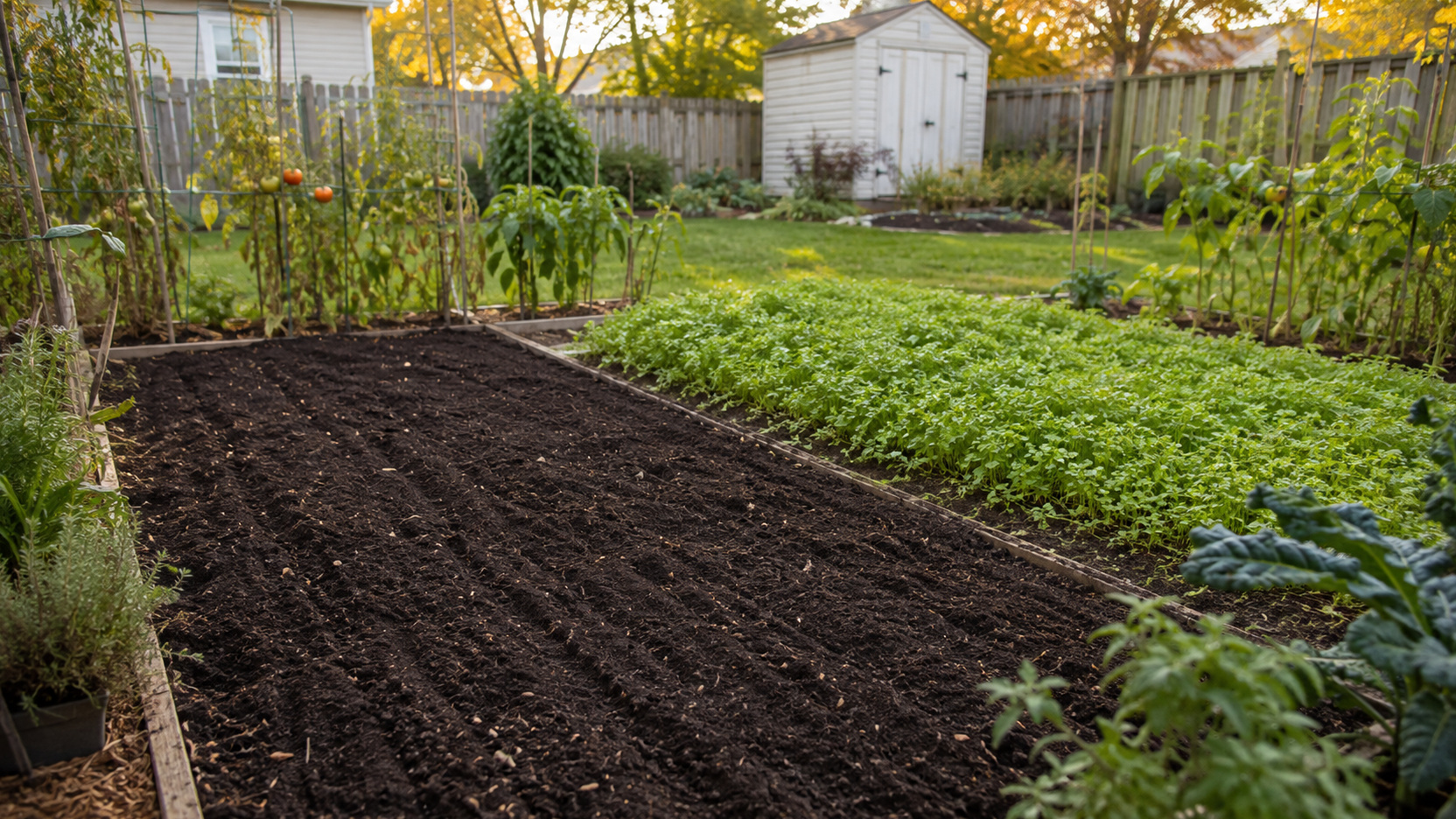
Plant Cover Crops Now: An Ohio Home Garden Guide
Plant fall cover crops in an Ohio vegetable garden with practical guidance on timing, species, seeding, winter care, and spring termination.
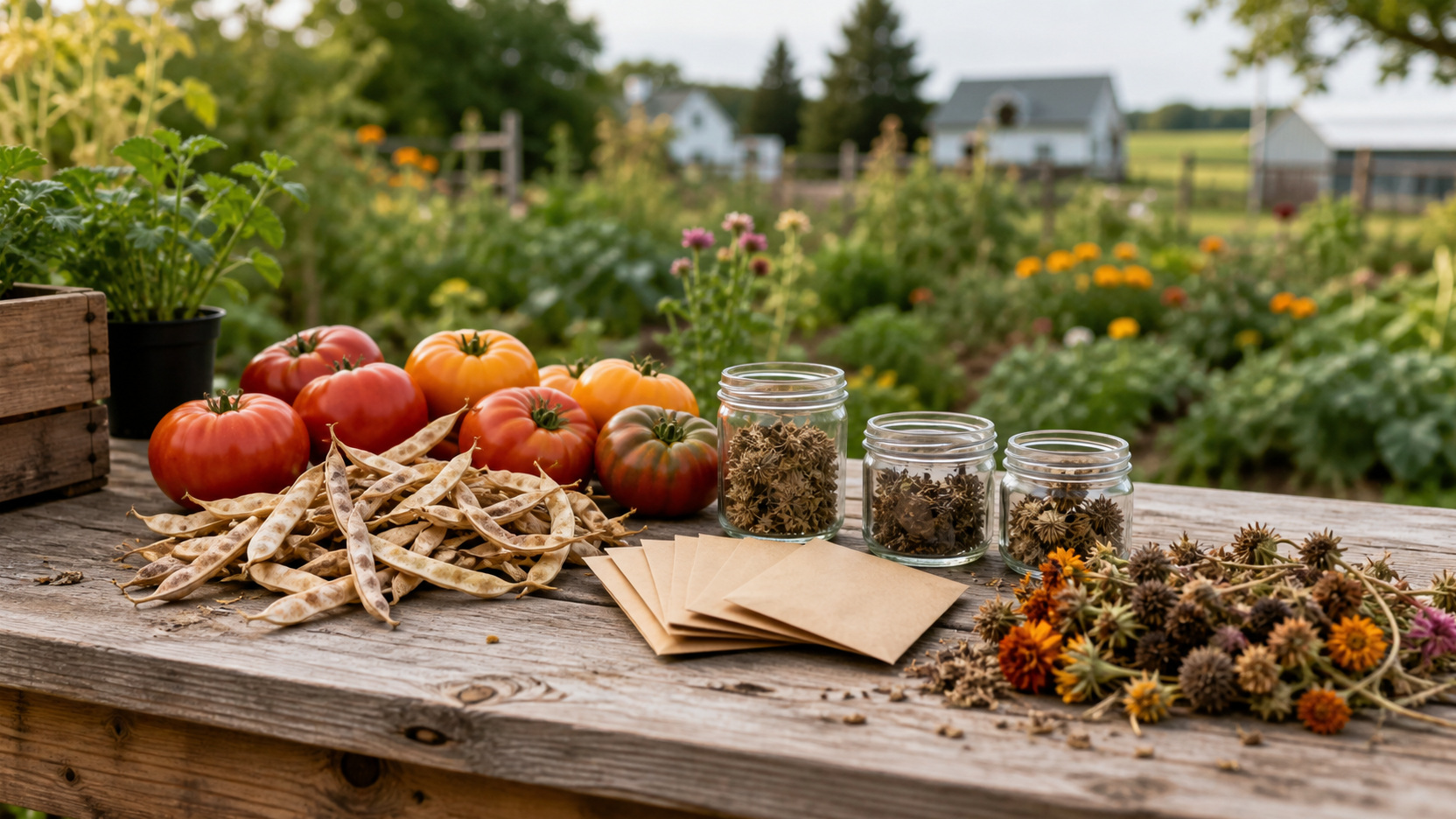
Save This Summer’s Garden: A Practical Ohio Seed-Saving Guide
Save tomato, bean, pea, lettuce, marigold, zinnia, and other garden seeds with this practical late-summer guide for Galion and north-central Ohio.