
The Best Show in Your Backyard Is Free: A Complete Guide to Corn Cob Squirrel Feeding with the Style Selections Green Metal Feeder
Why dedicated squirrel feeders reduce bird feeder raids, how a corn cob feeder works, the best corn to load it with, and where to place it for maximum wildlife entertainment
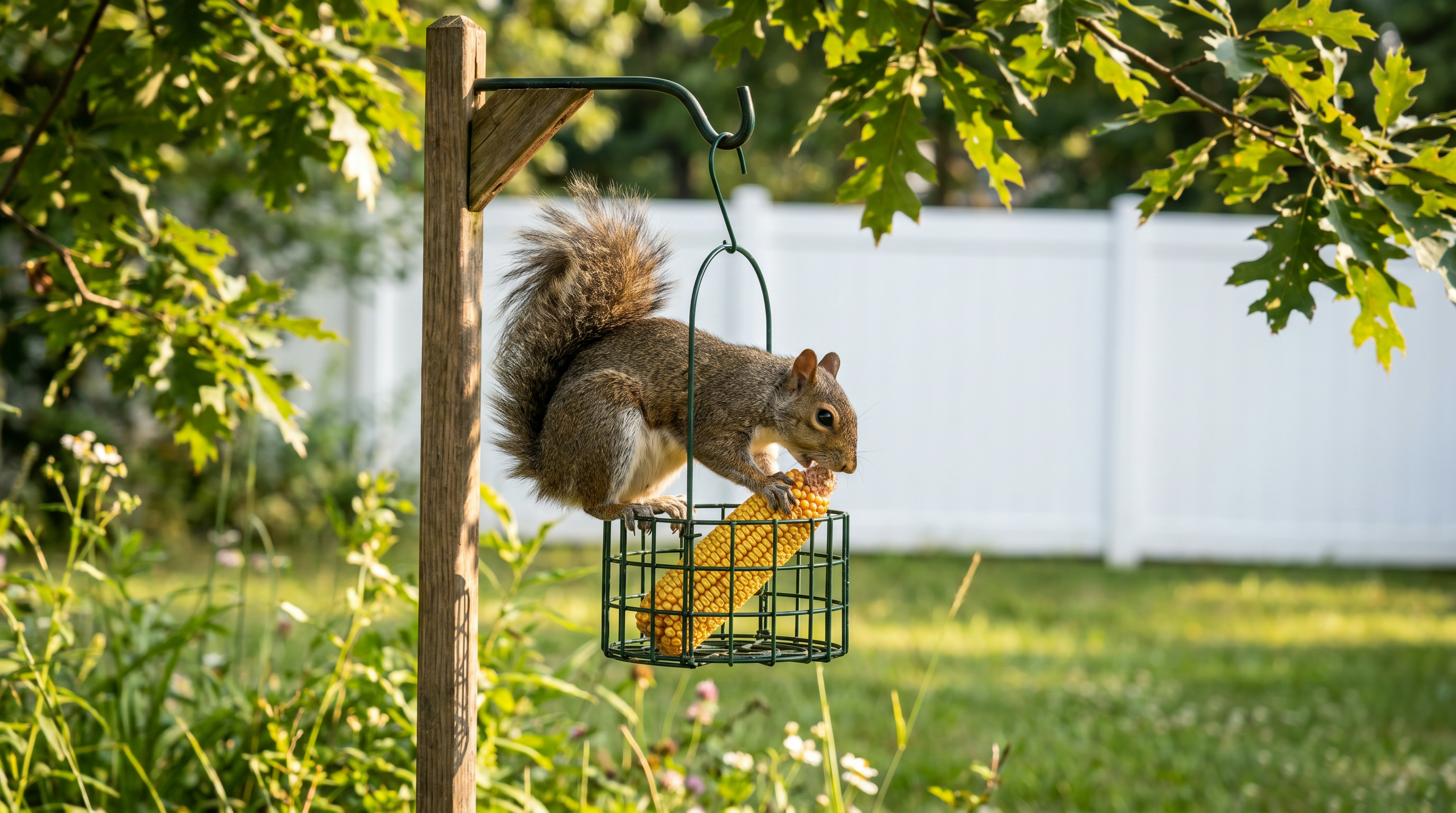
Of all the wildlife feeding setups you can put in a backyard, very few deliver the consistent entertainment value of a corn cob squirrel feeder. Watching a squirrel figure out a spinning corn cob, hang upside down to rotate it, run off with a piece to bury somewhere in the yard, and then come back to do it again is genuinely compelling — the kind of thing that stops you mid-coffee and keeps you watching for ten minutes longer than you planned. The Style Selections Green Metal Corn Cob Squirrel Feeder is built for exactly this — it holds a full ear of corn on a durable spike, mounts easily near a tree, and gives your backyard squirrels a dedicated food destination that keeps them busy and, importantly, keeps them away from your bird feeders. Available at Liberty Farm, Home & Garden in Galion, Ohio.
Why a Dedicated Squirrel Feeder Is One of the Smartest Backyard Wildlife Investments
The relationship between backyard birders and backyard squirrels is one of the most reliably frustrating dynamics in outdoor living. Squirrels are intelligent, athletic, and completely indifferent to squirrel-proofing measures that seemed impenetrable when you read about them online. They can jump further, climb faster, and figure out contraptions more quickly than almost any other backyard animal — and bird seed is calorie-dense, convenient, and readily available from your feeders at exactly the height squirrels prefer to work at.
The solution that actually reduces bird feeder raiding — more reliably than baffles, cages, hot pepper additives, or specialized squirrel-proof feeder designs — is to give squirrels something they want even more, placed in a location that competes more effectively for their attention. Corn does this. A whole ear of corn mounted on a feeder near a tree is, from a squirrel's perspective, a better target than your sunflower seed tube: it's physically easier to access, it provides a bigger payoff per visit, and working a corn cob engages the gnawing and foraging behaviors squirrels perform most naturally. Once a squirrel discovers a reliable corn cob station, it becomes the first destination on the daily foraging circuit — not the bird feeders.
This diversion strategy doesn't work perfectly for every squirrel in every yard, but for most backyard setups it meaningfully reduces the time squirrels spend at bird feeders. And regardless of its functional benefit, a corn cob feeder is simply more enjoyable to watch than an empty suet cage or a tube feeder that needs constant refilling because squirrels are emptying it.
What the Style Selections Green Metal Corn Cob Feeder Is and How It Works
The Style Selections Green Metal Corn Cob Squirrel Feeder is a purpose-built squirrel feeding station that holds a whole ear of corn on a metal spike. The green metal construction makes it durable and weather-resistant — this is not a painted wood or plastic feeder that will crack, fade, or rot through Ohio winters. The metal frame and spike are built for outdoor use year-round, and the green finish blends naturally with tree bark and foliage so the feeder doesn't look out of place in a naturalistic backyard setting.
The operation is as simple as the design: slide a whole ear of corn onto the spike, mount the feeder near a tree at a height squirrels can easily access (roughly 4–6 feet off the ground is typical), and let the squirrels do the rest. There are no moving parts to jam, no electronics to fail, no complicated fill systems. The spike holds the cob securely while the squirrel works it — and the squirrel has to work it, which is exactly the point. A cob that rotates and wobbles on a fixed spike keeps squirrels engaged and exercised in a way that a pile of loose shelled corn on the ground simply doesn't.
Refilling is equally simple: when the corn is gone (or gnawed down to the cob), remove the remaining cob and replace it with a fresh one. Full refill cycles typically take under a minute. The feeder can also be loaded with one ear and left — squirrels are reliable enough visitors that you don't need multiple feeders or complicated setups to establish a consistent feeding station. One feeder, one cob at a time, mounted near a tree is all it takes.
How Strategic Squirrel Feeding Protects Your Bird Feeders
The diversion strategy works because squirrels, like most wildlife, are foraging optimizers. They learn and remember reliable food sources, return to them on predictable schedules, and prioritize locations that offer the best reward-to-effort ratio. If your corn cob feeder is consistently stocked and positioned where squirrels can access it comfortably, it will naturally become the higher-priority destination compared to a bird feeder that requires more effort or risk to access.
The key to making this work is consistency. A squirrel that finds the corn cob feeder stocked several days in a row establishes a feeding habit around it. Once that habit is established, the feeder becomes the first stop in the morning foraging circuit — before the squirrel bothers with your bird feeder. Inconsistent stocking undermines this: if the corn cob feeder is often empty, the squirrel doesn't build the same dependable association with it and continues to hedge by raiding bird feeders as a backup.
It's also worth positioning the squirrel feeder on the opposite side of the yard from your bird feeders — or at least in a clearly separate zone — rather than right next to them. The goal is to split the foraging territory into distinct destinations. A squirrel that has already worked a corn cob for twenty minutes and is satisfied is much less likely to then cross the yard to raid a bird feeder. Proximity defeats the strategy by allowing the squirrel to easily alternate between both options.
Some birders go further and pair the corn cob feeder with a mounted squirrel baffle or cage on their bird feeders, treating both as part of an integrated strategy rather than relying on either alone. The combination — attractive alternative food source plus physical access barrier at the bird station — produces better results than either approach independently.
The Best Corn to Load in a Corn Cob Feeder
The Style Selections feeder is designed for whole ears of corn, and that's what squirrels prefer — but Liberty Farm, Home & Garden also carries shelled and mixed corn options that round out a complete squirrel feeding program. Here's how the options compare:
Ear corn: The original and best choice for a spike-mounted feeder. Ear Corn (35 lb) gives squirrels the full corn-on-the-cob experience — the resistance of the cob, the satisfying gnawing action, and the slow-feed format that keeps them occupied longer than any loose corn option. Squirrels visibly enjoy the physical engagement of working a mounted cob, and it holds their attention in a way that shelled corn simply doesn't. Ear corn also stores and handles easily — individual cobs are clean to handle, require no measuring, and are ready to load directly onto the spike.
Shelled corn: Shelled Corn (25 lb) is ideal for supplementary ground or platform feeding near the corn cob feeder. Squirrels will pick up fallen kernels around the base of the feeder, and adding a small pile of shelled corn on a platform or flat rock nearby extends the foraging area and keeps more squirrels occupied at once. It's also an excellent food source for deer, turkeys, and other ground-feeding wildlife that visit the yard. Shelled corn is not suitable for spike feeding on its own but works well as a complement to whole ear corn.
Whole corn (bulk): Whole Corn (50 lb) provides the highest volume option for households that maintain active wildlife feeding stations year-round. Loose whole kernels are excellent for mixed-species ground feeding and can be scattered in foraging areas to encourage natural searching behavior. At 50 pounds, this format is most economical for consistent high-volume use.
Wild Kritter mix: Nature's Window Wild Kritter (30 lb) is a mixed wildlife blend that typically includes corn along with other seeds and grains that attract a broader range of backyard wildlife. For yards where you want to feed squirrels, chipmunks, rabbits, deer, and birds all from a single product, a wild critter mix fed on a platform or on the ground near the feeder station gives you the widest wildlife appeal with the least complexity.
Understanding Squirrel Behavior at the Feeder: What You're Actually Watching
Once a corn cob feeder is active in your yard, the behavioral show it produces is worth understanding — not just for entertainment value, but because it tells you something about how squirrels actually work.
The first thing most people notice is that squirrels don't just eat corn at the feeder and leave. They eat some, cache some, and make multiple trips. Squirrels are scatter-hoarders — they bury food in many small caches rather than accumulating it in one spot — and a mounted corn cob triggers this behavior reliably. You'll see a squirrel gnaw off a kernel or a small piece of cob, run off across the yard, return a minute later, repeat. What looks like frantic or disorganized behavior is actually systematic food storage — the squirrel is building a distributed supply that it will locate by memory and smell during leaner months. Each item is buried individually in a shallow scratch-cache, and squirrels have remarkable spatial memory for the locations of hundreds of caches. Not all of them are recovered, which incidentally makes squirrels significant distributors of seed in forest and yard ecosystems.
Dominant squirrels will attempt to monopolize a feeder, and if you have multiple squirrels visiting, you'll see the hierarchy in action — chasing, posturing, and timed visits as lower-status individuals wait for their turn. This is normal. In yards with heavy squirrel traffic, adding a second feeder on the opposite side of the yard accommodates more animals simultaneously and reduces conflict.
Squirrels are also very good at reading their environment for safety. A feeder mounted near a tree gives them confidence — they have a quick escape route overhead. A feeder out in the open, away from cover, will see far less traffic because squirrels are prey animals that won't feed comfortably in exposed locations. This is why proximity to a tree is not just a mounting convenience but actually a functional requirement for good feeder utilization.
Seasonal Squirrel Feeding: What Changes Through the Year
Squirrels are active year-round in Ohio and do not hibernate, which means your corn cob feeder can stay in service through all four seasons — though the pattern of use shifts with the calendar.
Spring (March–May): High activity as young squirrels emerge from winter nests and natural food sources are still limited. New-to-yard squirrels are actively exploring and searching for food sources, making this the best time to establish a feeder — early adopters become your most reliable regulars. Breeding activity in early spring means more squirrels overall in the territory.
Summer (June–August): Natural food sources expand with garden growth, fruiting trees, and insects. Feeder traffic may decrease somewhat as wild food becomes available, but squirrels that have established your feeder as a reliable stop will continue visiting, especially in early morning and evening. Second litters of young squirrels arrive in late summer and begin foraging, which can bring a visible increase in traffic at your feeder again in August.
Fall (September–November): The busiest season. Squirrels shift into hyperdrive cache-building mode ahead of winter, and a corn cob feeder loaded with ear corn becomes an extremely high-value resource during this period. You'll see longer visits, more caching runs, and increased competition between individuals. This is the most entertaining time of year to watch your squirrel feeder, and also when stocking it consistently matters most — a reliable food source during cache-building season keeps squirrels in your yard and makes them much less likely to raid bird feeders when natural food becomes scarce.
Winter (December–February): Squirrels remain active through Ohio winters and need calorie-dense food when natural sources are buried under snow or frozen. A corn cob feeder loaded with ear corn provides exactly the high-calorie, easily accessible food squirrels need during cold snaps. Winter visits are typically concentrated in the warmest part of the day — mid-morning through early afternoon — and squirrels will often stay at the feeder longer per visit rather than caching as aggressively when conditions are harsh.
Style Selections Green Metal Corn Cob Squirrel Feeder Quick Reference
| Feature | Details |
|---|---|
| Material | Durable green metal |
| Feed type | Whole ear of corn (one cob per load) |
| Mounting | Near a tree; approx. 4–6 ft off ground |
| Weather resistance | Yes — metal construction for year-round outdoor use |
| Primary wildlife | Gray squirrels, fox squirrels; also chipmunks |
| Bird feeder benefit | Diverts squirrels away from bird stations when placed separately |
| Best corn to use | Whole ear corn (35 lb bag); shelled or whole kernel for ground supplement |
| Brand | Style Selections |
| Available at | Liberty Farm, Home & Garden — Galion, Ohio |
Related Products at Liberty Farm, Home & Garden
For a complete backyard squirrel and wildlife feeding setup, Liberty Farm, Home & Garden carries everything you need alongside the Style Selections feeder:
- Ear Corn (35 lb) — The ideal corn format for spike-mounted squirrel feeders. Individual whole cobs load directly onto the Style Selections feeder spike with no prep. Squirrels work each cob through multiple sessions, providing extended entertainment and satisfying the natural gnawing behavior that makes corn cob feeding so engaging to watch. A 35-pound bag gives you a generous supply for the season.
- Shelled Corn (25 lb) — Perfect for ground feeding near the corn cob station, or for filling a flat platform feeder adjacent to the cob feeder. Shelled corn attracts deer, turkeys, and ground-feeding birds in addition to squirrels and chipmunks, making it an excellent multi-species supplement for an active backyard wildlife station.
- Whole Corn (50 lb) — The highest-volume corn option for year-round feeding. Best for households with consistent heavy wildlife traffic or those who feed multiple stations simultaneously. Whole kernel corn can be used in platform feeders, scattered in foraging areas, or used to supplement ground feeding around the squirrel feeder station.
- Nature's Window Wild Kritter (30 lb) — A wildlife blend designed to attract the full spectrum of backyard animals — squirrels, chipmunks, rabbits, raccoons, deer, and more. If you want to turn your squirrel feeding station into a broader wildlife destination, a Wild Kritter mix on a platform or ground feeder near the corn cob station gives you maximum species variety with minimum setup complexity.
Stop in at Liberty Farm, Home & Garden in Galion, Ohio and we can help you build out a complete squirrel and wildlife feeding station. We carry the Style Selections Green Metal Corn Cob Squirrel Feeder, ear corn, shelled corn, and a full selection of wildlife feeds to complement it. Our staff knows which setups work best in Ohio backyards and can recommend the right combination of feeders and feed for your specific yard and wildlife goals.
Frequently Asked Questions
Keep Reading
Keep the Feeder Up: An Ohio Guide to Fall Hummingbird Migration
Learn when to take down hummingbird feeders in Ohio, how to mix safe nectar, and how often to clean during late-summer migration near Galion.
Planting Fall Deer Food Plots in Ohio: An August Field Plan
Plan an Ohio fall deer food plot with soil testing, smart seedbed prep, mix selection, and local tips from Liberty Farm, Home & Garden in Galion.