
The Japanese Beetle Trap That Works — If You Put It in the Right Place: A Complete Guide to the Spectracide Bag-A-Bug
How the Spectracide Bag-A-Bug Japanese Beetle Trap uses a dual floral and pheromone lure system to pull beetles away from your garden — and why trap placement 30 feet from your plants is the single most important decision you'll make
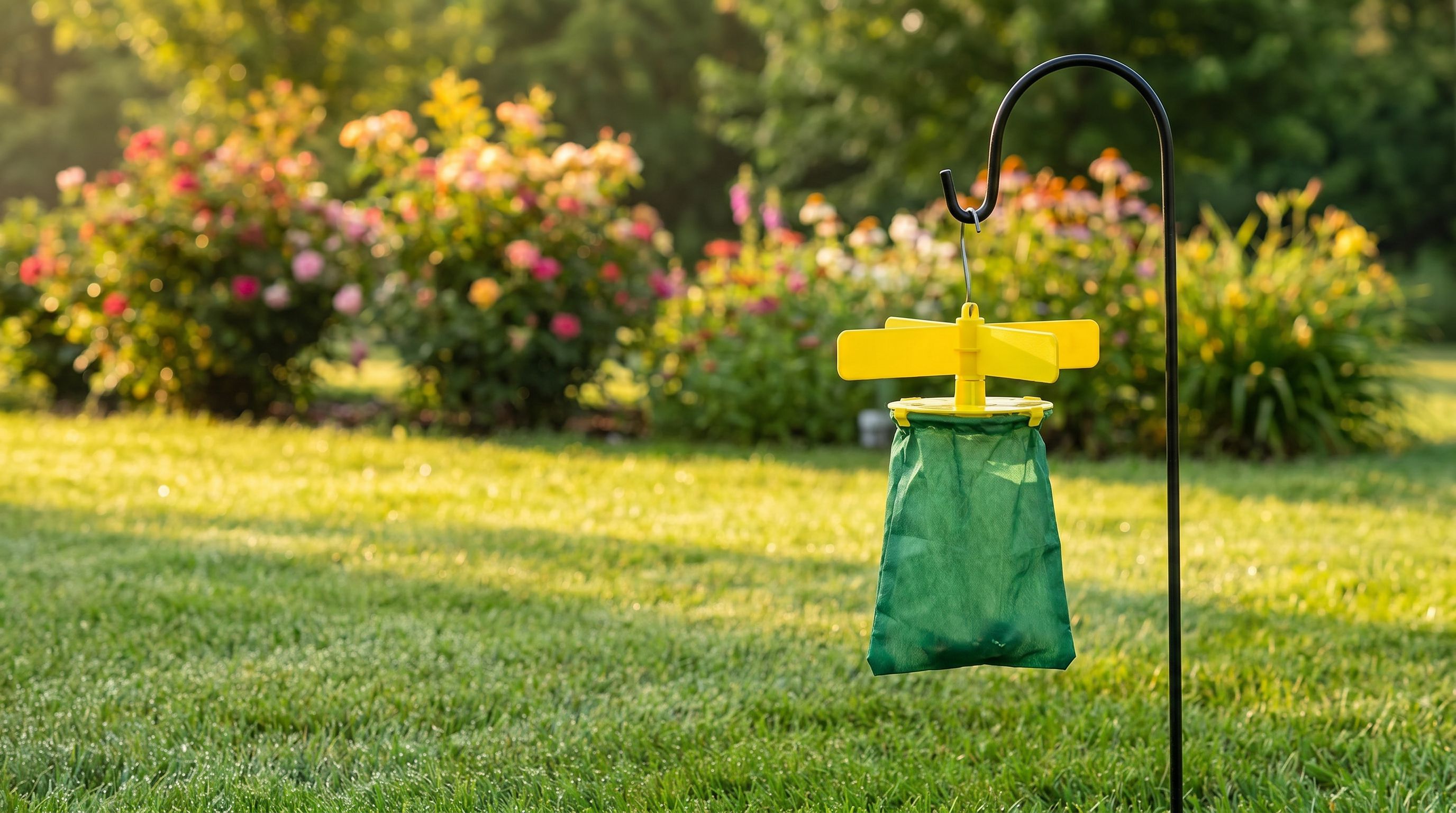
Japanese beetles are among the most destructive garden pests in Ohio, and they arrive with remarkable predictability every summer — typically emerging in late June and peaking through July and into August. In that window, a healthy rose bush or a productive grape vine can go from full foliage to a skeleton of skeletonized leaves in a matter of days, and a flower bed that was thriving in June can look like something stripped it clean by mid-July. The beetles don't eat roots or tunnel into stems — they consume leaf tissue between the veins in a pattern called skeletonizing, leaving behind a lacy, brown remnant that eventually falls away. The Spectracide Bag-A-Bug Japanese Beetle Trap is one of the most effective tools available for pulling beetles out of your garden in large numbers — but it comes with a placement rule that most people ignore, and ignoring it turns the trap from your best defense into your worst enemy. Liberty Farm, Home & Garden in Galion, Ohio carries the Bag-A-Bug trap so you can get ahead of beetle season before the first wave hits your garden.
Understanding the Japanese Beetle: Ohio's Most Destructive Summer Garden Pest
The Japanese beetle (Popillia japonica) is an invasive species from Japan that arrived in the eastern United States in the early 1900s and has spread steadily westward ever since. In Japan, the beetle's natural predators keep its populations in check — in North America, those predators are absent, and populations are regulated primarily by soil conditions, turf health, and intervention by homeowners and farmers.
The beetles spend most of their lives underground as grubs, feeding on turf roots from late summer through spring. The white grub stage is the target of grub control products applied to lawns in July and August. But by the time you apply grub control, the adults have already emerged. Adult beetles live for four to six weeks above ground, feeding and mating continuously during that window. A single female lays 40 to 60 eggs during her adult life — depositing them in moist turf soil where new grubs will develop and feed through the following season.
Adult Japanese beetles are actually attractive insects — about half an inch long, with a distinctive metallic green body and copper-colored wing covers, with a row of white tufts of hair along their abdomen. They're easy to identify, which is useful: if you can see them, you can count them, which tells you whether your trap is working. They feed in groups, aggregating on preferred host plants. Roses, grapes, linden trees, crabapples, and raspberries are among their most favored hosts, but the beetle's host list includes over 300 plant species. When a group of beetles begins feeding on a plant, they release aggregation pheromones and feeding volatiles that signal to other beetles that this is a good feeding site — which is precisely why a lightly infested plant can become heavily infested within a day or two.
This aggregation behavior is the key to understanding both the effectiveness of pheromone traps and the danger of placing them incorrectly.
How the Spectracide Bag-A-Bug Trap Works: Dual-Lure Science Explained
The Spectracide Bag-A-Bug Japanese Beetle Trap uses two separate attractants simultaneously — a design that makes it significantly more effective than traps using a single lure type.
The first attractant is a floral lure. Japanese beetles feed heavily on flowers — roses, linden blossoms, and other fragrant flowers are among their most preferred targets. Floral lures mimic the volatile compounds released by these flowers, exploiting the beetle's natural foraging behavior. Beetles detect the floral scent as a food signal and fly toward it to investigate. The floral lure works on beetles' feeding instincts.
The second attractant is a sex pheromone. Female Japanese beetles release a pheromone during the mating season that attracts male beetles from significant distances. The synthetic pheromone used in the Bag-A-Bug trap mimics this chemical signal. Male beetles — which represent roughly half the beetle population — are strongly drawn to the pheromone. The pheromone lure works on beetles' reproductive instincts.
By combining both lure types on a single trap, the Bag-A-Bug system reaches both male and female beetles through two separate behavioral drives. Beetles approach from downwind, fly toward the lure vanes, and fall into the bag below the lure assembly. The bag is designed to hold large quantities of beetles — during peak season, a well-placed trap can fill within days in areas with heavy infestations.
The effectiveness of this dual-lure system is also its primary risk in terms of placement. The same lures that pull beetles into the trap also attract every beetle within a meaningful radius toward the area where the trap is located. That's exactly what you want — as long as the trap is positioned so that beetles fly past or away from your garden to reach it, rather than through or over the plants you're trying to protect.
The Critical Placement Rule: Why 30 Feet Is Not a Suggestion
The most common mistake people make with Japanese beetle traps — and the reason many gardeners conclude that traps don't work, or actively make things worse — is placing the trap too close to the plants they're trying to protect. This is not a minor technicality. It is the single most important variable in whether a Japanese beetle trap helps or harms your garden.
Here is what happens when the trap is placed near a rose bed: The lures begin releasing chemical signals that draw beetles from surrounding areas. Beetles approach the trap flying low and following the scent gradient. On the way to the trap, they pass over, through, or land briefly on the roses and other plants in the vicinity. Some of those beetles get captured in the trap. Others — particularly those approaching from certain wind angles, or those that land on roses first and then get distracted — feed on the plants before continuing toward the lure. The chemical signals those beetles release while feeding on the roses compound the problem by drawing even more beetles to the rose area. Net result: more beetles at and around the trap location than would have been present without the trap.
Here is what happens when the trap is placed 30 or more feet away, at the far edge of the yard or beyond the garden perimeter: The lures draw beetles from surrounding areas in the same way. But the beetles approach the trap location, which is away from the rose beds. Beetles captured in the trap are removed from the population. Beetles that approach from the garden direction fly past the garden toward the trap — they're drawn through the garden space rather than to the garden. The net effect is a meaningful reduction in the beetle population feeding on your garden plants.
Practical placement guidelines for Ohio yards:
- Identify your prevailing wind direction. Beetles follow the lure scent downwind. Place the trap so beetles approach it from the direction of open space or lawn rather than from the direction of your garden beds.
- Use a corner of the property — a fence line, the back edge of a lawn, or a spot adjacent to a neighbor's lawn if they're also dealing with beetles. The goal is maximum distance from prized plants.
- Hang at roughly waist to shoulder height — 2 to 4 feet off the ground. Beetles fly at a range of heights, but this is the zone where you'll intercept the most traffic.
- Don't place near a wooded edge. Wooded borders and tall vegetation can harbor large beetle populations. A trap at the lawn-woodland edge in the wrong position draws beetles out of the woods toward the trap and across your garden.
- One trap for a residential yard; multiple traps for farm or large property situations. A single Bag-A-Bug trap covers a meaningful area — placing multiple traps too close together reduces effectiveness of each. Space traps at least 50 feet apart in large-area applications.
Step-by-Step Setup: Getting the Trap Working from Day One
The Spectracide Bag-A-Bug trap is straightforward to assemble and deploy. Handling is minimal — the key steps are lure placement, bag attachment, and choosing the right hang point.
- Choose your placement location first. Don't open the packaging until you know exactly where the trap is going. The lures begin releasing attractants as soon as they're exposed to air. Walking across your garden with an open lure package draws beetles toward wherever you are.
- Assemble the vane trap body. The Bag-A-Bug trap uses a cross-vane design — two interlocking plastic vanes that beetles fly into, which redirects them down into the bag below. Slide the vanes together per the package instructions and attach the bag to the bottom outlet of the vane assembly.
- Attach the lures to the top of the vane assembly. The dual lures — floral and pheromone — attach to the top of the cross-vane structure. Handle the lures minimally; avoid getting lure material on your hands and then touching garden plants, as trace amounts of pheromone on plants can briefly attract beetles.
- Hang the assembled trap at your predetermined location at least 30 feet from protected plants. Use a wire hook through the trap hanger, looped over a fence post, shepherd's hook, or tree branch at the correct height. Make sure the trap hangs freely — it should be able to swing slightly in wind, which helps distribute the lure scent.
- Check the trap regularly during peak season. In a heavy infestation year, a trap can fill quickly. A full bag stops catching beetles effectively — new beetles may land on the full bag rather than falling in, or the bag may clog the funnel opening. Replace the bag when it is two-thirds to three-quarters full. Replacement bags are available separately.
When Japanese Beetles Are Active in Ohio and How to Stay Ahead of Them
Japanese beetle adults emerge from the soil when soil temperatures at a 2-inch depth reach approximately 64°F consistently. In most of Ohio, this corresponds to late June through early July, with the first emergence often appearing in the southernmost counties a week or two before the northern tier of the state. Emergence typically peaks about three weeks after the first adults appear, with the total adult flight period running six to eight weeks before populations decline in late August.
For residents of north-central Ohio — including the Galion area — peak emergence typically runs from the first week of July through mid-August, with the heaviest feeding pressure in July. Trap deployment should begin before the first adults appear rather than after. Traps set in late June, before beetles have emerged, are ready and active when the first adults fly. Waiting until you see obvious garden damage to deploy a trap means the population has already spent time feeding and reproducing.
Soil moisture plays a role in beetle emergence timing. Dry summers can delay or reduce emergence because the soil conditions are less favorable for grub survival through the winter and spring. Conversely, a wet spring followed by warm June soil temperatures often signals a heavy emergence year. If your area had a wet spring, it is worth being prepared for a heavier-than-average beetle season.
Monitoring for Japanese beetles in your area is straightforward: look at linden trees, roses, crabapples, and grape vines in late June. If you begin seeing the characteristic skeletonized leaf damage — leaf tissue consumed between the veins with the veins left intact — beetles have arrived. The Bag-A-Bug trap should already be deployed and active when you see that first damage, not set up in response to it.
Protecting Roses and Flowering Plants from Japanese Beetle Damage
Roses are among the Japanese beetle's preferred targets, and damage to roses from beetle feeding is among the most frustrating garden problems Ohio gardeners face in summer. A rose bush that took years to establish, is just reaching peak bloom in early July, and then gets stripped by beetles in two weeks is a genuine loss — aesthetically, financially, and in terms of the effort invested.
The Bag-A-Bug trap, placed correctly, is the highest-capacity tool for reducing the beetle population attacking your roses. But effective rose protection during Japanese beetle season often combines trapping with a few additional measures:
- Hand-picking in the early morning. Japanese beetles are sluggish in the early morning before air temperatures warm. Shake branches over a bucket of soapy water — beetles drop off easily and drown quickly. This is tedious but effective as a daily practice during peak season when you're already out in the garden.
- Targeted plant protection spray. For roses and other high-value plants, contact insecticides can be applied to plant surfaces. BioAdvanced All-in-One Rose and Flower Care Concentrate provides systemic protection along with fungal disease control and fertilization — a convenient combination product for rose care that addresses multiple summer rose stressors in one application. Available at Liberty Farm, Home & Garden.
- Avoid peak feeding hours. Beetles are most active and most likely to aggregate mid-morning through early afternoon on warm, sunny days. If you need to cut roses or work in the garden, do it in the early morning or late evening when beetles are less active.
- Accept that the trap alone won't eliminate all feeding. Even a perfectly placed, functioning Bag-A-Bug trap will not catch every beetle in your area. New beetles emerge from soil daily throughout the flight period, and beetles fly in from surrounding properties. The trap dramatically reduces local population density — it does not create a beetle-free zone. Combined with protective sprays on highest-value plants, the trap-plus-targeted-treatment approach gives the best real-world results.
The Bag-A-Bug Trap as Part of a Complete Garden Pest Strategy
Japanese beetles are the dominant summer garden pest in Ohio, but they're rarely the only one. A garden dealing with Japanese beetles in July is also likely managing other chewing insects, sucking pests, fungal diseases, and the general stress of summer heat and drought. A trap that handles the beetle population effectively frees you to address other challenges without Japanese beetles as a constant background problem.
Liberty Farm, Home & Garden carries a range of garden pest control products that complement the Bag-A-Bug trap for comprehensive summer garden management. For broader insect pest pressure — caterpillars, aphids, stink bugs, and other garden insects that increase alongside beetles in midsummer — Sevin Garden Insect Killer Ready to Use is a broad-spectrum contact insecticide that covers the full range of garden pest insects and is available in a convenient ready-to-use format. For rose and ornamental care that addresses fungal diseases alongside beetle and insect damage, BioAdvanced All-in-One Rose and Flower Care Concentrate combines systemic insect protection, disease control, and plant nutrition in a single product. For areas of the yard where pest pressure extends to rodents and other wildlife — particularly farm or rural properties — the Tomcat Rat & Mouse Pelleted Place Packs and Tomcat Advanced Formula Refillable Mouse Bait Station address rodent pressure alongside insect and beetle management.
| Specification | Details |
|---|---|
| Product | Spectracide Bag-A-Bug Japanese Beetle Trap |
| Brand | Spectracide |
| Lure System | Dual lure — floral attractant + sex pheromone |
| Target Pest | Japanese beetle (Popillia japonica) adults |
| Trap Design | Cross-vane interceptor with collection bag |
| Critical Placement Distance | Minimum 30 feet from plants you are protecting |
| Hang Height | 2 to 4 feet off the ground |
| Ohio Active Season | Late June through mid-August; deploy before first emergence |
| Replacement Bags | Available separately; replace bag when two-thirds to three-quarters full |
| Available At | Liberty Farm, Home & Garden, Galion, Ohio |
Stop by Liberty Farm, Home & Garden in Galion, Ohio to pick up the Spectracide Bag-A-Bug Japanese Beetle Trap before the June emergence. Our team can help you find everything you need for a complete summer pest management plan — from beetle traps to rose care products to broad-spectrum garden insect killers — all in one place.
Frequently Asked Questions
Keep Reading
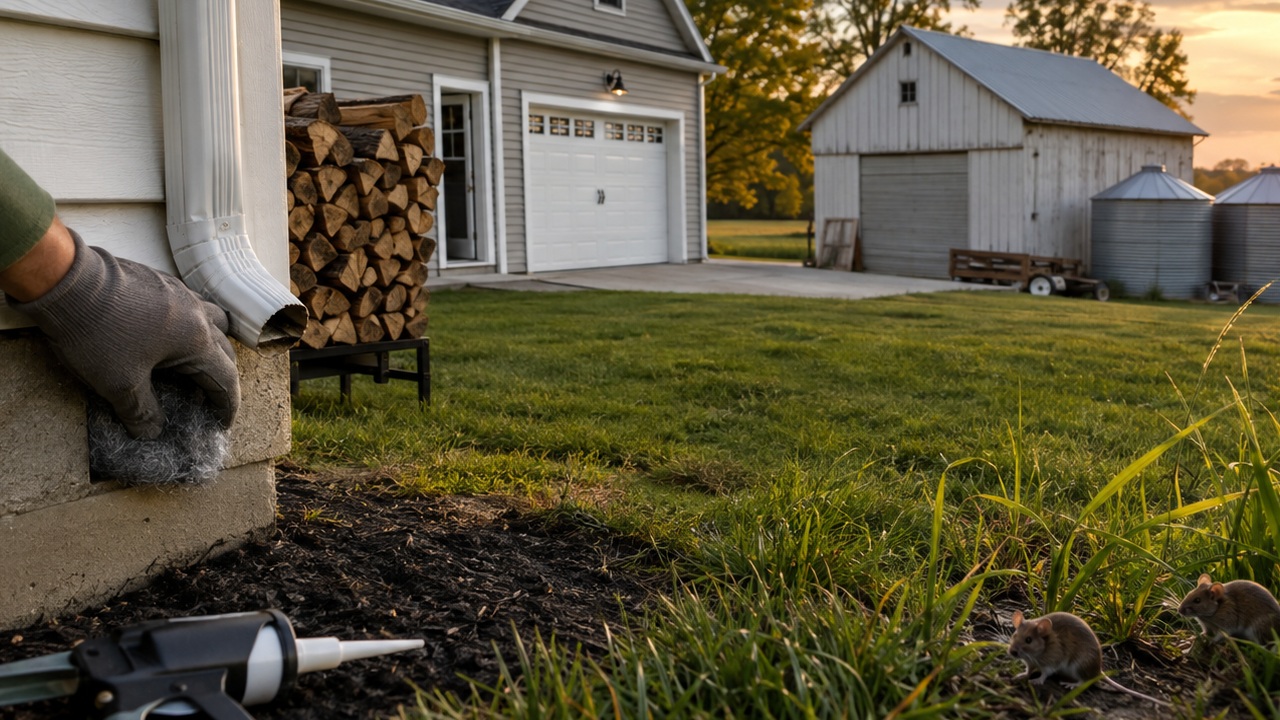
Stop Mice Before Fall: A Practical Ohio Home and Outbuilding Guide
Mouse-proof your Ohio home, garage, barn, or feed shed before fall with practical exclusion, storage, trapping, and safe cleanup steps.
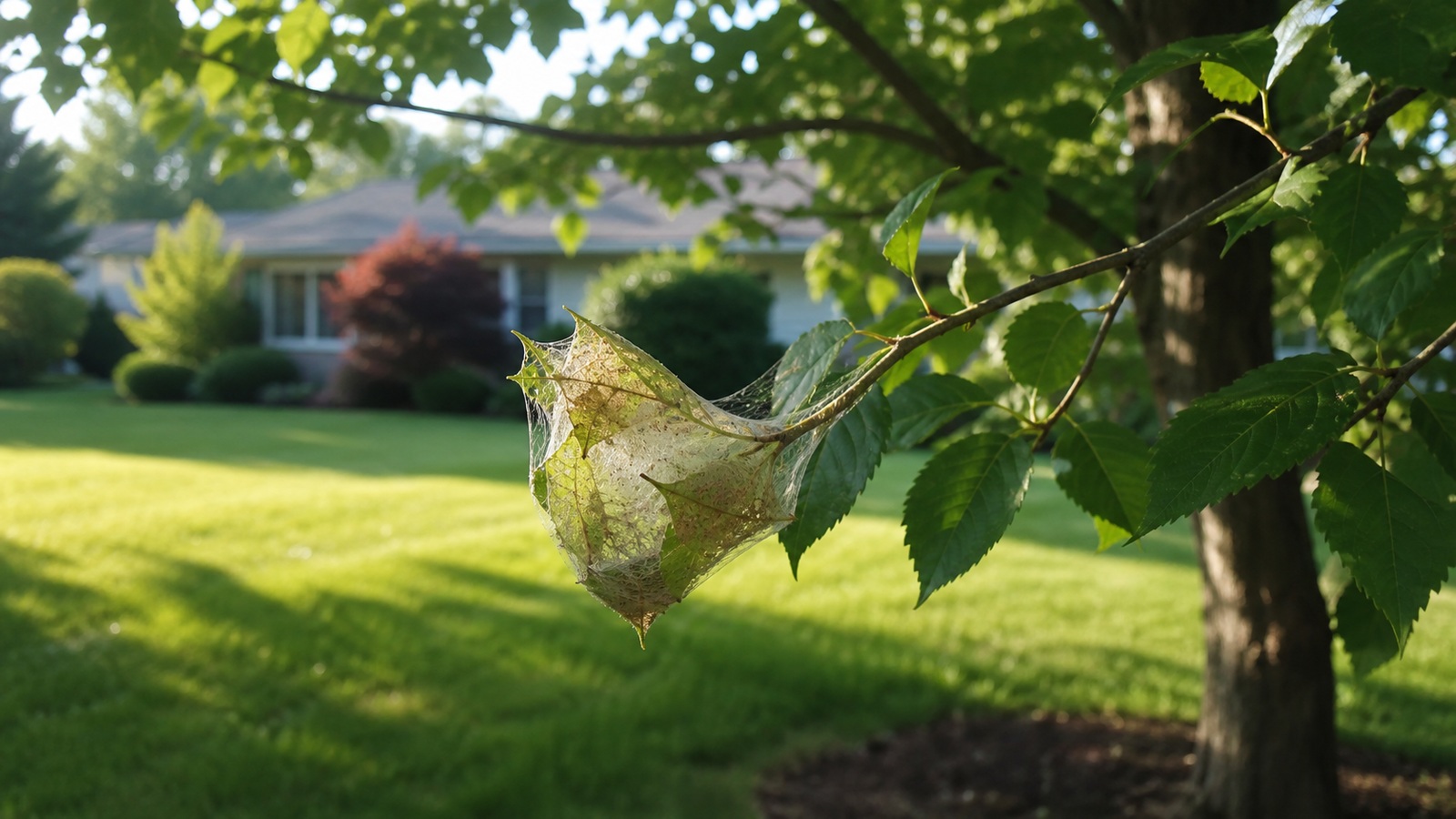
Fall Webworms in Ohio: What to Do About Those Late-Summer Tree Nests
Identify fall webworm nests in Ohio trees, distinguish them from tent caterpillars, assess damage, and choose safe late-summer management.