
Stop Slugs From Destroying Your Garden This July: A Complete Ohio Guide
Warm nights, summer rain, and lush beds make July the worst month for slug damage in Ohio gardens. Here's how to identify the problem, understand why iron phosphate bait outperforms old-school methods, and use Monterey Sluggo correctly to protect hostas, lettuce, strawberries, and more — without putting your pets or wildlife at risk.
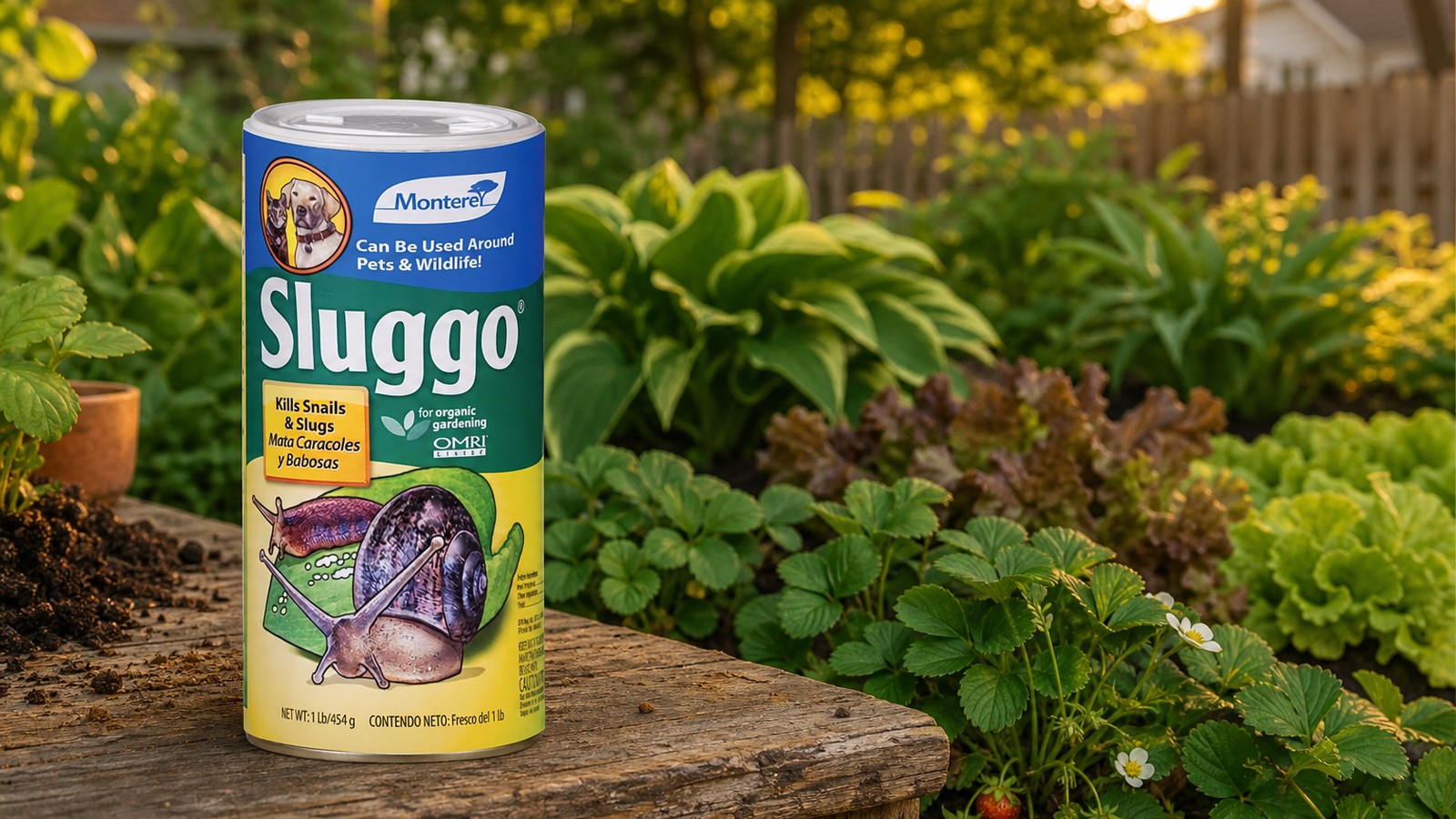
If you've stepped outside on a dewy July morning and found your hostas riddled with ragged holes, your lettuce leaves reduced to lacy shreds, or your ripening strawberries scooped hollow overnight, you already know what slugs can do to a garden in north-central Ohio. July is their prime month — warm nights, frequent summer rain, and dense, mature foliage give slugs everything they need to explode in population and feed relentlessly until dawn. The good news is that you don't have to resort to chemical baits that put your dog, your cat, or the songbirds passing through your yard at risk. Monterey Sluggo uses iron phosphate, an OMRI Listed organic active ingredient, to kill slugs and snails without poisoning anything else — making it the right tool for vegetable beds, flower borders, and anywhere your pets or wildlife roam.
Why July Is the Worst Month for Slugs in Ohio
Slugs are not insects — they're mollusks, more closely related to clams than to the beetles or caterpillars most gardeners spend the summer fighting. That distinction matters because the conditions that drive slug activity are completely different from those that drive insect pest pressure. While Japanese beetles peak in heat and sun, slugs thrive in moisture and mild darkness. July in Crawford County delivers exactly that combination.
Ohio's USDA Hardiness Zone 6 climate means July nights in Galion routinely stay above 60°F, often well into the upper 60s. Daytime temperatures are hot enough that slugs stay underground or under debris through the afternoon, but as soon as temperatures drop toward evening and dew or rainfall dampens the soil surface, they emerge in force. Summer storms — which Ohio sees frequently in July — are particularly effective at triggering feeding frenzies, because slugs can cover surprising distances across wet foliage and soil.
By July, your garden beds are also at their densest. Hostas have fully leafed out and their broad canopy traps moisture at soil level for hours after rain. Vegetable beds are crowded with tomato foliage, bean plants, and sprawling squash leaves that create the shaded, humid microclimate slugs prefer. Mulch — which you've almost certainly put down by now, and rightly so for weed suppression and moisture retention — adds another layer of cool, moist hiding space that slugs use as daytime shelter. All of this means a slug population that was barely noticeable in May can feel overwhelming by the first week of July.
The timing of your control effort matters, too. July is the middle of the slug's active feeding season, but populations will continue into September if left unchecked. Treating now, before the late-summer flush of eggs hatches, keeps the problem from compounding into fall — when slugs can devastate late-planted lettuce, kale, and fall strawberry production.
Identifying Slug Damage: What to Look For
Accurate identification is the first step, because slug damage is sometimes misread as caterpillar feeding, deer browsing, or even fungal disease. A few diagnostic clues will tell you definitively whether slugs are the culprit.
The Slime Trail
The single most reliable sign is the dried slime trail slugs leave behind. On smooth leaf surfaces, on stepping stones, and on the soil itself, these trails look like thin, slightly iridescent streaks — almost like dried clear glue. They're easiest to see in the early morning when the light rakes across the surface at a low angle. If you see these trails, slugs are active in that area.
The Damage Pattern
Slug feeding produces irregular, ragged holes in leaves — not the clean edge-notching that caterpillars or Japanese beetles often create. Slugs can feed from anywhere on the leaf, including the middle, leaving behind a leaf that looks like it was chewed by something with no preference for edges. On hosta leaves, look for large, irregular holes with slightly translucent tissue around the margins. On lettuce and spinach, the damage often starts on the outer leaves and works inward. On strawberries, slugs hollow out the flesh from underneath or the side, leaving the skin partially intact but the inside eaten out.
Confirming With a Nighttime Check
If you're still not sure, go out 30 to 60 minutes after dark on a warm, humid night with a flashlight. Slugs are rarely subtle once they're actively feeding — you'll see them on the surface of leaves, on the soil near the base of plants, and under the edges of debris or low-hanging foliage. In a badly infested bed during July, it's not unusual to find a dozen or more slugs in a 4-foot-square area after a rainy day.
Plants Most Vulnerable in July
- Hostas — Broad, overlapping leaves hold moisture and create deep shade. Slugs are the single most common hosta pest in Ohio.
- Lettuce and spinach — Tender, moisture-rich leaves are a preferred food source. Late-planted summer lettuce in partial shade is especially vulnerable.
- Strawberries — Ground-level fruit in mulched beds is prime slug territory in July.
- Basil and other herbs — Soft, aromatic foliage is frequently targeted.
- Marigolds and petunias — Despite their reputation as pest-resistant annuals, young transplants and seedlings can be heavily damaged.
- Bean and cucumber seedlings — Newly germinated seedlings are especially vulnerable; slugs can kill them before they establish.
Why Iron Phosphate Works — and Why It Matters What's in Your Bait
Walk into any garden center and you'll find slug baits, but not all slug baits are the same. The active ingredient is what makes the critical difference, and understanding it will help you make a confident, informed choice for your family, your pets, and your garden ecosystem.
The Problem With Metaldehyde
For decades, metaldehyde was the standard active ingredient in slug bait. It works by causing slugs to produce excessive mucus until they dehydrate and die. The problem is that metaldehyde is also toxic to dogs, cats, birds, and wildlife. It has a somewhat sweet or grain-like smell that attracts dogs particularly readily, and ingestion of even a small amount of metaldehyde bait can cause serious neurological symptoms in pets — muscle tremors, seizures, and in severe cases, organ failure. This is not a theoretical concern. Veterinary emergency clinics see metaldehyde poisonings every summer, concentrated in the months when slugs are most active and baits are most heavily applied.
Beyond pets, metaldehyde has documented effects on ground beetles — the beneficial predatory insects that are among your garden's best natural slug controllers. Killing the predators while killing the prey removes a layer of natural balance from your garden.
How Iron Phosphate Is Different
Iron phosphate, the active ingredient in Monterey Sluggo, works through a completely different mechanism. When slugs or snails eat an iron phosphate bait, it disrupts their ability to feed. They stop eating within hours of ingestion, retreat to cover, and die over the following few days. The iron phosphate itself then breaks down in the soil into iron and phosphate — two compounds that are naturally present in soil and are actually minor plant nutrients.
Critically, iron phosphate at the concentrations used in slug bait is harmless to mammals and birds. Dogs and cats can investigate treated areas without risk. Wildlife — including ground-feeding birds, toads, and beneficial insects — are not harmed. The OMRI Listed designation on Monterey Sluggo confirms that an independent organization has reviewed the ingredients and approved it for use in certified organic production. That's a meaningful third-party verification, not just a marketing claim.
This combination of effectiveness against slugs and safety for everything else is the reason iron phosphate bait has become the preferred choice for home gardeners who want results without collateral damage.
How to Use Monterey Sluggo Correctly
Iron phosphate bait is only as effective as the application technique. Scatter it carelessly and you'll see uneven results. Apply it correctly and you'll notice a sharp drop in damage within a week.
When to Apply
Apply Monterey Sluggo in the late afternoon or early evening, just before slugs become active. This puts fresh bait on the surface when slugs are beginning to move, maximizing the chance of contact. In July, with its frequent afternoon thunderstorms, check the forecast before applying: bait applied just before a heavy storm can wash away before slugs emerge. A light rain after application is actually fine — iron phosphate baits are formulated to remain active when damp — but a heavy downpour immediately after application reduces effectiveness.
How Much to Apply
Scatter the pellets lightly across the soil surface. The goal is light, even coverage — think of it like scattering a handful of sprinkles, not pouring a pile. You do not need to create a dense layer; slugs will find individual pellets because they forage widely. Concentrate placement around the base of vulnerable plants and along the perimeter of beds, especially near mulch edges, landscape fabric seams, and board or stone borders where slugs hide during the day.
Where to Place the Bait
- Around hosta crowns — Place pellets in a rough circle 6–12 inches out from the base of each plant, where slugs will encounter them as they move in to feed.
- Along vegetable bed edges — The perimeter where mulch meets bare soil is a major slug highway. Scatter bait along this transition zone.
- Near strawberry rows — Apply directly on the soil under and around the foliage, keeping pellets away from the fruit itself for cleanliness, though the product is labeled safe for use around edible crops.
- Under dense foliage — Tuck a few pellets under low-hanging hosta leaves, squash leaves, or dense basil plants where the soil stays moist and dark through the day.
- Around deck and foundation plantings — Slugs often enter ornamental beds from underneath decks, foundation mulch, and dense ground cover. Treating these entry zones reduces the source population.
How Often to Reapply
Reapply every 2 to 4 weeks through the active slug season, or after significant rainfall that may have dispersed the pellets. In July and August in Ohio, once every 2 to 3 weeks is a reasonable rhythm. As you get into September and nights cool below 50°F consistently, slug activity drops sharply and you can taper off.
Safe Around Edible Crops
One of the practical advantages of an iron phosphate bait is that you can apply it directly in and around the vegetable garden without worrying about harvest intervals or contamination of edible parts. Apply around your lettuce, strawberries, and herbs the same way you would in an ornamental bed.
Companion Strategies: Making Your Garden Less Slug-Friendly
Monterey Sluggo does the heavy lifting when slug populations are already established, but combining it with a few cultural practices will reduce pressure over time and make each application more effective. Think of these as background strategies that support the bait rather than replace it.
Manage Moisture at Soil Level
Slugs need surface moisture to move and feed. Drip irrigation or soaker hoses deliver water directly to plant roots while keeping the soil surface between plants drier than overhead watering does. If you're using an overhead sprinkler, water in the early morning so the surface dries through the heat of the day before slugs emerge at night. Avoid evening watering in July if slugs are a known problem — you're essentially pre-moistening their runway.
Clear Daytime Hiding Spots
Slugs spend daylight hours in cool, moist, dark hiding spots: under boards, flat stones, dense ground cover, low-hanging leaf debris, and the edges of mulch. Doing a periodic cleanup around the perimeter of affected beds — turning boards, pulling back mulch slightly from plant crowns, removing piles of dead plant material — eliminates the micro-habitats slugs rely on. You don't need to remove your mulch entirely; just keep it from building up in a thick, matted layer directly against plant stems.
Encourage Natural Predators
Ground beetles, toads, and garter snakes are among the most effective natural slug predators in an Ohio garden. All three are common in north-central Ohio and all three benefit from a garden environment that has some structural complexity: log piles near the edges of the property, unmown grass buffers, and minimal pesticide use in the surrounding area. Because iron phosphate bait leaves these predators unharmed, using Monterey Sluggo is itself compatible with encouraging a natural predator population — something that isn't true of metaldehyde.
Don't Over-Mulch
Mulch is valuable for weed suppression and moisture retention, but a layer deeper than 3 to 4 inches in a slug-prone bed becomes a slug apartment complex. If you're dealing with a heavy infestation, consider pulling some mulch back from the worst-affected areas temporarily while you get the population under control, then reapplying at a more moderate depth.
Sluggo in the Vegetable Garden: What You Need to Know
Many gardeners are comfortable using iron phosphate bait in ornamental beds but hesitate when it comes to the vegetable garden. The hesitation is understandable — you're growing food, and you want to be careful about what goes into the soil and onto the plants. Here's what actually applies to using Monterey Sluggo in an edible garden context.
Iron phosphate is a naturally occurring compound. When the pellets in Monterey Sluggo break down — whether eaten by a slug or simply decomposing in the soil — the byproducts are iron and phosphate. These are the same mineral nutrients that are already present in your garden soil and are taken up by plant roots under normal conditions. There is no accumulation concern, no soil contamination, and no residue on edible plant parts.
The OMRI Listed certification means the product has been reviewed for use in certified organic production. If you're growing vegetables, fruits, or herbs under organic practices — or simply want the assurance that your growing methods are as clean as possible — that certification is directly relevant to you.
Practically speaking, this means you can apply Monterey Sluggo around your tomato transplants, in your strawberry bed, between rows of lettuce and spinach, and at the base of your bean and cucumber trellises without any special precautions beyond keeping the pellets on the soil surface rather than on the fruit or leaves themselves. There's no harvest waiting period.
| Situation | Details |
|---|---|
| Hostas with ragged holes | Scatter pellets in a 6–12 inch ring around plant crowns in the evening; reapply every 2–3 weeks through September |
| Strawberry beds | Apply on soil surface under foliage; safe for use around edible crops with no harvest waiting period |
| Lettuce and leafy greens | Treat bed perimeter and soil surface; particularly important for late-summer and fall plantings |
| Vegetable garden (tomatoes, beans, cucumbers) | Treat along mulch edges and at plant bases; OMRI Listed for certified organic production |
| Yards with dogs or cats | Safe for use in pet areas; iron phosphate is not toxic to dogs, cats, or wildlife — unlike metaldehyde baits |
| Ornamental beds with mulch | Focus applications along mulch-to-soil transition zones and under dense foliage where slugs hide during the day |
| Active ingredient | Iron phosphate — breaks down into iron and phosphate (minor plant nutrients); OMRI Listed organic |
| Product | Monterey Sluggo (1 lb) |
| Available At | Liberty Farm, Home & Garden — Galion, Ohio | libertyfhg.com |
Common Slug Control Myths Worth Clearing Up
A lot of slug control folklore circulates in gardening communities, and some of it is more useful than others. A few of the most common myths are worth addressing directly so you're working with accurate information.
Myth: Beer Traps Are Enough
Beer traps — small containers buried flush with the soil surface and filled with beer — do attract and drown slugs, and they work to some degree. But they have serious limitations. They attract slugs from a wide area, potentially drawing in more slugs than you started with. They require daily emptying and refilling, which adds up to a real labor commitment in July. And they're ineffective in large beds where you'd need dozens of traps for meaningful coverage. Beer traps make sense as a monitoring tool to confirm slug presence, or as a supplemental method in a small, defined area. As a primary control strategy for a seriously infested garden, they fall well short.
Myth: Diatomaceous Earth Works in Summer
Diatomaceous earth works by abrading the soft bodies of slugs as they crawl through it. The problem in an Ohio July is obvious: it only works when dry. Any rain, morning dew, or irrigation renders it ineffective immediately, and in a north-central Ohio July, you'll often see daily dew and frequent rain. Reapplying diatomaceous earth every day or two in July is impractical for most gardeners. It has its uses, but heavy summer application isn't one of them.
Myth: Salt Is a Good Slug Control Method
Applying salt directly to slugs kills them dramatically and quickly, but it's a terrible garden practice. Salt accumulates in soil, raises soil salinity to levels that damage or kill plants, and destroys beneficial soil microbiology. Never apply salt to your garden beds as a slug control method.
Myth: Copper Tape Is Highly Effective
Copper tape is marketed as a slug barrier on the premise that the copper reacts with slug mucus and creates an unpleasant sensation that repels them. Results in garden conditions are inconsistent at best. Gaps in the tape, weathering, and slugs simply going over or under the barrier all reduce effectiveness. It can be useful for protecting container plants or raised beds with a continuous copper perimeter, but it's not a reliable solution for in-ground beds.
What to Expect After You Apply
One of the most common points of confusion with iron phosphate bait is the timeline of results — and understanding it will help you evaluate whether the product is working before you draw any conclusions.
Unlike some pest control products that kill on contact, iron phosphate bait works over several days. After a slug ingests the bait, it stops feeding within hours. This is the critical outcome: the damage to your plants stops almost immediately after ingestion, even though the slug itself doesn't die for another 3 to 6 days. The slugs typically retreat into the soil or into cover to die, which is why you often won't see a pile of dead slugs on the surface as visible confirmation that the product is working.
What you should see is a reduction in new damage. Check your hostas, lettuce, and strawberries 4 to 5 days after the first application and look at whether the damage has slowed. In a heavy infestation, one application may reduce but not eliminate the problem — reapplication within 2 to 3 weeks addresses the next wave of slugs, including any that hatched from eggs in the soil after the first treatment.
Give the product 2 to 3 application cycles before you evaluate overall effectiveness. Most gardeners with established slug problems see a meaningful reduction in plant damage within 2 to 3 weeks of the first application and a dramatic reduction after 4 to 6 weeks of regular use through the summer.
If you're starting mid-season in July — which is exactly where we are right now — you can make real progress before the end of the summer feeding season in early September. Getting an application down this week, with a follow-up in late July or early August, positions you well to protect the second half of your garden season.
Stop by Liberty Farm, Home & Garden at 222 S. Liberty St. in Galion to pick up Monterey Sluggo, and don't hesitate to ask the staff if you have questions about dosage or application for your specific garden setup.
Get Ahead of Slug Season Before August Arrives
July is the tipping point for slug control. Act now and you'll protect the rest of your summer garden — your tomatoes as they approach peak production, your strawberries finishing their season, your hostas through their fullest, most beautiful display of the year, and your late-planted fall greens as they go into the ground in August. Wait, and the population compounds. Slugs that survive July will lay eggs in August that hatch in September, extending the problem well into the fall season.
The case for Monterey Sluggo iron phosphate bait comes down to a straightforward combination: it works, it's organic and OMRI Listed, and it's safe for the pets and wildlife that share your yard. You're not choosing between effectiveness and safety — you're getting both. That's not always true in pest control, and it's worth recognizing when it is.
Apply it this evening, during the long July twilight, scattered lightly around the beds where you've seen damage. Check back in a week. You'll see less damage. Reapply in three weeks. By mid-August, you'll have turned the corner on what was shaping up to be one of those summers where the slugs ate as well as you did.
Pick up Monterey Sluggo at Liberty Farm, Home & Garden, located at 222 S. Liberty St. in Galion, Ohio — open to serve Crawford County gardeners through the full growing season.
Frequently Asked Questions
Keep Reading
Stop Mice Before Fall: A Practical Ohio Home and Outbuilding Guide
Mouse-proof your Ohio home, garage, barn, or feed shed before fall with practical exclusion, storage, trapping, and safe cleanup steps.
Fall Webworms in Ohio: What to Do About Those Late-Summer Tree Nests
Identify fall webworm nests in Ohio trees, distinguish them from tent caterpillars, assess damage, and choose safe late-summer management.