
The Right-Sized Trellis Net for Real Home Gardens: A Complete Guide to the Rapiclip Vine & Veggie Trellis Net
How a 5 ft x 10 ft trellis net from Luster Leaf's Rapiclip line solves vertical growing in raised beds, small plots, and backyard gardens — supporting cucumbers, beans, peas, and squash the way professional growers do, at exactly the scale a home gardener actually needs
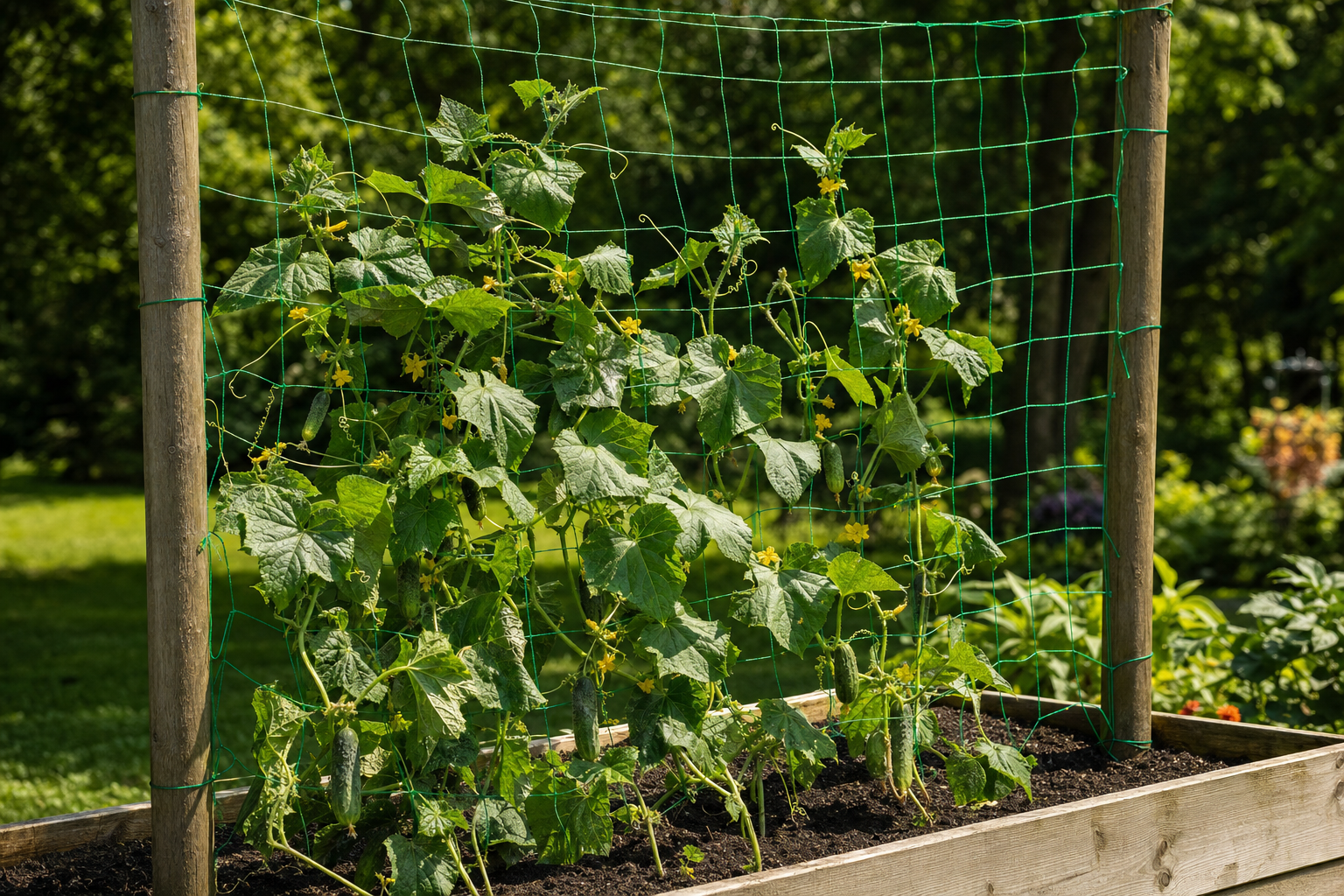
Walk through most backyard vegetable gardens in June and you'll find the same scene: cucumber vines sprawling across the soil, bean plants leaning sideways because a bamboo stick wasn't strong enough, and squash tentacles creeping into every neighboring bed. It isn't because these gardeners don't know their plants need support. It's because finding the right support — the right height, the right scale, something that actually fits the space they have — turns out to be harder than it should be. Commercial trellis netting is sold in 100-foot rolls intended for greenhouse operations. Wire cages max out at four feet and tip over once a cucumber plant loads up in August. The Rapiclip Vine & Veggie Trellis Net (5 ft x 10 ft) from Luster Leaf closes that gap. It is trellis netting designed for the scale of an actual home garden — five feet tall, ten feet long — and it supports the full range of climbing vegetables, from cucumbers and beans to peas and small-fruited squash, so they grow the way they are designed to grow: upward. Available at Liberty Farm, Home & Garden in Galion, Ohio.
Why Most Home Gardeners Are Either Under-Supporting or Overbuilding Their Trellises
The support structures most backyard gardeners reach for fall into two broad categories, and neither one is quite right for the typical home vegetable plot.
The first category is underbuilding: a few bamboo stakes, maybe some twine run between fence posts, or a single wire stretched horizontally a couple of feet off the ground. These systems work for the first few weeks of the season when plants are small, but climbing vegetables grow fast in June and July. A cucumber vine can put on a foot of new growth in a single warm week. A pole bean plant in full summer production is an aggressive climber that wraps its tendrils around whatever it finds. Two bamboo sticks and a piece of twine provides a starting point; it doesn't provide a full-season support structure. By mid-July, the plants have outgrown the support, stems are leaning in every direction, and fruit is lying on the ground where it develops rot on the contact surface and is difficult to find at harvest.
The second category is overbuilding: buying commercial trellis netting designed for greenhouse rows and professional operations. Commercial netting in 100-foot rolls is the right tool if you are running a serious vegetable operation with a full row of indeterminate tomatoes or 40 feet of cucumbers. It is significantly more than most home gardeners need for a raised bed or a 10-foot garden row. The installation requires heavy posts, significant hardware, and storage space for a bulky roll at the end of the season.
The Rapiclip Vine & Veggie Trellis Net from Luster Leaf occupies the middle ground that most home vegetable gardeners actually need: a purpose-designed, correctly-sized trellis net built for the 4-foot raised bed, the 10-foot garden row, or the compact backyard plot where a few plants of each climbing crop are grown each season.
Who Is Luster Leaf and What Is the Rapiclip Line?
Luster Leaf is an American garden products company with a history rooted in practical, gardener-focused tools and accessories — the kind of company that designs products by observing what home gardeners actually need rather than scaling down commercial products and calling it a day. The Rapiclip name is Luster Leaf's brand for their line of plant training and support products: clips, ties, tapes, cages, and netting designed to support the full range of vegetables, herbs, flowers, and vines that home gardeners grow.
The Rapiclip product philosophy emphasizes ease of use and reusability. Products in the line are designed to go on and come off cleanly, to work with plant stems without cutting or bruising them, and to be stored and reused for multiple growing seasons. That same philosophy carries through to the Vine & Veggie Trellis Net: the netting is constructed from polypropylene that is intended for repeated use, the mesh openings are sized so that plants can weave through them naturally without getting trapped or pinched, and the overall dimensions are calibrated for the spaces and scales where home gardeners actually work.
Luster Leaf is one of those brands that doesn't generate a lot of noise but earns consistent respect among gardeners who have used its products and found that they hold up over multiple seasons. The Rapiclip line in particular has a following among raised-bed vegetable growers for whom the right support product has to be compact, simple to install, and genuinely functional — not an overly engineered solution to a straightforward gardening problem.
Five Feet Tall, Ten Feet Wide: Why This Size Is Right for Most Home Gardens
The 5 ft x 10 ft dimensions of the Rapiclip Vine & Veggie Trellis Net are not arbitrary. They reflect the actual scale of how home gardeners grow climbing vegetables in the real world.
Ten feet is the length of a typical raised bed or a short garden row. If you are growing cucumbers, pole beans, peas, or small-fruited summer squash, a 10-foot section of your garden is a meaningful production area — enough to grow four to six cucumber plants, a full row of pole beans, or a double-planting of climbing peas. It is also the kind of run where a purpose-sized support system can be set up and taken down without heavy equipment, major post installation, or a significant time investment. A 10-foot trellis section can be installed with a pair of lightweight support stakes, a roll of twine or wire to suspend the top edge, and thirty minutes of setup time.
Five feet — sixty inches — is the height that climbing cucumbers, pole beans, and most home-garden tomatoes reach and actually use during a productive Ohio growing season. It is taller than a wire tomato cage, taller than a standard bamboo stake, and tall enough that your cucumber plants can run up the full height of the net and start to reach the top by late August. For most home gardeners growing cucumbers or beans in a standard 4-foot-tall raised bed setting, five feet of net height — extending above the bed wall — gives you the full support surface the plants need from early June through fall harvest.
The combination of these two dimensions means that a single Rapiclip net covers a 10-foot garden row or raised bed section at the height climbing vegetables actually need, without requiring you to buy more product, install more infrastructure, or manage more storage than the job calls for. Two nets cover a 20-foot row. One net works perfectly across a standard 4-foot x 8-foot raised bed, attached to the end walls and one center post, giving every plant in the bed access to vertical support.
The Best Vegetables to Grow on the Rapiclip Vine & Veggie Trellis Net
The Rapiclip Vine & Veggie Trellis Net is designed to support the core group of climbing and vining crops that most home vegetable gardeners grow. Here is how each major crop interacts with the net:
Cucumbers. Cucumbers are one of the clearest wins for vertical growing, and the Rapiclip net handles them perfectly. A cucumber vine has active tendrils that reach out and attach to any surface they find — the polypropylene mesh of the Rapiclip net gives those tendrils multiple attachment points at every foot of height, and the plants climb with minimal guidance once the first few tendrils have established contact. Cucumbers grown vertically produce straighter, better-colored fruit that hangs freely in the air rather than lying on moist soil or mulch. Disease pressure from soil-borne pathogens like angular leaf spot drops when foliage is lifted off the ground and spaced along a vertical plane where air can move freely around it. Most importantly for harvesting: cucumbers on a vertical net are easy to see and pick at the right stage — you walk along the net, scan from low to high, and harvest anything that has reached the right size. Cucumbers hidden under a mat of ground-level vines get missed, overmature, and tell the plant to slow down production. Cucumbers on a vertical net get found and harvested promptly, which keeps the plant producing actively through the full season.
Pole beans. Pole beans are aggressive climbers built for exactly this kind of support structure. They put out thin, twining shoots that wrap around any strand or mesh opening they encounter, and they grow fast — a healthy pole bean plant will cover a foot of net height in a warm week. On the Rapiclip 5 ft x 10 ft net, a row of pole beans planted in front of the net will be climbing within days of germination and will fill the net by mid-July. Harvesting pole beans on a vertical net is dramatically easier than harvesting bush beans or unsupported pole beans — the beans hang clearly, you can see them without bending, and you can pick a full row in minutes rather than the ground-level crouch required for bush varieties. For a home gardener who grows beans for fresh eating and canning, vertical support on a properly sized net like the Rapiclip is one of the most practically useful changes you can make to your garden setup.
Peas. Peas are a natural fit for trellis netting — they are true climbers with delicate tendrils that find and attach to the mesh quickly. In Ohio, peas go in early — March or April, as soon as the soil can be worked — and run through late June or early July before heat shuts them down. The Rapiclip net is an ideal support for a pea row because the plants fill the lower portion of the net (peas typically reach 4 to 6 feet on climbing varieties), hold themselves well once established, and clean off the net quickly at the end of their season. After the pea crop is done in early July, cut the vines at soil level, pull them off the net, and plant a second crop of climbing beans or cucumbers at the base of the same net — getting two crops from one trellis setup in the same growing season.
Small-fruited squash and gourds. Summer squash grown as a climbing vine rather than a ground-sprawler is one of the more space-efficient things you can do in a compact garden. Not all squash varieties climb well, but compact summer types — including many patty pan, yellow crookneck, and small zucchini varieties — can be guided up a trellis net and trained to grow vertically, freeing the garden floor for other crops. Small gourds and ornamental vines also work beautifully on the Rapiclip net for purely decorative purposes, covering a fence section or a raised-bed end wall with interesting foliage and distinctive fruit.
Tomatoes. The Rapiclip net supports compact and semi-determinate tomato varieties grown in containers, raised beds, or tightly spaced garden plots. For full-season indeterminate heirlooms that can reach 8 feet or more, a taller commercial trellis system is the better tool. But for bush-type, patio, or container tomato varieties grown in a raised bed, the Rapiclip net's 5-foot height provides practical support through most of the Ohio growing season.
How to Install the Rapiclip Vine & Veggie Trellis Net in Under 30 Minutes
Installing the Rapiclip Vine & Veggie Trellis Net requires minimal materials and no special skills. Here is the complete installation process:
What you'll need:
- Rapiclip Vine & Veggie Trellis Net (5 ft x 10 ft)
- Two support stakes, posts, or bamboo canes — at least 6 feet long
- One optional center support stake for longer spans
- Garden twine, zip ties, or clips to attach the net to the stakes
- A rubber mallet or post driver for driving stakes
Step 1: Set your end stakes. Drive a support stake at each end of your intended trellis run, leaving approximately 5 feet of stake above ground level — enough that the net can hang at full height with the bottom edge near the soil surface. For a raised bed installation, the stakes can be set directly in the soil at the ends of the bed. For an in-ground row, drive stakes at each end of the 10-foot run. Stakes should be driven 8 to 12 inches into the ground for stability; a rubber mallet makes this easy with bamboo canes or thin metal stakes.
Step 2: Run a top support line (optional but recommended). For the cleanest, most stable installation, run a length of garden twine or lightweight wire between the two end stakes at the top height where you want the net to hang. Thread this line through the top row of mesh openings in the Rapiclip net to distribute the support load evenly across the full width of the net. This method prevents the net from sagging between support points under the weight of actively growing plants.
Step 3: Attach the net to the stakes. Clip or tie the top edge of the net to each end stake using zip ties, garden clips, or twine. If you are using a center support stake (recommended for heavy crops like cucumbers), attach the net to the center stake at the top edge as well. Let the bottom edge of the net hang freely or lightly stake it to the ground for crops that need a low starting point for attachment.
Step 4: Plant your crops at the base of the net. If direct-sowing (beans, peas), sow seeds in a row immediately in front of and below the net. If transplanting (cucumbers, tomatoes), set transplants 8 to 12 inches from the net base. As the plants grow, loosely tuck the growing tip through the lower mesh openings to begin establishing the plant's relationship with the support surface. Most climbing crops will self-attach within a week once they are close enough to the net to find the mesh with their tendrils.
Step 5: Guide weekly during fast-growth periods. In June and July, plan a weekly five-minute walk along your net to tuck any stems that have grown away from the surface back into the mesh. This takes almost no time when done consistently and prevents the tangling situation that develops when fast-growing plants are left unmanaged for two or three weeks at a stretch.
Space Saving in the Garden: What Vertical Growing Actually Gets You
The marketing language around vertical gardening tends to focus on aesthetics — the beautiful, organized look of plants growing up a trellis rather than sprawling on the ground. The practical reality is less about looks and more about productivity per square foot, and the gains are significant.
A cucumber plant growing on the ground typically takes up a 4-foot by 4-foot area of garden space, more if it's a vigorous variety in a productive season. The same plant trained vertically on a 5-foot trellis net takes up a footprint of approximately 12 inches — the width of the space immediately in front of and behind the net. The garden floor space on both sides of the net is available for other crops: lettuce, radishes, herbs, compact flowers. In a 4 ft x 8 ft raised bed, a trellis net along one end converts that end into a vertical growing zone for cucumbers or beans while leaving the rest of the bed for crops that grow outward rather than upward. This kind of layered use of vertical space is how serious home gardeners get maximum production from small plots.
Vertical growing also changes what you plant near climbing crops. The east side of a north-south trellis net receives partial afternoon shade in mid-summer — the kind of shade that is perfect for keeping lettuce, spinach, and other cool-season greens productive a few weeks longer than they would last in full sun. Planting heat-sensitive greens in the shade zone of a trellis net is a practical strategy for extending your salad harvest into July. Meanwhile, the west side of the same net receives full afternoon sun, making it suitable for heat-loving crops that benefit from the warmest exposure your garden offers.
In a yard where total garden space is limited — a common reality for suburban and urban home gardeners — the ability to grow cucumbers, beans, and peas vertically rather than horizontally can meaningfully increase the total food output of the space you have. The Rapiclip Vine & Veggie Trellis Net is one of the most space-efficient products in the garden supply category precisely because its 5 ft x 10 ft footprint converts 10 feet of linear garden space from horizontal-sprawl territory to productive vertical growing area.
Harvest Quality: Why Vertically Grown Produce Tastes Better and Stores Longer
The quality difference between cucumbers, beans, and peas grown vertically versus on the ground is not subtle — it is visible, measurable, and meaningful to anyone who has grown both ways.
Cucumbers that lie on moist soil or mulch develop a pale, softened patch on the contact surface — the ground-contact side of the fruit — that reduces uniformity and shortens shelf life. The same cucumber hanging freely on a trellis develops color and skin firmness all the way around, stores better after harvest, and has a crisper texture because it never sat in contact with a moisture-retaining surface. For gardeners growing cucumbers for fresh eating or pickling, the quality difference between trellised and ground-grown fruit is meaningful enough that it is worth setting up the support structure for that reason alone.
Beans harvested from a vertical net are consistently cleaner — less soil contact, less mud splash from irrigation and rainfall, less time in the humid near-ground zone where bacterial and fungal pathogens are most active. Fresh-picked beans from a trellis net are firmer, crisper, and have a longer refrigerator life than beans harvested from sprawling ground-level plants in the same soil and watering conditions. For a gardener who grows beans for canning or freezing in quantity, the ability to harvest a clean, high-quality product with less washing and sorting time is a practical benefit on top of the aesthetic one.
Peas grown on a trellis are accessible — you can pick along the row standing upright, seeing the pods clearly against the vertical plane of foliage and mesh — and they are harvested at the right stage because they are easy to see. Ground-grown peas hide inside a tangled mat of foliage, get missed at the ideal harvest window, and overmature on the vine. Overmature peas are starchy and tough rather than sweet and tender. Consistent vertical trellis support keeps peas accessible and keeps your harvest timing accurate.
End-of-Season Cleanup and Reuse
The Rapiclip Vine & Veggie Trellis Net is designed for reuse, and the end-of-season process is straightforward when handled at the right time.
After the first killing frost — typically late September to mid-October in north-central Ohio — climbing crops lose their foliage and vines become easier to remove from the netting. The ideal cleanup window is after frost has killed the plants but before the dried vines have become fully brittle. At this stage, vines can be pulled away from the mesh in long sections by detaching the stem at the soil level and working the plant along the net rather than pulling it straight off the surface. Most of the vine comes free without tearing the mesh or leaving embedded fragments in the openings.
Once the plants are removed, detach the net from its support stakes, shake off any debris, and roll it loosely for storage. Store the rolled net in a garage, shed, or covered storage area away from direct UV exposure and away from rodents that might chew through it for nesting material. The polypropylene construction handles temperature extremes well — freezing and thawing over winter does not degrade the material — so standard unheated garage storage is appropriate.
Before reinstalling for the next season, unroll the net and inspect it for any holes or weak spots. Small holes can be bridged by threading a length of polypropylene twine through the surrounding mesh openings. A net with minor repairs is functionally equivalent to an undamaged one for a full additional season of use. Handled with basic care, a Rapiclip Vine & Veggie Trellis Net should provide multiple growing seasons of reliable service.
| Specification | Details |
|---|---|
| Product | Rapiclip Vine & Veggie Trellis Net (5 ft x 10 ft) |
| Brand | Luster Leaf (Rapiclip line) |
| Dimensions | 5 feet tall x 10 feet wide |
| Best Use | Raised beds, compact rows, backyard vegetable gardens |
| Best Crops | Cucumbers, pole beans, peas, small summer squash, compact tomatoes |
| Installation Time | Under 30 minutes with two support stakes |
| Reusable | Yes — polypropylene construction, multi-season service |
| Support Stakes Needed | 2 end stakes + 1 optional center stake (not included) |
| Key Benefit | Saves ground space, keeps fruit off soil, simplifies harvesting |
| Available At | Liberty Farm, Home & Garden, Galion, Ohio |
The Rapiclip Vine & Veggie Trellis Net (5 ft x 10 ft) is available at Liberty Farm, Home & Garden in Galion, Ohio, along with a full range of garden support products, seeds, and supplies for the growing season. If you are setting up a raised bed or planning a summer vegetable row, stop in and talk through your setup with our team — we can help you pick the right support system for the crops you are growing and the space you have to work with.
Frequently Asked Questions
Keep Reading
Plant Cover Crops Now: An Ohio Home Garden Guide
Plant fall cover crops in an Ohio vegetable garden with practical guidance on timing, species, seeding, winter care, and spring termination.
Save This Summer’s Garden: A Practical Ohio Seed-Saving Guide
Save tomato, bean, pea, lettuce, marigold, zinnia, and other garden seeds with this practical late-summer guide for Galion and north-central Ohio.