
Beat July Fly Season: The Complete Guide to Horse Fly Control with Pyranha Wipe N' Spray
Flies aren't just a nuisance in July — they stress your horses, spread disease, and make every barn visit a battle. Here's how to use a dual-purpose spray-and-wipe fly repellent to protect your horses all summer long.
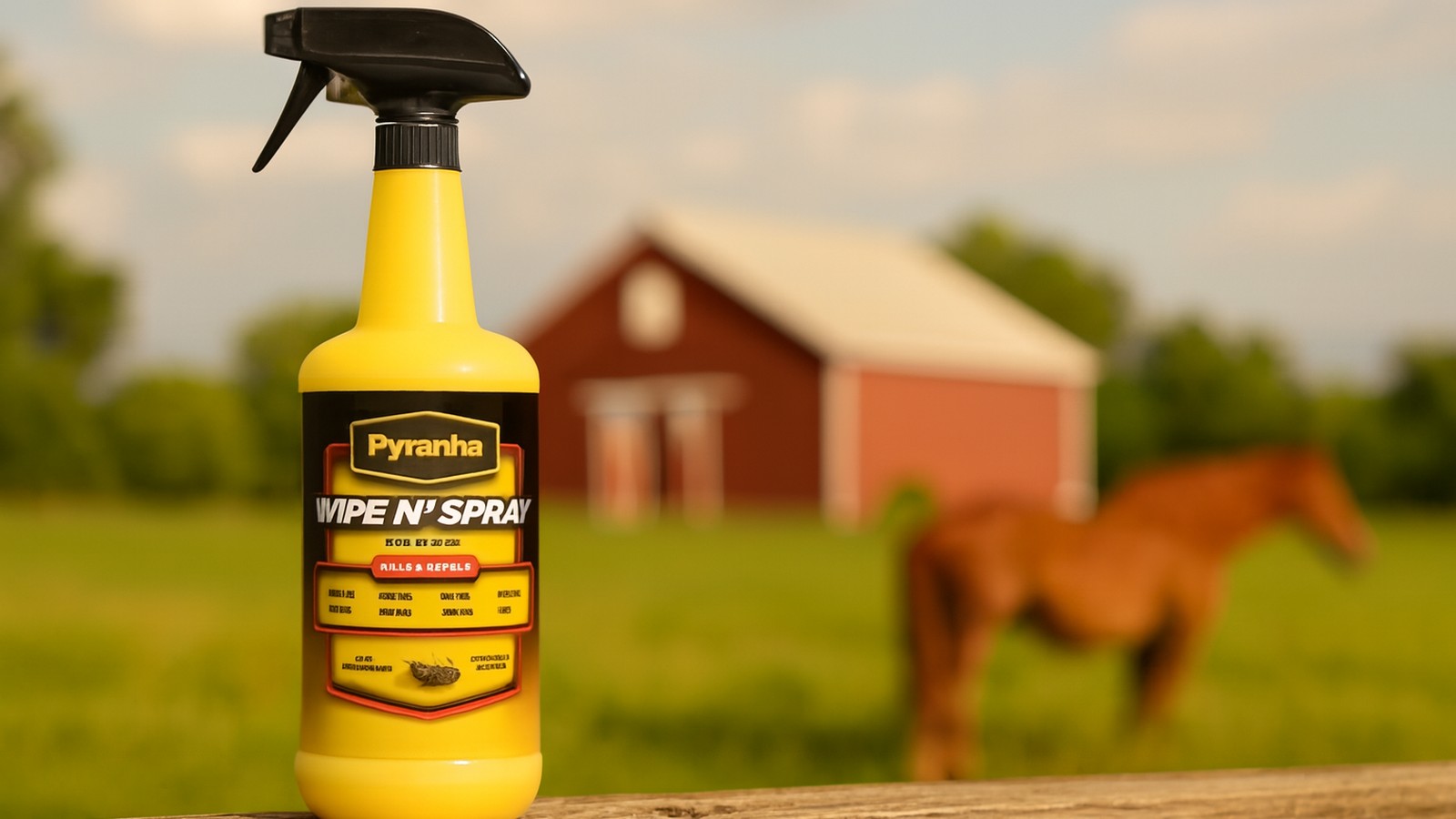
July in north-central Ohio is gorgeous — long days, warm nights, horses out on pasture — but it also marks the absolute peak of fly season, and your horses know it better than you do. Flies, gnats, and mosquitoes don't just irritate; they trigger head-shaking, tail-wringing, skin stomping, and chronic stress that can visibly affect weight, behavior, and overall health. The right fly control product, applied the right way, makes the difference between a horse that's calm and comfortable and one that's miserable from dawn to dusk. This guide walks you through why midsummer is the critical window for fly control in Ohio, how to use a dual-purpose spray-and-wipe product effectively, and how to build a daily fly management routine that actually works.
Why July Is the Worst Month for Flies in Ohio
If you've managed horses in Crawford County or anywhere across north-central Ohio for more than a season, you already know this intuitively: the fly population doesn't just show up in July — it explodes. Understanding why helps you stay ahead of it rather than constantly reacting to it.
Horse flies (Tabanus spp.) and stable flies (Stomoxys calcitrans) thrive in warm, humid conditions. Ohio's USDA Zone 6 climate means we reliably hit the temperature and humidity sweet spot — typically 80–95°F daytime highs with overnight lows that stay warm enough to keep insect populations breeding continuously. By mid-July, a stable fly population that started building in late May can be several generations deep. That's a lot of flies.
Gnats and mosquitoes add to the misery. Mosquitoes in particular breed aggressively after summer rainstorms, and Ohio's July weather pattern — hot days punctuated by afternoon thunderstorms — creates standing water in low spots, tire tracks, and any container left outside. Even a small puddle 3–4 inches deep can produce thousands of mosquitoes within a week.
Horse flies are perhaps the most physically damaging. Unlike house flies, horse flies have blade-like mouthparts that actually cut into skin to feed on blood. A single horse fly bite creates a wound that bleeds and attracts even more insects. Horses subjected to heavy horse fly pressure will run, pace fence lines, and refuse to stand still — burning calories and building anxiety that carries over into handling and training.
Gnats, particularly the biting midge species (Culicoides), are responsible for "sweet itch" in sensitive horses — an allergic reaction to gnat saliva that causes intense itching along the mane, tail, and belly. Left unmanaged, affected horses can rub themselves raw over the course of a summer. Consistent repellent application starting now, in July, is far more effective than waiting until the skin condition worsens.
The bottom line: the flies are at their worst right now, in July, and they will remain a serious problem through August and into early September in Ohio. This is your critical management window.
Understanding the Dual-Purpose Design: Spray-On and Wipe-On
Most fly sprays on the market are designed for one thing: spray it on, walk away. The Pyranha Wipe N' Spray RTU takes a different approach by giving you two application methods in one ready-to-use bottle — and that distinction matters more than it might seem at first glance.
The Spray Application
For the large surface areas of your horse's body — neck, shoulders, barrel, hindquarters, and legs — a spray application is fast, efficient, and gets good coverage. You can cover a 1,200-pound horse's major body surfaces in under two minutes with a proper spray application. Holding the nozzle 6–8 inches from the coat and working in overlapping sweeps ensures you're getting the product into the coat rather than just misting the tips of longer hair.
Spraying works best when the coat is clean and dry. A dusty or sweaty coat creates a barrier between the product and the skin surface where biting flies are targeting. If your horse has just come in from turnout on a hot afternoon, give the coat a quick brush to remove surface dust before you apply.
The Wipe-On Application
Here's where this product earns its name. The wipe-on method is specifically designed for a horse's face and other sensitive areas where direct spraying causes problems. Head-shyness — the habit of throwing or pulling the head away from stimuli around the face — is a real and common issue in horses, and it's frequently made worse by owners repeatedly spraying fly product at a horse's head.
The wipe-on method is straightforward: pour or spray a small amount of the product onto a soft cloth, sponge, or grooming mitt, then apply it gently to the face, around the ears, under the jaw, and along the sensitive inner legs and belly flank area. Because the horse feels cloth contact rather than a sudden spray mist, most horses tolerate it far better. This is especially important for young horses still building their confidence around grooming routines.
Using the wipe-on method around the ears is particularly valuable. Flies and gnats tend to cluster in and around horse ears, and the irritation often causes horses to shake their heads constantly, refuse to accept a bridle, or become touchy around the poll. A cloth application inside the ear base (not deep into the ear canal — just the outer area) gives meaningful protection in one of the most sensitive and commonly targeted areas.
Citronella Scent
The product's citronella scent is worth noting for a practical reason. Citronella has a long history as an insect deterrent, and many horses and horse owners find the scent acceptable — even pleasant — compared to some of the more chemical-forward fly sprays on the market. If you're working with a horse that's particularly sensitive to smell, introduce the product gradually, allowing the horse to sniff the closed bottle and then the cloth before your first application.
What Pyranha Wipe N' Spray RTU Controls
Knowing what a product targets helps you make smart decisions about when and how to use it, and whether you need additional control measures elsewhere in your fly management program.
The Pyranha Wipe N' Spray RTU kills and repels flies, gnats, mosquitoes, and other biting insects. In practical terms for Ohio horse owners in July, that covers the four main categories of flying insects that make summer miserable:
- Horse flies and deer flies: The big, aggressive biters that cause bleeding wounds and send horses bolting across pastures. These are July and August insects in Ohio — you're dealing with them right now.
- Stable flies: The sneaky ones. Stable flies look like house flies but bite hard, typically targeting legs and belly. They're a constant presence around hay, manure, and damp bedding throughout summer.
- Face flies and house flies: These cluster around horses' eyes and nostrils, feeding on secretions and spreading eye infections like pink eye. They're infuriating and relentless in summer.
- Gnats and biting midges: The tiny insects responsible for "sweet itch" reactions and constant ear irritation. Because they're small and often missed until the horse is already reacting, consistent preventive application is especially important.
- Mosquitoes: Beyond the nuisance factor, mosquitoes are disease vectors. In Ohio, Eastern Equine Encephalitis (EEE) and West Nile Virus are genuine concerns — both transmitted by mosquitoes to horses. Reducing mosquito exposure on your horses is part of a responsible EEE and West Nile prevention strategy alongside vaccination.
The product is ready to use straight from the bottle — no measuring, no mixing, no dilution required. For a busy horse owner doing morning or evening chores, that's a real practical advantage.
| Situation | Recommended Approach |
|---|---|
| Full-body protection before turnout | Spray application to neck, shoulders, barrel, hindquarters, and legs; wipe-on for face |
| Head-shy horse | Wipe-on method only for entire face, ears, and poll area using a soft cloth or grooming mitt |
| Young or green horse building tolerance | Introduce cloth first; wipe-on only until horse is comfortable; add spray gradually |
| Horse with gnat sensitivity / sweet itch | Focus wipe-on application along mane, tail base, belly, and ears; apply before dawn turnout when gnats peak |
| Pre-ride or pre-show application | Full spray-on body coverage; wipe-on face; allow 2–3 minutes to absorb before tacking up |
| Evening stall time / mosquito exposure | Spray-on application before stalling; ensure barn has good airflow — fans are highly effective alongside repellents |
| Sensitive skin areas (inner legs, belly) | Wipe-on method for targeted application without over-saturating tender skin |
| Product | Pyranha Wipe N' Spray RTU 32 oz |
| Available At | Liberty Farm, Home & Garden - Galion, Ohio | libertyfhg.com |
Building a Daily Summer Fly Control Routine
A fly repellent spray applied once a week does very little against Ohio's July fly pressure. Effective summer fly control is a daily habit — but it doesn't have to be complicated or time-consuming. Here's how to build it into your existing barn routine.
Morning Application (Before Turnout)
The most important application of the day is right before your horses go out. Morning turnout coincides with peak activity for many biting insects, particularly gnats and midges which are most active at dawn and dusk. Make fly spray application part of your pre-turnout routine the same way you'd check hooves before riding.
Typical morning application sequence:
- Quick brush of the coat to remove overnight dust, shavings, and debris from the horse's back, neck, and sides.
- Spray application to both sides of the neck, shoulders, barrel, hindquarters, and legs. Use smooth, overlapping passes — you're not trying to drench the coat, just get good coverage.
- Wipe-on application to the face: around the eyes, across the nose, under the jaw, and around the base of the ears. Use a dedicated cloth kept clean and stored in a sealed bag between uses.
- A quick wipe-on pass along the belly and inner legs if the horse has a history of gnat sensitivity or stable fly targeting in those areas.
Total time for a practiced routine: 3–5 minutes per horse.
Midday Check and Reapplication
On extremely hot, humid days — the kind of July days where horses are sweating heavily even at rest — you may need a midday reapplication, particularly on horses in pasture with significant fly pressure. Sweat and rain wash product off faster than dry conditions. If you see horses bunching in corners, stomping excessively, or clustering near a barn entrance rather than grazing, that's a signal the repellent has worn off and flies are winning.
Evening Stall-In Routine
If you're stalling horses overnight, an evening application helps manage mosquito exposure during the hours when mosquitoes are most active (dawn and dusk, extending into full darkness). This is also the application most relevant to mosquito-borne disease prevention. A spray-on pass at stall-in, combined with good barn airflow from fans, significantly reduces the number of mosquitoes landing on your horses overnight.
Application Tips for Maximum Effectiveness
Even a good fly repellent underperforms if it's applied carelessly. A few technique details make a meaningful difference in how long your protection lasts and how well it works.
Coat Preparation
Apply to a clean, dry coat whenever possible. Sweat, mud, and thick dust all reduce how well the product contacts and bonds with the hair shaft. This doesn't mean you need to bathe your horse before every application — a quick curry and brush is sufficient. If a horse has been working hard and is lathered, let them cool and dry before applying repellent.
Coverage, Not Quantity
More is not better with fly repellents. Your goal is even, thorough coverage — both sides of the body, getting the product down into the coat rather than sitting on top. Soaking the coat wastes product and can cause skin irritation in sensitive horses. Consistent, light-to-moderate coverage applied reliably every day outperforms heavy applications done sporadically.
Don't Skip the Legs
Stable flies target legs almost exclusively. Many horse owners focus on the back and barrel and neglect the lower legs, then wonder why their horses are still stamping constantly. The lower legs, fetlocks, and pastern area deserve specific attention during spray application.
Cloth Selection for Wipe-On
For wipe-on application, use a soft cloth that won't scratch or irritate the skin — old terry cloth towels, grooming mitts, or soft cotton rags work well. Keep a dedicated cloth for each horse if possible to avoid spreading any skin conditions between animals. Store used cloths in a resealable bag between applications; a cloth that has absorbed product from previous applications still carries some repellent activity and can be lightly re-dampened with fresh product.
Ear Application Technique
To apply around the ears without triggering a head-shy response, start by letting the horse sniff the cloth. Apply to your own hand or the back of your wrist first so the horse can investigate the smell without any pressure. Then gently fold the cloth around the base of the ear and the area just inside the ear entrance — not deep into the canal. Most horses that are initially head-shy about fly spray will accept a calm, slow cloth application after a few sessions.
Rainy Days and Wet Conditions
Rainfall washes fly repellent off. If a summer thunderstorm rolls through mid-morning, plan a reapplication when horses are back in and dry. Ohio's July weather pattern of afternoon storms means you may need to build a flexible reapplication step into your routine on storm days rather than sticking rigidly to a once-daily schedule.
Fly Control Beyond the Horse: A Whole-Farm Approach
Applying fly repellent to your horses is the frontline defense, but it's most effective when it's part of a broader fly management strategy across your property. The best repellent in the world can't overcome a barn that's generating thousands of flies every day from unmanaged manure and wet bedding.
Manure Management
This is the single biggest lever in barn fly control. A single pile of fresh manure can support the development of hundreds of house flies and stable flies within days in July heat. Removing manure from stalls daily and from paddocks 2–3 times per week dramatically reduces the breeding population. If you're composting manure on-site, locate the pile as far from the barn as practical — ideally 150–200 feet — and keep it turned to maintain temperatures that kill fly larvae.
Wet Bedding and Standing Water
Wet bedding is a fly breeding paradise. Keep stalls dry by stripping wet spots daily, not just at full stall cleanings. Check water buckets, troughs, and any low spots in paddocks after rainstorms. A stagnant water source as small as a wheelbarrow left upright after rain can produce a significant mosquito hatch within 5–7 days in Ohio's July temperatures.
Barn Fans
Large box fans mounted in stall openings are remarkably effective at reducing fly pressure. Flies are weak fliers and cannot navigate well against even moderate airflow. A simple 20-inch box fan creating airflow through a stall reduces fly landing counts significantly — and as a bonus, keeps horses cooler on hot July nights. Position fans to create cross-ventilation through the barn aisle rather than just blowing air around in circles.
Fly Traps and Bait
Disposable fly traps placed around the exterior of the barn — away from where horses stand and where you work — can knock down overall population numbers meaningfully. They're not a replacement for repellent on the horse, but combined with good sanitation and daily repellent application, they're a useful layer of control.
Fly Masks and Sheets
For horses with particularly severe reactions to flies — or during peak fly hours on especially bad days — fly masks protect the face and eyes physically while repellent handles the rest of the body. A fly mask used alongside a wipe-on repellent on the face provides the most comprehensive face protection available.
Horses That Need Extra Attention in Fly Season
Every horse in your barn deals with summer flies, but some individuals need a more proactive, intensive approach. Recognizing which horses need extra care helps you prioritize your time and repellent application in a multi-horse operation.
Young Horses
Foals and yearlings often have more sensitive skin than adult horses and haven't built the behavioral tolerance for flies that adult horses develop over time. Young horses that have never experienced heavy fly pressure can panic and injure themselves running from flies. Start fly repellent application early in the season, using the wipe-on method exclusively at first, so young horses associate grooming contact with the process rather than experiencing a sudden spray. Build to full spray application gradually over a week or two.
Light-Colored Horses
Gray, palomino, and cremello horses tend to attract flies more readily than darker-coated horses — researchers believe flies are drawn by reflected light and heat patterns, and lighter coats behave differently in this regard. Light-colored horses may need more frequent reapplication and are prime candidates for daily fly sheet use in addition to repellent.
Horses with Sweet Itch or Skin Sensitivity
If you have a horse that has previously developed summer seasonal recurrent dermatitis (the technical name for sweet itch), start your repellent routine in early to mid-June in Ohio — before gnat populations peak — and maintain consistent daily application through September. The wipe-on method allows you to focus carefully on the mane crest, tail head, and belly midline where gnats prefer to feed in sweet itch-prone horses.
Senior Horses
Older horses with compromised immune systems or underlying health conditions are more vulnerable to the secondary effects of heavy insect pressure — stress weight loss, wound infection from bites, and heightened disease risk. Senior horses also tend to be less mobile and therefore less able to outrun or outmaneuver fly swarms. Consistent daily protection matters more for them, not less.
Horses in Work
If you're riding or showing your horses through July and August, fly control is directly relevant to your training. A horse distracted by flies — head-shaking, tail-wringing, breaking gait to stomp — is a horse that can't focus. Applying repellent 10–15 minutes before tacking up, with careful wipe-on application to the face and ears, gives the product time to absorb before you put a bridle on and gives you a calmer, more focused horse to work with.
Pick Up Pyranha Wipe N' Spray RTU in Galion This Week
If your fly control routine feels like it's falling behind the pressure of a full Ohio July, now is exactly the right time to get a product that can handle both spray and wipe-on application in one bottle. The peak of fly season doesn't wait, and the horses standing in your barn right now — stomping, head-shaking, and seeking shade — are telling you they need better protection today, not next week.
The Pyranha Wipe N' Spray RTU 32 oz is available at Liberty Farm, Home & Garden at 222 S. Liberty St. in Galion — your local source for horse care supplies, livestock feed, and everything your barn needs through the summer months. The staff at Liberty Farm, Home & Garden understand north-central Ohio's fly season firsthand and can help you put together a complete summer fly management plan for your operation. Stop in this week and pick up a bottle — or browse the full selection at libertyfhg.com.
Your horses will thank you. And so will your grooming routine.
Frequently Asked Questions
Keep Reading
Late-Summer Pasture Checkup: Repair, Reseed, or Rest Your Ohio Fields?
A practical late-August pasture guide for Ohio livestock owners: assess plant cover, soil fertility, weeds, grazing pressure, and whether to repair or reseed.
Molting Season Prep: How to Support Your Chickens Through the August Transition
Learn how to recognize and support your chickens through their annual molt in late summer and early fall. This seasonal guide from Liberty Farm, Home & Garden in Galion, Ohio covers nutrition, management, and timing for north-central Ohio flocks.