
Molting Season Prep: How to Support Your Chickens Through the August Transition
Late summer triggers the annual molt in backyard flocks across north-central Ohio — and how you manage it determines how fast your hens bounce back into full production. Here's everything you need to know to get your birds through it in good shape.
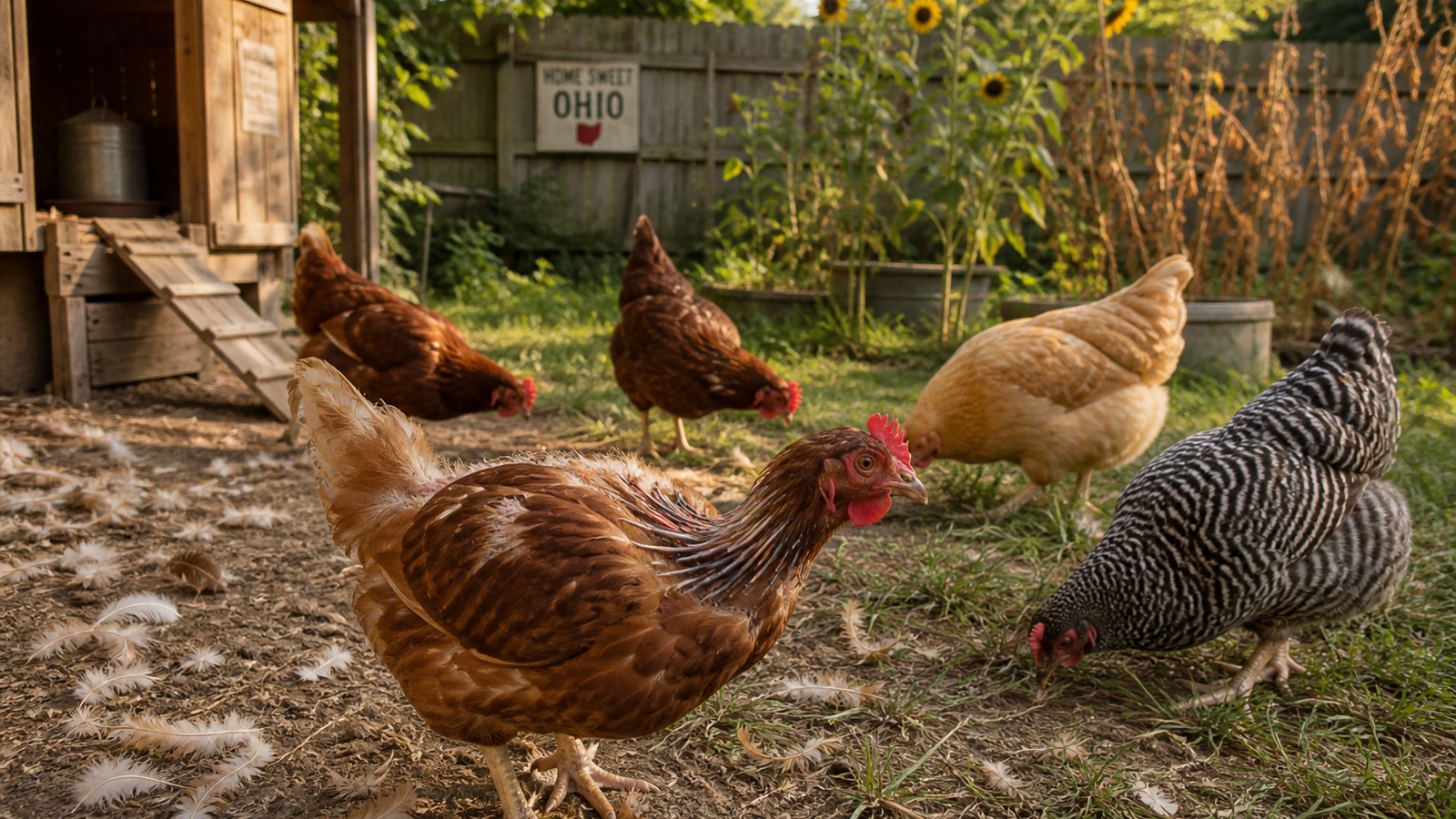
Sometime between now and October, your hens are going to start looking rough — patchy feathers, bare necks, a dropped egg count, and a general air of indignation. That's the molt, and for backyard flock owners in Crawford County and across north-central Ohio, late summer is exactly when it begins. Understanding what's happening inside your birds, and taking a few deliberate steps to support them through it, is the difference between a molt that drags on into November and one that wraps up cleanly by late September — putting your hens back on the nest just in time for fall.
What Is the Molt and Why Does It Happen in August?
The molt is the natural, annual process by which chickens shed old, worn feathers and grow a fresh set. It's not a disease, not a nutritional deficiency on its own, and not a sign that something has gone wrong. It's biology — specifically, it's triggered by the shortening of daylight hours that begins after the summer solstice in late June and becomes noticeable to your flock by mid-to-late July.
Chickens are extraordinarily sensitive to photoperiod — the ratio of light to dark in a 24-hour cycle. As days shorten past roughly 14 hours of daylight, the pineal gland in a chicken's brain signals a slowdown in reproductive hormones. Egg production tapers off, and the body redirects its protein and energy budget away from making eggs and toward regrowing feathers. In north-central Ohio, that hormonal shift typically kicks in for most flocks between late July and mid-August, meaning you should start watching for early molt signs right now if you haven't already.
The molt usually follows a predictable head-to-tail sequence. Feathers drop first from the head and neck, then the back and breast, then the wings, and finally the tail. The speed of the molt — and therefore the length of your egg-production gap — varies significantly by bird. "Hard molters" drop the bulk of their feathers rapidly (sometimes within just two or three weeks) and regrow them quickly. "Soft molters" lose feathers gradually and may stretch the process over three to four months. Hard molters are actually the more productive long-term birds, because their total downtime is shorter.
Age matters too. Pullets hatched this past spring won't molt this year — their first full molt typically comes after their first laying season, usually in the fall or winter of their second year. Your older hens — those in their second, third, or fourth laying seasons — are the ones you'll be managing this August.
Early Signs Your Flock Is Starting to Molt
The molt doesn't always announce itself with dramatic feather loss right out of the gate. Knowing the subtler early signals helps you get ahead of the nutritional and management changes that will matter most in the coming weeks.
- Loose feathers in the coop and run: A few feathers here and there is normal. If you're suddenly finding handfuls on the floor every morning, the molt has begun.
- Bare patches on the neck, back, or behind the head: These are the first areas to thin out. A hen with a suddenly sparse-looking neck or a visible skin patch behind her comb is almost certainly starting her molt.
- Pin feathers (blood feathers): These are the waxy, translucent quills of newly emerging feathers, filled with a blood supply that eventually recedes as the feather matures. They look like dark spines pushing through the skin. Pin feathers are a sign the molt is actively progressing — and they're also extremely sensitive to touch, which explains why molting hens often pull away from handling.
- A sudden drop in egg production: If your reliable layers cut back noticeably — or stop altogether — without any obvious stress, illness, or heat event to blame, check their feathering. A molt-related production drop can be dramatic: a hen laying five or six eggs per week may drop to zero.
- Behavioral changes: Molting hens are often irritable, withdrawn, or less interested in treats and foraging. The discomfort of pin feathers is real, and some hens want to be left alone.
It's also worth distinguishing the molt from other causes of feather loss. Feather pecking (bullying), northern fowl mite or lice infestations, and broody hens pulling their own chest feathers can all cause patches. In a true molt, feather loss follows the head-to-tail progression and is accompanied by the simultaneous appearance of pin feathers. If feathers are being pulled out rather than dropping cleanly, or if only one hen in the flock is losing feathers, investigate other causes before assuming molt.
Nutrition Is Everything During the Molt
A feather is approximately 85% protein. Growing an entirely new set of them — on top of maintaining basic bodily functions — is one of the most nutritionally demanding things a chicken's body ever does. If there's one management lever that has the biggest impact on how quickly and completely your hens come through the molt, it's protein.
Standard layer feed is formulated with egg production as the primary goal, typically running around 16% crude protein. That's appropriate for actively laying hens, but it's on the low side for the protein demands of active feather regrowth. During the molt, many experienced flock owners switch their birds — at least partially — to a higher-protein feed, such as a flock raiser or all-flock formula, which commonly runs 18–20% crude protein. Some growers temporarily bump protein even higher by supplementing with high-protein treats.
Good high-protein supplement options to offer during the molt include:
- Black soldier fly larvae or dried mealworms: Both are excellent molt-season treats. Mealworms typically run 50–53% crude protein and are enthusiastically accepted by almost every flock. Limit to a small handful per bird per day — treats should complement, not replace, balanced feed.
- Scrambled or hard-boiled eggs: Yes, feeding eggs back to your chickens is perfectly normal and doesn't teach bad habits. Cooked eggs are an easy, high-bioavailability protein source that many flocks love.
- Sunflower seeds (black oil type): High in both protein and the amino acid methionine, which is specifically important for feather structure. A tablespoon or two per bird a few times a week is a reasonable supplemental amount.
- Canned tuna or sardines in water: An occasional treat, not a daily staple. A small can split among a small flock provides an excellent protein and omega fatty acid boost.
- Dry cat food: Some flock owners use this as an emergency molt-season protein boost. It works, but use it sparingly and short-term — it's not formulated for poultry long-term.
Equally important is what to reduce during the molt. Scratch grains — cracked corn, wheat, milo blends — are high in carbohydrates and low in protein. They're great as a warming winter supplement or an occasional treat, but leaning on scratch during the molt actively dilutes your birds' protein intake and can slow feather regrowth. Cut scratch back significantly, or eliminate it entirely, until your hens are through the molt and back into lay.
Calcium needs shift during the molt as well. Laying hens need high calcium (typically 3.5–4.5% in layer rations) to shell their eggs. Hens that are not laying need far less calcium — excess calcium during non-laying periods can stress the kidneys over time. If you switch your flock to a flock raiser formula during the molt, offer oyster shell free-choice on the side rather than having calcium baked into the base ration. Hens that are still laying (some slow molters continue intermittently) will consume oyster shell as needed; birds fully out of lay will largely ignore it.
Management Adjustments That Speed Recovery
Nutrition is the biggest lever, but several management practices make a meaningful difference in how smoothly your flock handles the molt.
Minimize Handling
Pin feathers contain active blood vessels and are genuinely painful when touched, squeezed, or broken. A hen with a back full of pin feathers does not want to be picked up and cuddled. Keep handling to a minimum during peak molt — health checks, yes, but casual handling should wait. If you need to examine a molting bird, support her body weight carefully and avoid pressing on areas where pin feathers are visible.
Reduce or Eliminate Artificial Lighting Temporarily
Many backyard flock owners in north-central Ohio run supplemental coop lighting in the fall and winter to maintain egg production through the shorter days. During an active molt, consider holding off on adding light — at least until your birds are showing visible feather regrowth across the back and wings. Artificially extending daylength signals the reproductive system to resume laying before the body has finished the molt, which can result in partial feather regrowth and a bird that never fully completes either process. Let the molt run its natural course first.
Keep the Coop Dry and Draft-Free
A molting hen has significantly reduced insulation. Late August in Ohio can still be warm, but nights in Crawford County are already beginning to cool toward the mid-50s°F and lower by the end of the month, and September nights can dip into the 40s. A bird with bare patches on her back and neck loses body heat much faster than a fully feathered hen. Make sure your coop has adequate ventilation (to prevent moisture buildup and respiratory disease) but no direct drafts blowing across roosting birds at night. Check that roosts are positioned away from open ventilation gaps and that there are enough roosting spots for everyone — a cold, molting hen that gets bumped off the roost at 2 a.m. is a hen under stress.
Manage Flock Dynamics
Pecking order stress is real, and it intensifies around molt time. Bare skin is an attractant for curious or aggressive flockmates — the pink or reddish skin visible beneath pin feathers is especially stimulating to other birds. Watch for signs of pecking at exposed areas, particularly on the back, neck, and tail base. If you see blood from a picked wound, remove the injured hen immediately and treat the wound. A poultry anti-pecking spray or blue-tinted wound spray can help disguise the injury's appearance and deter further attention. Providing additional space, multiple feeding stations, and environmental enrichment (hanging cabbage, a flock block, extra roosting options) reduces idle pecking behavior across the flock.
Keep Water Fresh and Plentiful
Feather growth requires not just protein but adequate hydration — keratin, the primary structural protein in feathers, is synthesized more efficiently when birds are well-hydrated. In late August heat, water consumption in a small flock can be surprisingly high. Check waterers at least twice daily and scrub them weekly to prevent algae and biofilm buildup. If your coop area gets afternoon sun, move waterers to a shadier spot.
| Topic | Recommendation |
|---|---|
| Base feed during molt | Switch to 18–20% protein flock raiser or all-flock formula |
| Calcium supplementation | Offer oyster shell free-choice on the side; don't force via layer feed |
| High-protein treats | Dried mealworms, black soldier fly larvae, black oil sunflower seeds — small daily amounts |
| Scratch grains during molt | Reduce significantly or eliminate until molt is complete |
| Supplemental lighting | Hold off until feather regrowth is well advanced across back and wings |
| Handling | Minimize — pin feathers are painful; health checks only |
| Coop temperature/drafts | Ensure roosts are draft-free as September nights cool into the 40s–50s°F |
| Molt duration (typical) | Hard molters: 4–8 weeks; soft molters: up to 16 weeks |
| Product | High-protein flock raiser feed, dried mealworms, oyster shell, anti-pecking spray |
| Available At | Liberty Farm, Home & Garden - Galion, Ohio | libertyfhg.com |
What to Expect Week by Week
The molt timeline varies by individual bird, but having a rough framework helps you know whether things are progressing normally or whether something has gone wrong.
Weeks 1–2: Feather loss begins — first at the head and neck, then spreading to the back. You'll find feathers in the coop and run daily. Egg production drops noticeably or stops. Pin feathers may begin emerging on the neck. Hens may seem withdrawn or grumpy.
Weeks 3–4: Peak feather loss. This is when hard molters look their worst — patchy, sparse, and frankly a little alarming if you've never seen it before. The good news: this phase doesn't last long for hard molters. Pin feathers should be visibly emerging across the neck, back, and breast. Continue high-protein nutrition and avoid stress.
Weeks 5–6: Feather regrowth becomes more visible. Pin feathers mature and open into full feathers across the head and neck. The back and breast are still filling in. Egg production remains low or absent — the body is still directing resources toward feather completion.
Weeks 7–8: For most hard molters in a well-nourished flock, this is the home stretch. Wing and tail feathers are filling in. The bird's full plumage is largely restored. Egg production often begins to pick back up in this window, especially if daylight hours are still adequate (or if you begin adding supplemental light at this point).
Soft molters on the slower end of the spectrum may still be in mid-molt at week 8 and won't complete feather regrowth until October or even early November. As long as the bird is eating well, alert, and showing steady pin feather development, this is normal — just slower. Where you need to pay closer attention is if a hen appears to have stalled: pin feathers are barely progressing, the bird looks lethargic, or weight loss is apparent. Those are signs to look more carefully at nutrition, parasite load (mites and lice are especially stressful during molt), or underlying health issues.
Checking for Parasites During the Molt
The molt is an excellent time to do a thorough parasite check — partly because you're handling your birds more intentionally anyway, and partly because external parasites like northern fowl mites and chicken lice can dramatically worsen molt outcomes. A heavy mite infestation causes anemia, significant stress, and persistent feather damage, all of which slow regrowth and compromise bird health at precisely the moment when their bodies are under maximum nutritional demand.
To check for mites, part the feathers around the vent area (northern fowl mites concentrate there), under the wings, and along the back. Look for small, fast-moving reddish-brown or gray specks on the skin and at the base of feather shafts. You may also see white or grayish egg clusters cemented to feather shafts near the vent — those are louse or mite eggs. A heavy infestation will be unmistakable; a moderate one requires a close look in good light.
If you find parasites, treat all birds in the flock simultaneously and clean the coop thoroughly — paying special attention to cracks in roosting bars and nestbox corners where red (roost) mites hide during the day. Dust baths are the chicken's own natural defense mechanism against external parasites. Make sure your flock has year-round access to a dry dust bath area with fine, loose material — plain dirt, wood ash, or food-grade diatomaceous earth added to the mix are all commonly used. This won't eliminate an active infestation but supports ongoing prevention.
Stop by Liberty Farm, Home & Garden in Galion if you need poultry-safe external parasite treatments or dust bath amendments — the staff can help you find appropriate products for your flock size.
Planning Your Lighting Strategy for Fall Production
One of the most common questions flock owners ask in late summer is: should I run supplemental lighting this fall, and if so, when do I start? The molt complicates that decision in a useful way.
If your goal is to maintain reasonable egg production through the winter months in Ohio, supplemental lighting is an effective tool. Chickens generally need 14–16 hours of light per day to sustain peak laying. In Galion, natural daylight drops below 14 hours around mid-August and continues falling through the winter solstice. Without supplemental light, most hens will taper production significantly from September onward.
The timing rule of thumb most poultry keepers use is this: don't add supplemental light until your hens have substantially completed their molt — meaning the majority of pin feathers have matured and full feathering is visible across the back, breast, and wings. For most Ohio flocks that begin molting in August, that window opens somewhere between mid-September and mid-October, depending on the individual bird.
When you do add light, use a timer to provide consistent, predictable hours rather than leaving a light on randomly. Early morning light (turning on at 4 or 5 a.m. and running until natural sunrise) is gentler on the flock's routine than evening extension. A simple incandescent or LED bulb providing enough light to read by (roughly 25–40 watts incandescent equivalent for a small coop) is adequate. The light doesn't need to be bright — it just needs to be consistent.
Keep in mind that running supplemental lighting year-round, starting from early in a hen's life, can shorten her overall productive laying career by driving earlier-than-natural depletion of her follicle supply. Some backyard flock owners choose to let their birds molt naturally in the fall without light intervention and accept the winter production gap. Both approaches are valid — it comes down to your goals and how important year-round eggs are to your household.
Getting Your Coop Ready for the Molt Season Shift
While your birds are going through their molt, it's the ideal time to do a thorough late-summer coop maintenance pass. The coop is less intensively used in warm weather (hens spend more time outdoors), and catching structural issues now — before Ohio's fall weather sets in — is far easier than trying to seal gaps in a cold October rain.
Work through this checklist while your flock is spending time in the run:
- Inspect and replace roosting bars if needed. Roosting bars take a lot of abuse. Check for cracks, splinters, and loose mounting — and confirm bar diameter is appropriate (1.5–2 inches is a good target for standard breeds, which allows hens to roost flat-footed with their toes wrapped comfortably around the bar rather than perching on a narrow dowel).
- Seal ventilation gaps against future drafts. You want ventilation (airflow at the top of the coop to exhaust moisture and ammonia) but not drafts at roost height. Use hardware cloth over upper vents to maintain airflow while keeping out predators, and check lower wall areas for gaps that will let in cold winter air at bird level.
- Deep-clean nestboxes. Late summer is peak mite habitat in nestboxes — warm, dark, and full of organic material. Remove all bedding, scrub the boxes, let them dry completely in the sun if possible, and replace with fresh nesting material before hens return to laying.
- Check the coop roof and walls for water intrusion points. An August evening is a good time to look for daylight coming through where it shouldn't. A damp coop in fall and winter is a respiratory disease setup.
- Evaluate your feeder and waterer setup for the coming season. If you plan to heat a waterer this winter, test your electrical access now. Check that your feeder is covered and rodent-resistant — fall means mice start looking for warm, grain-filled spaces.
For coop supplies, bedding, feeders, waterers, and the high-protein feeds and supplements your flock needs through the molt, visit Liberty Farm, Home & Garden at 222 S. Liberty St. in Galion — they stock a solid selection of poultry supplies suited to small backyard flocks and larger hobby operations alike.
When to Call a Vet: Molt vs. Something Else
The vast majority of molts in healthy, well-nourished flocks proceed without veterinary intervention. But it's worth knowing the signs that what you're looking at might not be a straightforward molt.
Contact a poultry-experienced vet if you observe any of the following:
- A hen that is losing feathers but showing no pin feather regrowth after 3–4 weeks
- Significant weight loss or muscle wasting during the molt period
- Lethargy, hunched posture, or tail-down stance that doesn't resolve with reduced stress and good nutrition
- Diarrhea, respiratory symptoms, or swelling of the face or wattles accompanying feather loss (these suggest infectious disease, not molt)
- Feather loss concentrated only in specific areas (vent, breast) with no head-to-tail progression — this pattern more often points to parasites, nutritional deficiency, or feather pecking rather than normal molt
- Bright-red or bleeding skin that attracts aggressive flockmates
Ohio State University Extension's Small Flock Poultry program is a solid free resource for health questions, and Crawford County farmers can also reach out to the OSU Extension office in Bucyrus. Many large-animal vets in the Galion and Bucyrus area will see poultry — it's worth identifying one in advance rather than scrambling during a health emergency.
The molt is one of those events that looks alarming the first time you experience it with your flock and becomes completely routine by the second or third year. The birds that come through it with the best outcomes are the ones whose owners adjust their feed, protect them from added stress, keep the coop in good shape, and give them the time their bodies need. Stock up on the high-protein feed and molt-support supplements your flock will need over the next six to eight weeks — Liberty Farm, Home & Garden in Galion is a reliable local source for everything on that list.
Frequently Asked Questions
Keep Reading
Late-Summer Pasture Checkup: Repair, Reseed, or Rest Your Ohio Fields?
A practical late-August pasture guide for Ohio livestock owners: assess plant cover, soil fertility, weeds, grazing pressure, and whether to repair or reseed.
Beat July Fly Season: The Complete Guide to Horse Fly Control with Pyranha Wipe N' Spray
July is peak fly season for Ohio horses — learn how to use Pyranha Wipe N' Spray RTU to kill and repel flies, gnats, and mosquitoes this summer, available at Liberty Farm, Home & Garden in Galion, Ohio.