
Why Your Backyard Chickens Need Grit and Probiotics This Summer
Chickens have no teeth — grit is how they grind every bite of food. This summer guide explains how adult poultry grit works, why the warm-weather season puts extra demands on your flock's digestion, and how to feed it correctly so your birds stay healthy and productive.
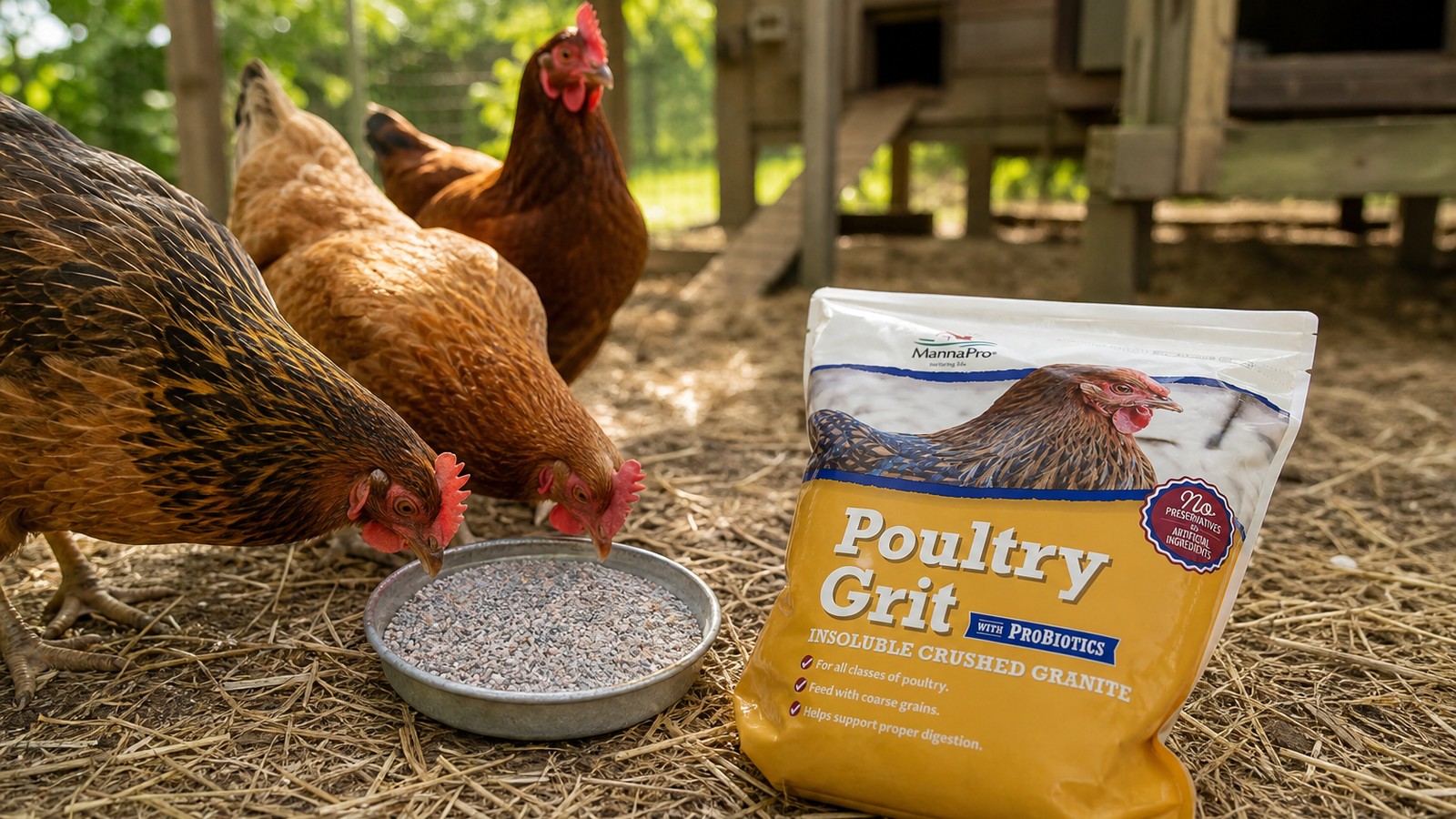
Chickens are surprisingly efficient digesters — but only when they have what their bodies actually require to break food down, and that starts with grit. Unlike mammals, chickens have no teeth; instead, they rely on a muscular organ called the gizzard to grind up every kernel of feed, every blade of grass, and every bug they swallow. Without the right grit, that process stalls, and even well-fed birds can end up undernourished. Summer in Ohio adds a whole new layer of complexity: longer days mean more foraging, more dietary variety, and more stress on your flock's digestive system. Manna Pro Poultry Grit with Probiotics (5 lb) addresses both the mechanical and the microbial sides of poultry digestion in a single, easy-to-offer supplement — and right now, in late June, is exactly when your adult birds need it most.
How a Chicken's Digestive System Actually Works
To understand why grit matters so much, it helps to walk through what happens after a chicken pecks up a mouthful of food. Chickens have no teeth and no ability to chew. Food travels down the esophagus and into the crop, a storage pouch in the upper chest where it softens and begins to break down with the help of saliva and early-stage enzymes. From there it moves into the proventriculus — the "true stomach," which secretes digestive acids — and then into the gizzard.
The gizzard is a dense, muscular organ lined with a tough keratin coating called the koilin layer. It contracts powerfully and rhythmically, squeezing and grinding whatever is inside. When grit particles are present, the gizzard uses them the way a millstone uses gravel: the hard, angular pieces crush and shred feed against the thick walls. Without sufficient grit, the gizzard still contracts, but it has nothing to grind against. Whole grains and fibrous plant material pass through only partially digested, meaning your birds absorb fewer nutrients from the same amount of feed.
After the gizzard, the now-ground slurry moves into the small intestine, where the majority of nutrient absorption takes place, and then through the ceca — two blind pouches where fermentation by gut bacteria helps break down fibrous material further. This is where probiotics become relevant: a healthy microbial population in the lower gut directly affects how well a bird extracts energy, vitamins, and minerals from her diet.
The key takeaway is that grit and gut health are not separate issues — they are two interconnected pieces of the same digestive chain. Get either one wrong and the whole system becomes less efficient.
Adult Grit vs. Chick Grit: Size Really Does Matter
Not all poultry grit is the same, and using the wrong size is a surprisingly common mistake among newer flock keepers. Chick grit is finely crushed, sized for the small, still-developing gizzards of birds under about 8 weeks old. Adult grit — like the Manna Pro Poultry Grit with Probiotics — is larger and harder, sized for the full-grown gizzards of laying hens, roosters, and mature meat birds.
Why does particle size matter so much? A gizzard grows significantly as a bird matures, and so does the force it can generate. A mature laying hen's gizzard can exert enough pressure to crack whole corn kernels — but only if it has appropriately sized, hard grit to work with. Fine chick grit would simply dissolve or pass through too quickly to be useful in an adult gizzard. Conversely, giving adult-sized grit to young chicks can cause crop impaction because their systems are not yet equipped to handle it.
The hardness of the particles matters too. Softer materials like oyster shell (which is primarily calcium carbonate and dissolves readily in stomach acid) serve a different purpose — calcium supplementation for shell development — and should not be confused with insoluble granite grit. True insoluble grit stays in the gizzard long enough to do grinding work before eventually passing through. Granite-based grit is the standard for insoluble poultry grit, and it is what mature birds need to properly process their feed.
| Scenario / Bird Type | Grit Recommendation | Notes |
|---|---|---|
| Chicks 0–8 weeks old | Fine chick grit only | Adult grit is too large and may cause impaction |
| Pullets 8–16 weeks | Transitioning to adult grit | Introduce adult grit gradually alongside chick grit |
| Adult laying hens (16+ weeks) | Adult insoluble grit | Larger particles match the mature gizzard's capacity |
| Roosters and meat birds (adult) | Adult insoluble grit | Heavy feed consumption makes adequate grit essential |
| Free-range birds on diverse pasture | Supplement grit free-choice | Natural grit intake can be inconsistent; a dish ensures availability |
| Confined birds on layer pellets only | Adult insoluble grit, always available | No natural grit source; must be provided |
| Birds eating whole grains or scratch | Adult insoluble grit, critical | Whole grains require active grinding to be digestible |
| Product | Manna Pro Poultry Grit with Probiotics (5 lb) | Adult-sized insoluble grit with added probiotics for digestive support |
| Available At | Liberty Farm, Home & Garden - Galion, Ohio | libertyfhg.com | |
Why Summer in Ohio Is the Most Demanding Season for Poultry Digestion
Ohio summers in USDA Hardiness Zone 6 are warm, humid, and long — and from a chicken's perspective, those conditions create a genuinely different set of digestive demands than any other time of year. Understanding the seasonal pressure on your flock helps you see why late June is exactly the right time to evaluate your grit program.
Free-ranging birds eat a much wider diet. During the winter, a confined or semi-confined flock mostly eats formulated layer feed — a nutritionally complete pellet that requires relatively straightforward digestion. In summer, the same birds spend hours scratching through your yard, garden edges, and pasture. They are eating grass blades, clover, dandelions, beetles, earthworms, grasshoppers, fallen fruit, and whatever else catches their eye. This is genuinely good for them nutritionally, but it means the gizzard is working much harder and processing a far greater variety of fibrous, tough material. Adequate grit is not optional under these conditions — it is the mechanical foundation that makes all that summer foraging actually nourishing rather than just filling.
Heat stress affects gut microbiome balance. When temperatures climb above 85°F — a routine occurrence in central Ohio from mid-June through August — chickens experience physiological heat stress. One of the less-discussed effects of heat stress is disruption to the microbial community in the gut. Beneficial bacteria populations can shift, potentially allowing pathogenic organisms a better foothold. This is one reason why probiotics are a particularly valuable addition to summer flock management, not just a year-round nicety.
Peak production season means peak nutritional demand. Late June and July bring the longest days of the year, which drives maximum egg production in your laying hens. A hen at peak lay is putting extraordinary nutritional demands on her body — producing an egg nearly every day requires efficient absorption of protein, calcium, and a range of vitamins. Any inefficiency in digestion has a direct, visible impact on egg production, shell quality, and body condition. A well-functioning gizzard, supported by healthy gut flora, is part of the foundation that makes a productive summer laying flock possible.
The Role of Probiotics in Poultry Gut Health
The second major feature of this product — beyond the grit itself — is the inclusion of probiotics. For backyard flock keepers who may not have considered probiotic supplementation before, it is worth understanding what these additions actually do and why they matter in a practical, day-to-day sense.
A chicken's digestive tract, like that of all livestock and humans, is home to a complex community of microorganisms — bacteria, yeasts, and other microbes — collectively called the gut microbiome. In a healthy bird, beneficial bacteria dominate this community. They help ferment fibrous feed material in the ceca, produce certain B vitamins, outcompete harmful pathogens, and support the overall immune function of the gut lining. When this balance is disrupted, the effects can range from loose droppings and reduced feed efficiency to more serious health complications.
What disrupts gut microbiome balance in backyard chickens? The list is longer than most flock keepers realize:
- Heat stress during hot Ohio summers
- Sudden dietary changes (switching feeds, introducing new forage areas)
- Environmental stressors like predator scares or flock introduction
- Antibiotic treatment, which kills beneficial bacteria alongside pathogens
- Wet weather and muddy conditions that increase pathogen exposure
- Molting, which is physically stressful and nutritionally demanding
Probiotic supplementation works by continuously replenishing populations of beneficial bacteria, giving them an ongoing numerical advantage over harmful organisms. The practical result, in a well-managed flock, is more consistent droppings, better feed conversion (meaning your birds get more nutrition from the same amount of feed), and a more resilient digestive system overall. When probiotics are built directly into a grit product you are already offering free-choice, you do not need to add a separate step to your flock care routine — the benefit comes automatically with every visit to the grit dish.
How to Offer Grit Correctly: Free-Choice Feeding Done Right
The correct method for offering insoluble poultry grit is free-choice, meaning it is always available in a separate container, not mixed into the main feed. This distinction matters for a practical reason: chickens are remarkably good at self-regulating grit consumption. They eat more of it when their diet is highly fibrous or varied, and less when they are eating primarily soft, pre-ground feed. Mixing grit directly into feed removes that self-regulation and can lead to either under-consumption or overconsumption, and it can also cause your more dominant birds to inadvertently monopolize the supply.
Here is a straightforward approach to setting up free-choice grit for your flock this summer:
- Choose the right dish. A small, heavy ceramic or galvanized metal bowl works well — something low enough for easy bird access but with enough weight that it does not tip over when birds crowd around it. Avoid lightweight plastic dishes that blow over easily.
- Place it in a covered or sheltered spot. Summer thunderstorms in Ohio can dump an inch of rain in an hour. If your grit dish fills with water repeatedly, the fine material at the bottom can turn to paste and become less accessible. Place the dish under your coop's overhang, inside the covered run, or somewhere with natural overhead protection.
- Keep it topped off, not overflowing. Fill the dish to about three-quarters full. A 5 lb bag is a practical size for small to medium backyard flocks — typically 4 to 8 birds — and will last several weeks with free-choice access.
- Keep it separate from oyster shell. If you are also offering oyster shell for calcium, keep it in a separate dish. Oyster shell is soluble and serves a different function than insoluble grit. Mixing the two makes it harder for birds to self-regulate their intake of each.
- Check and refresh weekly. At your regular coop cleaning or weekly check, top off the grit dish, remove any debris or wet clumped material from the bottom, and rinse the dish if needed.
One common question: do free-range birds need supplemental grit if they are outside all day? The honest answer is: maybe, but probably yes. Free-ranging birds do pick up natural grit from soil and gravel, but the availability is highly inconsistent depending on your property. Lawns, garden beds, and well-maintained pasture often have surprisingly little exposed grit. Offering a dish ensures that no bird is going without, regardless of what the yard provides on any given day.
Signs Your Flock May Be Grit-Deficient
Because grit deficiency develops gradually and does not produce a single dramatic symptom, it often goes unrecognized until you know specifically what to look for. If you are noticing any of the following in your flock this summer, grit availability is one of the first things worth checking:
- Loose, watery, or unusually smelly droppings. While loose droppings have many potential causes, chronic digestive inefficiency from insufficient grit is one of them. If the rest of your flock management is sound and droppings remain poor, grit is worth evaluating.
- Undigested whole grains in droppings. If you feed scratch grains or whole corn and you can see recognizable grain pieces in your birds' droppings, the gizzard is not grinding effectively. This is one of the clearest signs of grit insufficiency in birds eating a whole-grain diet.
- Declining egg production or poor shell quality. A bird whose gut is not absorbing nutrients efficiently will not have the resources to maintain peak production. Thin shells, soft shells, or a noticeable drop in lay rate during prime summer production season can have a digestive component.
- Weight loss or poor body condition despite adequate feed. Birds that are eating well but losing condition are not extracting full nutritional value from their feed — a gizzard problem is one possible contributing factor.
- Impacted crop. While crop impaction has multiple causes, one of them is the inability of the gizzard to move material through efficiently, which can back up into the crop. Regular grit access reduces this risk.
It is worth noting that none of these symptoms is unique to grit deficiency — all of them can have other causes including disease, parasites, poor feed quality, or heat stress. Grit availability is simply one of the easiest and least expensive things to rule out first. If you stop by Liberty Farm, Home & Garden at 222 S. Liberty St. in Galion, the staff can also help you think through what else might be affecting your flock's condition.
Integrating Grit Into Your Overall Summer Flock Management Routine
Grit does not exist in isolation — it works best as part of a coherent seasonal approach to flock care. Here is how to fit it naturally into your summer management routine in north-central Ohio:
Shade and hydration first. Heat stress is the single biggest summer threat to Ohio backyard flocks. Before worrying about any supplement, make sure your birds have access to deep shade during the hottest part of the day (roughly 11 a.m. to 4 p.m.) and fresh, cool water at all times. A bird that is severely heat-stressed will not eat or drink normally, which means supplements of any kind become less effective.
Review your feed program. Summer is a good time to confirm you are feeding a nutritionally complete layer pellet or crumble as the primary diet for laying hens, with scratch grains offered only as a treat (no more than about 10% of total diet). Scratch and whole grains are great enrichment but dilute the nutritional density of the diet if overfed. When you do offer whole grains or scratch, grit becomes even more important.
Manage the foraging area. Rotating your flock through different sections of yard or pasture — if your setup allows it — prevents overgrazing any single area, reduces parasite load in the soil, and keeps the diet varied. A bird exploring a fresh patch of ground is encountering a wider range of plants and insects, all of which requires a well-functioning gizzard to process efficiently.
Keep the coop clean and dry. Wet litter in summer is a breeding ground for pathogens that can disrupt gut health. The probiotics in your grit supplement support a healthy internal microbial balance, but you want to minimize external pathogen pressure at the same time. Aim to clean or stir deep litter weekly during humid summer months, and make sure your coop has adequate ventilation.
Watch for molting pullets. Birds hatched in early spring (a very common timing in Ohio) will be approaching their first partial molt in late summer. Molting is nutritionally demanding and mildly immunosuppressive. The digestive support from consistent grit and probiotic access is a genuine asset as pullets transition into their first full laying season this fall.
Frequently Asked Questions at a Glance
After explaining all of this to fellow flock keepers, a few practical questions come up repeatedly. Here are direct answers to the most common ones:
Does grit replace oyster shell? No. Insoluble grit and oyster shell serve completely different purposes and should both be offered free-choice in separate dishes. Grit stays in the gizzard to grind food; oyster shell dissolves in stomach acid and provides dietary calcium for eggshell formation. Your laying hens need both.
Can I mix grit into the feed? It is better not to. Free-choice access lets birds regulate their own intake. Mixing grit into feed removes that control, can cause heavier birds to eat more than lighter ones simply by volume, and does not reflect how birds naturally self-supplement in a pasture environment.
How do I know if my birds are eating the grit? Check the level in the dish weekly. With a flock of four to six adult hens, you should see measurable consumption over the course of a week or two. If the dish level is not changing at all, consider moving it to a higher-traffic location closer to the feeder or waterer.
Is this product appropriate for ducks, turkeys, and other poultry? The general principle of insoluble grit applies to virtually all poultry species. Ducks, geese, and turkeys all have gizzards and benefit from insoluble grit. If you keep a mixed flock, offering free-choice adult grit covers all your adult birds.
You can find Manna Pro Poultry Grit with Probiotics in store at Liberty Farm, Home & Garden, 222 S. Liberty St., Galion, OH 44833, or browse the full poultry and livestock section online at libertyfhg.com.
Frequently Asked Questions
Keep Reading
Late-Summer Pasture Checkup: Repair, Reseed, or Rest Your Ohio Fields?
A practical late-August pasture guide for Ohio livestock owners: assess plant cover, soil fertility, weeds, grazing pressure, and whether to repair or reseed.
Molting Season Prep: How to Support Your Chickens Through the August Transition
Learn how to recognize and support your chickens through their annual molt in late summer and early fall. This seasonal guide from Liberty Farm, Home & Garden in Galion, Ohio covers nutrition, management, and timing for north-central Ohio flocks.