
The High-Calcium Treat Your Flock Needs Most in Summer: A Complete Guide to Black Soldier Fly Larvae
Summer heat stresses your flock in ways that show up in thin eggshells and patchy feathers. Black soldier fly larvae deliver the high-protein, high-calcium nutrition your birds need most right now — and your chickens will go absolutely wild for them.
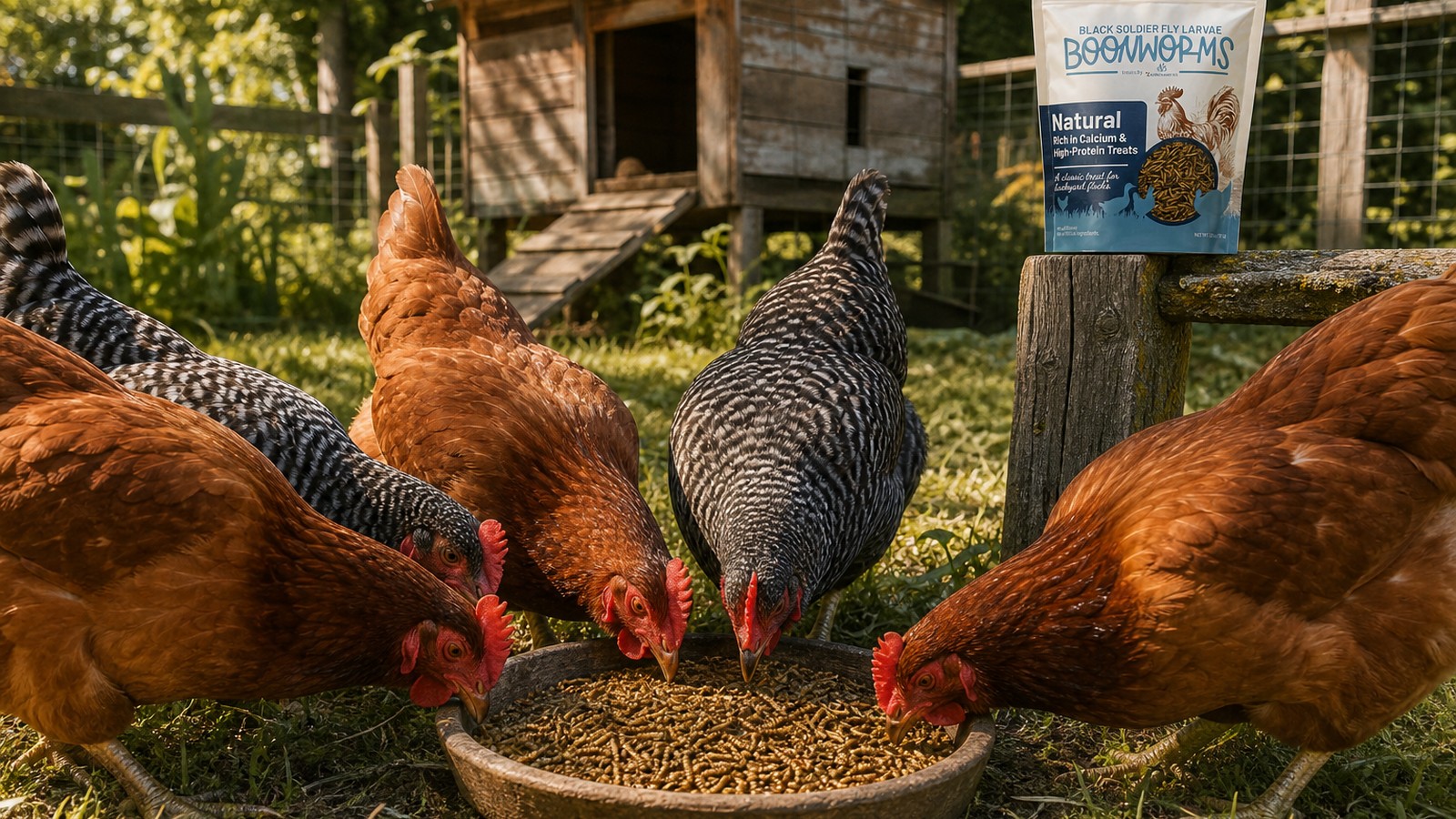
If you keep backyard chickens in north-central Ohio, June and July quietly become the hardest months of the year for your hens — not because of cold, but because of heat, molting pressure, and the enormous nutritional demand of peak laying season all landing at once. Thin eggshells, dull feathers, and hens that slow their laying in midsummer are common complaints, and most of the time the root cause isn't a disease or a management problem — it's a nutrition gap that commercial layer feed alone isn't closing. ZenithWorks Black Soldier Fly Larvae give you a 100% natural, high-protein, extremely high-calcium supplement that chickens treat as an irresistible reward, not a chore to eat. This guide covers exactly why these dried larvae work so well, when and how to use them, and how they compare to the mealworm treats you may already have on your shelf.
Why June and July Are the Hardest Months for Your Flock's Nutrition
Most backyard chicken keepers think of winter as the stressful season, and winter certainly has its challenges. But midsummer in Ohio — particularly the stretch from mid-June through August — creates a nutritional crunch that catches a lot of flock owners off guard.
Here's what's happening simultaneously in your yard right now:
- Peak laying demand. Long daylight hours (Galion sees roughly 15 hours of daylight around the summer solstice) stimulate maximum egg production. Each egg requires about 2 grams of calcium just for its shell. A hen laying five or six eggs per week is pulling heavily on her calcium reserves every single day.
- Heat-suppressed appetite. When temperatures climb past 85°F — common in Crawford County from late June through August — hens eat less. They spend more energy panting to regulate body temperature and less energy digesting feed. The result is lower calcium and protein intake at exactly the moment demand is highest.
- Summer molt pressure. Many hens begin a partial or full molt in late summer. Feather production requires significant protein, specifically the amino acid methionine. A hen trying to replace feathers while maintaining egg output while dealing with heat stress is stretched thin nutritionally.
- Free-range calorie shifting. If your birds free-range, they're eating more bugs and greens in summer — great for enrichment, but bugs vary wildly in calcium content. Without a reliable calcium supplement, this variety can actually dilute their overall mineral intake.
The practical result: you may notice your eggs developing softer shells or thin spots at the ends. You may see hens that were laying reliably in May start skipping days. These are warning signs your flock's calcium and protein pipeline needs reinforcement — and that's exactly where black soldier fly larvae step in.
What Black Soldier Fly Larvae Actually Are (and Why They're Different from Mealworms)
Black soldier fly larvae (Hermetia illucens) are the juvenile stage of a non-pest fly species that's been gaining serious attention in sustainable agriculture for the past decade. Unlike common houseflies, adult black soldier flies don't bite, don't land on food, and aren't associated with disease transmission. They're harmless to humans and essentially invisible to your flock — it's the larvae that matter.
In their larval stage, black soldier fly grubs are nutrient-accumulation machines. They consume organic matter and concentrate protein, fat, and minerals in their bodies at levels that rival or surpass other common insect feeds. When dried and packaged, they become a stable, shelf-stable treat that retains those nutritional properties without refrigeration.
The comparison to mealworms is worth making directly, because mealworms are the most popular dried insect treat on the market and the benchmark most flock owners know:
- Calcium: This is the headline difference. ZenithWorks Black Soldier Fly Larvae contain up to 20 times more calcium than mealworms. Dried mealworms are notoriously calcium-poor — they're high in phosphorus, which can actually work against calcium absorption in large quantities. Black soldier fly larvae have a much more favorable calcium-to-phosphorus ratio, which is a meaningful advantage for laying hens.
- Protein: Both are high-protein options, but BSFL hold up well with a protein profile that supports both egg production and feather development.
- Natural origin: ZenithWorks larvae are 100% natural and dried, with no artificial additives. What you see is what you get — just larvae.
For a backyard flock in peak summer laying mode, that calcium advantage alone makes black soldier fly larvae a more targeted nutritional tool than the mealworm bag you might have defaulted to in the past.
The Calcium Story: Eggshells, Bones, and Why Your Hens Can't Store Enough
Understanding how hens use calcium helps you understand why a dietary supplement makes such a difference — and why the timing of June matters specifically.
A laying hen doesn't store calcium the way you might imagine. She maintains a small reserve in her bones called medullary bone, but that reservoir depletes quickly under heavy laying pressure. When her diet doesn't replenish calcium fast enough, her body pulls from structural bone — which leads to weakened legs, poor shell quality, and in severe cases, "cage layer fatigue" (which can happen in backyard flocks too, not just commercial operations).
The standard advice is to offer oyster shell free-choice alongside your layer feed, and that's still good practice. But here's the nuance: in the summer heat, a hen eating less total feed is also consuming less of whatever is mixed into or offered alongside that feed. An anxious hen competing for feeder space in the heat may avoid the oyster shell bin altogether. A hen that's already off her feed due to stress isn't reliably self-regulating her mineral intake the way the textbook suggests.
A high-calcium treat that your hens actively seek out and eagerly consume is a different tool entirely. When you offer dried black soldier fly larvae, hens don't pick around them or ignore them — they compete for them. That behavioral eagerness is nutritionally useful: you can be confident the calcium is actually being consumed rather than left in a dish.
Stronger eggshells aren't just aesthetically satisfying. They mean fewer cracked eggs in the nest box, less chance of a hen discovering and eating her own eggs (a bad habit triggered partly by thin shells breaking prematurely), and better hatchability if you're saving eggs for incubation.
Protein and Feathers: The Midsummer Molt Connection
Feathers are roughly 85–90% protein by composition, and when a hen goes into molt — partial or full — she redirects significant dietary protein away from egg production and toward feather replacement. This is why molting hens typically slow or stop laying.
In Ohio, the annual molt usually peaks in fall (September–November), triggered by decreasing daylight. But many hens experience a lighter partial molt in midsummer, and younger pullets coming into their first laying season can cycle through feather growth while simultaneously ramping up egg production. The protein demands overlap in ways that standard layer rations (typically 16% crude protein) sometimes struggle to meet on their own.
Adding a high-protein insect supplement during this period gives your flock a bioavailable protein boost that's easy to digest and eagerly consumed. Unlike increasing the protein percentage of an entire feed ration — which requires switching feeds and can cause digestive upset if done abruptly — supplementing with dried larvae is flexible, treat-based, and easy to adjust up or down depending on what you're observing in your birds.
Watch for these signs that your flock may benefit from a protein bump right now:
- Hens with patchy or dull-looking feathers, particularly around the neck and vent area
- Increased feather pecking among flock members (a classic sign of protein competition)
- Egg production dropping by more than 10–15% from your May baseline without an obvious cause
- Young pullets who started laying in spring and seem to be losing condition
How to Feed Black Soldier Fly Larvae: Amounts, Methods, and Timing
Dried black soldier fly larvae are a treat and supplement, not a replacement for your complete layer ration. The goal is to use them strategically — enough to deliver real nutritional benefit without unbalancing your birds' diet.
How Much to Offer
A reasonable guideline for most backyard flocks is to treat insects as no more than 10% of total daily diet. For a standard-sized hen eating roughly 4–6 ounces of feed per day, that works out to about a small handful (roughly half an ounce to an ounce) of dried larvae per bird per day. For a flock of six hens, a good starting point is 3–4 ounces total per daily session — less if you're offering other treats as well.
The 30-ounce resealable bag gives you a meaningful supply. At that usage rate for a small flock, you're looking at a supplement you can offer several times a week without running through the bag in a few days.
Methods of Feeding
- Hand feeding: The fastest way to build trust with your flock and turn daily chicken chores into an enjoyable routine. Hens that associate you with larvae become remarkably easy to handle and herd.
- Scattered in the run: Toss a handful across the ground and let your birds scratch and forage for them. This provides behavioral enrichment — pecking and scratching activity — that helps reduce boredom in hot weather when birds are spending more time in shade rather than free-ranging.
- Mixed into a wet mash: In extreme heat, some keepers offer a morning mash of layer feed dampened with water, sometimes with a bit of plain yogurt for probiotics. Mixing larvae into the mash ensures every hen gets her share without dominant birds monopolizing the treat.
- In a treat ball or foraging toy: For enclosed runs, a foraging toy loaded with larvae encourages activity and reduces flock aggression — both of which tend to spike during summer heat.
Best Time of Day
Offer treats in the early morning or in the cooler late afternoon, not during the heat of midday when hens are panting and sedentary. Early morning feeding ensures birds are in an active, eating mindset, and the protein and calcium go to work during the most metabolically active part of the day. If you collect eggs in the morning, this also makes a nice pairing — you check the nest boxes, collect eggs, and reward your flock in one stop.
Storage
The resealable bag is a practical feature. Keep it closed between uses and stored in a cool, dry location out of direct sunlight — a shelf in your coop's storage area or a garage cabinet works well. Dried larvae stored properly maintain their nutritional value for an extended period without refrigeration.
Beyond Chickens: Wild Birds and Other Poultry
While backyard laying hens are the most obvious beneficiary of ZenithWorks Black Soldier Fly Larvae, the product is suitable for wild birds and other poultry as well — and summer is actually the right time to think about these applications too.
Wild Birds at Your Feeder
June is nesting season for most of Ohio's songbirds, and parent birds are working overtime to feed rapidly growing nestlings. Nestlings require a protein-rich diet — significantly higher protein than adult birds typically consume — and in urban and suburban yards where natural insect populations may be lower due to lawn care products, supplemental insects at a feeder can genuinely support breeding success.
Bluebirds, robins, starlings, and wrens are all enthusiastic consumers of dried insects. If you're already running a bluebird box program or trying to attract insect-eating species, a platform or tray feeder stocked with dried larvae in addition to your seed feeders can make your yard significantly more attractive to these species during their most critical nesting weeks.
Ducks and Turkeys
Ducks benefit from high-protein supplementation during laying season for the same reasons chickens do, and they tend to be enthusiastic about any food they can splash around with water. Turkeys, which have a higher overall protein requirement than chickens, can also benefit from insect supplementation during growing and breeding seasons.
Bantams and Ornamental Breeds
Small or ornamental breeds that are often less efficient at extracting nutrients from standard rations — Silkies, for instance, or miniature breeds with small feed consumption — can benefit particularly from nutrient-dense treats. A small daily serving of larvae ensures these birds are getting meaningful calcium and protein even on lower total feed intake.
| Application | Primary Benefit | Best Feeding Method | Season Relevance |
|---|---|---|---|
| Laying hens (peak summer) | Eggshell strength, protein for heat stress recovery | Hand feed or scatter in run | Critical — June through August |
| Molting hens | Feather regrowth protein support | Mixed into wet mash | High — late summer into fall |
| Young pullets | Calcium and protein for development | Scatter on ground to encourage foraging | High — spring and summer |
| Ducks (laying) | Eggshell quality, protein support | Mixed into water dish or wet feed | Moderate — spring and summer |
| Turkeys | High protein requirement support | Scatter or hand feed | Moderate — breeding and growing season |
| Wild backyard birds (nesting) | Nestling protein, adult breeding condition | Platform or tray feeder | High — June and July nesting peak |
| Bantams and ornamental breeds | Nutrient density on small feed intake | Hand feed or small dish | Year-round, elevated in summer |
| Product | ZenithWorks Black Soldier Fly Larvae — 30 oz resealable bag | ||
| Available At | Liberty Farm, Home & Garden — Galion, Ohio | libertyfhg.com | ||
Integrating Larvae into a Complete Summer Flock Management Plan
Black soldier fly larvae work best as one piece of a thoughtful summer management approach rather than a standalone solution. Here's how to fit them into what you're already doing for your flock this time of year in north-central Ohio.
Keep Fresh Water Available Around the Clock
Laying hens drink twice as much water in summer as in winter. An egg is roughly 74% water, and a dehydrated hen stops laying before she shows any other outward signs of distress. Water stations in shade, refreshed at least twice daily in hot weather, are non-negotiable. Add a second waterer if your run only has one — flock pecking order means lower-ranked hens can be muscled away from a single water source during heat stress.
Maintain Your Oyster Shell Station
Dried larvae complement oyster shell — they don't replace it. Keep oyster shell available free-choice in a separate container from your feed so hens can self-regulate. The larvae provide a reliable consumed dose of calcium; the oyster shell provides an additional buffer hens can tap when they feel the need.
Consider Shade and Ventilation Before Supplementing
No supplement corrects a heat management problem. If your coop lacks cross-ventilation or your run has no shade, fix that first. A hen that can't cool herself isn't going to absorb nutrients efficiently no matter how good her treat is. Simple shade cloth over part of the run, or a box fan mounted in the coop's upper vent, can make a significant difference in Crawford County's humid July heat.
Watch Your Flock Weekly, Not Just Daily
Daily checks tell you if something is acutely wrong. Weekly assessments — egg count trends, body condition scoring by gently feeling the keel bone, feather quality observations — tell you how your nutritional strategy is actually working. If you add larvae and see shell quality improving over two to three weeks, you've confirmed the calcium gap was real. If you don't see improvement, consider whether another factor (parasites, disease, lighting, other stressors) is in play.
Treat Time as Training Time
One underappreciated benefit of hand-feeding a high-value treat like dried larvae is that it makes your flock easy to work with. Hens that associate you with something delicious come running when called, follow you into a coop you need them in, and tolerate handling for health checks without the panicked scrambling that makes routine care frustrating. Five minutes of larvae-based interaction each morning pays dividends all year long.
Getting the Most Out of Your 30-Ounce Bag
The 30-ounce resealable bag is a practical size for a small to medium backyard flock — enough to supplement meaningfully without committing to a quantity that might go stale before you use it. Here's how to think about getting maximum value from each bag.
Use them when it matters most. If you're trying to stretch your supply, prioritize offering larvae during the hottest weeks (typically mid-July through mid-August in Ohio, when heat index values regularly exceed 90°F in Crawford County) and during any period when you notice shell quality declining or laying rates dropping. These are the windows where the calcium and protein boost makes the most measurable difference.
Don't ration so tightly that hens stop responding. Part of the value of a high-value treat is the behavioral engagement it creates. If you offer larvae so rarely that hens have forgotten they exist, you lose the training and handling benefits. A small daily offering is often better than an occasional large one.
Reorder before you run out. If you're using larvae regularly and they're working well for your flock, don't wait until the bag is empty to think about restocking. The team at Liberty Farm, Home & Garden in Galion can help you find the right products for your flock's seasonal needs — stop in at 222 S. Liberty St. and grab a bag (or two) while you're picking up feed, bedding, or your other summer coop supplies.
Note seasonal changes as you go. Keep a simple log — even just notes in your phone — of when you started supplementing, how much you're offering, and what you observe about shell quality and laying rates over the following two to four weeks. This kind of simple record-keeping is what separates guesswork from genuinely effective flock management, and it gives you useful data for adjusting your approach next summer.
Why This Is the Right Time to Start
Mid-June in Galion means your laying hens are already working hard. The solstice just passed, daylight is at its maximum, your hens' laying hormones are firing on all cylinders — and the first of the summer's serious heat is either already here or a week or two away. This is the optimal moment to shore up your flock's calcium and protein supply before the stress of July heat hits, not after you've spent three weeks wondering why shell quality declined.
Starting a nutritional supplement before a deficiency becomes obvious is always more effective than trying to correct a problem that's already manifest. Hens recovering from calcium depletion or protein stress take time to bounce back — sometimes several weeks. Hens that were adequately supplemented through the stress period maintain their condition and output much more consistently.
The other reason right now makes sense: June is nesting season for your wild bird visitors, your flock is at peak activity, and the resealable bag format means whatever you don't use this month stays fresh for July and August without any special storage effort. There's no downside to having this on hand starting now.
You can pick up ZenithWorks Black Soldier Fly Larvae in the 30-ounce size at Liberty Farm, Home & Garden at 222 S. Liberty St. in Galion, or order through libertyfhg.com. If you have questions about summer flock nutrition or want to talk through what else your birds might need heading into July, the staff there can help — they know local flocks and local conditions, not just catalog descriptions.
Frequently Asked Questions
Keep Reading
Late-Summer Pasture Checkup: Repair, Reseed, or Rest Your Ohio Fields?
A practical late-August pasture guide for Ohio livestock owners: assess plant cover, soil fertility, weeds, grazing pressure, and whether to repair or reseed.
Molting Season Prep: How to Support Your Chickens Through the August Transition
Learn how to recognize and support your chickens through their annual molt in late summer and early fall. This seasonal guide from Liberty Farm, Home & Garden in Galion, Ohio covers nutrition, management, and timing for north-central Ohio flocks.