
Keeping Rabbits Cool in Ohio: A Practical Summer Heat-Safety Guide
Build a safer summer setup for pet and project rabbits with shade, airflow, dependable water, cooling options, daily checks, and a clear plan for urgent warning signs.
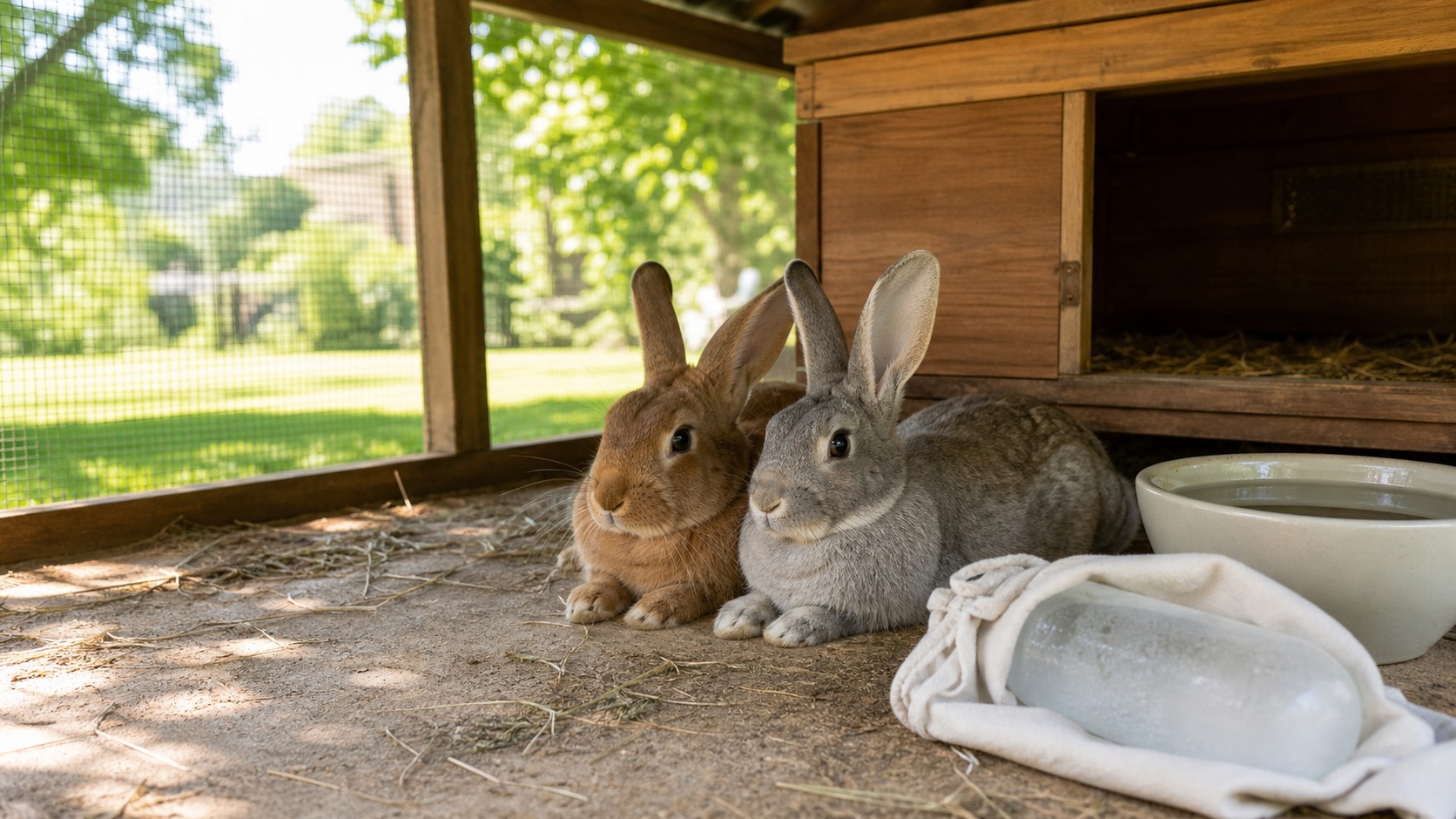
A rabbit hutch that feels comfortable at breakfast can become a heat trap by midafternoon. Sun moves across a yard, roof panels absorb heat, water warms, and a breeze can disappear. In Galion and across north-central Ohio, that makes late July and August a season for active management rather than a one-time setup.
Rabbits have limited ways to release excess body heat. Veterinary guidance from PDSA notes that their dense fur and inability to cool themselves by sweating or normal panting leave them vulnerable when a living space gets too warm. Their ears help exchange heat, but ears alone cannot make a hot, still enclosure safe. The practical goal is to give every rabbit a cooler place to choose, moving air without a harsh direct draft, and fresh water that remains accessible all day.
This guide is about prevention and observation, not diagnosis. A quiet rabbit lying in shade may simply be resting. A rabbit with rapid or open-mouth breathing, weakness, confusion, tremors, collapse, or another sudden change may be in an emergency. If those signs appear, move the rabbit out of the hot area, contact a veterinarian immediately, and follow the clinic’s instructions while arranging transport. Do not wait for a home remedy to work.
The best summer plan is simple enough to repeat: check the forecast, inspect the enclosure at the hottest part of the day, provide redundancy for shade and water, prepare safe cooling aids, and know where you will move the rabbit if the setup fails. Those steps protect pets, 4-H project rabbits, and small rabbitries without pretending that one temperature number fits every animal or enclosure.
Why a Rabbit’s Living Space Can Heat Up Faster Than Expected
Outdoor air temperature is only one part of a rabbit’s heat exposure. Sun on a hutch roof, reflected heat from concrete or siding, high humidity, still air, crowded housing, damp bedding, and a water container placed in direct sun can make the animal’s immediate space much less comfortable than the weather app suggests. A shaded thermometer at the house does not tell you what is happening inside a wooden sleeping compartment or under a plastic cover.
Alabama Cooperative Extension’s rabbit-production guidance warns that rabbits cope poorly with very hot, humid conditions and emphasizes planning a cooling system before summer heat arrives. Michigan State University Extension likewise treats ventilation, cooling, feed, water, handling, and insect management as connected parts of summer rabbit care. The lesson for a backyard owner is not to chase a universal cutoff. It is to inspect the microclimate where the rabbit actually spends the day.
Check the enclosure after the sun has had time to reach its hottest angle. Put your hand on the roof, walls, resting surface, and water container. Look for a shaded area that remains shaded as the sun moves. Confirm that warm air can leave the enclosure instead of collecting beneath a solid roof. Notice whether the rabbit can choose between a protected sleeping area and an open, airy run.
Humidity matters because evaporative cooling becomes less effective as the air holds more moisture. That is one reason a damp, enclosed hutch is not a cooling solution. Misters may have a place in a carefully engineered production setup, but Alabama Extension cautions that excess moisture can contribute to respiratory problems. For most home setups, dry shade, broad ventilation, fresh water, and prepared cool surfaces are easier to manage safely.
Make weather checks part of the routine. The National Weather Service forecast for the Galion area can alert you to changing heat, humidity, storms, and power-outage risk. Use those forecasts as planning information, not as a rabbit-specific medical threshold. The enclosure and the animal still need direct observation.
Build Shade That Lasts Through the Whole Afternoon
Good shade blocks direct sun without blocking the air. A hutch tucked against a building may be shaded in the morning and fully exposed after lunch. A thin tarp can flap shut over an opening, while a dark solid cover can absorb heat and radiate it downward. Walk around the setup at several times of day before assuming the shade is adequate.
Start with location. A naturally shaded area beneath a healthy tree canopy or on the protected side of a structure can reduce solar gain, provided the site stays dry and receives airflow. Add a roof or shade panel that extends beyond the enclosure so low-angle sun cannot reach the resting area. Leave generous open sides or screened ventilation rather than wrapping the run like a box.
Every rabbit should have access to a shaded retreat large enough to lie down naturally. In group housing, provide enough cool resting room that one rabbit cannot guard the only comfortable spot. Watch the rabbits rather than judging the layout from outside. If they crowd into a narrow strip of shade, the shaded footprint is too small or the rest of the enclosure is too warm.
Do not depend on a sealed sleeping compartment as the cool zone. It may feel dark while holding stagnant air. The protected area needs cross-ventilation, a dry floor, and an opening large enough for easy movement. A rabbit should never have to choose between direct sun and an airless box.
Indoor rabbits need the same thought. Close blinds before direct afternoon sun reaches the room, move the enclosure away from hot windows, and verify that air conditioning reaches the rabbit’s level. A basement can be cooler, but only if it is dry, clean, ventilated, and free from fumes, predators, loose wiring, and flooding risk. Choose the relocation area before a heat warning, not during one.
Move Air Without Creating a New Problem
Ventilation removes accumulated heat, moisture, odors, and stale air. It is not the same as aiming a powerful fan directly at a rabbit all day. Alabama Extension recommends moving air above rabbit cages rather than subjecting animals to a hard direct blast. In a home hutch, the equivalent is broad air exchange across the space with protected cords and equipment the rabbits cannot chew or knock over.
Openings on opposing sides help warm air escape. Keep wire mesh clear of stacked supplies, weeds, tarps, and solid panels. Clean accumulated fur and dust from screens because a surface that looks open can lose much of its airflow. The enclosed sleeping area also needs a path for warm air to leave near the top.
If you use a fan, place it outside the enclosure, secure it against tipping, protect every cord, and keep it dry. Aim it so air circulates through or above the occupied space instead of forcing the rabbit to sit in a constant draft. A fan does not lower air temperature by itself, and it is not a substitute for shade. When outdoor air is dangerously hot, moving that same hot air may not create an adequate refuge.
Make a power-loss plan. A fan-powered setup can change quickly during a storm or outage. Keep frozen bottles ready, identify a cooler backup room, and use a battery-powered thermometer if practical. Never run a gasoline generator in a house, garage, shed, or near doors and windows; follow manufacturer and public-safety guidance for generator placement.
Cleanliness supports ventilation. Remove wet bedding and manure, refresh dry resting material, and prevent urine odors from building in closed sections. Avoid soaking the enclosure in an attempt to cool it. The goal is moving, breathable air around a dry shaded resting area.
Make Water Dependable, Cool, and Easy to Reach
Fresh water must remain available at all times. Summer is not the season to trust a single bottle without checking it. A sipper tube can clog, a bottle can leak empty, and a lightweight bowl can tip. PDSA recommends at least one bowl or bottle per rabbit and keeping water out of direct sunlight. In practical terms, redundancy gives you time to catch a failure.
Use containers the rabbit already knows how to use. A heavy ceramic bowl is difficult to tip and easy to inspect, while a properly working bottle may stay cleaner in some setups. Many owners provide both. Secure bottles firmly, test the ball or valve by hand every day, and verify that the water level actually drops during normal use. Refill with fresh water and scrub away film rather than continually topping off a dirty container.
Place water in the coolest shaded area that is still easy to access. Do not wedge it behind a cooling bottle or inside a sleeping compartment where another rabbit can block the entrance. In group housing, separate water stations reduce crowding and provide backup if one container fails.
Watch normal eating and drinking patterns. A rabbit that stops eating, produces markedly fewer droppings, or suddenly avoids water needs prompt veterinary advice; those changes can accompany serious problems that are not safely diagnosed from a blog article. Do not force water into a rabbit’s mouth and do not add human electrolyte drinks, medications, or supplements unless a veterinarian directs you to do so.
Water checks belong at breakfast, during the hottest part of the day, and again in the evening. On very hot days, check more often. The quick test is concrete: water present, container working, water reasonably fresh and cool, no algae or debris, and every rabbit able to reach it.
Use Cooling Aids as Choices, Not Restraints
A frozen water bottle can create a cool object a rabbit may choose to rest beside. Both MSU Extension and Alabama Extension discuss frozen bottles as a practical summer tool. Freeze clean, sturdy bottles, remove loose labels, check for cracks, and wrap each bottle loosely in a light cloth so the rabbit is not pressed against bare ice. Keep a rotation in the freezer so a replacement is ready.
Place the bottle on a stable surface where condensation will not soak bedding or make the floor slippery. The rabbit must be free to move toward or away from it. A bottle that rolls across the enclosure, blocks the water bowl, or reduces usable floor space creates new problems. Inspect cloth for chewing and remove frayed fabric or loose threads.
A heavy ceramic tile or manufactured pet cooling surface can also offer a cooler place to rest when it is used according to its directions and kept clean. Avoid unknown gels, leaking packs, or products a rabbit can puncture. Do not assume that a cool object makes a hot enclosure safe; it is a supplement to shade, ventilation, and water.
Never pack a rabbit in ice, force it to lie against a frozen object, or cover it with a wet towel. Those actions can cause distress, trap heat, or delay professional care. If an animal appears ill, the job of a cooling aid changes from routine comfort to emergency support directed by a veterinarian.
| What you observe | What it may mean | What to do |
|---|---|---|
| Rabbit calmly chooses shade, drinks, eats, and responds normally | Routine heat management is working | Keep monitoring water, airflow, shade, and enclosure conditions |
| Rabbit avoids a sunny or enclosed area | That part of the setup may be too warm | Expand lasting shade and improve dry ventilation; recheck at peak heat |
| Water is warm, empty, tipped, or not flowing | Immediate husbandry failure | Restore fresh water, add a backup container, and watch the rabbit closely |
| Rapid breathing, open-mouth breathing, weakness, wobbliness, confusion, tremors, seizure, collapse, or bleeding | Possible life-threatening emergency | Move to a cooler area, call a veterinarian immediately, and follow transport and first-aid instructions |
| Storm or outage stops fans or cooling equipment | Backup plan is needed now | Move rabbits to the prepared cooler location and continue direct checks |
Know the Difference Between Resting and an Emergency
Rabbits naturally rest for long periods, especially during the middle of the day. A comfortable rabbit may stretch out in shade, relax its ears, or lie beside a cool bottle. The important questions are whether the animal responds normally, can move without difficulty, continues normal eating and drinking, and shows its usual pattern of droppings.
Warning signs are changes, not just poses. PDSA lists hot red ears, fast breathing, open-mouth breathing, lethargy, wobbliness or confusion, tremors, seizures, weakness, collapse, unconsciousness, and bleeding among possible heatstroke signs. Open-mouth breathing, collapse, seizure activity, or sudden neurological changes are not “wait and see” symptoms.
If you observe urgent signs, move the rabbit out of the hot environment and call a veterinarian or emergency clinic immediately. Tell the clinic what you see, how long it has been happening, the enclosure conditions, and what cooling steps have already been taken. Follow the veterinarian’s first-aid and transport directions. Offer water, but do not force the rabbit to drink.
Use a ventilated carrier and a climate-controlled vehicle for transport. Do not place a rabbit in a parked vehicle, even briefly, and do not seal a carrier beneath blankets. Bring a second person when possible so one person can drive while the other watches the rabbit and communicates with the clinic.
Another illness can resemble heat stress, and heat can worsen an existing condition. That is why this guide separates prevention from diagnosis. Do not give human medicine, soak the rabbit without veterinary direction, take invasive temperature measurements if you are not trained, or delay transport while trying multiple home treatments.
Plan for Travel, Shows, Storms, and Power Outages
Summer risk rises whenever a rabbit leaves its familiar setup. A trip to a show, fair, veterinary clinic, or family event adds a carrier, vehicle, waiting time, unfamiliar noise, and fewer chances to retreat. Schedule essential travel for cooler hours when possible and confirm the destination has a cool, ventilated holding area.
Pre-cool the vehicle before loading. Secure the carrier where air can circulate without a direct hard blast from a vent. Keep it out of sun, and never put a carrier in an enclosed pickup bed or unconditioned cargo area. Bring fresh water and a familiar container, but do not open the carrier in an unsecured location.
At a show or fair, inspect the actual pen location before leaving the rabbit. Know when direct sun reaches the building, whether fans depend on extension cords, and who will check water between your visits. Follow event veterinary and animal-care rules. If the facility becomes too warm or the rabbit changes behavior, be prepared to leave rather than relying on the schedule.
Storm preparation starts with a backup location. Choose a dry interior room, basement area, or other protected space that can safely hold carriers or temporary pens. Keep carriers accessible, not buried behind equipment. Store flashlights, clean water containers, towels, and frozen bottles where the household can find them quickly.
Write down the regular veterinarian, nearest emergency clinic, and an alternate route. Confirm clinic hours before the hottest weekend of the season. A plan on paper prevents wasted time when the internet is down or the person who normally handles the rabbits is away.
Use a Repeatable Late-Summer Rabbit Checklist
A checklist turns good intentions into a system. Use it for every rabbit, every day, and teach it to anyone who may cover chores. Record unusual changes rather than relying on memory. A short note about water intake, appetite, droppings, behavior, and enclosure conditions can help a veterinarian understand what changed.
Morning
- Read the Galion-area forecast and note heat, humidity, storms, and outage risk.
- Confirm that shade will cover the resting area through the afternoon.
- Refill and test every bowl and bottle; provide a backup water source.
- Remove wet bedding and check that screened openings are clear.
- Place prepared wrapped frozen bottles or safe cooling surfaces where rabbits can choose them.
- Observe normal movement, appetite, drinking, and droppings.
Peak heat
- Inspect the enclosure in person rather than relying only on a remote thermometer.
- Check roof, walls, floor, airflow, water temperature, and the size of the remaining shade.
- Replace thawed cooling bottles and dry any wet resting material.
- Confirm that each rabbit can reach water and a cool resting area without competition.
- Watch for rapid or open-mouth breathing, weakness, confusion, tremors, or collapse.
Evening
- Refresh water and clean containers as needed.
- Remove damaged cloth, cracked bottles, spoiled feed, and wet bedding.
- Record any changes in appetite, drinking, droppings, or behavior.
- Refreeze bottles and reset outage supplies for the next day.
For bowls, bottles, hay, bedding, enclosure supplies, and other everyday rabbit-care basics, visit Liberty Farm, Home & Garden in Galion. Bring measurements and photos of your setup so you can choose practical supplies without guessing. Product availability changes, so confirm current stock before making a special trip.
The goal is not to make an outdoor hutch survive any weather. It is to recognize when the environment can no longer provide a safe choice and move the rabbit to the cooler backup space you prepared. Shade, airflow, water, cooling aids, direct observation, and a veterinary plan work together; none of them should carry the whole job alone.
Frequently Asked Questions
Keep Reading
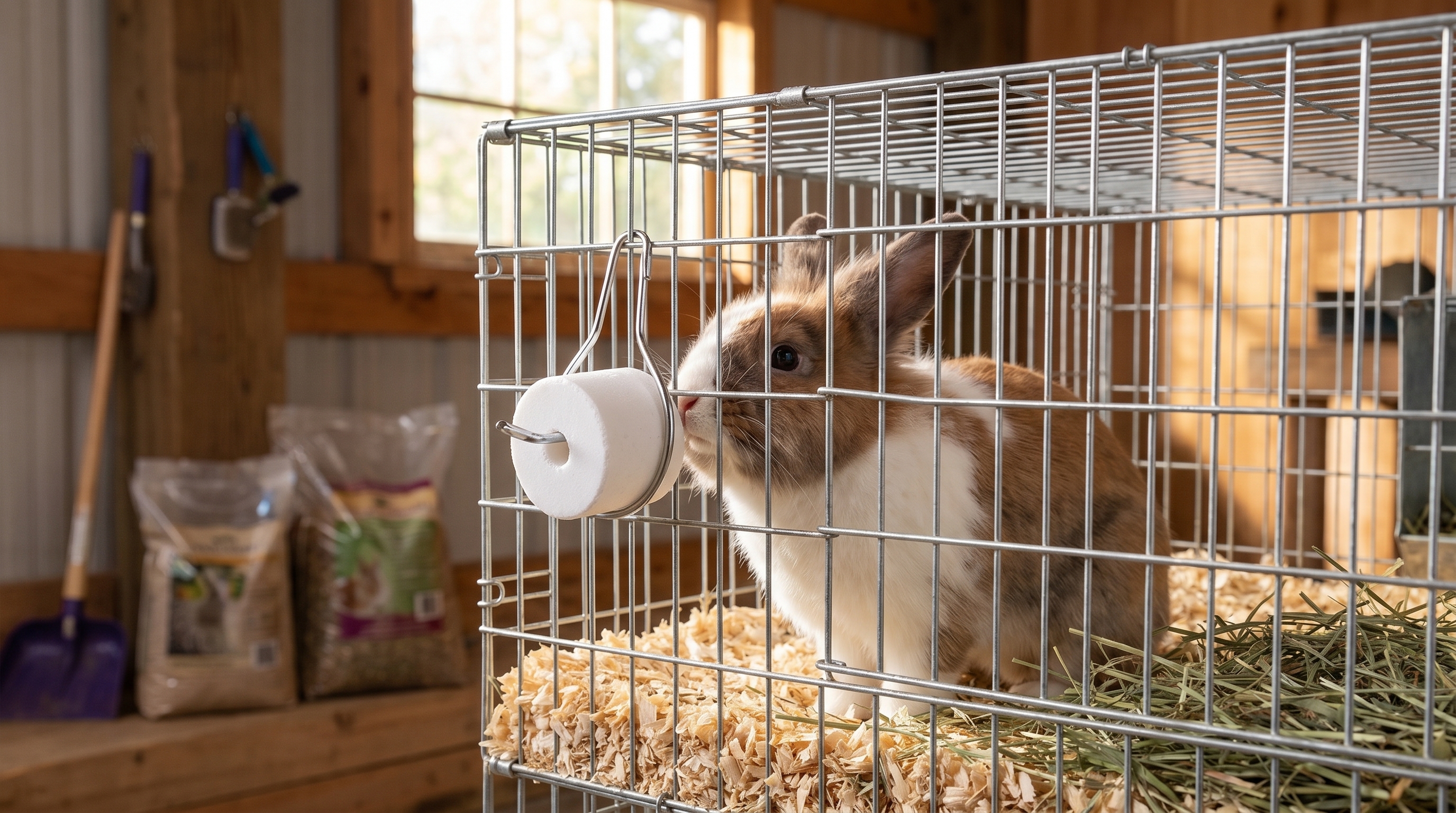
Why Your Rabbit's Salt Lick Keeps Ending Up in the Bedding — and the Simple Wire Fix That Solves It
Salt spools are one of the most common small animal accessories in any rabbitry or guinea pig setup — and one of the most commonly misused. The Little Giant Salt Spool Hanger clips to wire cages in seconds, keeps the spool elevated and clean, and costs almost nothing. Here is everything you need to know.
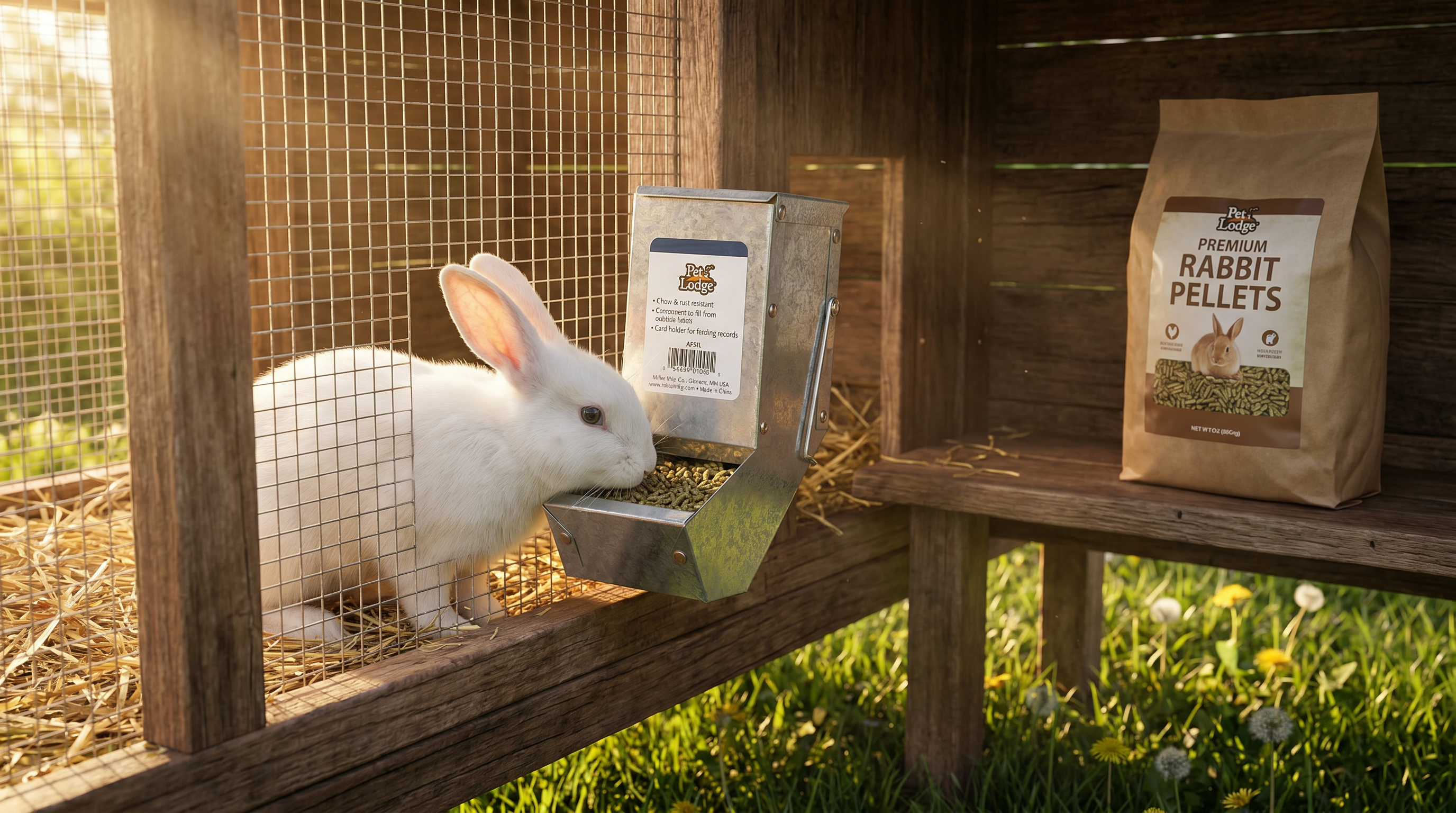
The Feeder Built for a Real Rabbitry: A Complete Guide to Galvanized Rabbit Feeders and Getting Pellets Right
Why the feeder you use is just as important as the feed you put in it — and how the Pet Lodge galvanized sifter feeder solves the problems that plastic feeders and dishes can't