
Green Bamboo Stakes: The Complete Guide to Supporting Your Summer Garden
Tall indeterminate tomatoes, pole beans, and climbing flowers are putting on serious growth right now — and if they don't have solid support in place, you'll be untangling a mess by July. Here's everything you need to know about using bamboo stakes effectively in your north-central Ohio garden.
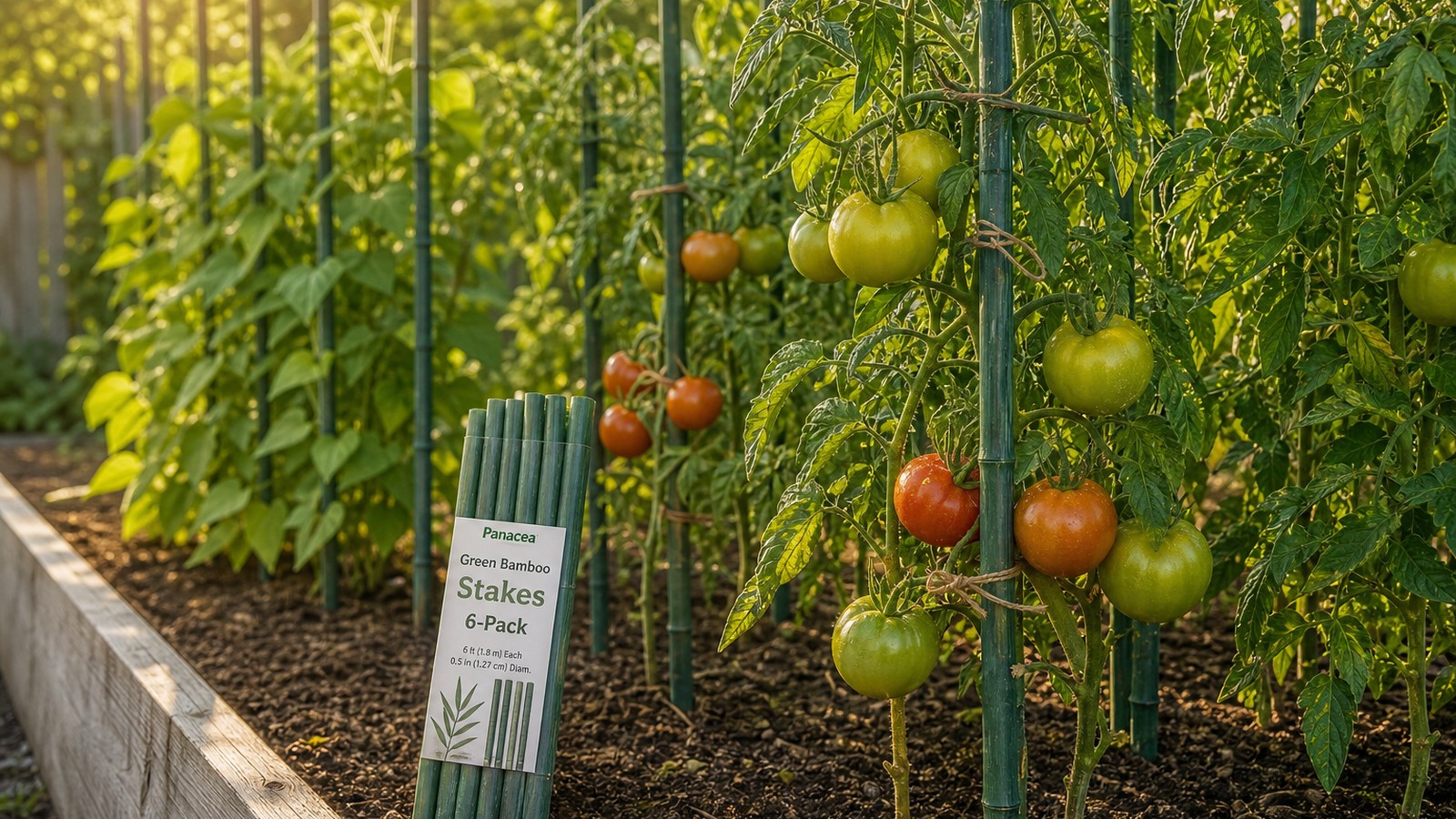
It's late June in Ohio, and your vegetable garden is at a critical turning point. Indeterminate tomatoes that were knee-high transplants just six weeks ago are now shoulder-height and covered in fruit clusters, pole beans are spiraling upward looking for anything to grab, and that climbing 'Heavenly Blue' morning glory is flopping onto the mulch. What every one of those plants needs right now — before the heavy summer storms roll through Crawford County — is a strong, reliable stake in the ground. Green bamboo stakes have been a gardener's workhorse for generations, and the Green Bamboo Stakes (6 ft) 6-Pack gives you the height and quantity to tackle a full planting season's worth of support needs at once. This guide covers everything from why June is the ideal installation window to exactly how to stake tomatoes, beans, dahlias, and more for a productive, tidy garden through harvest.
Why Late June Is the Critical Window for Staking in Ohio
Gardeners in USDA Zone 6 — which covers Galion and most of north-central Ohio — are in a narrow but important window right now. The summer solstice just passed, which means day length is at its peak and plants are responding with explosive vegetative growth. Indeterminate tomato varieties like 'Brandywine,' 'Big Boy,' or 'Sun Gold' can easily add 6 to 12 inches of new growth per week under good conditions in late June. If you haven't staked them yet, or if you put in a short 4-foot stake back in May and now it's clearly not enough, today is the day to act.
Here's why the timing matters so much:
- Root systems are established but not yet crowded. Driving a stake in now causes far less root disturbance than waiting until August when roots have spread across the entire bed. Aim to place stakes at least 4 to 6 inches away from the main stem and drive them 10 to 12 inches deep.
- Summer thunderstorms are coming. Ohio's July and August storm season routinely brings wind gusts of 30 to 50 mph with heavy rain. An unsupported 5-foot tomato plant holding several pounds of developing fruit is a recipe for a snapped main stem or a completely uprooted plant.
- Pole beans and climbing flowers are in their fastest growth phase. Once these plants find something to grab, they direct energy upward rather than sprawling laterally, which improves air circulation and reduces fungal disease pressure — a real concern in Ohio's humid summers.
- You can still train the plants correctly. Once a tomato or bean plant has collapsed under its own weight and tangled with its neighbors, correcting it without breaking stems is genuinely difficult. Staking now, while plants are upright and accessible, takes 10 minutes instead of an hour.
The bottom line: mid-to-late June is your sweet spot. Early enough to avoid storm damage, late enough that plants have the stem diameter and root mass to be tied without injury.
What Makes Bamboo a Better Staking Material
Walk through any serious kitchen garden and you'll find bamboo stakes — not because they're trendy, but because they genuinely outperform most alternatives. Understanding why helps you make confident choices for your garden setup.
Strength-to-diameter ratio: Bamboo is one of the strongest natural materials pound for pound. A single 6-foot bamboo stake can support a fully loaded indeterminate tomato plant through an Ohio summer without bending or snapping under lateral wind load. Comparable wooden dowel stakes of the same diameter simply don't hold up as well and are prone to splitting at the point where you tie the twine.
Natural rot resistance: Unlike untreated wooden stakes, bamboo has a naturally dense outer skin (the culm wall) that resists moisture intrusion and decay. You can leave bamboo stakes in the ground through an entire growing season, pull them in fall, rinse them off, and store them dry for use next year. Well-maintained bamboo stakes can last three to five seasons or more with reasonable care.
The green color matters more than you'd think. Raw bamboo is a pale straw-yellow color that creates a lot of visual noise in a garden — every stake becomes a bright vertical line cutting through your foliage. The green dye on these stakes helps them visually recede into the plant canopy. In a tidy kitchen garden or a mixed ornamental-vegetable bed, that subtle color difference makes the whole planting look cleaner and more intentional.
Reusability: Bamboo stakes are reusable season after season. This is both an economic and environmental advantage over single-use plastic or thin wire alternatives. Proper end-of-season care (pull, clean, dry, store under cover) dramatically extends their life.
How to Stake Indeterminate Tomatoes the Right Way
Staking tomatoes is the most common use for 6-foot stakes in an Ohio vegetable garden, and there's a right way and a frustrating way to do it. Here's the method that actually works through a full season.
Step 1: Drive the Stake Before the Plant Gets Too Tall
Place your stake 4 to 6 inches from the main stem on the north or west side of the plant (so it doesn't cast shade across the leaves during peak sun hours). Drive it at least 10 to 12 inches into the soil — in loose raised bed soil you may need 12 to 14 inches for stability. Use a rubber mallet or the heel of your hand with a block of scrap wood to avoid splitting the bamboo at the top.
Step 2: Tie Loosely with Soft Material
Never use wire or thin twine tied directly and tightly around a tomato stem. As the plant grows and the stem thickens, a tight tie becomes a tourniquet that damages the vascular tissue and stunts the plant. Instead, use soft cotton garden twine, stretchy silicone plant clips, or torn strips of old t-shirt fabric. Tie in a figure-8 loop: one loop around the stake, a crossover in the middle, and a looser loop around the stem. Leave at least a half-inch of slack.
Step 3: Tie Every 12 to 18 Inches of Height
A single tie at 2 feet doesn't prevent a 5-foot plant from flopping at the top. Plan on placing ties every 12 to 18 inches up the stake as the plant grows. For most indeterminate varieties at full height in late July or August, you'll use 3 to 4 ties per plant. The topmost tie should be within 6 to 8 inches of the top of the stake.
Step 4: Keep Removing Suckers (for Single-Stake Method)
The single-stake method works best when you're growing tomatoes as a single main stem. That means consistently removing suckers — the new growth that emerges in the crotch between the main stem and a side branch. If you want to grow a two-stem plant, that's fine, but you'll need two stakes per plant or a cage in addition to the stake for reinforcement.
Staking Pole Beans, Cucumbers, and Climbing Flowers
Tomatoes get most of the attention, but a 6-pack of bamboo stakes opens up a lot of vertical gardening possibilities in your summer garden.
Pole Beans
If you direct-seeded pole beans in late May or early June (a common timing for central Ohio), they're now 12 to 24 inches tall and actively searching for vertical support. Place stakes every 12 inches down the row, drive them 10 inches deep, and run horizontal lengths of jute twine between the stakes at 12-inch intervals to create a simple ladder trellis. Alternatively, arrange 4 to 6 stakes in a teepee formation — cross the tops and lash them together — for a single dense bean planting. Pole varieties like 'Kentucky Wonder' or 'Blue Lake Pole' will easily reach 6 feet by late July under good conditions in zone 6.
Cucumbers
Cucumbers grown vertically instead of sprawling on the ground have better air circulation, cleaner fruit, and are significantly easier to harvest. Run a row of bamboo stakes 18 inches apart, string a trellis net or horizontal twine between them, and train young vines onto the structure. Fruits grown vertically also tend to be straighter and longer, which matters if you're growing slicing or pickling types for appearance.
Dahlias
Dinner-plate dahlias planted in May in central Ohio will be 3 to 4 feet tall by late June and can reach 5 to 6 feet by August. Their hollow stems are brittle and snap easily in wind. Drive a bamboo stake within 3 inches of the tuber (being careful not to spear it — mark your tuber locations at planting time) and tie the main stem at 18-inch intervals. The green color of the stake blends with dahlia foliage far better than a white or raw-wood stake would.
Climbing Annuals and Perennials
Morning glories, black-eyed Susan vines, sweet peas, and climbing nasturtiums all benefit from early guidance onto a stake or stake-supported twine structure. Even a single stake with twine looped around it in a spiral gives a climbing annual enough purchase to ascend rapidly. Get the support in place now while vines are still 12 to 24 inches long and easy to direct.
Building Simple Stake Structures for Better Garden Results
Six stakes used individually are useful, but used together as a simple structure they become genuinely versatile. Here are four configurations that work well in north-central Ohio gardens and are achievable with a single 6-pack.
The Teepee (3–6 Stakes)
The classic teepee uses 3 to 6 stakes arranged in a circle 18 to 24 inches in diameter, tops crossed and lashed together with jute or paracord. Plant one pole bean, climbing flower, or small-fruited squash at the base of each stake. By mid-July, the entire structure disappears under foliage. A 6-stake teepee is one of the most productive small-space growing structures you can build in an hour for almost no cost.
The Lean-To Row Trellis (4–6 Stakes)
Drive stakes every 18 to 24 inches down a row, then lean each stake at a 15-degree angle toward the center of the row. Connect them with horizontal runs of twine at 12-inch intervals. This works exceptionally well for a double row of pole beans planted 12 inches apart on either side — the plants climb toward the center and fill the structure completely.
The Reinforced Cage Helper (2 Stakes)
Standard wire tomato cages, especially the lightweight cone-shaped ones sold at most garden centers, are notoriously unstable in Ohio's summer storms. Drive one bamboo stake on each side of a cage and zip-tie or wire the cage to both stakes. This dramatically increases the wind resistance of the cage-stake combination and prevents the whole structure from tipping over when a plant is fully loaded with fruit.
The Dahlia or Sunflower Stand (1–2 Stakes)
For single tall-stemmed plants — dahlias, sunflowers, delphiniums — one or two flanking stakes with figure-8 ties at 18-inch intervals is the most elegant solution. The green color keeps the support visually minimal even in a formal flower bed or front-yard kitchen garden where appearance matters.
A Practical Look at Which Plants Need Which Support
| Plant Type | Stakes Needed Per Plant/Row | Recommended Tie Interval | Notes |
|---|---|---|---|
| Indeterminate tomatoes | 1–2 per plant | Every 12–18 inches of height | Drive 12 inches deep; remove suckers for single-stem method |
| Pole beans | 1 per 12 inches of row | Horizontal twine every 12 inches | Teepee formation works well for concentrated plantings |
| Cucumbers (vertical) | 1 per 18 inches of row | Trellis net or twine every 8–10 inches | Improves air circulation, reduces powdery mildew |
| Dahlias (dinner plate) | 1–2 per plant | Every 18 inches of height | Mark tuber location at planting to avoid spearing |
| Climbing annuals (morning glory, sweet pea) | 1 per plant or 1 per 12 inches | Spiral twine guide | Install early while vines are short and flexible |
| Sunflowers (tall branching) | 1–2 per plant | Every 18–24 inches of height | Most critical support point is just below the flower head |
| Determinate tomatoes / peppers | 1 per plant (optional) | 1–2 ties total | Less critical than indeterminate types but adds wind stability |
| Product | Green Bamboo Stakes (6 ft) 6-Pack — natural, strong, green-dyed, reusable bamboo stakes | ||
| Available At | Liberty Farm, Home & Garden — Galion, Ohio | libertyfhg.com | ||
Installation Tips, Common Mistakes, and How to Avoid Them
Even a simple tool like a bamboo stake has a handful of common installation errors that undermine its effectiveness. Here's what to watch for:
Mistake 1: Not Driving Deep Enough
The single most common staking failure in home gardens is stakes that pull out or tip over in wet soil during a storm. In Ohio's clay-influenced soils, a stake that feels solid when driven into dry soil in June can shift in the saturated ground after a 2-inch overnight rain in July. The rule of thumb: drive at least 10 inches deep in loose or amended raised bed soil, and 12 to 14 inches in native garden soil. In very loose growing media, lash two stakes together in an X configuration for added resistance to lateral force.
Mistake 2: Placing the Stake Too Close to the Stem
Driving a stake within 1 to 2 inches of the main stem of an established tomato or dahlia almost guarantees root damage. Those fine feeder roots extend well beyond the drip line of a mature plant. Place stakes at least 4 to 6 inches from the stem and angle them slightly outward away from the plant as you drive.
Mistake 3: Tying Too Tightly
A tomato stem tied snugly to a stake in early June will be constricted by mid-July as the stem continues to thicken. Check ties every two weeks and loosen any that have become tight. When in doubt, tie looser than feels necessary — the goal is guidance, not immobilization.
Mistake 4: Waiting Too Long to Add Height
A 6-foot stake gives you the full 6 feet of height only if you drive it 12 inches into the ground — leaving 5 feet of above-ground support. That's appropriate for most indeterminate tomatoes at full height. But if you wait until a plant is already 4 feet tall and then try to drive the stake adjacent to it without disturbing the root ball, you've lost the window for deep installation. Drive stakes at transplant time or within the first 2 to 3 weeks of the plant's establishment in the garden bed.
Proper End-of-Season Care for Reuse
At the end of the growing season — typically October for central Ohio — pull stakes before the ground freezes hard. Knock off any soil and use a stiff brush to remove any plant material. If any stakes were in beds that had disease issues (early blight, fungal problems), wipe them down with a diluted bleach solution (1 part bleach to 9 parts water) and let them air dry completely. Store them horizontally in a dry location — a shed, garage, or under a covered porch. Avoid storing them standing upright in a bucket exposed to weather, as moisture entering the cut ends accelerates interior decay.
Pairing Bamboo Stakes with Other Vertical Garden Tools
Bamboo stakes work even better when combined with a few complementary supplies. Here's how to build out a complete vertical support system for your Ohio summer garden.
Soft jute or cotton garden twine is the ideal companion material for bamboo staking. It's strong enough to support heavy tomato plants and thick dahlia stems, but soft enough that it doesn't cut into plant tissue. It also biodegrades at end of season, making cleanup easier. Synthetic twine or wire should be avoided for direct plant contact.
Silicone or foam-coated plant clips are faster to apply than twine when you're doing a lot of tying at once, and they're infinitely reusable. They grip bamboo stakes securely and open wide enough to accommodate even mature tomato stems without pressure. These are worth keeping in your garden apron pocket throughout the season for quick adjustments after storms or rapid growth spurts.
Trellis netting strung between bamboo stake rows creates a vertical growing wall for cucumbers, beans, and lightweight squash varieties. Tying netting between 6-foot bamboo stakes with 18-inch spacing gives you a support wall that can handle a full row of cucumbers across an entire raised bed. The green color of the stakes complements the netting visually and keeps the whole structure looking tidy.
Wire tomato cages with stake reinforcement is a hybrid approach worth considering for gardeners who want the ease of a cage with the stability of a stake. As described in the structures section, two bamboo stakes zip-tied to the outside of a standard cone cage creates a combination that survives Ohio's summer storm season reliably. This approach is especially practical for gardeners growing larger indeterminate varieties that regularly exceed cage height — the stake provides an above-cage tie point for the final 12 to 18 inches of growth.
If you're putting together your vertical gardening supplies for this season, stop in at Liberty Farm, Home & Garden in Galion at 222 S. Liberty St. — the staff can help you figure out exactly what combination of stakes, twine, and trellis materials makes sense for your specific garden layout and the crops you're growing this year.
Get Your Garden Staked Before the July Storms Hit
If there's one gardening task that consistently pays dividends out of proportion to the effort it takes, it's getting good support structures in place before your plants need them urgently. Every experienced Ohio vegetable gardener has the memory of walking out to the garden after a July storm to find a 5-foot tomato plant snapped at the base, weeks of growth and dozens of developing fruits lost in one night. Bamboo stakes are one of the cheapest forms of crop insurance you can buy.
The Green Bamboo Stakes (6 ft) 6-Pack gives you six full-height, green-dyed, rot-resistant stakes that blend into your garden canopy and come back out at the end of the season to do it all again next year. At 6 feet, they're genuinely tall enough for the largest indeterminate tomatoes you'll grow in a zone 6 Ohio garden. The green color is a small but real aesthetic improvement over raw bamboo, especially in ornamental-kitchen garden combinations where appearance matters alongside productivity.
Late June through early July is your window. The plants are growing fast, the storms are coming, and taking 20 minutes to drive stakes and tie off your biggest plants today is one of the highest-return tasks on your summer garden to-do list. Pick up a pack — or two — at Liberty Farm, Home & Garden, 222 S. Liberty St., Galion, OH, and get your garden ready for whatever Ohio summer throws at it.
Frequently Asked Questions
Keep Reading
Plant Cover Crops Now: An Ohio Home Garden Guide
Plant fall cover crops in an Ohio vegetable garden with practical guidance on timing, species, seeding, winter care, and spring termination.
Save This Summer’s Garden: A Practical Ohio Seed-Saving Guide
Save tomato, bean, pea, lettuce, marigold, zinnia, and other garden seeds with this practical late-summer guide for Galion and north-central Ohio.