
Don’t Bag Every Leaf: A Practical Ohio Fall Yard Plan
Decide before peak leaf fall which leaves to mulch into the lawn, leave in garden beds, turn into compost, or send through an approved local route.
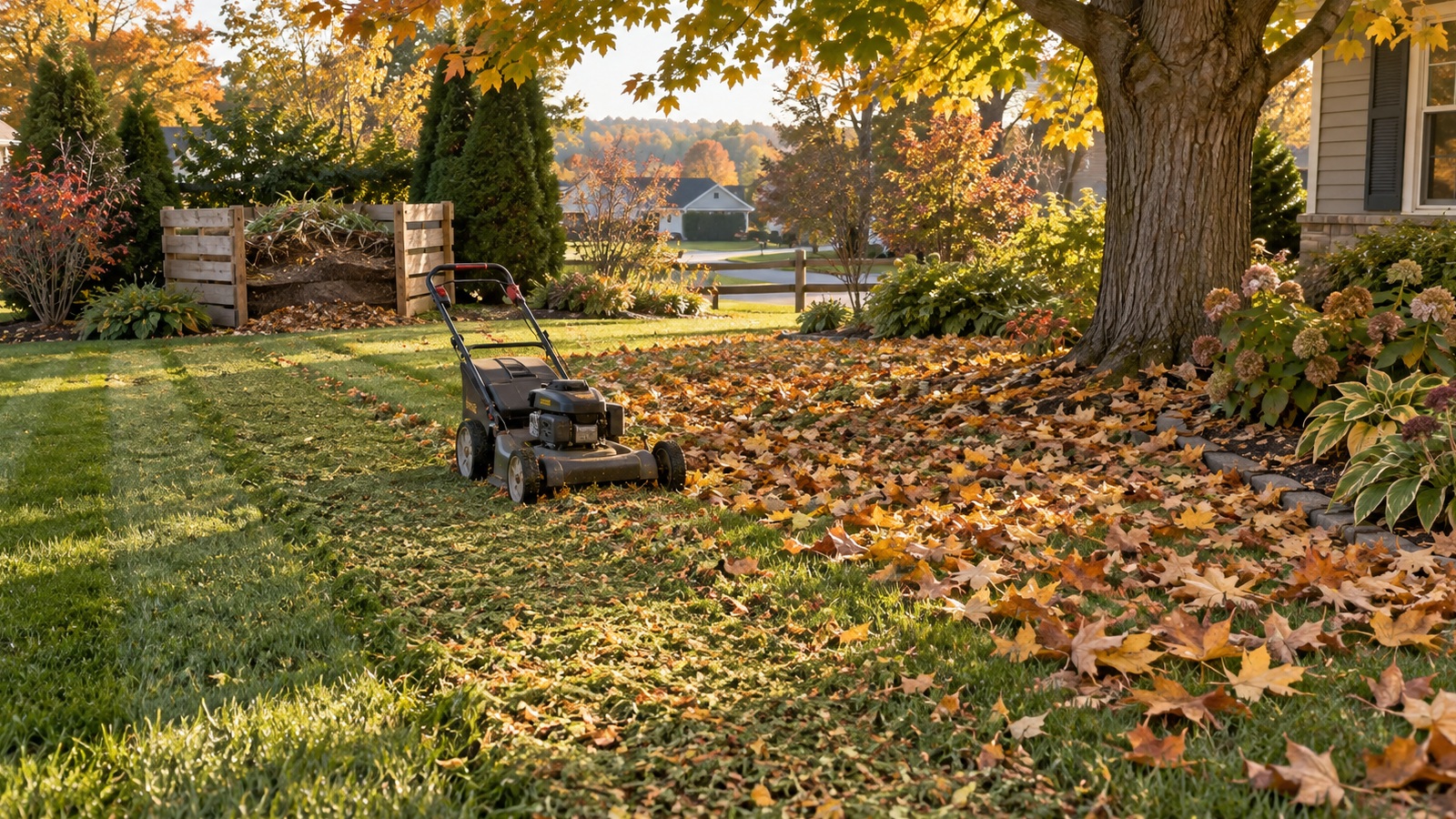
The smartest time to decide what to do with autumn leaves is before the yard disappears under them. In mid-September around Galion, most trees are still holding their canopy, which gives you a quiet planning window: choose which leaves can stay beneath trees and in garden beds, which can be chopped into the lawn, which should become compost, and where any true excess will go. That simple map replaces the all-or-nothing routine of raking every leaf into bags—and it can leave the lawn clear, protect useful winter habitat, and turn part of the fall workload into material your soil can use.
Start With a Four-Zone Leaf Plan
Leaves do not need one universal destination. A tidy lawn, a sheltered garden bed, a compost pile, and a curb or community collection point have different needs. The practical answer is to divide the property into four zones and move each leaf only as far as necessary.
Zone one is active turf. Grass still needs light and air, so a heavy, wet mat should not remain through winter. A modest dry layer, however, can be chopped finely with a mower and allowed to filter between the grass blades. The goal is small fragments, not a brown blanket.
Zone two is planted ground. Beneath mature trees, between shrubs, and in established perennial beds, some intact leaves can serve as winter cover. The Xerces Society notes that many invertebrates overwinter in leaf litter or other plant debris. Keeping leaves in selected, low-traffic beds preserves shelter without requiring the entire property to look unmanaged.
Zone three is the compost area. Dry leaves are a useful carbon-rich ingredient. Save them to balance grass clippings and kitchen scraps, or make a mostly leaf-based pile that can break down more slowly into leaf mold. Shredding speeds decomposition, while whole leaves last longer as cover.
Zone four is true excess. Leaves mixed with trash, leaves that cannot be managed safely on-site, or a volume beyond your available space may need an approved local collection or disposal route. Check the current City of Galion or hauler instructions before placing anything at the curb; schedules, container rules, and accepted materials can change.
Mark these zones now. A quick sketch or a few photos are enough. Decide where mower discharge can stay, which beds will receive whole leaves, and where a stable pile or bin can sit. Once leaves begin falling in earnest, you will be following a plan instead of repeatedly moving the same pile.
Mulch Leaves Into the Lawn Without Smothering It
Leaf mulching works best as a frequent mowing task, not a rescue operation after a month of buildup. Wait until the leaves are dry enough to break apart rather than clump. Set the mower at its normal healthy cutting height, make a pass, and look behind you. If recognizable pieces remain on top, a second pass from another direction can reduce them further.
University of Minnesota Extension recommends continuing to mulch while about half of the lawn surface remains visible. When leaf cover becomes so dense that less than 50 percent of the grass can be seen, move the excess to compost or another approved destination. That threshold is more useful than a fixed number of inches because maple, oak, and ornamental leaves settle differently, and wet leaves compact much faster than dry ones.
Do not force the mower through a deep or wet mat. Clumped leaves can clog the deck, hide sticks and stones, and leave patches of grass covered. Rake or blow the heavy areas into a thin layer first, or remove part of the load. Work across slopes with the method specified in the mower manual, keep children and pets indoors or well away, and never reach into a chute until the machine is fully stopped and cannot restart.
Mulched leaves are not instant fertilizer, and they do not remove the need for soil testing or a sensible lawn program. They are small pieces of organic material that decompose over time. Extension guidance says this practice can return nutrients and improve soil structure as the fragments break down. The visual test remains simple: after mowing, grass blades should be standing through scattered leaf pieces rather than buried beneath them.
Timing matters more than perfection. Two short passes during a week of active leaf fall are usually easier on the lawn and the operator than one exhausting cleanup at the end. If rain is coming, prioritize the thickest areas first. Dry leaves are easier to chop, easier to rake, and less likely to form a sealed mat.
Leave Whole Leaves Where They Do the Most Good
“Leave the leaves” does not have to mean leaving every sidewalk, driveway, and lawn untouched. It means recognizing that a layer of whole leaves has ecological value in places where it will not create a safety or maintenance problem. The Xerces Society describes fallen leaves as winter shelter for many insects and other invertebrates, including species that spend the cold months as eggs, caterpillars, chrysalises, or adults.
Choose deliberate habitat pockets: beneath a mature tree, around shrubs, behind a perennial border, or in a quiet corner protected from constant foot traffic. Move leaves gently with a rake rather than shredding all of them first. A natural, uneven layer is more useful than a tightly packed mound. Keep trunks, woody crowns, basement windows, vents, and building siding clear so the leaves do not hold moisture against structures or sensitive plant tissue.
Where leaves blow immediately back onto walks or across a neighbor’s property, low edging or a brushy border can help contain them. Do not pile leaves in drainage paths, street gutters, storm drains, or ditches. Water still needs a clear route, and wet leaf piles can make pavement slick.
Some beds need a lighter touch. Small evergreen groundcovers and low rosettes can be buried by a deep mat. Newly planted perennials may also disappear under leaves, making them easy to step on in spring. Place a marker beside young plants, use a thinner layer around them, and redistribute any wind-packed drifts after storms.
Spring cleanup should be gradual. When plants begin pushing and consistently mild weather returns, loosen any matted layer and move excess leaves to compost rather than stripping every bed bare on the first warm day. The point is not to follow a rigid calendar. It is to keep the bed functional while allowing the sheltered organisms within it time to emerge.
Turn the Excess Into Useful Compost
Ohio State University Extension describes composting as managed decomposition that turns leaves, grass, plant cuttings, and other organic material into a soil amendment. A working pile needs carbon-rich material, nitrogen-rich material, moisture, and oxygen. Dry autumn leaves supply the carbon side of that balance.
OSU lists a carbon-to-nitrogen ratio of about 30:1 as favorable for compost microbes and gives dry leaves an approximate ratio of 50:1. You do not need a laboratory calculation for every load. Use the numbers to understand why a pile of leaves alone breaks down slowly and why mixing in appropriate “green” material speeds the process. EPA’s home-composting guidance offers a practical volume rule: add at least two to three times as much brown material, such as dry leaves, as green material, such as food scraps.
Begin on a well-drained site with room to work. EPA recommends a four- to six-inch base of bulky browns such as twigs or wood chips to lift the pile and admit air. Add leaves in layers with accepted green materials, dampening only as needed. The pile should feel like a wrung-out sponge—not dusty, not dripping. Cover food scraps with four to eight inches of leaves or other browns to reduce odors and discourage pests.
Chopping leaves with a mower increases the surface available to microbes and speeds decomposition. Whole leaves are still useful when time is not important. Save several dry bags or a covered bin of leaves as a year-round brown supply; summer grass clippings and kitchen scraps often arrive when carbon material is harder to find.
OSU notes that piles around three to five feet in each dimension retain heat while still allowing air to reach the center. A smaller pile can still decompose, just more slowly. Turn the material when it compacts or develops an unpleasant odor, and add dry browns if it becomes wet and slimy. If a household cannot manage an open pile without attracting animals, choose a secure system and follow EPA’s list of materials to avoid, including meat, dairy, fats, pet waste, treated wood, and glossy paper.
Know What Does Not Belong in the Routine
A leaf plan works only when the material is clean. Before mowing or raking, walk the area and remove sticks, stones, wire, toys, plastic, glass, and pet waste. A mower can throw hard objects, and contaminated material does not improve a compost pile. Wear sturdy footwear and eye and hearing protection appropriate to the equipment.
Keep leaves away from roadways and storm drains. A curb pile can spread into traffic, obscure the edge of pavement, or block water. Use a municipal collection point only after confirming the current placement rules. Do not assume that a practice allowed outside city limits is allowed on a city lot.
Be cautious with diseased plant debris and weeds carrying mature seed. A carefully managed hot compost pile may reach temperatures that reduce some pathogens and weed seeds, but an ordinary backyard pile often heats unevenly. When the consequence of survival matters, separate the material and follow current local extension or municipal disposal guidance rather than promising that one turn of the pile will sanitize it.
Black walnut leaves deserve less alarm than they often receive. The bigger questions for any leaf pile are volume, air, moisture, and the intended use of the finished material. Mixing tree species, shredding dense leaves, and allowing adequate decomposition creates a more manageable product than building an enormous compacted pile from one source.
Finally, do not burn leaves simply because that was once the usual fall routine. Smoke, wind, property setbacks, local ordinances, and Ohio open-burning rules all matter. Composting, mowing, habitat beds, and an approved collection route give most Galion households safer and more useful options. If burning is being considered, verify current state and local requirements first rather than relying on a neighbor’s recollection.
Match the Method to What You See
The same yard may need all four destinations in the same week. Use what you can see underfoot to choose the next action instead of following a date alone.
| What you see | Best destination | Next step |
|---|---|---|
| Dry, scattered leaves with most grass still visible | Lawn | Mow once or twice until fragments settle between grass blades |
| Dry leaves covering more than about half the lawn | Split between lawn and compost | Remove part of the layer, then mulch what remains |
| Whole leaves beneath trees or around established shrubs | Habitat bed | Leave a loose layer while keeping trunks, drains, and structures clear |
| Clean leaves plus accepted kitchen or garden greens | Compost | Mix roughly two to three volumes of browns per volume of greens and maintain air and moisture |
| Wet, matted leaves on walks or turf | Dry and redistribute | Move them off hard surfaces, loosen the mat, and process in smaller batches |
| Leaves mixed with trash, pet waste, or questionable debris | Separate disposal | Remove contaminants and follow current local instructions |
| More clean leaves than the property can use | Approved collection | Confirm Galion’s current schedule, placement, and container rules |
This approach also prevents unnecessary hauling. Leaves mulched where they fall travel only a few feet. Leaves raked beneath the nearest tree stay on the same property. Only the useful compost share moves to the bin, and only the real surplus reaches a collection point.
After each round, inspect the result. Grass should remain visible, beds should not be packed against stems or walls, the compost pile should be damp and airy, and every hard surface should be clear enough for safe walking. Those four checks are more reliable than trying to make the entire yard match one standard.
Build a Week-by-Week Fall Routine
Mid-September is for setup. Service the mower according to its manual, sharpen or replace the blade if needed, choose a compost site, place simple edging around habitat beds, and clear storage space for a reserve of dry leaves. Confirm municipal guidance now, then check again when collection season begins. Do not quote last year’s dates as this year’s schedule.
During light leaf fall, mow dry leaves frequently. Move whole leaves into selected beds before they are chopped. This is also the easiest time to gather a clean reserve for compost because the leaves have not yet been mixed with weeks of rain, mud, and street debris.
During peak drop, reduce the workload by triage. Clear steps, sidewalks, driveways, drainage routes, and the thickest lawn areas first. Leave planned habitat pockets alone. Process only as much as the mower and compost area can handle safely. A leaf pile can wait on the lawn for a dry afternoon, but it should not sit wet long enough to flatten the turf beneath it.
After the canopy is mostly bare, make a final lawn pass and check for wind-packed corners. Stabilize the compost cover without sealing the pile airtight. Mark young plants in leafy beds, clear leaves from vents and foundations, and store tools dry. Keep a small reserve of shredded leaves available to cover winter kitchen scraps.
In spring, inspect rather than automatically remove. Finished compost can be screened and used where appropriate. Coarse material can return to the pile. Habitat leaves can remain under shrubs or be loosened and shifted as plants emerge. A plan that continues into spring turns fall cleanup from a disposal event into a cycle.
Make the Plan Fit Your Galion Property
A small in-town lot may have one mature maple, narrow beds, and little room for a pile. That property can mulch repeatedly, keep a shallow leaf layer under shrubs, and use approved collection for the remainder. A larger yard may be able to maintain several habitat pockets and a three-bin compost system. Neither approach is morally better; the useful plan is the one the household can keep safe and consistent.
If you share property lines, talk with neighbors before placing a habitat bed or compost bin where wind and runoff cross the boundary. Keep the public sidewalk clear, avoid directing mower discharge toward people or vehicles, and maintain sight lines near the street. Good leaf management should reduce friction, not export the work.
For tools and general yard supplies, you can check Liberty Farm, Home & Garden’s full in-store assortment at libertyfhg.com or stop at 222 South Liberty Street in Galion. Verify current availability before making a special trip. If the fall load is bulky, remember that we load you, and free local delivery within Galion may be available for qualifying in-store purchases.
The larger point is simple: a leaf is not automatically waste, and a neat property does not have to be biologically empty. Keep active surfaces clear. Chop a manageable layer into the lawn. Let whole leaves shelter selected beds. Save carbon for compost. Send only the excess through the current approved route.
Make those choices before peak leaf fall and the work becomes a series of short, purposeful passes instead of one exhausting weekend. Your lawn still looks cared for, your beds keep useful cover, and next year’s soil receives something back from this year’s canopy.
Frequently Asked Questions
Keep Reading
Bring Houseplants Indoors Before the Chill: An Ohio Fall Transition Guide
Learn when and how to bring houseplants indoors in Ohio, inspect for pests, acclimate light, reset watering, and avoid common fall mistakes.
When Are Apples Ready? A North-Central Ohio Harvest and Storage Guide
Know when Ohio apples are ripe, how to pick them correctly, which fruit to store, and how to keep a backyard harvest crisp longer.