
Sweet Smoke Without the Guesswork: A Complete Guide to Apple Grilling Pellets
Learn how to store, pair, blend, and cook with apple wood pellets for clean, mild summer smoke—plus the mistakes that cause weak flavor, bitter food, and auger trouble.
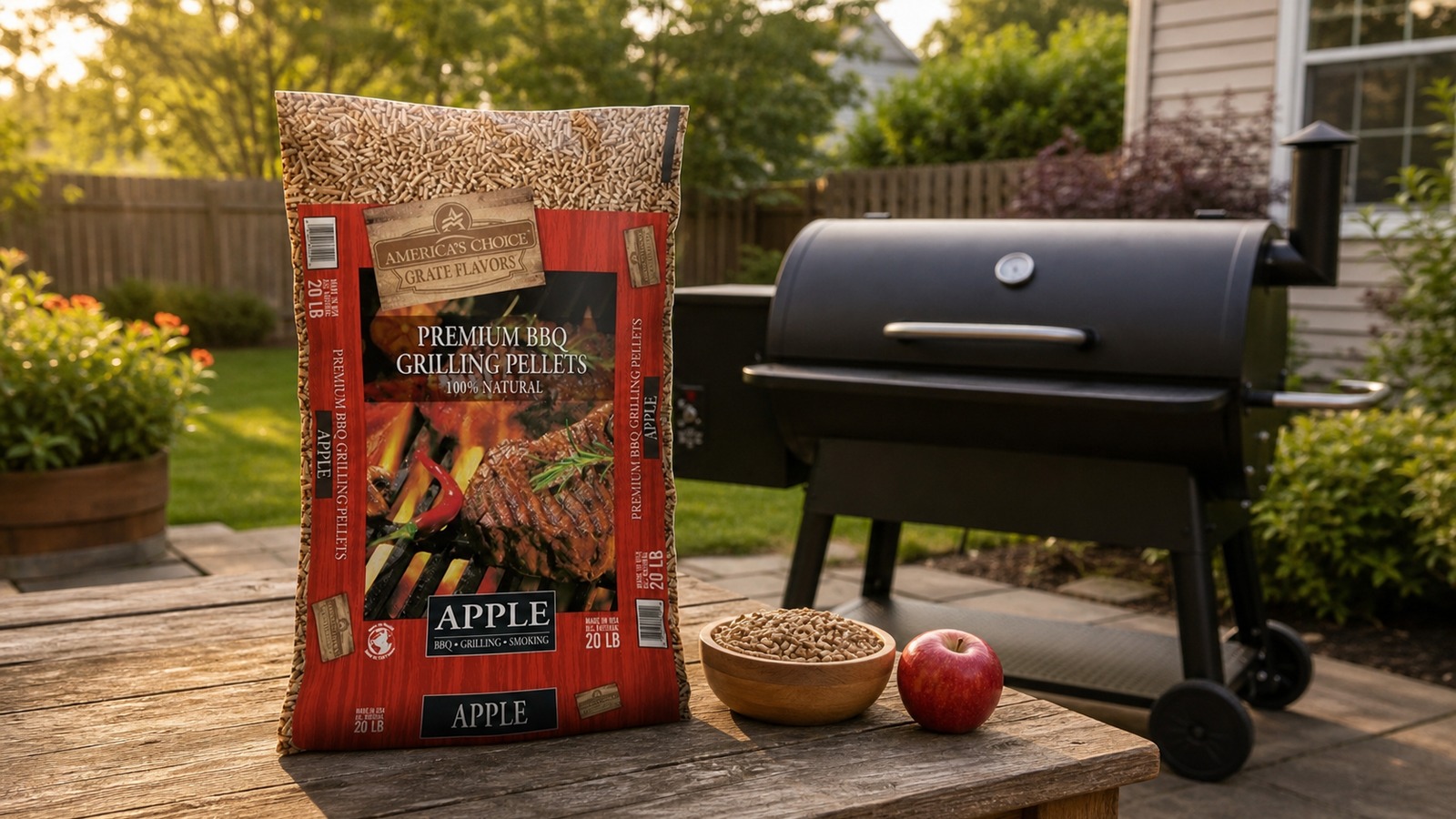
Apple wood smoke is one of the easiest ways to add real barbecue character without burying the food under a heavy, bitter flavor. That makes apple pellets especially useful in summer, when the grill may be handling chicken one evening, pork the next, and vegetables or fish over the weekend. The challenge is not simply buying a bag of pellets. Good results depend on keeping the fuel dry, matching the smoke to the food, managing airflow, and knowing when a mild wood needs more time—or a stronger partner.
This guide uses America's Choice Apple Grilling Pellets, 20 lb as a practical example. Liberty's live catalog identifies these as 100% natural apple wood pellets made from kiln-dried virgin hardwood, with no chemical additives, fillers, bark, or artificial flavoring. The listing also describes them as compatible with pellet grills and smokers. Those details make the product a sensible starting point for cooks who want a clean, approachable fruitwood smoke rather than an aggressive campfire profile.
Why Apple Smoke Works for So Many Summer Meals
Every cooking wood has a personality. Hickory and mesquite can announce themselves quickly. Apple is usually more restrained: gently sweet, lightly fruity, and less likely to overpower delicate food. That restraint is useful when you are still learning a pellet grill because it gives you a wider margin for error. A little extra smoke exposure is less likely to dominate dinner than it would be with a much stronger wood.
Apple is particularly comfortable with foods that already have some natural sweetness. Pork, onions, squash, corn, carrots, fruit-based sauces, and brown-sugar rubs all fit naturally. It also works with poultry and fish because the smoke supports rather than competes with mild flavor. That does not mean apple is weak. Used with time and good airflow, it can build a noticeable mahogany color and a rounded smoke layer.
Think of apple as an all-purpose seasoning rather than a specialty effect. If your household cooks several kinds of food and you do not want five open bags of pellets, apple is a practical single-wood choice. It is also a useful base for blending. When you want more depth for beef or a large pork shoulder, combine apple with a stronger wood instead of abandoning the fruitwood character altogether.
What the Pellet Bag Tells You—and What It Does Not
The live Liberty catalog lists the America's Choice bag at 20 pounds and identifies the fuel as 100% natural apple wood made from kiln-dried virgin hardwood. It specifically says there are no fillers, bark, chemical additives, or artificial flavoring. Those are meaningful details because pellet composition affects aroma, ash production, and how consistently the grill can feed fuel through its auger.
A product listing cannot replace the manual for your grill. Hopper capacity, startup procedure, shutdown cycle, temperature range, and cleaning interval vary by appliance. Always follow the instructions supplied by the grill manufacturer, especially during ignition and shutdown. Never bypass a safety procedure because another grill owner uses a different routine.
| Catalog detail | Why it matters in practice |
|---|---|
| 20 lb bag | A useful household quantity that can cover multiple cooks; actual burn time depends on grill design, weather, temperature, and cooking duration. |
| 100% natural apple wood | Provides a consistent fruitwood flavor profile without intentionally blending in a stronger species. |
| Kiln-dried virgin hardwood | Pellets are manufactured from dried wood for dependable ignition and feeding when stored correctly. |
| No fillers, bark, or artificial flavoring | The smoke character comes from the listed wood rather than added flavor compounds. |
| Pellet-grill compatibility | Designed for grills and smokers that burn food-grade wood pellets; it is not a substitute for charcoal, heating pellets, or wood chunks. |
One important limitation: never use home-heating pellets in a cooking appliance. Fuel intended for heating may use different wood sources or manufacturing standards. Buy pellets labeled for barbecue or grilling, keep them in their original package or a clearly marked food-safe container, and avoid mixing them with shop or stove fuel.
How to Store Pellets Through an Ohio Summer
Moisture is the enemy of wood pellets. A sound pellet is hard, smooth, and easy for an auger to move. Once it absorbs enough humidity, it can swell, soften, crumble, and leave dusty material at the bottom of the bag. That dust may feed poorly and can contribute to inconsistent heat. North-central Ohio summers bring humidity, sudden storms, and damp garage floors, so storage deserves as much attention as seasoning.
- Keep the bag off concrete. Place it on a shelf, pallet, or sturdy bin rather than directly on a garage or basement floor.
- Close the package after every use. Roll the top tightly and secure it, or transfer the pellets to a clean container with a dependable lid.
- Choose a dry location. A covered porch may still experience humidity and wind-driven rain. An indoor utility area, dry garage cabinet, or sealed deck box is safer.
- Inspect before filling the hopper. Pellets should not feel spongy or break apart with almost no pressure. Large amounts of sawdust or clumped material are warning signs.
- Do not leave fuel exposed indefinitely. If the grill manual recommends emptying the hopper between cooks or before long storage, follow that guidance.
A sealed container is not permission to store warm pellets or a warm ash bucket. Fuel belongs away from ignition sources. Ashes should be handled exactly as the appliance manufacturer directs and placed only in an appropriate noncombustible container after they are fully cold.
It also helps to keep a simple inventory habit. Before planning a long weekend cook, look at the bag rather than assuming the hopper is full enough. Startup, preheating, weather, and the length of the recipe all affect consumption. Keep an unopened backup only if you grill often enough to use it while it remains dry, and rotate the older bag first. Marking the date when you open a package can expose storage problems: if pellets deteriorate unusually quickly, the location or container may be admitting moisture. This is more useful than trying to predict an exact number of cooking hours from bag weight alone.
Matching Apple Pellets to Food
Apple smoke is flexible, but the best pairing depends on how long the food stays in the cooker and how much surface area is exposed. A large roast can absorb smoke for hours. Thin vegetables may be finished before a strong smoke layer develops. Adjust the rub, sauce, and cooking method rather than assuming one setup fits every meal.
Poultry
Chicken and turkey are classic apple-wood foods. The mild smoke complements the meat and works with herb rubs, pepper, garlic, honey, maple, and fruit-based glazes. For crisp skin, follow a recipe and grill procedure designed for skin-on poultry; smoke flavor alone cannot correct rubbery skin caused by the wrong finishing method. Avoid opening the lid repeatedly, which releases heat and extends the cook.
Pork
Pork chops, tenderloin, ribs, shoulder, and fresh sausage all pair naturally with apple. For quick-cooking cuts, use a balanced rub and give the grill time to produce clean smoke before the food goes on. For long cooks, apple can stand alone for a mild result or be blended with hickory for more depth. Keep sugary sauces away from excessive direct heat so they do not scorch.
Fish
Apple is a good choice when you want smoke that does not overwhelm a delicate fillet. Use clean grates, a suitable pan or mat when needed, and a conservative seasoning plan. Fish can move from properly cooked to dry quickly, so monitor doneness instead of chasing a dark exterior.
Vegetables and fruit
Corn, onions, peppers, mushrooms, zucchini, peaches, and apples can all pick up light smoke. Oil and season them according to the recipe, arrange pieces so air can circulate, and use a basket when small food could fall through the grate. Smoked fruit can work in desserts, salsa, chutney, or alongside pork without requiring an all-day cook.
Beef
Apple can be used on burgers, meatloaf, and steaks when you prefer a subtle profile. On brisket or another large beef cut, many cooks want more intensity. Blending apple with hickory or another stronger barbecue wood keeps some sweetness while adding a deeper smoke backbone.
A Reliable First Cook With Apple Pellets
Your first test should be simple enough that you can pay attention to the grill. Bone-in chicken pieces, pork chops, or a small pork tenderloin are easier learning projects than an overnight brisket. Use a trusted recipe written for your type of appliance, then treat the following as a workflow rather than a replacement for the recipe or manual.
- Clean and inspect the grill. Check the grease path, cooking grate, burn area, and hopper according to the manufacturer's directions. Confirm that old pellets have not swollen or crumbled.
- Start with dry pellets. Pour carefully so loose dust stays out of the hopper as much as practical. Do not overfill beyond the appliance instructions.
- Follow the official startup sequence. Pellet grills use fans, augers, igniters, and control boards differently. Use the exact startup procedure for your model.
- Allow the smoke to stabilize. Thick, harsh startup smoke is not the goal. Wait until the appliance reaches the stage specified by its manual or recipe before loading food.
- Season with restraint. A heavily salted, heavily sauced piece of meat makes it difficult to judge what the apple smoke contributes. Keep the first test straightforward.
- Use a dependable food thermometer. Color, elapsed time, and smoke ring appearance are not reliable measures of food safety. Cook to the safe internal temperature appropriate for the food.
- Record the result. Note the weather, set temperature, food weight, cooking time, and your opinion of the smoke strength. Those notes make the second cook better.
- Complete the shutdown cycle. Do not unplug the grill early unless the manufacturer specifically instructs you to do so. Many pellet appliances need a fan-assisted cooldown.
For food-safety temperatures, consult the current USDA safe minimum internal temperature chart and the recipe you are following. Rest times can be part of the safety requirement, so read the complete guidance rather than remembering only a number.
How to Get More—or Less—Smoke Flavor
If the first cook tastes too mild, do not immediately assume the pellets failed. Smoke intensity is influenced by the food, surface moisture, cooking duration, airflow, temperature program, and the grill itself. A short, hot cook naturally produces a different result from a long smoke session.
- For more presence: choose a longer-cooking food, use a recipe with an intentional smoking stage, avoid wrapping too early, or blend apple with a stronger food-grade barbecue pellet.
- For a gentler result: use apple by itself, shorten the smoke phase within a tested recipe, finish at the appropriate cooking temperature, and avoid adding other strongly smoked ingredients.
- For a cleaner result: keep the grill maintained, use dry pellets, provide the airflow intended by the manufacturer, and avoid smoldering caused by poor operation.
More visible smoke does not automatically mean better flavor. Heavy, stale smoke can taste bitter or ashy. The objective is clean combustion and a pleasant aroma, not the largest possible cloud. If the grill behaves abnormally, stop and consult its manual rather than improvising around a feed, ignition, or airflow problem.
Common Pellet-Grilling Mistakes
Leaving the bag open
A half-used bag can look fine on top while the lower pellets absorb moisture. Close it promptly and keep it raised in a dry area.
Changing too many variables
A new rub, unfamiliar recipe, different meat cut, and new wood used all at once make troubleshooting nearly impossible. Hold most variables steady when testing apple pellets.
Confusing smoke color with doneness
A dark exterior or pink smoke ring does not prove that meat is safely cooked. Verify internal temperature with a thermometer in the correct location.
Opening the lid repeatedly
Frequent checking releases heat, disrupts the cooking environment, and can extend the cook. Use the grill's monitoring features and open only when the recipe requires it.
Ignoring grease and ash
Pellet grills still require maintenance. Follow the manufacturer's cleaning schedule to reduce fire risk and preserve consistent airflow.
Expecting one wood to imitate another
Apple is intentionally mild. If you want a forceful hickory-style result, use a suitable stronger barbecue wood or a blend rather than over-smoking with apple and hoping its character changes.
When Apple Pellets Are the Right Bag to Keep on Hand
A 20-pound bag of apple pellets makes the most sense for households that value flexibility. It can move from chicken and pork to fish, vegetables, and fruit without forcing every meal into the same heavy smoke profile. It is approachable for beginners, useful for experienced cooks who blend woods, and especially practical during summer when the grill handles a wide variety of foods.
America's Choice Apple Grilling Pellets fit that role based on the live catalog details: 100% natural apple wood, kiln-dried virgin hardwood, no listed fillers or artificial flavoring, and a bag intended for pellet grills and smokers. Liberty Farm, Home & Garden lists the 20-pound product in its web catalog under SKU 15025. Catalog visibility does not guarantee a particular quantity is on the shelf at the moment you read this, so check current availability before making a special trip.
If you are choosing your first fruitwood, apple is the sensible place to start. Keep the pellets dry, follow the grill manual, use a thermometer, and judge the smoke on a simple meal before moving to a long cook. That small amount of discipline will improve dinner far more than chasing complicated tricks.
Frequently Asked Questions
Keep Reading
Bring Houseplants Indoors Before the Chill: An Ohio Fall Transition Guide
Learn when and how to bring houseplants indoors in Ohio, inspect for pests, acclimate light, reset watering, and avoid common fall mistakes.
When Are Apples Ready? A North-Central Ohio Harvest and Storage Guide
Know when Ohio apples are ripe, how to pick them correctly, which fruit to store, and how to keep a backyard harvest crisp longer.