
Harvest Radishes in 28 Days: The Complete Ohio Gardener's Guide to Champion Radishes
The fastest vegetable in the garden takes less than a month to harvest, costs almost nothing to grow, and teaches kids that seeds really do become food. Here's everything you need to know about growing Champion radishes in Ohio — including why you need to plant your last spring succession right now.
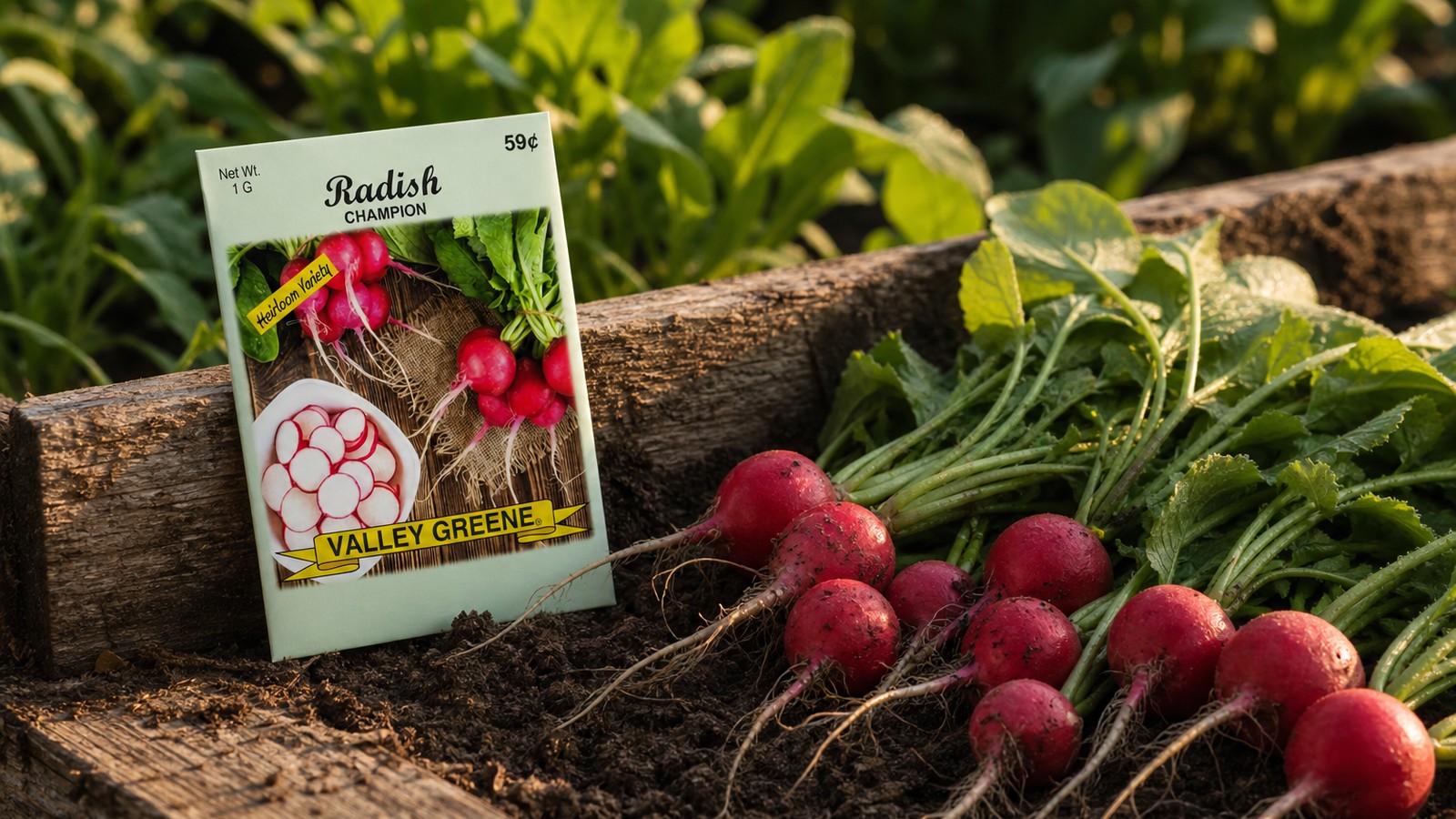
If you've ever wished a vegetable could prove itself before the season slips away, the Champion radish is your answer. Valley Greene Radish (Champion) 1G goes from seed to harvest in just 28 days — the single fastest vegetable most Ohio gardeners will ever grow. Here in late June, you're standing at a narrow window: radishes love cool soil, and once the heat of July arrives and stays, they bolt straight to seed without forming usable roots. Planting a succession right now, and planning ahead for a fall planting in August, means you'll keep fresh radishes on the table from spring through fall without a gap. This guide walks you through everything — timing, soil prep, spacing, watering, common problems, and the secrets to that crisp, mild flavor everyone expects from a great garden radish.
Why Late June Is Your Last Call for Spring Radishes in Ohio
Ohio sits in USDA Hardiness Zone 6, and north-central Ohio's Crawford County averages daytime highs that push into the upper 80s and low 90s by mid-July. That heat is the enemy of every radish you plant. Radishes are a cool-season vegetable — they thrive when soil temperatures are between 50°F and 65°F, form tight round roots, and stay crisp. When soil temperatures climb above 70°F consistently, radishes shift their energy away from root development and surge upward in a process called bolting. A bolted radish sends up a flower stalk, turns pithy, and becomes bitter. It's still alive, but it's no longer food.
Right now — mid-to-late June — soil temperatures in Galion-area gardens are typically in the upper 60s in the morning and approaching 70°F by mid-afternoon. That's the edge of the usable window. A seed you plant today will germinate in three to five days and reach harvest size in roughly four weeks, putting your pick date around mid-to-late July. At that point, the roots will be pulling from increasingly warm soil, so your best strategy is to plant the seeds as soon as possible, keep the bed mulched and watered consistently, and plan to harvest promptly at the 28-day mark rather than letting them sit in the ground.
Don't be discouraged if this sounds rushed — it's actually a feature of the radish, not a limitation. The same 28-day clock that creates urgency in summer becomes pure joy in spring and fall. Mark your calendar now: your fall planting window for Ohio radishes opens around August 10–25, when soil temperatures begin dropping back through the comfortable range. A seed planted in mid-August easily matures before first frost, which typically arrives in Crawford County around October 10–15.
What Makes the Champion Radish Worth Growing
Not all radishes are the same. There are elongated French Breakfast types, spicy Asian daikon varieties, and the classic round red globe types that most Americans picture when they think "radish." The Champion falls firmly in that last category — a round, uniformly red radish with bright white flesh inside. According to Valley Greene's own description, it produces a crisp, mild flavor that distinguishes it from sharper or more pungent radish varieties. That mild character makes it approachable for children and for people who've been put off by radishes in the past.
The seeds are non-GMO, which matters to many home gardeners who want to save seeds, grow without synthetic genetic modification concerns, or simply know exactly what's going into their food. Non-GMO designation also aligns with organic-compatible gardening practices, even if the seeds themselves aren't certified organic.
Perhaps the most compelling trait, though, is one that shows up in the garden before you ever take a bite: speed. At 28 days from seed to harvest, the Champion radish is genuinely the fastest vegetable most home gardeners will ever grow. Compare that to green beans (50–60 days), cucumbers (55–65 days), or tomatoes (70–85 days from transplant). You can grow and harvest a full radish crop between planting day and when your tomatoes even start to set fruit. That speed makes radishes perfect for filling gaps in beds, testing new soil, keeping kids engaged, and generating quick wins in the garden while longer-season crops do their slow work.
Choosing and Preparing the Right Bed
Radishes are one of the least demanding vegetables you can grow, but soil preparation still matters — especially for a round variety like Champion. Because the root needs to push outward in all directions to form that classic globe shape, it does best in loose, rock-free, well-drained soil. Compacted clay soil — common throughout Crawford County — can deform roots into strange shapes or cause splitting, even if the plants otherwise look healthy.
If you're planting in an existing garden bed with reasonably loose soil, a quick loosening with a garden fork to a depth of 6–8 inches is usually sufficient. If your soil is heavy clay, work in a 2-inch layer of compost before planting and mix it into the top 6 inches. This improves both drainage and the loose texture radish roots need.
Raised beds are ideal for radishes. The naturally well-drained, loose structure of raised bed soil gives Champion radishes exactly the environment they prefer, and the slightly elevated position means the soil warms and drains more predictably than in-ground beds. If you've been growing in a raised bed all spring, your soil is probably already in great shape — just rake it smooth, remove any large debris, and you're ready to go.
Radishes prefer a soil pH of 6.0 to 7.0, which is consistent with the slightly acidic-to-neutral soil common in north-central Ohio. If you've been amending your beds regularly with compost, you're likely already in range. A basic soil test — available through the Ohio State University Extension — can confirm your pH if you're seeing consistent problems across multiple crops.
One soil prep mistake to avoid: don't add heavy amounts of nitrogen-rich fertilizer right before a radish planting. Excess nitrogen pushes leafy top growth at the expense of root development, giving you beautiful green tops and disappointingly small roots. A balanced, low-rate fertilizer or simply good compost is all radishes need.
Planting: Spacing, Depth, and Succession Strategy
Planting Champion radishes correctly is simple, but the details matter for getting uniform, full-sized roots rather than a crowded mess of stunted, oddly shaped ones.
Seed Depth and Row Spacing
Sow seeds ½ inch deep. Deeper planting slows germination unnecessarily; shallower planting risks the seed drying out before it sprouts. Space your rows 12 inches apart if you're planting multiple rows, which gives you enough room to work between them at harvest time without disturbing adjacent plants.
Spacing Within the Row
Sow seeds roughly 1 inch apart in the row — they're small enough that precise placement isn't always possible. The critical step is thinning. Once seedlings are about an inch tall (typically 5–7 days after germination), thin them to 2 inches apart. Skipping this step is the single most common radish mistake. Crowded radishes compete for space, produce long, misshapen roots that push against each other, and often bolt earlier under the stress. Thinning feels wasteful, but it's what creates those satisfying round roots. The thinnings are edible — use them in salads.
Succession Planting Every Two Weeks
The best way to avoid the "feast or famine" problem of radishes is succession planting: instead of sowing all your seeds at once, plant a short row every 14 days. Valley Greene's own recommendation is succession planting every 2 weeks for a continuous harvest, and for good reason. A single sowing gives you a burst of ready radishes over about a week, then nothing. Succession planting staggers that burst into a steady trickle of fresh radishes.
For your current late-June planting in Ohio, you have room for one more spring succession right now. Your fall succession schedule can start in mid-August and continue through mid-September, giving you multiple harvests before frost.
Container and Small-Space Planting
Radishes do very well in containers and small raised beds. A container at least 6 inches deep and wide enough to give each plant its 2-inch spacing works fine. This makes Champion radishes a good choice for apartment balconies, small patios, or children's container gardens. The fast growth cycle means even a modest patio planter can produce a full harvest cycle in a single month.
Watering, Feeding, and Day-to-Day Care
Consistent moisture is the single most important maintenance task for radishes — more important than fertilizing, and arguably more important than anything else you'll do after the seeds are in the ground.
Watering
Radishes need about 1 inch of water per week, either from rain or irrigation. More critical than the total amount is the consistency. Uneven watering — letting the soil dry out and then drenching it — causes radish roots to crack and split. It also stresses the plants enough to accelerate bolting in warm weather. Check soil moisture by pressing your finger 1–2 inches into the soil; if it feels dry at that depth, water thoroughly. In Ohio's June and July heat, that may mean watering every 2–3 days or even daily during dry stretches.
A thin layer of straw mulch (1–2 inches) over your radish bed serves double duty in summer: it holds moisture in and keeps soil temperatures a few degrees cooler, both of which extend your harvest window during warm weather. Keep the mulch back slightly from the base of the plants to prevent rot.
Fertilizing
Radishes grown in reasonably fertile soil need very little supplemental fertilizer. If you amended with compost at planting, that's typically enough. Avoid heavy nitrogen applications mid-cycle. If your soil is genuinely poor, a light application of a balanced fertilizer at planting time is acceptable, but don't overdo it.
Thinning (Again)
It's worth restating: thinning at the seedling stage is not optional. If you find yourself with crowded plants a week after germination, thin without hesitation. Use scissors to snip seedlings at soil level rather than pulling them, which can disturb the roots of neighboring plants.
Common Problems and How to Solve Them
Radishes are remarkably trouble-free, but a few specific problems come up repeatedly in Ohio gardens. Knowing what to look for saves a crop.
| Problem | Likely Cause | Solution |
|---|---|---|
| Roots are long and skinny, not round | Too much shade, overcrowding, or compacted soil | Thin to 2" spacing; grow in full sun; loosen soil before planting |
| Roots crack or split | Inconsistent watering or left in ground too long after maturity | Water evenly; harvest promptly at 28 days |
| Tops grow but no root develops | Excess nitrogen, too much shade, or high soil temps | Reduce fertilizer; ensure 6+ hours of sun; plant earlier in season |
| Bolting (plant flowers before root forms) | Heat stress or planting too late in summer | Plant in cool season only; mulch to moderate soil temps |
| Flea beetle holes in leaves | Flea beetles (common in Ohio gardens) | Use row cover at planting; diatomaceous earth around plants |
| Root maggots tunneling into roots | Cabbage root fly (most active in cool, wet springs) | Use row cover; rotate radish bed location each season |
| Bitter, pithy flesh | Heat stress, overmaturity, or drought stress | Harvest on time; keep soil moist; avoid midsummer planting |
| Product | Valley Greene Radish (Champion) 1G — Non-GMO, 28-day harvest | |
| Available At | Liberty Farm, Home & Garden - Galion, Ohio | libertyfhg.com | |
The most universally useful protective measure for Ohio radish gardens is a simple floating row cover laid over the bed at planting time. It blocks flea beetles, root flies, and other pests while still allowing light and water through. For a fast 28-day crop, you can leave the cover on for the entire growth cycle without any need for pollination (radishes are root crops, not fruiting crops). Lift it only at harvest time.
Harvesting, Storing, and Using Champion Radishes
The 28-day clock is a guide, not a rigid rule — but it's a good one. Start checking your radishes around day 24 or 25 by gently pushing aside soil at the base of a plant and looking at the root. A mature Champion radish should be roughly ¾ to 1 inch in diameter — firm, round, and uniformly red. If it feels solid and looks the right size, it's ready.
The most important harvesting rule: don't wait. Radishes left in the ground even a week past maturity become spongy, pithy, and hot-flavored. They lose the crisp, mild character that makes the Champion variety worth growing. Set a reminder on your phone for day 25 and check every day or two after that.
How to Harvest
Harvest by grasping the greens firmly at the base and pulling straight up with a steady, firm motion. In loose soil, the root should come up cleanly. In heavier soil, loosen around the root with a hand fork first to avoid breaking off the top and leaving the root in the ground.
Storage
Twist off the greens immediately after harvest — leaving them attached draws moisture out of the root and causes wilting within hours. Store the cleaned roots in a sealed plastic bag or airtight container in the refrigerator. Properly stored radishes stay crisp for one to two weeks. The greens are edible too — sauté them like turnip greens or add them raw to salads within a day of harvest before they wilt.
In the Kitchen
Champion's crisp texture and mild flavor make it genuinely versatile. Slice thin and eat raw with butter and salt (the classic French preparation), add to slaws and salads for crunch and color, or try quick-pickling: thinly sliced radishes in a mixture of white vinegar, a pinch of sugar, and salt are ready to eat in 30 minutes and will keep in the refrigerator for a week. Radishes also roast surprisingly well — a hot oven (425°F) for 20 minutes transforms them into mellow, slightly sweet vegetables that are nothing like their raw form.
Growing Radishes With Kids: A Garden Project That Actually Works
Most vegetables require patience that tests adults, let alone children. A tomato planted in May won't be eaten until July or August. Green beans take two months. Even lettuce takes several weeks. The 28-day radish is genuinely different — it moves fast enough that a child can plant a seed, watch it sprout within days, and hold a harvest in their hand within a single month of school summer break.
Valley Greene specifically notes that Champion radishes are perfect for kids' gardens, and the reasoning is straightforward: when a child can see real results within their attention span, gardening becomes something that happens to them rather than something they're waiting for. That early engagement plants the seed (pun intended) of a lifelong interest in growing food.
How to Set Up a Kids' Radish Project
Let the child prepare their own small patch — even a 12-inch-square area is enough for a meaningful first harvest. Have them use a finger or pencil to make furrows ½ inch deep, drop in seeds, cover them, and water. Mark the planting date on a popsicle stick or plant marker they can decorate. Check the bed together each morning. Germination typically happens within 3–5 days, which is fast enough to maintain excitement. Mark day 25 on a calendar as "First Peek Day" and day 28 as "Harvest Day."
The experience of pulling a radish out of the ground — seeing something they planted appear as food — is one of those concrete childhood memories that sticks. And if they decide they don't like the taste? That's fine too. The growing was the point.
You can find Valley Greene Champion Radish seeds at Liberty Farm, Home & Garden in Galion — they're easy to grab along with whatever other garden supplies you're picking up, and inexpensive enough to buy a couple of packets for repeat plantings throughout the season.
Planning Your Fall Radish Season Now
If your June planting is truly the last of your spring season, it's worth taking five minutes right now to plan your fall radish schedule — because "I'll remember to plant in August" is the kind of intention that disappears in the business of summer.
In north-central Ohio, the fall radish window opens in mid-August. Here's a practical succession schedule for Crawford County:
- August 12–15: First fall succession. Soil temperatures are beginning to drop but are still warm enough for fast germination. Harvest around September 10–15.
- August 26–29: Second fall succession. Harvest around early October.
- September 9–12: Third fall succession. Harvest around mid-October, just before average first frost. This is the latest safe planting for a reliable harvest before hard freeze.
Fall radishes often outperform spring radishes in flavor and texture. Cooling soil temperatures slow the growth cycle slightly and seem to enhance the crisp, moist character of the root. Many gardeners consider the fall crop the best of the year. The mild Ohio fall also means fewer pest pressures — flea beetles especially become less active as temperatures drop — so fall-grown radishes often reach harvest without any pest intervention at all.
Write those planting dates on your garden calendar today, or set recurring reminders on your phone. Pick up an extra packet of Valley Greene Radish (Champion) seeds when you're next in at Liberty Farm, Home & Garden on Liberty Street in Galion — they're small enough to store in a drawer all summer without taking up any space, and they'll be ready when August rolls around.
Frequently Asked Questions
Keep Reading
Plant Cover Crops Now: An Ohio Home Garden Guide
Plant fall cover crops in an Ohio vegetable garden with practical guidance on timing, species, seeding, winter care, and spring termination.
Save This Summer’s Garden: A Practical Ohio Seed-Saving Guide
Save tomato, bean, pea, lettuce, marigold, zinnia, and other garden seeds with this practical late-summer guide for Galion and north-central Ohio.