
Does Salmon or Lamb Dog Food Really Mean Chicken-Free?
Salmon or lamb on the label does not tell the whole story. Learn how to check for chicken ingredients and when to ask about unclear sources.
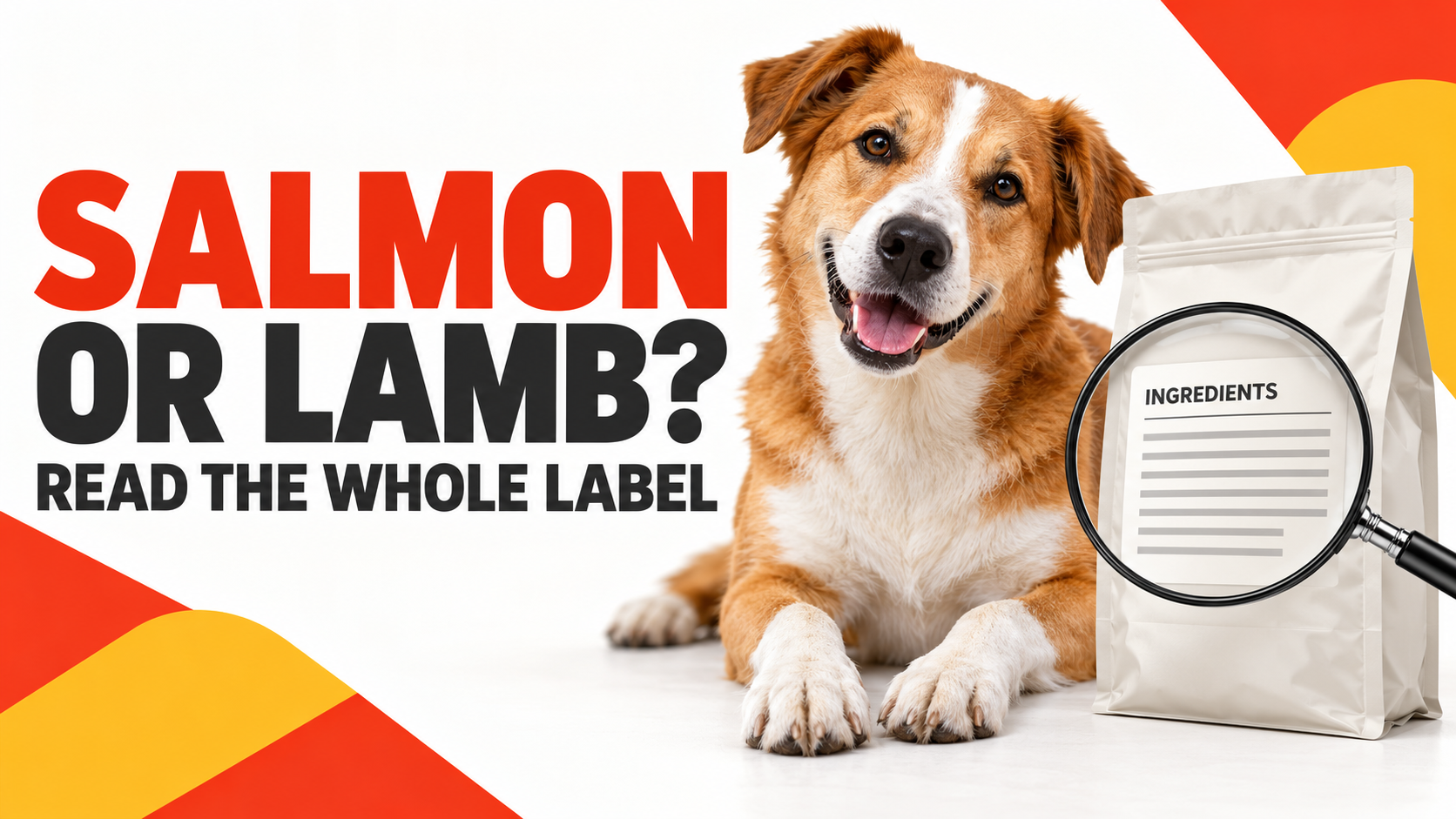
Not necessarily. Salmon or lamb on the front of a dog-food bag does not mean the recipe has no chicken ingredients. Here is a practical label-reading guide for Galion dog owners, including the fats and flavorings that are easy to overlook.
A flavor name does not tell the whole story
A bag labeled salmon, lamb, beef or whitefish does not automatically mean the recipe is made without chicken ingredients. The food can feature one animal in its name while using other animal ingredients elsewhere in the formula.
For Galion dog owners trying to avoid chicken, the best starting point is the complete ingredient panel. The front of the bag helps identify the food, but it is not a substitute for reading what is inside.
Look beyond chicken meat
If your goal is to avoid all chicken-derived ingredients, check the entire list for:
- Chicken and chicken meal
- Chicken by-product meal
- Chicken fat or chicken oil
- Chicken broth and chicken-derived flavoring
A recipe without chicken meat can still contain a chicken-derived fat or flavor. Do not stop reading after the first few ingredients.
Egg ingredients deserve a separate check when their source is unclear. If avoiding every chicken-derived ingredient is your preference, ask where the eggs come from. That does not mean every dog with a chicken allergy will also react to eggs.
Ask about ingredients with an unclear source
Terms such as natural flavor, animal fat or poultry ingredients may not tell you everything you need to know. Natural flavor can be animal-derived, and the words alone do not identify its source.
An unclear ingredient is not proof that chicken is present. It is also not confirmation that chicken is absent.
When needed, ask the manufacturer a specific question: “Does this exact recipe contain any chicken-derived ingredients, including fats, broth, flavorings or egg ingredients?” Have the full recipe name and a photo of the ingredient panel ready so the answer applies to the food you are considering.
Compare the whole recipe, not one claim
“No chicken as the main protein” and “made without chicken ingredients” are different statements. Likewise, grain-free describes grains, not whether a food contains chicken.
Read the current bag even when you have bought the food before. If its label and an online ingredient list do not agree, ask the manufacturer to clarify before relying on a chicken-free claim.
Ingredient preferences are only one part of choosing a food. Check that the food is appropriate for your dog's life stage, and follow your veterinarian's advice when a health condition is involved.
Check treats and toppers too
A salmon-flavored treat does not necessarily have the same ingredients as a salmon-based dry food. Canned foods, meal toppers and training treats each need their own label check.
Do not assume that a matching flavor name means a matching recipe. If you are avoiding chicken throughout your dog's diet, include the extras in your review, not just what goes into the bowl at mealtime.
If your veterinarian has prescribed a food trial, follow their instructions about every food and treat your dog receives.
Chicken-free does not automatically mean allergy-safe
Food allergies generally involve proteins. An ingredient's source and an individual dog's likelihood of reacting are not the same question, so a chicken-derived fat should not automatically be treated as medically equivalent to chicken meat.
“Made without chicken ingredients” describes a recipe. It does not guarantee zero cross-contact during manufacturing or establish that the food is suitable for every dog with a chicken allergy. For suspected food allergies, your veterinarian can guide a controlled diet trial rather than relying on front-label claims.
Before your next shopping trip, save a photo of your current ingredient panel and any dietary guidance from your veterinarian. A few minutes comparing the full labels can make your next choice clearer.
Further reading: Veterinary guidance on hydrolyzed diets and food-allergy trials.
Frequently Asked Questions
Keep Reading

Back-to-School Routine Changes: Helping Dogs Adjust to More Time Alone
Prepare your dog for back-to-school schedule changes with gradual departures, safe enrichment, camera checks, and veterinarian-backed warning signs.

Ohio Flea Season Peaks in June — Why Your Small Dog Needs Protection on Before It's Too Late
June marks the annual turning point when Ohio's flea and tick populations reach peak activity. Here's what's happening in your yard right now, why small dogs are especially vulnerable, and why the Adams Plus Flea & Tick Collar for Small Dogs is the simplest way to stay ahead of an infestation before it starts.