
Back-to-School Routine Changes: Helping Dogs Adjust to More Time Alone
Help your dog adjust when school-year schedules make the house quieter with gradual routine changes, video monitoring, safe enrichment, and clear signs that it is time to call a veterinarian.
Why back-to-school can be a big change for a dog
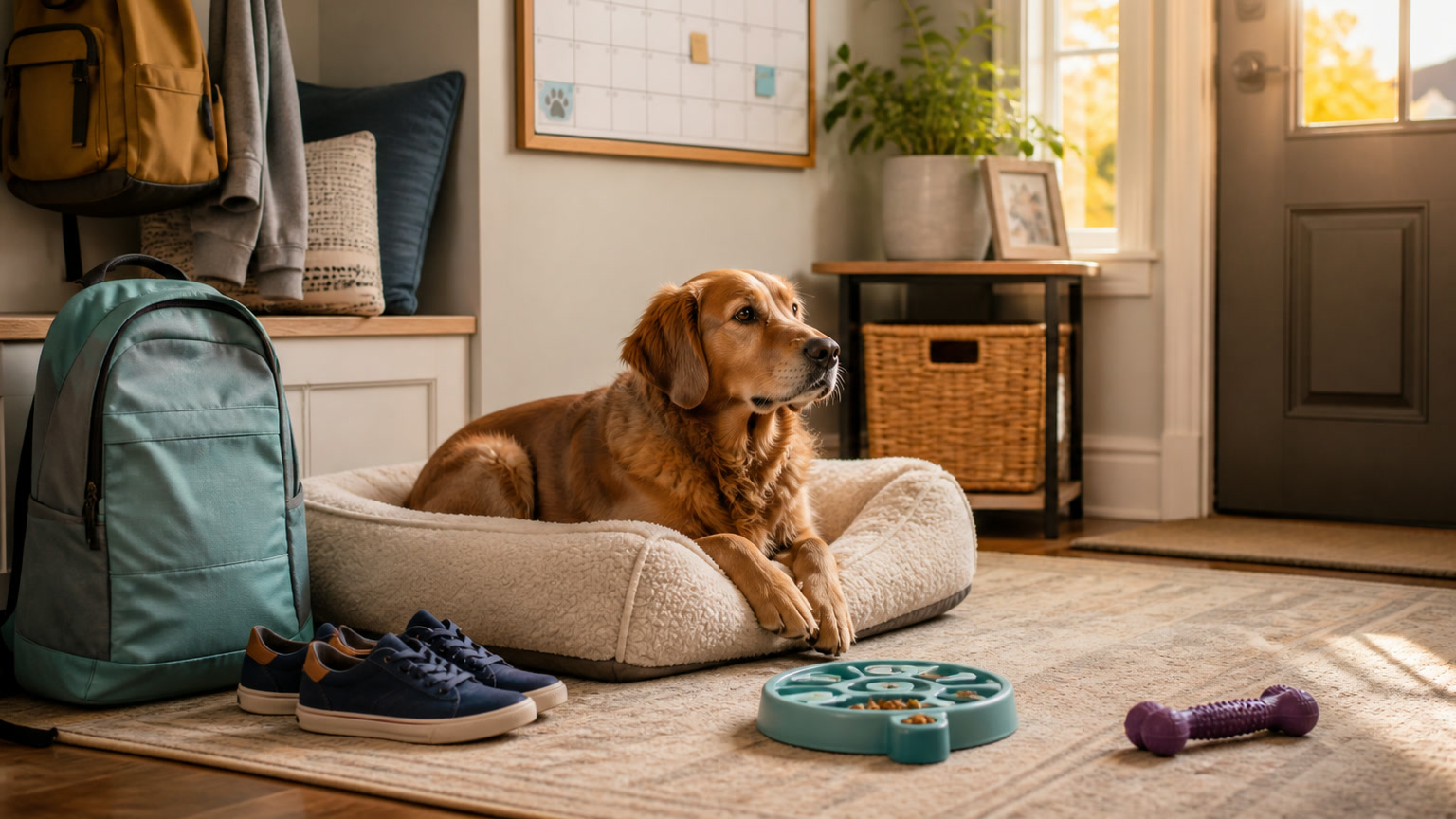
August changes the sound and rhythm of many homes around Galion. Children who were home much of the summer leave for school. Morning activity starts earlier. Adults may return to a steadier work schedule. Walks, meals, play, and quiet time can all move at once. A dog that had company for weeks may suddenly spend a longer block of the day alone.
That change does not automatically cause separation anxiety, and one chewed tissue or one bark is not a diagnosis. Dogs can vocalize, eliminate indoors, or damage something for many reasons, including incomplete house-training, boredom, outside noise, a medical problem, or fear that is not specifically related to separation. The useful first question is simpler: What does this dog actually do after the household leaves?
The Ohio State University Veterinary Medical Center describes separation-related behaviors as responses to distress associated with being home alone. Observable signs can include barking or whining, pacing, destruction, urination or defecation, drooling, panting when the dog is not hot, freezing, trembling, or refusing food. Some dogs leave obvious evidence. Others pace or pant without damaging anything, so their distress is easy to miss unless someone watches a recording.
A practical back-to-school plan therefore has two goals: make the schedule change less abrupt, and observe the dog well enough to recognize when ordinary adjustment has crossed into real distress.
Start with a camera and a baseline
Before changing everything, record one or two ordinary departures. A phone, indoor camera, or other secure video device can show what happens during the first 20 to 30 minutes and again later in the absence. Position it where the dog usually waits, rests, or approaches the exit. Video is for observation, not for repeatedly talking to the dog through a speaker.
Write down the departure time, how long the dog was alone, and what you saw. Look for patterns rather than one isolated movement. A dog may check the door, circle once, and settle. More concerning patterns include persistent pacing, escalating vocalization, repeated attempts to escape, heavy drooling, frantic scratching at doors or windows, elimination despite reliable house-training, or an inability to settle.
| What you observe | What it may tell you | Reasonable next step |
|---|---|---|
| Brief door check, then resting or quiet play | The dog may be adjusting without sustained distress | Continue gradual practice and monitor |
| Restlessness that improves during short practice absences | The change may be manageable when increases stay small | Repeat the successful duration before adding time |
| Pacing, panting when not hot, drooling, trembling, or refusing a familiar food item | These are observable stress signs, not proof of a specific diagnosis | Shorten the next absence and discuss the pattern with your veterinarian |
| Escape attempts, damaged teeth or nails, self-injury, collapse, or severe panic | The dog may be at immediate risk | Stop unsupervised practice at that level and contact a veterinarian promptly |
Do not use the recording to decide that a dog is being “spiteful.” Ohio State notes that separation-related problems are not retaliation. Treat the video as evidence that helps you and your veterinarian decide what support is appropriate.
Shift the schedule before the first school morning
If there is still time before school begins, start moving the household toward the new routine now. Meals, bathroom breaks, walks, and periods of independent rest can gradually move closer to their school-day times. The point is not to make every day rigid. It is to avoid changing five important parts of the dog's day in one morning.
Ohio State's behavioral-medicine guidance recommends practicing time alone and making schedule changes in small increments while watching for stress. Its example moves a departure time by only 5 to 15 minutes after several successful departures. That is a useful principle, but the right pace depends on the individual dog. A dog showing distress needs a smaller step, not a longer test.
| Time before the new routine | Practice goal | What success looks like |
|---|---|---|
| 7–14 days | Move breakfast, walk, and quiet periods toward the coming schedule; add very short departures | The dog can eat, explore, or settle without escalating stress |
| 3–6 days | Practice the real morning sequence: backpacks, shoes, keys, and a short exit | Departure cues become ordinary rather than a sudden event |
| First school week | Keep mornings predictable and use the longest absence the dog has already handled comfortably | Recordings show the dog settling rather than deteriorating |
| After the first week | Review video, accidents, appetite, and sleep; adjust the plan | Progress is measured by calmer behavior, not by forcing a deadline |
If the dog cannot tolerate even a short absence, do not keep extending the time to “get them used to it.” That approach can repeatedly expose the dog to panic. Call your veterinarian and ask about a structured behavior plan.
Make departures predictable, not dramatic
School mornings are busy, but a simple sequence helps. Plan enough time for a bathroom break and age-appropriate activity before everyone leaves. Refill water. Put away food, trash, cords, children's supplies, and anything the dog could swallow. Close access to unsafe rooms. Then offer the same calm cue and leave without a long emotional goodbye.
Returns can be calm, too. Give the dog a chance to go outside and settle before the household launches into loud play. Calm does not mean ignoring the dog for an arbitrary amount of time; it means avoiding an arrival that turns every departure and return into the biggest event of the day.
Keys, shoes, backpacks, and lunch packing can become powerful predictors of absence. Practice some of those cues without leaving: pick up the keys and put them down, or pack a bag and remain home. For a mildly concerned dog, repeated neutral exposure can make the cue less alarming. For a dog that already panics, departure-cue work should be part of a plan made with a veterinarian or qualified behavior professional.
Never punish damage, barking, or an accident discovered after returning home. Punishment does not explain what the dog should do instead, and it can add fear to an already difficult routine. Clean up, check the recording, reduce the next challenge, and use the evidence to improve the plan.
Use enrichment safely—and for the right job
A food puzzle, durable toy, or familiar chew can give a comfortable dog something appropriate to do during part of an absence. It is not a treatment for panic. In fact, Ohio State lists an inability to eat treats while alone as a possible stress sign. If a dog normally loves a food toy but leaves it untouched after the family departs, pay attention to that change.
Introduce every item while someone is home. Confirm that the toy is the right size, that the dog does not break off or swallow pieces, and that the food agrees with the dog's normal diet. Count calories used in enrichment as part of the daily food allowance. Follow the manufacturer's inspection and replacement directions. Dogs with a history of swallowing objects, guarding food, or destroying toys need individualized choices and supervision.
- Rotate rather than overwhelm. One familiar activity can be more useful than a floor covered with novel toys.
- Match the dog. Choose by size, chewing style, age, and physical ability—not by what looks entertaining to a person.
- Keep water available. Enrichment never replaces access to fresh water and a safe environment.
- Use it as data. Note whether the dog engages, abandons the item, or becomes more agitated.
Physical activity also needs to fit the dog. A healthy adult may benefit from a sniffing walk or play before the morning departure; puppies, seniors, short-nosed dogs, and dogs with medical limitations may need something different. During hot or humid north-central Ohio mornings, adjust the timing and intensity and ask your veterinarian what is appropriate.
Set up a safe resting area
The best location is one where the dog already relaxes. It may be a dog-proofed room, a gated section of the house, or another familiar space with water, comfortable bedding, and a safe temperature. Close blinds only if outside activity triggers barking; some dogs settle better when they can see out. Low, familiar background sound may help some households, but it should not be treated as a cure.
A crate is appropriate only for a dog that is already comfortable and relaxed in it for the planned duration. Do not suddenly crate a panicking dog to protect the house. A distressed dog can injure teeth, nails, or paws while trying to escape. If video shows frantic crate behavior, stop and consult the veterinarian who knows the dog.
Check ordinary back-to-school hazards: lunch boxes with food, sugar-free gum or candy, medications, art supplies, batteries, cords, and small toys. Keep backpacks and wastebaskets out of reach. Verify that doors and gates latch securely. Leave emergency contact information for a walker, neighbor, or family member who may enter the home.
For long school and work days, plan a realistic bathroom break and human check-in. Puppies, senior dogs, and dogs with medical needs may require more frequent care. A reliable family member, pet sitter, or dog walker can shorten the absence, but a new visitor should be introduced before the first high-pressure day.
Know when this needs professional help
Call your veterinarian when stress signs are persistent, increasing, or interfering with the dog's ability to eat, rest, or remain safe. Also call when house-soiling, vocalization, pacing, appetite changes, or destructive behavior appears suddenly. Pain, urinary or digestive disease, cognitive change, medication effects, and other conditions can resemble or worsen behavior problems. A veterinarian should evaluate the whole dog rather than assuming every symptom is separation anxiety.
Prompt help is especially important for escape attempts, damaged nails or teeth, self-injury, collapse, severe drooling, or panic that begins as soon as departure cues appear. Do not wait for the first full school week to become a repeated crisis. Ask whether the veterinarian recommends a veterinary behaviorist or another qualified professional experienced with separation-related cases.
Treatment plans can include environmental management, carefully graduated absences, behavior modification, and—in some cases—veterinary medication. Medication decisions belong to a veterinarian. Do not use human calming products, leftover prescriptions, or supplements without veterinary guidance.
The ASPCA distinguishes mild cases, which may respond to structured counterconditioning, from moderate or severe cases that require a more involved desensitization and counterconditioning program. The practical takeaway is not to diagnose the level yourself; it is to recognize that repeatedly exceeding the dog's threshold can slow progress and that severe cases deserve professional oversight.
Helpful products for a carefully planned routine
Products can support a safe setup, but they cannot diagnose or treat separation anxiety. Choose only items that fit your dog, introduce them while you are present, and inspect them regularly. Liberty Farm, Home & Garden currently lists these practical options in its online store:
- KONG Fun Pack Dog Toys — an assorted toy pack that can provide different supervised play options. Test each toy with your dog before leaving any item out during an absence.
- Nylabone Power Chew Lobster Dog Chew Toy — available in dog-size options on the product page. Select the correct size and follow all inspection, supervision, and replacement directions.
- Happy Tails Large Chenille Pet Bed (30 in × 40 in) — a familiar resting surface for a dog-proofed quiet area. Bedding is useful only if the dog does not shred or ingest fabric.
As of August 5, 2026, all three pages showed at least one in-stock option. Inventory can change, so check the live page before making a trip. If you are unsure about toy size or setup, bring your dog's approximate weight and chewing habits when you visit Liberty Farm, Home & Garden at 222 S. Liberty Street in Galion.
A repeatable school-day checklist
- Keep wake-up, meal, bathroom, and activity times reasonably predictable.
- Give the dog an appropriate bathroom break before the household leaves.
- Provide fresh water and confirm that the resting area is a safe temperature.
- Remove backpacks, food, medication, cords, trash, and small objects.
- Offer only enrichment that has already been tested under supervision.
- Use a calm, consistent departure rather than a prolonged goodbye.
- Record selected absences and review the first part of the video.
- Arrange a midday break when the dog's age, health, or the length of the day requires it.
- Do not punish evidence found after returning.
- Contact the veterinarian if stress signs persist, escalate, or create a safety risk.
A successful transition is not measured by whether the dog can endure the longest possible day. It is measured by whether the dog can remain safe and increasingly settled within a routine the household can maintain. Start before the schedule changes, make each step small enough to succeed, and let observed behavior—not the school calendar—set the pace.
Frequently Asked Questions
Keep Reading
Ohio Flea Season Peaks in June — Why Your Small Dog Needs Protection on Before It's Too Late
June marks the annual turning point when Ohio's flea and tick populations reach peak activity. Here's what's happening in your yard right now, why small dogs are especially vulnerable, and why the Adams Plus Flea & Tick Collar for Small Dogs is the simplest way to stay ahead of an infestation before it starts.
The 16-Inch Bone Built for Dogs That Destroy Everything Else: A Complete Guide to Nature's Own Giant Smoked Femur
Why large and giant breed dogs need a fundamentally different kind of chew, how free-range American beef femur bones are sourced and slow-smoked for lasting flavor, which dogs belong in the giant chewer category, and how to give any bone safely