
Planting Fall Deer Food Plots in Ohio: An August Field Plan
A practical north-central Ohio plan for choosing a site, testing soil, preparing a firm seedbed, comparing annual and perennial mixes, and avoiding the mistakes that waste seed.
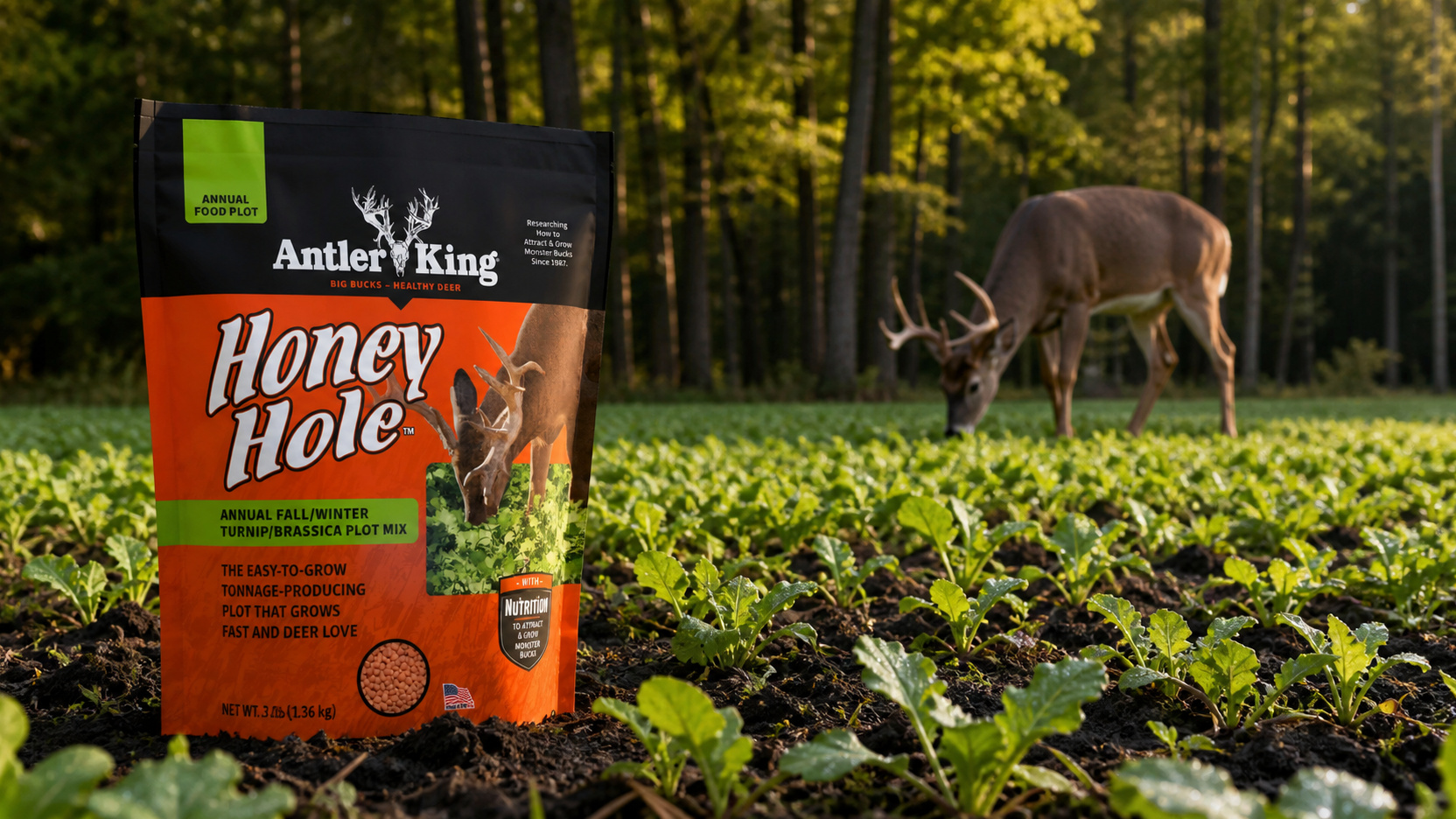
August is when a successful fall deer food plot usually begins—not with broadcasting seed, but with measuring the site, checking the soil, choosing a mix that fits the ground, and waiting for workable moisture. In north-central Ohio, those steps help prevent the familiar failures: seed buried too deeply, lime applied by guess, annual and perennial mixes treated alike, or a plot placed where it is difficult to maintain. This field plan walks Galion-area landowners from site selection through the first six weeks after planting, with current local product options and a responsible-habitat perspective.
Start With the Right Goal: Better Habitat, Not a Shortcut
A fall food plot can add useful forage and create an excellent place to observe deer, but it should be one piece of a broader habitat plan. Ohio State University Extension cautions that food plots do not replace natural foods and, by themselves, do not create trophy deer. Genetics, age structure, existing habitat, weather, and the amount of natural forage all matter. That is a healthier starting point than treating a bag of seed as a guaranteed result.
Decide what job the plot needs to do before buying seed. A small opening near cover may be intended for wildlife viewing. A larger, accessible field may be managed as a dependable fall and winter food source. A narrow woodland opening may need a shade-tolerant perennial rather than a fast annual mix. Those are different sites, so they call for different seed, preparation, and expectations.
Also look beyond the plot boundary. Deer need secure cover, water, travel routes, and a varied supply of natural browse. Retaining useful native vegetation and protecting wooded edges can matter as much as the planted area. Avoid locating a plot where it will pull deer toward a public road, a busy driveway, a fence conflict, or a neighbor's property. Confirm property boundaries and obtain permission before doing any work outside your own ground.
For Galion-area landowners, the practical goal is a plot that fits the land and can be maintained with the equipment, time, and access you actually have. A well-prepared quarter-acre plot can be more useful than a larger plot planted hurriedly into weeds and dry soil.
Use August as a Planning Window—Not a Reason to Rush
Early August in north-central Ohio is valuable because it gives you time to inspect the site, collect a soil sample, choose the right mix, control competing vegetation, and watch for a workable moisture window. It does not mean every fall seed blend should go into the ground on the same day. Annual brassica blends, mixed annual plots, and perennial clover products have different planting directions. The current package label for the exact seed you buy is the final authority for rate, depth, timing, and coverage.
Work backward from the seed instructions. If the site needs mowing, do that early enough for the residue to dry and settle. If soil amendments are recommended, determine whether you can obtain and spread them before planting. If the plot requires tillage, do not leave loose, fluffy soil that lets tiny seed disappear too deeply. If the site is steep or erosion-prone, reconsider aggressive disturbance and choose a lower-impact method.
| Stage | What to do | Decision point |
|---|---|---|
| Site check | Measure the plantable area, note shade, drainage, access, and existing vegetation. | Does the site fit an annual mix, a perennial mix, or neither? |
| Soil check | Collect representative samples and obtain pH and nutrient guidance. | Can needed amendments be applied safely and practically? |
| Preparation | Reduce competition and create the seedbed required by the label. | Is the soil firm enough for the seed size? |
| Planting | Use the labeled rate and depth; time the work around suitable soil moisture. | Is rain likely to help without washing seed away? |
| Follow-up | Photograph emergence, check bare spots, weeds, browsing, and erosion. | Does the plot need correction, or simply more time? |
A calendar can organize the work, but field conditions still decide whether planting day is sensible. Dry dust, saturated ruts, or a hard storm forecast are all reasons to pause.
Choose a Site You Can Actually Manage
Start with sunlight, drainage, access, and existing cover. Most annual food-plot plants need meaningful sunlight, while some perennial blends are marketed for partial shade. A site that stays wet after ordinary rain, holds standing water, or erodes during storms is a poor candidate unless the selected crop and management method truly fit those conditions.
Access matters twice: first for installation, and later for maintenance. Ohio State's equipment guidance notes that food plots can be established at different scales, from hand and shoulder spreaders to ATV and tractor equipment. Match the plot to the equipment instead of assuming you need a large machine. A walk-behind or handheld approach may be adequate for a small opening; a larger site can demand mowing, tillage, spreading, and packing equipment that must reach the field safely.
Walk the perimeter and look for compacted tracks, hidden stumps, rocks, wire, steep banks, and low branches before operating equipment. Keep machinery within its rated capacity. Ohio State specifically warns that slowly pulling heavy ground-working loads can overheat an ATV and strain its drivetrain. If the job exceeds your machine or experience, reduce the plot size or hire the work rather than improvising.
Plot shape should also support your goal. Ohio State recommends planning food-plot layout around deer use and surrounding habitat rather than dropping a rectangle wherever a machine happens to fit. An irregular edge can connect naturally with cover, while a long, exposed strip may make wildlife reluctant to use the center during daylight. Keep adequate visibility for safe equipment work and avoid removing valuable edge habitat simply to make the plot look tidy.
Soil-Test Before You Buy Lime or Fertilizer
A soil test is the cheapest way to replace guesswork with a workable amendment plan. Ohio State's 2025 soil-testing guidance explains that laboratory results can identify nutrient deficiencies or excesses, provide pH information, and discourage unnecessary fertilizer applications. For a new food plot, request recommendations that fit the crop or forage you intend to plant; a generic lawn recommendation is not the same thing.
Take several small cores from representative spots across the plantable area and combine them according to the laboratory's directions. Avoid unusual patches—such as an old burn pile, a manure pile, or the immediate edge of a gravel lane—unless you sample those separately. Record the date and location so next year's result can be compared with the same area.
Do not apply lime merely because woodland soil is often acidic. University of Minnesota Extension notes that former forest soils frequently have low pH, but crop tolerance and the practicality of hauling lime should affect the plan. Ohio State's equipment guide also points out that lime applications can involve tons per acre, not a few handfuls. Use the test recommendation, calculate the true plot area, and decide whether the site and access can support the material and equipment.
The same restraint applies to fertilizer. More is not automatically better. Choose nutrients from the soil-test recommendation and the seed label, calibrate the spreader, and keep granules out of streams, ditches, ponds, and storm-drain paths. If a test cannot be completed before the intended planting window, it is better to select a mix suited to the known site and postpone unsupported amendments than to guess at a heavy rate.
Prepare a Firm, Clean Seedbed and Protect Seed-to-Soil Contact
Competition and planting depth cause many preventable failures. Existing grass and broadleaf weeds can capture light, moisture, and nutrients before new seedlings establish. Begin by identifying what is already growing. Mowing may be enough for some minimum-till instructions; other sites may require more preparation. If any herbicide is used, follow its label exactly, including crop restrictions, protective equipment, weather limits, setbacks, and the required interval before planting. Never rely on a seed-bag description as pesticide guidance.
After vegetation is managed, build the seedbed specified for the mix. Ohio State describes seedbed preparation as critical and explains that conventional tillage can create clean soil and better contact for small seed. The same source recommends a firm surface—roughly one where a footprint is visible without sinking deeply. Tiny clover and brassica seed can be buried by loose soil or aggressive dragging, so “more tillage” is not automatically better.
Calibrate before crossing the plot. Measure a small test area, weigh or estimate the amount of seed assigned to it, set the spreader conservatively, and make even passes. When a blend contains seeds of different sizes, keep the mix agitated as directed so heavier seed does not settle and produce streaks. Do not exceed the labeled rate to compensate for uncertain technique; crowding can create weak stands and wastes seed.
Ohio State notes that a cultipacker can firm soil before broadcast seeding and improve contact afterward, especially with very small seed. For a tiny hand-planted plot, another method may be permitted by the product directions, but avoid burying seed beneath a thick layer of soil. Finish by photographing the plot, recording the mix and lot, noting the rate, and marking rainfall. Those simple records make troubleshooting far easier than memory.
Match the Seed Mix to the Site and the Job
Liberty Farm, Home & Garden's live webstore listed the following three food-plot mixes in stock when this draft was prepared on August 7, 2026. Inventory changes, so open the linked product page before making a special trip. Coverage figures below come from the current product records; always verify the package in hand.
| Current option | Listed role | Package coverage | Best reason to compare it |
|---|---|---|---|
| Antler King Honey Hole (3 lb) | Annual brassica blend for minimum- or no-till conditions | Up to 1/2 acre | For a fall brassica plot where the site and planting directions fit |
| Antler King Slam Dunk (3.5 lb) | Mixed annual plot with early- and cold-season species | 1/4 acre | For growers comparing a multi-species annual blend |
| Antler King Game Changer Clover (2.5 lb) | Perennial clover-and-brassica blend listed for low-till, lower-pH, or shaded sites | 1/4 acre | For a longer-lived plot where the perennial establishment plan fits |
These products are not interchangeable. Honey Hole is presented as a brassica blend; Slam Dunk combines several annual species; Game Changer is presented as a perennial clover-based option. Compare the desired life span, sun exposure, soil-test result, available equipment, labeled planting window, seeding rate, and maintenance requirements. A perennial mix can demand patient establishment and future mowing or weed control, while an annual mix creates a new planning decision next year.
Coverage is a maximum planning figure, not a reason to stretch seed over a larger area. Measure length and width, account for irregular edges, and buy for the actual plantable area. Liberty Farm, Home & Garden can help compare the current labels in Galion; if you are picking up seed, you can shop inside or use the drive-through and the team will load you.
Manage the First Six Weeks Without Chasing Every Imperfection
Planting is not the finish line. Check the plot after meaningful rain and again as seedlings emerge. Walk the edge rather than trampling the center, and photograph the same points each visit. Look for four patterns: even emergence, bare strips that suggest spreading error, washed areas that reveal erosion, and dense old vegetation that shows competition was not controlled.
Do not diagnose a failed plot after only a few dry days. Germination depends on species, soil temperature, planting depth, and moisture. Use the product's stated expectations as a guide, but judge the whole field rather than a single square foot. If seed remains on the surface in dry soil, wait for the recommended moisture window rather than immediately adding more seed. If a heavy storm moved seed downhill, document the damage and repair the erosion source before replanting.
Weed management must fit the planted species. A treatment tolerated by one crop can injure another species in a blend. Read both the seed information and any control-product label, and ask for crop-specific advice when the stand contains several species. Hand removal or spot management may be more appropriate than a blanket treatment in a small plot.
Heavy browsing can also make establishment look uneven. A trail camera placed legally and responsibly may help distinguish browsing from germination problems, but it should not replace field inspection. Keep human traffic predictable and limited. If the plot is primarily for viewing, enjoy it from a route that does not force deer across a road or through neighboring ground.
Use those visits to protect the rest of the property, too. Repair fresh ruts before they become drainage channels, remove seed bags and flagging when they are no longer needed, and clean plant debris from equipment before leaving. If wildlife use is intense, resist the urge to keep expanding until you know whether the existing plot can be maintained without erosion, repeated soil disturbance, or the loss of useful native cover.
At the end of six weeks, record what worked: planting date, preparation method, rate, rainfall pattern, emergence, weed pressure, and wildlife use. Those notes are the beginning of next year's better plan.
Keep Food Plots Responsible, Legal, and Part of a Bigger Habitat Plan
A planted food plot is vegetation rooted in the soil; placing piles of grain, minerals, or other attractants is a different activity and may be treated differently by wildlife rules or disease-management orders. Before hunting, feeding, baiting, or placing attractants, check the current Ohio Department of Natural Resources regulations for the county and season. Rules can change, and a product being sold does not prove that every use is legal in every place or at every time.
Reduce ecological problems by cleaning soil and plant debris from mowers, tillers, boots, and ATV tires before moving between properties. That simple habit helps avoid carrying weed seed or plant pathogens into a new opening. Use certified or commercially packaged seed as intended, protect streams and wet areas from sediment and nutrients, and stabilize any ruts created during installation.
Keep expectations balanced. Ohio State emphasizes that food plots should remain a small part of a wider management strategy. Natural browse, mast-producing trees, diverse field edges, secure cover, and water all contribute to wildlife habitat. A plot that requires removing good native cover, causes erosion, or concentrates animals in an unsafe location may do more harm than good.
Your final pre-plant checklist is straightforward:
- Confirm the site is on property you control and will not draw deer toward traffic or conflict.
- Measure the plantable area and match it to realistic equipment access.
- Collect a representative soil sample and use the resulting recommendations.
- Choose an annual or perennial mix for the actual sun, soil, and management plan.
- Read the current seed package for timing, rate, depth, and coverage.
- Prepare a firm seedbed, calibrate the spreader, and protect seed-to-soil contact.
- Record conditions, watch emergence, and correct causes before reseeding.
- Review current Ohio wildlife rules before any hunting, baiting, feeding, or attractant use.
If you need to compare current food-plot seed in person, visit Liberty Farm, Home & Garden in Galion. Bring the plot dimensions, a photo of the site, the soil-test result, and a list of the equipment you have; those details are more useful than simply asking for “the best seed.”
Frequently Asked Questions
Keep Reading
Keep the Feeder Up: An Ohio Guide to Fall Hummingbird Migration
Learn when to take down hummingbird feeders in Ohio, how to mix safe nectar, and how often to clean during late-summer migration near Galion.
Attract More Deer This Summer: A Complete Guide to Cotton Candy Liquid Attractant
Learn how to use Antler King Cotton Candy Liquid deer attractant this summer in Ohio to pattern bucks before fall season. Available now at Liberty Farm, Home & Garden in Galion, Ohio.