
Why Running Out of Ice Melt Is Always Your Fault — A Complete Guide to Lake Shore Professional Ice Melt (50 lb) for Driveways, Sidewalks, and Parking Areas
How a professional-grade, multi-surface ice melt formula handles Ohio's worst winter storms — and why a 50 lb bag is the only sensible way to stock your garage before the first freeze
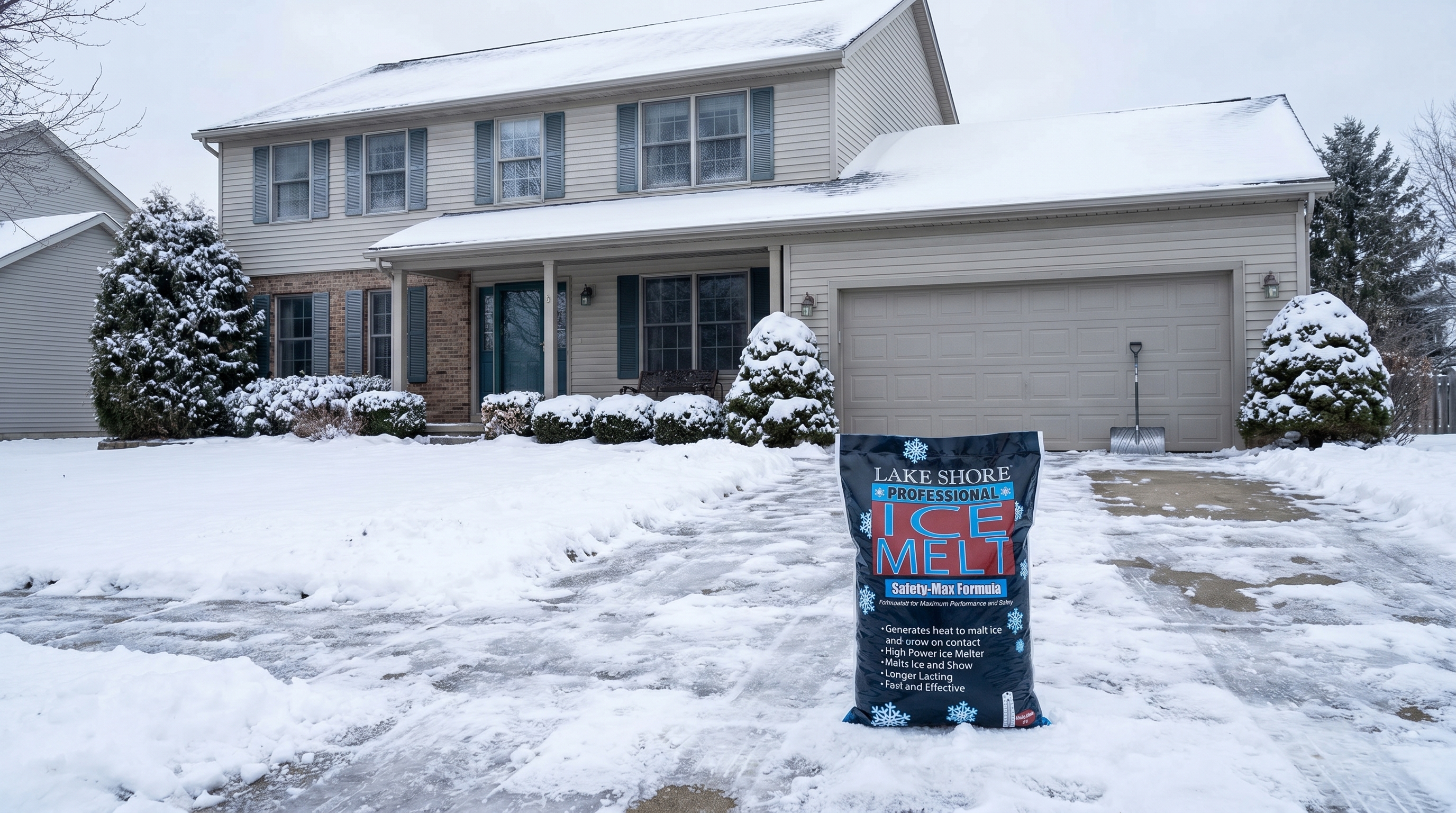
In north-central Ohio, ice storms don't announce themselves politely. A forecast that calls for light rain at 30 degrees can leave your driveway, walkway, and parking area coated in a quarter-inch of clear glaze ice by morning — the kind of ice that looks like wet pavement until someone steps on it and goes down hard. The solution is ice melt, and the right answer for anyone who owns a driveway, a sidewalk, or a parking area with more than a few square feet of pavement is a proper supply of a professional-grade product that doesn't run out before the job is done. The Lake Shore Professional Ice Melt (50 lb) is available at Liberty Farm, Home & Garden in Galion, Ohio — and the 50 lb bag format exists specifically so you have enough product on hand to handle what Ohio winters actually deliver, rather than rationing a small container and running short at the worst possible moment.
Why Ice on Ohio Driveways Is a Real Safety and Property Problem
Ohio winters are not consistently brutal in the way that Minnesota or upstate New York winters are — but they are unpredictable, and that unpredictability is what makes them dangerous. A January week might include 50-degree rain followed by an overnight drop to 20 degrees, which leaves behind a sheet of ice under any snow that follows. February ice storms are common in the central part of the state, where air masses collide and temperatures hover right around freezing for days. March can bring late-season events that catch homeowners off guard when their winter supplies have already been depleted or put away.
The safety risk is well understood — falls on icy surfaces send tens of thousands of Americans to emergency rooms every winter, and a significant portion of those falls happen on residential driveways and sidewalks. But ice also poses a property risk that's less often discussed. Water that freezes in cracks in concrete and asphalt expands, widening those cracks with each freeze-thaw cycle. Driveways and walkways that aren't maintained through winter tend to deteriorate faster, with cracking and spalling that accumulates over years of neglect. Ice melt applied to clear surfaces before a freeze — the pre-treatment approach — can prevent water from pooling in existing small cracks and going through repeated expansion cycles during a multi-day cold spell.
The third risk is legal and financial. In Ohio, property owners have a duty of care to maintain safe conditions on walkways adjacent to their property. A delivery driver, meter reader, mail carrier, or guest who falls on an icy walk may have legal recourse if reasonable precautions weren't taken. Ice melt is not just a convenience — in practical terms, it's part of responsible property maintenance through the winter months.
How Ice Melt Works: The Chemistry That Clears Your Driveway
All ice melt products work through the same basic principle: they lower the freezing point of water. Pure water freezes at 32°F (0°C). When a soluble chemical compound is dissolved into water — or when ice melt is spread on ice and begins to absorb moisture and create a brine — the resulting solution freezes at a lower temperature than pure water. This means ice and compacted snow that would otherwise remain solid at 28°F begin to liquefy when ice melt is applied, because the solution created by the product mixing with the ice has a freezing point below the current air temperature.
Different chemical compounds achieve this effect at different temperatures, with different speeds, and with different implications for surfaces and surrounding vegetation. The most common active ingredients in commercial and professional-grade ice melt products include:
- Sodium chloride (rock salt): The most widely available and lowest-cost option. Effective down to approximately 20°F but slower to melt and slower to act at lower temperatures. High chloride content makes it harder on concrete and metal over time with heavy use.
- Calcium chloride: One of the fastest-acting and lowest-temperature ice melt compounds, effective down to approximately -25°F. It generates heat when dissolving, which accelerates melting on contact. Higher performance at extreme cold, but more expensive per pound than sodium chloride.
- Magnesium chloride: Effective down to approximately 0°F, generally considered less corrosive to concrete than sodium chloride, and somewhat gentler on vegetation. Often used in blended formulas for a balance of performance and surface compatibility.
- Blended formulas: Most professional-grade products combine two or more compounds to balance cost, performance range, speed of action, and surface safety. A well-formulated blend works faster and at lower temperatures than sodium chloride alone, while reducing the per-application cost compared to pure calcium chloride.
The Lake Shore Professional Ice Melt formula is designed to work in the full range of Ohio winter temperatures while remaining safe for use on multiple pavement surfaces — including the concrete surfaces that are most commonly damaged by heavy sodium chloride use over time.
What Makes Lake Shore Professional Ice Melt the Right Choice for Ohio Properties
The Lake Shore Professional Ice Melt is formulated to perform consistently across the temperature range that Ohio winters actually deliver. Several characteristics distinguish it as the right product for residential and small commercial applications in this region.
Professional formula, consistent performance. Consumer-grade ice melt products sold in small bags through mass-market channels vary widely in formulation and quality. Professional-grade formulas are developed to predictable performance specifications — they melt reliably at the labeled temperatures, they spread consistently, and they produce a predictable result that allows you to calibrate your application rate through experience. The Lake Shore formula provides the kind of consistent performance that professionals who maintain parking lots, loading docks, and commercial walkways depend on.
Multi-surface safe. The Lake Shore Professional Ice Melt is safe for use on concrete, asphalt, and pavers — the three surfaces that make up the vast majority of residential driveways, sidewalks, and parking areas. This is an important specification for homeowners who have a mix of surface types: a concrete driveway apron at the garage, brick pavers on the front walk, and asphalt in the main driveway area. A single product that handles all three without surface damage risk simplifies the job significantly.
The 50 lb format is intentional. A typical two-car residential driveway plus front and back walkways requires more product to treat properly than a small bag provides — especially during a multi-day winter event where you need to treat, clear, and re-treat. The 50 lb bag is the standard residential supply because it covers the surface area that a real winter event demands. Running out of product during an active ice storm and having to wait until conditions improve to get more is a preventable situation — and the 50 lb format prevents it.
Available locally at Liberty Farm, Home & Garden. One of the consistent complaints about online ordering for ice melt is timing: by the time you realize you're low and place an order, the storm has already come and gone. Keeping a 50 lb bag in the garage from early fall through winter, restocked from a local source when you get low, is the practical approach. Liberty Farm, Home & Garden in Galion, Ohio keeps Lake Shore Professional Ice Melt in stock through the winter season so you can resupply without waiting.
How to Apply Lake Shore Professional Ice Melt the Right Way
Effective ice melt application is partly about the product and largely about how and when you apply it. The common mistake — waiting until an inch of snow and ice has accumulated and then spreading product on top — is the least effective approach. Correct application technique dramatically improves performance and reduces the amount of product needed.
Pre-treatment before the storm. If precipitation is forecast and temperatures are at or below freezing, apply a light, even layer of ice melt to your driveway, walkway, and steps before any snow or ice arrives. This pre-treatment layer works its way into any moisture on the pavement surface and creates a brine that prevents ice from bonding to the pavement. Snowfall that lands on a pre-treated surface is much easier to shovel and clear because it hasn't adhered to the pavement the way it adheres to untreated concrete. Pre-treatment with Lake Shore Professional Ice Melt uses less product per treatment than reactive application after ice has formed and bonded.
Spread evenly, not in piles. Ice melt works by creating a brine across the surface — product sitting in a pile in one spot creates a deep puddle where the pile is and leaves adjacent areas untreated. Use a hand-crank or walk-behind broadcast spreader for large areas, or simply spread the product by hand (wearing waterproof gloves) in a side-to-side motion as you walk the treated area. The goal is a thin, even coating, not a concentrated heap. A thin, even coating activates faster and clears the surface more uniformly.
Allow time to work before shoveling. After applying ice melt to existing ice or packed snow, give the product 10 to 20 minutes to penetrate and begin breaking the bond between ice and pavement before you start shoveling or scraping. Trying to shovel immediately after application defeats much of the benefit. After the product has had time to work, the ice lifts and clears far more easily.
Clear slush after melting. Ice melt doesn't evaporate ice — it liquefies it into a slushy brine. That slush needs to be removed, particularly in below-freezing temperatures where re-freezing can occur once the brine concentration drops. After ice has softened, use your snow shovel or snow pusher to clear the slush off the pavement surface. If left in place, brine puddles can refreeze when temperatures drop overnight, creating a clear glaze ice problem the next morning.
Don't over-apply. More product does not mean faster melting after a certain point — it means more product sitting on the surface unreacted, more chloride running off into lawn areas and storm drains, and more product wasted per application. Follow the label rate. Professional-grade formulas like Lake Shore are calibrated for effectiveness at the recommended application rate.
Multi-Surface Safety: Concrete, Asphalt, and Pavers
One of the most common questions about ice melt is whether a given product is safe for concrete — because concrete surfaces, particularly newer concrete, can be damaged by aggressive deicing chemicals. The concern is real, but it is also frequently misunderstood in ways that lead to either avoidance of ice melt altogether or overuse of sodium chloride products that pose more surface risk.
Here is what actually causes concrete damage during winter:
- Freeze-thaw cycles with water in pores. Concrete is porous, and water that enters the pores and freezes expands approximately 9 percent by volume. Over many freeze-thaw cycles, this expansion pressure causes concrete to spall — the surface layer flakes and cracks in a pattern called scaling. Any ice melt that extends the melt season (keeps the surface wet longer) or that allows water to penetrate pores before a temperature drop can contribute to this process.
- High-sodium chloride products on new concrete. Very high concentrations of sodium chloride, particularly on concrete that is less than a year old and hasn't fully cured, can accelerate surface scaling. The recommendation for newly poured concrete is to avoid deicing salts entirely for the first winter if possible, or to use very minimal amounts of lower-chloride formulas.
- Over-application of any product. Excessive application rates, beyond what the surface needs to stay clear, contribute more to the potential for surface damage and runoff damage than correct application rates do.
The Lake Shore Professional Ice Melt formula is safe for use on fully cured concrete, asphalt, and pavers at recommended application rates. Its multi-surface rating reflects formulation choices that balance melting performance with surface compatibility. On asphalt, ice melt poses minimal surface risk — asphalt is a flexible petroleum-based binder that is not subject to chloride spalling the way concrete is. On pavers — both concrete and clay-based — the same guidance as for concrete applies: apply at recommended rates and clear slush promptly to reduce prolonged surface saturation.
Complete Your Winter Safety Kit: Tools That Work Alongside Ice Melt
Ice melt is the chemical side of winter driveway and walkway management — but the physical side matters equally. A full winter safety kit combines the right ice melt with the right tools for clearing snow and ice efficiently and safely.
The True Temper Steel Snow Shovel (18 inch) is the companion tool that no ice melt supply is complete without. A steel-bladed snow shovel scrapes packed snow and slush off pavement surfaces in a way that plastic blades cannot — particularly on concrete and asphalt where the blade needs to make firm contact with the surface to lift ice and slush completely. The 18-inch blade width is a practical size for residential driveways: wide enough to clear meaningful area per pass, narrow enough to use effectively in walkways and between parked vehicles. Available at Liberty Farm, Home & Garden.
For vehicle glass, windshields, and mirrors — where ice melt products have no role — the Prestone Windshield De-Icer (17 oz) is the correct tool. Prestone's formulation melts ice on contact down to temperatures where manual scraping becomes slow and difficult. Keep a can in the vehicle and one in the garage — you will use it every significant freeze event. Available at Liberty Farm, Home & Garden.
For situations where you need faster and deeper melting performance in extreme cold — temperatures below 15°F where standard ice melt begins to slow — Peladow Calcium Chloride Pellets (50 lb) provide the highest-performance ice melt option available. Calcium chloride generates heat on contact and works at temperatures down to -25°F. Peladow pellets are the professional standard for extreme cold conditions on commercial parking areas and critical access paths. For most Ohio winters, Lake Shore Professional Ice Melt handles the full temperature range — but for ice events during a genuine Arctic cold snap, Peladow calcium chloride provides the extra performance margin. Available at Liberty Farm, Home & Garden.
For smaller areas where you need spot melting power — steps, vehicle doors, lock mechanisms — the Prestone Driveway Heat Calcium Chloride Pellets (9.5 lb) delivers calcium chloride performance in a smaller format that is easy to apply precisely where you need it, without having to open a 50 lb bag for a small spot treatment. Available at Liberty Farm, Home & Garden.
Storing Your 50 lb Bag Between Uses
Ice melt is hygroscopic — it absorbs moisture from the air. A bag of ice melt that is improperly stored can absorb enough moisture to clump heavily or even harden into a solid mass that is difficult to spread. Proper storage preserves the product and ensures it is ready to use when you need it.
Storage guidelines for Lake Shore Professional Ice Melt:
- Keep the bag sealed when not in use. After opening, fold the top of the bag closed or seal it with a large clip. Even a few hours of exposure in a humid environment can cause surface clumping. If you plan to store the bag for extended periods between uses, transfer the remaining product to a sealed bucket with a lid — a 5-gallon bucket with a snap-on lid is ideal.
- Store off the ground. Moisture wicks from concrete floors through paper bags. Place the bag on a wooden pallet, a shelf, or any elevated surface that keeps it off direct floor contact. A garage shelf or plastic pallet works well.
- Store in a garage or covered shed, not outdoors. Direct rain and humidity exposure will ruin any ice melt product. The garage or a covered outbuilding is the correct storage location — dry, covered, and accessible.
- Don't store near metal tools or vehicles for extended periods. The chloride in ice melt products is corrosive to metals over time, particularly in the presence of moisture. A closed bag in the garage is fine, but avoid storing an open or leaking bag next to metal equipment, vehicle tires, or painted surfaces.
- Clumped product is still usable. If product has clumped due to moisture absorption, break up the clumps before spreading. Clumped product applied in chunks creates uneven coverage — break it up in the bag before use or spread through a gloved hand to ensure even distribution on the pavement surface.
Building a Complete Winter Driveway and Walkway Safety Plan
The most effective winter safety setup is not a reactive one — it is a system established in October or November, fully stocked and ready before the first winter weather event arrives. Liberty Farm, Home & Garden in Galion, Ohio carries the full range of winter safety products to stock your garage for the season so that when a storm arrives at 3 AM and your driveway is sheeting over, everything you need is already in place.
A complete residential winter safety kit looks like this:
- One or two 50 lb bags of Lake Shore Professional Ice Melt for primary driveway and walkway treatment
- A steel-bladed snow shovel — the True Temper 18 inch Steel Snow Shovel for shoveling, scraping, and slush removal
- A can of Prestone Windshield De-Icer in each vehicle and one in the garage
- A smaller container of Prestone Driveway Heat Calcium Chloride Pellets for steps and spot applications
- Optional: Peladow Calcium Chloride Pellets for extreme cold weather events
With this system in place, you respond to winter events from a position of preparation rather than scrambling for whatever product is left on the shelf after the storm has already started. Stop by Liberty Farm, Home & Garden in Galion, Ohio before fall ends and get your winter safety kit complete — our team can answer questions about application rates, surface compatibility, and the right products for your specific driveway and walkway setup.
| Specification | Details |
|---|---|
| Product | Lake Shore Professional Ice Melt (50 lb) |
| Brand | Lake Shore |
| Formula Type | Professional-grade blended ice melt |
| Surface Compatibility | Concrete, asphalt, and pavers — multi-surface safe |
| Bag Size | 50 lb — standard residential winter supply |
| Application Method | Broadcast spreader or hand application; spread evenly |
| Best Practice | Pre-treat before storms; clear slush after melting |
| Storage | Sealed, off the ground, in a dry covered garage or shed |
| Available At | Liberty Farm, Home & Garden, Galion, Ohio |
Liberty Farm, Home & Garden in Galion, Ohio carries the Lake Shore Professional Ice Melt (50 lb) along with a full range of winter safety products — shovels, scrapers, windshield de-icers, and calcium chloride formulas for extreme cold conditions. Stop in before fall ends to build out your complete winter safety supply.
Frequently Asked Questions
Keep Reading

Bring Houseplants Indoors Before the Chill: An Ohio Fall Transition Guide
Learn when and how to bring houseplants indoors in Ohio, inspect for pests, acclimate light, reset watering, and avoid common fall mistakes.

When Are Apples Ready? A North-Central Ohio Harvest and Storage Guide
Know when Ohio apples are ripe, how to pick them correctly, which fruit to store, and how to keep a backyard harvest crisp longer.