
Protect Your Cat's Urinary Health This August: A Complete Guide to Urinary Support Nutrition
Hot, dry August weather quietly raises your cat's urinary risk. Here's what every cat owner in north-central Ohio needs to know — and how the right food can make a real difference.
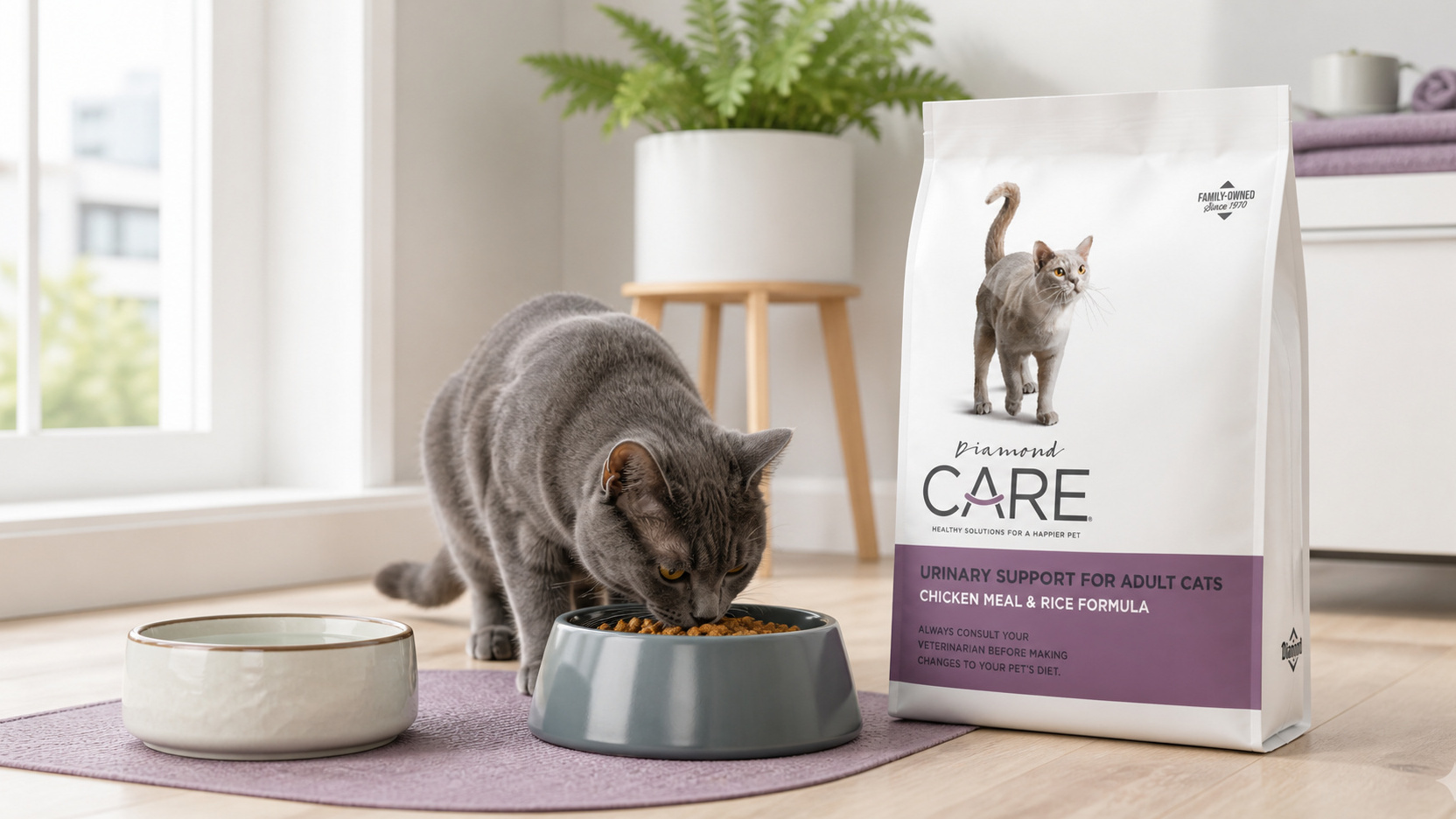
August in north-central Ohio is prime time for lawn projects, garden harvests, and backyard cookouts — but for indoor cat owners, it's also one of the riskiest months of the year for a problem that rarely announces itself until it's already a serious issue: urinary tract disease. Cats naturally drink less water than they need, and when summer heat drives up household temperatures and encourages cats to lounge in warm spots all day, their already-concentrated urine can become a perfect breeding ground for crystals, inflammation, and blockages. The right nutrition is one of the most powerful tools you have to prevent these issues before they start, and Diamond CARE Urinary Support for Adult Cats is formulated specifically with that goal in mind. This guide walks you through the science behind feline urinary health, the seasonal factors that make August a critical window to act, and exactly how to transition your cat to a urinary-supportive diet the right way.
Why August Is the Highest-Risk Month for Cat Urinary Problems
It may seem counterintuitive — urinary problems sound like a cold-weather condition, something that happens when animals are cooped up indoors during winter. But veterinary clinics across Ohio consistently see spikes in feline lower urinary tract disease (FLUTD) cases during the hottest weeks of summer, and the reasons come down to basic physiology and behavior.
When temperatures climb into the 80s and 90s — and Crawford County averages highs right around 83–86°F throughout August — cats become more sedentary than usual. They seek out warm patches of sunlight, sleep for longer stretches, and dramatically reduce their activity levels. Less movement means less thirst signaling. Cats are already notorious for drinking far less water than their bodies ideally require, and summer heat compounds the problem: they sweat minimally (only through their paw pads), rely almost entirely on panting and behavioral cooling, and the warm indoor and outdoor air reduces the instinct to drink.
The result is more concentrated urine sitting in the bladder for longer periods. Concentrated urine — particularly urine with elevated pH or high levels of certain minerals — is the environment where struvite crystals and calcium oxalate crystals form most readily. These microscopic mineral deposits irritate the bladder lining, cause painful urination, and in male cats especially, can lead to full urinary blockages that become life-threatening emergencies within 24 to 48 hours.
Indoor cats face compounded risk. They're exposed to the heat without the option to find naturally cool outdoor microenvironments (shady creek beds, cool soil under trees), and their controlled indoor environment — while comfortable — often leads to even more sedentary behavior and reduced water intake. If your cat is an adult (one year or older), lives primarily indoors, and eats dry food as their main or only meal, they are in the highest-risk category for urinary issues, and August is exactly when you want your prevention strategy fully in place.
Understanding Feline Lower Urinary Tract Disease (FLUTD)
FLUTD is not a single condition — it's an umbrella term for a group of problems affecting the bladder and urethra in cats. The most common presentations include struvite crystal formation, calcium oxalate crystal formation, feline idiopathic cystitis (bladder inflammation with no identified cause), bacterial urinary tract infections, and urethral blockages. Each of these has different root causes, but diet and hydration play a measurable role in nearly all of them.
Struvite crystals — the most common type in cats — form when urine pH rises above approximately 6.5 and when magnesium and phosphorus levels in the urine are elevated. Lowering dietary magnesium and phosphorus, and keeping urine slightly acidic (around pH 6.0–6.5), are clinically recognized strategies for reducing struvite crystal formation risk.
Calcium oxalate crystals, on the other hand, tend to form in overly acidic urine, which is why the balance matters so much. A properly formulated urinary diet doesn't simply acidify urine as aggressively as possible — it targets a specific, healthy pH range that discourages crystal formation of both types.
Beyond crystals, feline idiopathic cystitis is strongly associated with stress and environmental factors. Indoor-only cats, particularly those in multi-cat households or those experiencing routine changes (which can certainly happen during busy summer months when family schedules shift), are at elevated risk for stress-triggered episodes of bladder inflammation. Nutrition that supports overall urinary tract health is one layer of a broader prevention strategy that also includes environmental enrichment, consistent routines, and adequate hydration.
Signs to watch for include: straining in the litter box, frequent trips with little or no output, crying or vocalizing during urination, blood-tinged urine, excessive licking of the genital area, or avoiding the litter box altogether. Any of these symptoms — especially straining with no urine output in a male cat — warrants a same-day call to your veterinarian. Diet is prevention, not treatment; if symptoms are already present, professional evaluation comes first.
What Makes Diamond CARE Urinary Support Different
Not all "urinary health" cat foods are formulated the same way. Some make general marketing claims without meaningful nutritional differences from standard adult cat food. Diamond CARE Urinary Support for Adult Cats is purpose-built around the specific mineral and pH targets that matter most for urinary health, with verifiable, stated nutrient levels that you can evaluate directly.
Here's what sets this formula apart, based on its stated formulation:
- Chicken meal as the first ingredient: Protein quality and source matter. Chicken meal is a concentrated, high-quality animal protein — the moisture has been removed, so pound for pound it delivers more protein than fresh chicken listed by weight. High-quality animal protein supports lean muscle mass and overall health in adult cats.
- Controlled phosphorus — less than 1%: Phosphorus is a key mineral involved in struvite crystal formation. Keeping dietary phosphorus below 1% on a dry matter basis is a meaningful, targeted reduction designed to lower the mineral load that reaches the urinary tract.
- Controlled magnesium — less than 0.1%: Magnesium is directly implicated in struvite crystal formation. A level below 0.1% is a clinically recognized low-magnesium formulation, specifically intended to reduce urinary crystal risk.
- Formulated to reduce urine pH: By promoting a slightly acidic urine environment, this formula helps discourage the conditions under which struvite crystals form, targeting the healthy pH range that veterinary nutritionists recommend.
These are not vague wellness claims — they are specific, measurable nutritional targets built into the formula. That's the difference between a food that says "supports urinary health" and one that's actually designed from the ingredient level up to do so.
Is This Food Right for Your Cat? Scenarios Where It Fits Best
Urinary support food isn't necessarily the right choice for every cat, but it's appropriate — and often highly beneficial — for a wide range of adult cats. Use the table below to see where your cat falls.
| Cat Profile / Scenario | Urinary Support Diet a Good Fit? | Notes |
|---|---|---|
| Adult indoor cat, primarily dry food diet | Yes — high priority | Dry-food-fed indoor cats have the lowest natural water intake and highest crystal risk |
| Male cat, any age over 1 year | Yes — especially important | Male cats have a much narrower urethra and are at far greater risk of life-threatening blockages |
| Cat with a history of struvite crystals or UTIs | Yes — consult your vet first | Vet may recommend this or a prescription diet depending on crystal type and severity |
| Overweight or sedentary adult cat | Yes — good preventive choice | Reduced activity lowers water intake; mineral control adds a protective layer |
| Multi-cat household with one cat showing urinary issues | Yes — appropriate for healthy cats too | Feeding all cats the same urinary support food simplifies feeding and benefits everyone |
| Cat with a history of calcium oxalate crystals | Consult your vet first | Oxalate cases require careful pH management — your vet should guide the diet selection |
| Kitten under 1 year | No | Kittens have different nutritional requirements; this formula is for adults only |
| Product | Diamond CARE Urinary Support for Adult Cats | |
| Available At | Liberty Farm, Home & Garden — Galion, Ohio | libertyfhg.com | |
If your cat falls into one of the "consult your vet first" categories, that doesn't mean urinary support food is off the table — it just means your veterinarian should weigh in on the specific formula that best matches your cat's individual history. For the large majority of healthy adult indoor cats, particularly in the summer months, this formula is a smart preventive choice.
How to Transition Your Cat to a New Food Without Digestive Upset
Cats are famously resistant to sudden dietary changes, and switching food too quickly is one of the most reliable ways to cause vomiting, diarrhea, or outright food refusal. Even when the new food is objectively better for them, cats' digestive systems and behavioral preferences require a gradual introduction. Here's the transition schedule that works best for most adult cats:
- Days 1–3: Mix approximately 75% of the old food with 25% of the new Diamond CARE Urinary Support formula. Serve at your cat's normal meal times. Watch for any signs of digestive upset — loose stool, vomiting, or changes in litter box habits.
- Days 4–6: Move to a 50/50 mix. Most cats will be eating this blend without complaint by now. If your cat seems particularly resistant, slow the transition down — add an extra two or three days at each stage.
- Days 7–9: Shift to approximately 75% new food, 25% old food. By this point the new food's smell and texture should be familiar and accepted.
- Day 10 onward: Transition to 100% Diamond CARE Urinary Support. Your cat's digestive microbiome has had time to adjust, and the switch should be seamless.
A few additional tips to make the transition smoother:
- Measure portions: Use a standard 8-ounce dry measuring cup and follow the feeding guidelines on the bag. Overfed cats gain weight, which further elevates urinary risk.
- Don't free-feed: Scheduled meals (typically twice daily for adult cats) create more predictable patterns of eating and litter box use, making it easier to catch early warning signs of urinary problems.
- Warm the food slightly if your cat is being picky — a few seconds in the microwave (check for hot spots) releases aromas that encourage hesitant eaters.
- Keep meal times consistent: Cats are creatures of routine. Feeding at the same time each morning and evening reduces stress, which, as noted above, is itself a trigger for feline idiopathic cystitis.
Boosting Hydration Alongside the Right Diet
Controlled mineral levels in your cat's food are one critical piece of the urinary health puzzle. But no dry food — no matter how well formulated — can fully compensate for chronically low water intake. Increasing your cat's daily water consumption is the single most impactful thing you can do to dilute urine, reduce crystal concentration risk, and support overall urinary tract health year-round.
In August, when household temperatures in Galion and surrounding Crawford County communities can push into the mid-70s even inside, cats' water needs increase. Here's how to get more water into your cat on a practical, daily basis:
- Multiple water stations: Place water bowls in at least two or three locations around the home — not just next to the food bowl. Many cats drink more readily when water is located away from their feeding area.
- Ceramic or stainless steel bowls: Plastic bowls can harbor bacteria and impart an off-taste that discourages drinking. Wide, shallow bowls avoid whisker fatigue, which is a real reason some cats avoid their bowl.
- Running water: Cats are evolutionarily drawn to moving water (still water in the wild is more likely to be contaminated). A pet drinking fountain can measurably increase daily water intake for many cats.
- Wet food supplements: Even adding a small portion of wet food to one daily meal significantly increases moisture intake. Wet food is typically 70–80% water versus roughly 10% in dry kibble.
- Fresh water daily: Change water bowls every morning. Cats are sensitive to stale water, especially in warm weather when bacterial growth accelerates.
- Ice cubes in the bowl: Some cats are fascinated by ice and will drink more from a bowl that has a cube or two floating in it. It also keeps the water cooler and more appealing during hot August afternoons.
Think of hydration and mineral-controlled nutrition as two pillars working together. The food reduces the mineral load in the urine; adequate water dilutes whatever minerals are present. Together, they create a urinary environment that's far less hospitable to crystal formation than either strategy alone.
Environmental and Stress-Related Factors to Address in August
Diet and hydration are the most direct nutritional interventions for urinary health, but feline idiopathic cystitis — which accounts for a significant percentage of FLUTD cases in young to middle-aged indoor cats — is strongly linked to environmental stress. August is actually a higher-stress month for many cats than owners realize, for reasons that have nothing to do with weather.
Consider what typically changes in a household during August in Ohio:
- Kids are home all summer and may be returning to school in the second half of August, causing abrupt routine shifts
- Increased outdoor activity by family members means more door openings, outdoor sounds, and general household disruption
- Vacation travel may have disrupted the cat's routine for days or weeks, and re-adjustment stress can linger
- New pets, new family members, or changes in the household composition are more common in summer months
- Heat itself is a stressor for cats who cannot regulate their temperature efficiently
Practical steps to reduce stress-related urinary risk this time of year:
- Maintain consistent feeding, play, and sleep schedules even as the household routine shifts with the school year starting
- Provide vertical space — cat trees, shelving, or window perches — where your cat can observe the household from a safe, elevated position. Perceived control over their environment reduces stress significantly.
- Ensure adequate litter boxes: The general guideline is one box per cat plus one extra, cleaned at least once daily. In hot weather, boxes can smell more intensely, and cats may avoid dirty boxes — causing urine retention that compounds crystal risk.
- Create quiet retreat zones where your cat can escape household activity — a bedroom, a corner with a covered bed, or a quiet bathroom.
- Consider a calming pheromone diffuser if your household is unusually chaotic this time of year. These products release synthetic analogs of feline facial pheromones and have a documented calming effect on many cats.
Reading the Warning Signs: When to Call Your Vet
All the preventive nutrition and environmental management in the world doesn't make your cat immune to urinary problems, and knowing when to step away from home remedies and call a professional is critical. Urinary blockages in cats — particularly male cats — can progress from discomfort to kidney failure to death in as little as 24 to 48 hours. This is not a condition where a "wait and see" approach is safe.
Contact your veterinarian immediately if you observe any of the following:
- Your cat is squatting in the litter box repeatedly but producing little or no urine
- You see blood in the urine — pink, red, or brownish color in the litter box or on bedding
- Your cat is crying, vocalizing, or appearing to be in pain while attempting to urinate
- Your cat is licking at the genital area excessively and persistently
- Your cat is avoiding the litter box entirely and eliminating elsewhere
- Your cat seems lethargic, stops eating, or is hiding more than usual alongside any of the above
For cats with a confirmed diagnosis of urinary disease, your veterinarian may recommend a prescription urinary diet rather than or in addition to an over-the-counter urinary support food. Always follow your vet's guidance. For healthy adult cats being managed preventively, a veterinary-formulated over-the-counter urinary support food like Diamond CARE is a well-established, appropriate choice — and it's far easier (and less expensive) to prevent urinary issues through diet than to treat an emergency blockage.
If you're unsure which food is right for your specific cat, bring your questions to the team at Liberty Farm, Home & Garden in Galion, at 222 S. Liberty St. The staff can help you find the right products and talk through options for your cat's life stage and health history.
Making a Long-Term Commitment to Urinary Health
Urinary support nutrition isn't a short-term intervention — it works best as a sustained part of your cat's daily life. The mineral controls and pH management built into a urinary support formula are only effective when the food is being eaten consistently. A cat that eats urinary support food three days a week and regular adult food four days a week isn't getting the full benefit of either.
Once you've made the transition and your cat is eating Diamond CARE Urinary Support as their primary diet, build the following habits into your monthly routine:
- Weekly litter box observation: You don't need to obsess, but a weekly habit of noting your cat's litter box output — volume, frequency, color, any straining — gives you a meaningful baseline. Changes are easier to spot when you know what's normal for your cat.
- Annual veterinary checkups: For cats eating a urinary support diet, your vet may recommend a urinalysis once or twice a year to confirm that urine pH and specific gravity are staying in the healthy range. This is especially worthwhile if your cat has any history of urinary issues.
- Consistent water station maintenance: Keep up the fresh daily water changes and multiple bowl locations year-round, not just in summer. Winter heating systems dry out indoor air and can reduce cats' desire to drink just as much as summer heat does.
- Weight management: Overweight cats face elevated urinary risk, reduced activity, and a range of other health concerns. If your cat is gaining weight on their current portion size, reduce slightly and consult your vet rather than switching foods again.
- Restock before you run out: Running out of a urinary support diet and substituting regular food for a week is exactly the kind of dietary disruption that can undo weeks of good management. Keep at least a one-week buffer supply on hand.
You can pick up Diamond CARE Urinary Support for Adult Cats at Liberty Farm, Home & Garden, 222 S. Liberty St., Galion — conveniently located for cat owners throughout Crawford County and the surrounding north-central Ohio communities of Bucyrus, Crestline, Shelby, and beyond. The team there can answer questions about the product and help you find everything else your cat needs to stay healthy through the rest of summer and into fall.
Frequently Asked Questions
Keep Reading

The Small Pet Bed That Actually Washes Clean: A Complete Guide to the Vibrant Life Dog & Cat Bed (Blue & White, 19" × 15")
Why a soft plush bed with a non-slip bottom and machine-washable construction makes more practical sense for small dogs and cats than people expect — and how to pick the right size and style for your home
The Complete Chicken Cat Package: A Full Guide to the Temptations Tasty Chicken Flavor Bundle
Why matching your cat's dry food and treats to the same protein makes sense, what the bundle actually includes, and how to use treats effectively without turning mealtime into a negotiation