
Does Your Dog Have a Sensitive Stomach? How the Right Food Makes All the Difference
Identifying the signs, understanding what helps, and why the Diamond CARE Sensitive Stomach formula is worth trying before committing to a full bag
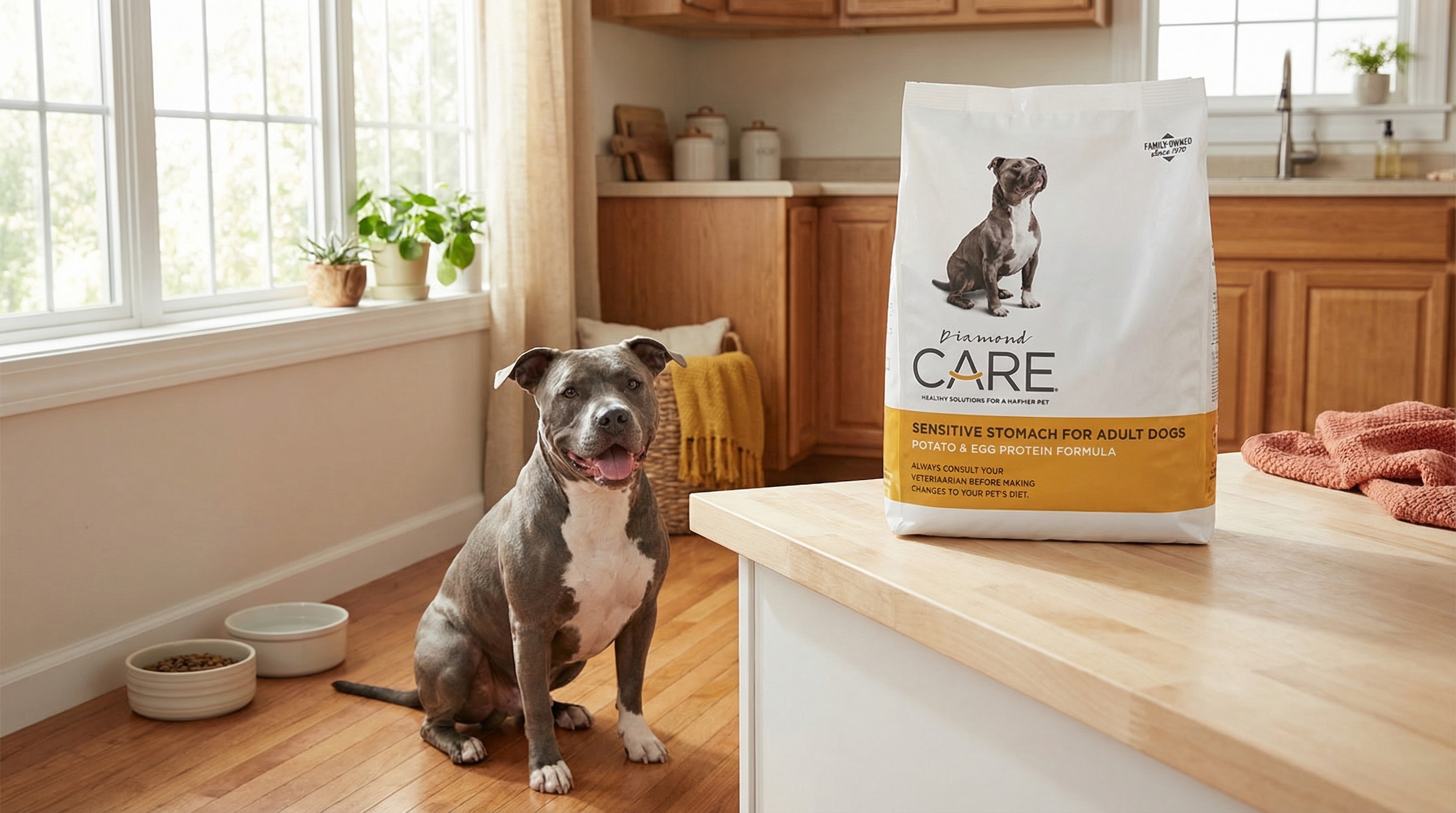
A dog with a sensitive stomach is one of the most common — and most frustrating — problems pet owners face. The signs are hard to ignore: loose stools, frequent gas, occasional vomiting, or a dog that seems uncomfortable after meals. The instinct is to assume something is seriously wrong, but in most cases, the answer is straightforward: the food doesn't agree with your dog's digestive system. Switching to a formula specifically designed for sensitive stomachs can resolve months of digestive trouble within a few weeks. Diamond CARE Sensitive Stomach Formula for Adult Dogs is built exactly for this situation — and the 8 lb trial bag lets you confirm it works before investing in the full 25 lb bag.
What "Sensitive Stomach" Actually Means in Dogs
The term gets used loosely, but it refers to a real pattern: a dog whose digestive system reacts poorly to common ingredients, transitions between foods, or ordinary dietary variation. It isn't the same as a true food allergy, which involves an immune response to a specific protein. A sensitive stomach is more of a digestive efficiency problem — the gut doesn't handle certain ingredients well, or it reacts to changes with inflammation, excess gas production, or loose stools.
Sensitive stomach dogs tend to show a predictable set of signs:
- Loose or soft stools — Not diarrhea necessarily, but never quite firm. Stools may be inconsistent from day to day.
- Excessive gas — Gas that's frequent enough to be noticed, often shortly after eating.
- Occasional vomiting — Especially after eating too fast, or when the diet changes. Not projectile or bloody, just the kind that happens occasionally and then the dog seems fine.
- Gurgling stomach sounds — Audible intestinal noise, particularly a few hours after eating.
- Grass eating — A classic sign that a dog is trying to soothe an upset stomach.
- Decreased appetite or pickiness — Some dogs with chronic digestive discomfort start showing less enthusiasm for meals.
If your dog shows any combination of these signs consistently, and has been cleared by a vet for parasites and underlying conditions, food is the most likely culprit.
Why Most Standard Dog Foods Don't Help
Standard adult maintenance formulas are designed for the average dog with a normal digestive tolerance. They often use protein sources like whole chicken or beef, grains that require thorough processing to be digestible, and fat levels that can be hard on sensitive systems. None of this is wrong for most dogs — but for a dog with a sensitive stomach, these formulas add digestive workload rather than reducing it.
The result is a dog that never feels quite right. Owners try switching brands, sometimes landing on something better but often just swapping one problem for another. What a sensitive stomach dog actually needs isn't a premium brand — it's a formula that prioritizes digestive ease from the ground up.
The Four Ingredients That Actually Help
Diamond CARE Sensitive Stomach Formula isn't complicated. Its effectiveness comes from a focused combination of ingredients that address the core problem — digestive efficiency — rather than loading up on marketing claims.
| Ingredient / Feature | What It Does | Why It Matters for Sensitive Stomachs |
|---|---|---|
| Easily digestible proteins | Less digestive work required to break down the protein | Reduces the fermentation load in the gut that causes gas and loose stools |
| Pumpkin | Soluble fiber that absorbs excess water in the intestines | Firms up loose stools naturally; well-established digestive remedy |
| Prebiotic fiber | Feeds beneficial gut bacteria | Supports a healthy microbiome, which regulates stool consistency and immune function |
| Probiotics (BC30) | Live beneficial bacteria added at coating stage for stability | Replenishes good gut bacteria; proven to reduce digestive upset frequency |
Pumpkin in particular is worth highlighting. It's been used by veterinarians as a home remedy for dog digestive issues for years — the soluble fiber in pumpkin acts like a sponge in the intestinal tract, absorbing excess water and adding bulk to loose stools. Including it directly in the formula means consistent, calibrated delivery with every meal rather than relying on owners to add it separately.
A Closer Look at Diamond CARE Sensitive Stomach Formula
The Diamond CARE Sensitive Stomach Formula for Adult Dogs (8 lb) is the trial size version of Diamond's dedicated digestive health formula. At $19.99 for 8 pounds, it's priced to let you properly evaluate the food over two to four weeks before deciding whether to buy the full 25 lb bag.
| Specification | Details |
|---|---|
| Size | 8 lb bag (trial size) |
| Life Stage | Adult dogs |
| Key Features | Pumpkin, prebiotic fiber, probiotics (BC30), easily digestible proteins |
| Intended For | Dogs with sensitive stomachs, digestive upset, loose stools, or gas |
| Price | $19.99 |
| Full-size Option | 25 lb bag (same formula, better per-pound value) |
| Brand | Diamond CARE (Diamond Pet Foods) |
Diamond CARE is Diamond Pet Foods' premium veterinary and specialty health line. The same company makes Diamond Naturals and Taste of the Wild, but the CARE line targets specific health needs — joint support, weight management, and in this case, digestive health. The formulas are manufactured in Diamond-owned facilities in the United States, and the company's quality control protocols include frequent ingredient and finished product testing.
How to Transition Your Dog to a New Food
The biggest mistake owners make when switching to a sensitive stomach formula is switching too fast. Even a beneficial food can cause temporary digestive upset if introduced abruptly — and then owners mistakenly blame the new food rather than the transition speed.
The right approach is a gradual transition over seven to ten days:
- Days 1-3: 75% old food, 25% Diamond CARE Sensitive Stomach
- Days 4-6: 50% old food, 50% Diamond CARE Sensitive Stomach
- Days 7-9: 25% old food, 75% Diamond CARE Sensitive Stomach
- Day 10 onward: 100% Diamond CARE Sensitive Stomach
During the transition, expect some mild variation in stool consistency. This is normal as gut bacteria adjust to the new fiber and protein profile. What you're watching for after the full transition is complete: firmer, more consistent stools and noticeably less gas within two to four weeks.
What to Expect in the First 2-4 Weeks
The timeline for improvement varies by dog, but most owners see meaningful changes within two to four weeks on a proper transition. Here's a realistic progression:
- Week 1 (transition): Mild variability in stool quality as the gut adjusts. Don't judge the food yet.
- Week 2: Gut bacteria begin shifting toward a healthier profile with the prebiotics and probiotics. Some dogs show improvement by the end of week two.
- Weeks 3-4: Most dogs show the full effect by now. Stools should be firmer and more consistent. Gas frequency should be noticeably reduced. Energy levels often improve as the dog is extracting more nutrition from the food and experiencing less intestinal discomfort.
If there's no meaningful improvement after four weeks of full feeding on the new formula, the underlying issue may not be simple dietary sensitivity — at that point, return to the vet for further evaluation.
Signs It Might Not Be the Food
A sensitive stomach diet works for dietary sensitivity, not for every cause of digestive symptoms. If your dog shows any of these signs, see a vet before or alongside a food change:
- Blood in the stool or vomit
- Significant weight loss alongside the digestive issues
- Symptoms that came on suddenly after being fine for years
- Diarrhea that persists despite dietary changes
- Lethargy, fever, or other systemic signs
Parasites in particular are common in Ohio dogs that spend time outdoors and can cause persistent digestive upset that mimics dietary sensitivity. A simple fecal test from your vet rules this out quickly.
Other Dog Food Options at Liberty Farm
If your dog's needs go beyond digestive support, here are a few other options available at Liberty Farm, Home & Garden:
- Purina Puppy Chow Tender & Crunchy (30 lb) — $34.99 — A widely available, trusted formula for growing puppies from the Purina line.
- Fromm Classic Puppy (30 lb) — $49.99 — Family-owned Wisconsin brand with decades of quality reputation. Good choice for puppy owners wanting a step up in ingredient quality.
- Fromm Classic Adult (15 lb) — $23.99 — A balanced, grain-inclusive adult formula from a brand that focuses on quality over marketing.
- Diamond Naturals Canned Beef Dinner (13.2 oz) — $2.89 — For dogs that benefit from added moisture in their diet; pairs well with dry sensitive stomach kibble for picky eaters.
Frequently Asked Questions
Keep Reading

Back-to-School Routine Changes: Helping Dogs Adjust to More Time Alone
Prepare your dog for back-to-school schedule changes with gradual departures, safe enrichment, camera checks, and veterinarian-backed warning signs.

Ohio Flea Season Peaks in June — Why Your Small Dog Needs Protection on Before It's Too Late
June marks the annual turning point when Ohio's flea and tick populations reach peak activity. Here's what's happening in your yard right now, why small dogs are especially vulnerable, and why the Adams Plus Flea & Tick Collar for Small Dogs is the simplest way to stay ahead of an infestation before it starts.