
Feeding Dogs That Actually Work: A Complete Guide to Country Value High Energy 26/18 Adult Dog Food
How to tell when your dog genuinely needs a high-energy formula — and why 26% protein and 18% fat changes everything for working, hunting, and highly active dogs
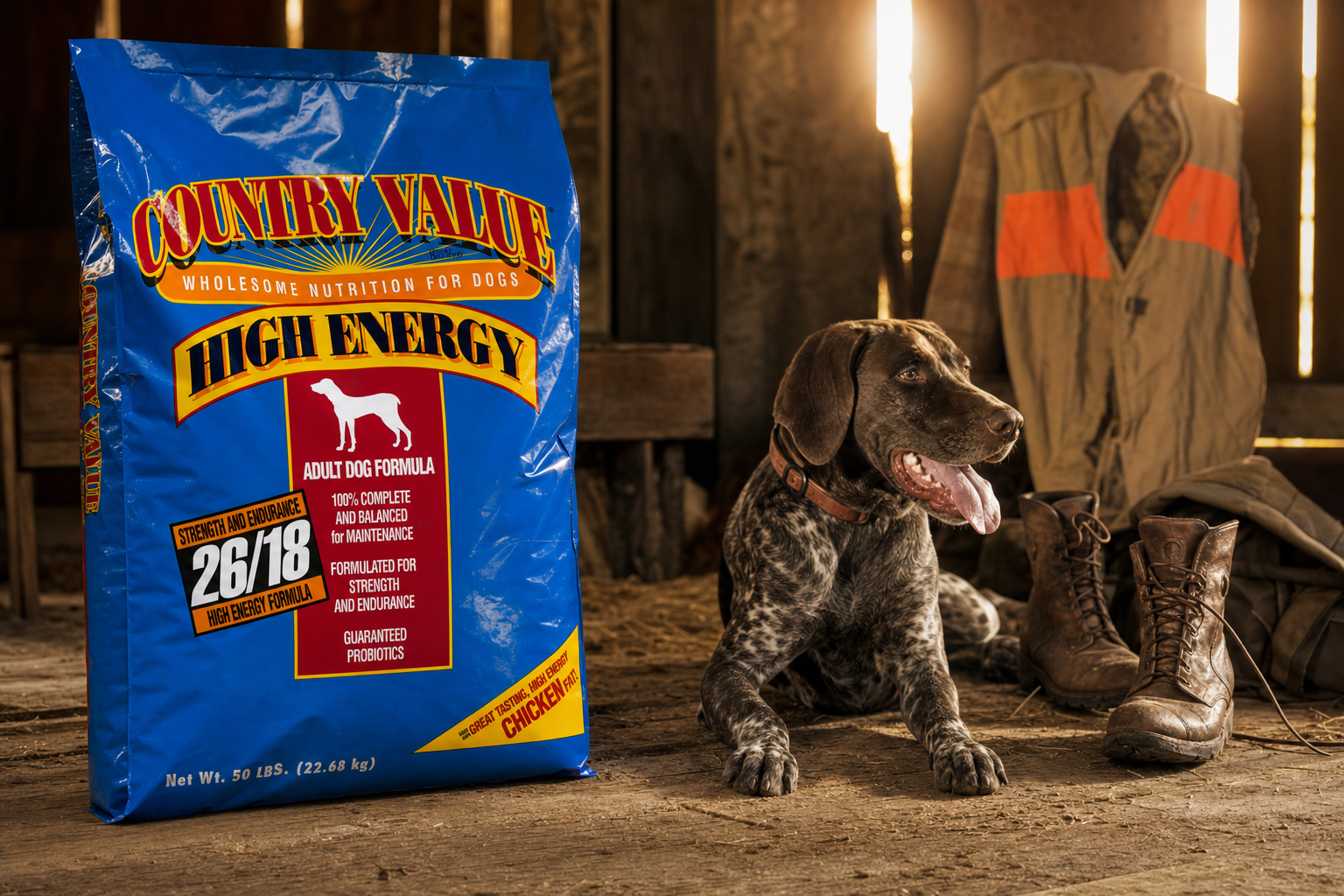
Most dog food is engineered for the average dog: a companion animal that spends the bulk of its day on the couch, takes a couple walks, and burns a relatively predictable number of calories. That food works fine for that dog. But if yours is running fencerows, working cattle, flushing pheasants twelve hours straight, or doing anything else that actually qualifies as real physical labor, standard kibble creates a problem. You either feed too much of it to keep the weight on, or the dog slowly loses condition over the course of a season. Country Value High Energy 26/18 Adult Dog Food (50 lb) was built specifically for dogs that earn their calories — available at Liberty Farm, Home & Garden in Galion, Ohio.
What Do the Numbers 26/18 Actually Mean?
The 26/18 designation on a dog food bag refers to the minimum guaranteed analysis figures for crude protein and crude fat. In Country Value High Energy's case: 26% minimum crude protein and 18% minimum crude fat. To understand why those numbers matter, it helps to compare them to a standard maintenance formula.
A typical adult dog food — the kind designed for a moderately active companion animal — usually falls in the range of 21–24% protein and 10–14% fat. Country Value already makes a 21/10 formula designed for that use case. The High Energy 26/18 is a different product with a different purpose: it's the version for dogs that actually need more.
| Nutrient | Standard Maintenance (21/10) | High Energy (26/18) | Why It Matters |
|---|---|---|---|
| Crude Protein | ~21% minimum | 26% minimum | Muscle repair and maintenance during sustained physical activity |
| Crude Fat | ~10% minimum | 18% minimum | Fat is the primary fuel source for endurance work; nearly double the calorie density |
| Calorie Density | Lower | Higher | More energy per cup means appropriate amounts feed a working dog without overloading the stomach |
| Primary Use Case | Companion dogs with moderate activity | Working, hunting, and highly active dogs | Wrong formula in either direction causes problems |
The fat percentage is where the real performance difference lives. Fat delivers approximately 8.5 calories per gram compared to protein's 3.5 calories per gram. A formula with 18% fat versus 10% fat isn't just slightly richer — it's a fundamentally higher-calorie product per pound of food. That's what lets you feed a working dog a normal volume of food and still meet their energy requirements, rather than shoveling in cups of standard kibble to hit the same calorie target.
How Dogs Use Fat as Fuel During Work
The biology of how working dogs process energy is worth understanding, because it directly explains why high-fat food outperforms high-carbohydrate food for sustained activity.
Dogs are metabolically different from humans in how they fuel sustained physical effort. While human endurance athletes primarily burn carbohydrates (glycogen) stored in muscles, dogs that work at moderate intensity over long periods rely heavily on fat oxidation as their primary fuel pathway. A hunting dog working a field for six hours straight is predominantly running on fat, not carbohydrates.
This has several practical implications:
- Fat-adapted dogs have better endurance — dogs consistently fed a high-fat diet develop improved capacity to mobilize and oxidize fat efficiently. This is sometimes called fat adaptation, and it takes several weeks of consistent high-fat feeding to develop. Switching a hunting dog from standard food to high-energy food the week before season starts is too late.
- Protein fuels muscle repair, not primary energy — the protein in a working dog food isn't primarily being burned for fuel during the work itself. It's being used to repair and rebuild muscle fiber that breaks down during sustained activity. A dog that hunts hard and eats insufficient protein will slowly lose muscle mass over a season, even if their weight stays roughly stable.
- Carbohydrate provides quick-burst energy — the starch component of the food still plays a role, particularly for high-intensity burst activities. A dog doing sprint-intensive work (like a dog agility competitor) may have slightly different needs than a dog doing six-hour sustained field work. But for most working and hunting dog applications, fat density is the more important variable.
Which Dogs Actually Need a 26/18 Formula?
This is the most important question to answer honestly, because feeding a dog more energy than it needs creates its own problems. A sedentary dog on a high-fat food gains weight quickly. The 26/18 formula is appropriate for dogs that meet the following criteria:
- Working dogs with a real job — livestock herding dogs (Australian Shepherds, Border Collies, Cattle Dogs) that spend hours a day actively working. Not dogs that could work but mostly sleep.
- Hunting dogs in active season — pointing breeds, flushing breeds, and retrievers running hard four or more days per week during season. This includes dogs doing duck hunting in cold water, which has high metabolic demands from thermoregulation alone.
- Sled and endurance dogs — though most serious mushing operations use even higher-fat diets, 26/18 is well into appropriate territory for recreational mushing and skijoring dogs.
- Dogs that consistently lose weight on maintenance food — some individual dogs simply have faster metabolisms or higher-than-average activity levels that standard food can't keep up with. If your dog maintains a healthy condition on standard food, they don't need the high-energy version.
- Farm dogs with real acreage to cover — a farm dog that's actually covering ground, alerting on predators, and staying active all day may need more than a standard adult formula delivers, particularly in winter when thermoregulation adds to the calorie demand.
Equally important: the following dogs are not good candidates for a high-energy formula:
- Companion dogs with normal activity levels, even if they go on daily walks
- Hunting dogs in the off-season who are largely sedentary
- Overweight dogs of any activity level
- Puppies under one year (puppy-specific nutrition requirements differ significantly)
Country Value's Approach: Affordable Without Cutting the Important Corners
The Country Value line is built around delivering functional nutrition at a price that makes sense for working dog owners who may be feeding multiple dogs or going through significant quantities of food each month. The 26/18 High Energy formula continues that philosophy into the performance segment.
What this means practically: Country Value focuses budget on the nutritional specs that matter for working dog performance — protein and fat percentages — rather than on marketing-oriented ingredients or boutique positioning. You're not paying for exotic proteins or premium packaging. You're paying for a formula that delivers the right macronutrient ratios for dogs that burn a lot of calories.
The 50 lb bag is the right size for this use case. Working and hunting dog owners typically go through food faster than companion dog owners, and buying in the largest available bag reduces cost per pound while ensuring the dog is never running short mid-week. At Liberty Farm, Home & Garden in Galion, the 50 lb bag is stocked specifically because that's what working dog owners need.
Feeding Guidelines for Working Dogs
Working dog feeding is more variable than maintenance dog feeding because energy expenditure fluctuates significantly between heavy work days and rest days. Here's how to think about it:
| Dog Weight | Maintenance Days (rest) | Light Work Days | Heavy Work Days |
|---|---|---|---|
| 40–50 lb | ~1.5–2 cups | ~2–2.5 cups | ~2.5–3 cups |
| 55–70 lb | ~2–2.5 cups | ~2.5–3 cups | ~3–3.5 cups |
| 75–90 lb | ~2.5–3 cups | ~3–3.5 cups | ~3.5–4.5 cups |
| Over 90 lb | ~3–3.5 cups | ~3.5–4 cups | ~4.5–5.5 cups |
These are general guidelines — always confirm with the specific feeding chart on the bag and adjust based on your dog's actual body condition. The goal is to maintain a lean, healthy working weight: ribs easily palpable with slight coverage, waist visible from above, tucked abdomen when viewed from the side.
One important rule for hunting and field dogs: do not feed a full meal immediately before heavy exercise. Feed the main meal in the evening after the work is done, and offer a light meal or nothing the morning of a hard hunting day. Exercising on a full stomach increases bloat risk in large-breed dogs and reduces athletic performance. A small high-fat snack (like a tablespoon of canned food) in the morning is fine for palatability, but the main nutritional load should follow the work, not precede it.
Transitioning to High Energy 26/18
Even when switching between two formulas from the same brand, a gradual transition prevents digestive disruption. The higher fat content in 26/18 is the main adjustment the digestive system needs to make — jumping from 10% fat to 18% fat too quickly commonly causes loose stools and GI discomfort.
Follow a 10-day transition:
- Days 1–3: 75% current food, 25% Country Value High Energy 26/18
- Days 4–6: 50% current food, 50% Country Value High Energy 26/18
- Days 7–9: 25% current food, 75% Country Value High Energy 26/18
- Day 10 and beyond: 100% Country Value High Energy 26/18
If the dog shows persistent loose stools or digestive upset during transition, slow down the ratio change and give the gut more time at each stage. Some dogs with sensitive stomachs need a 14-day transition even between similar foods.
Other Dog Food Options at Liberty Farm, Home & Garden
Not every dog in a household is a working dog. If you're feeding multiple dogs with different activity levels, or transitioning a working dog back to maintenance, here are other options we carry at Liberty Farm, Home & Garden:
- Fromm Classic Adult (15 lb) — A Wisconsin-made, multi-protein grain-inclusive adult formula from a family-owned company. Good choice for companion animals and working dogs in their off-season who do well on a quality maintenance formula.
- Fromm Classic Puppy (30 lb) — For working dog households raising the next generation. Purpose-built puppy nutrition for growing dogs from a trusted brand. If you're running working dogs, you're likely also raising pups at some point.
- Purina Puppy Chow Tender & Crunchy (30 lb) — A widely trusted puppy food for young dogs not yet ready for the demands of adult working formulas. Good for the early months before transition to an adult or performance food.
- Diamond Naturals Canned Beef Dinner (13.2 oz) — A useful topper for adding palatability and moisture to dry kibble. Some working dog owners use a small amount of canned food as a morning pre-work snack rather than a full meal, providing palatability without overloading the stomach before exercise.
Stop in and talk to us at Liberty Farm, Home & Garden in Galion. We're happy to help you sort out which formula makes sense for each dog in your setup — whether that's one working dog, a kennel of hunting dogs, or a mixed household with different needs across different animals.
Frequently Asked Questions
Keep Reading

Back-to-School Routine Changes: Helping Dogs Adjust to More Time Alone
Prepare your dog for back-to-school schedule changes with gradual departures, safe enrichment, camera checks, and veterinarian-backed warning signs.

Ohio Flea Season Peaks in June — Why Your Small Dog Needs Protection on Before It's Too Late
June marks the annual turning point when Ohio's flea and tick populations reach peak activity. Here's what's happening in your yard right now, why small dogs are especially vulnerable, and why the Adams Plus Flea & Tick Collar for Small Dogs is the simplest way to stay ahead of an infestation before it starts.