
How to Protect Young Trees From Rabbits and Voles This Winter
A wire-mesh guard can protect a young tree from both rabbits and voles, but it needs to stop them in different places. Close off the bottom so voles can’t tunnel under it, and leave enough height above the snow to keep rabbits from reaching the bark. Here’s how to set one up in a Galion-area yard or backyard orchard.
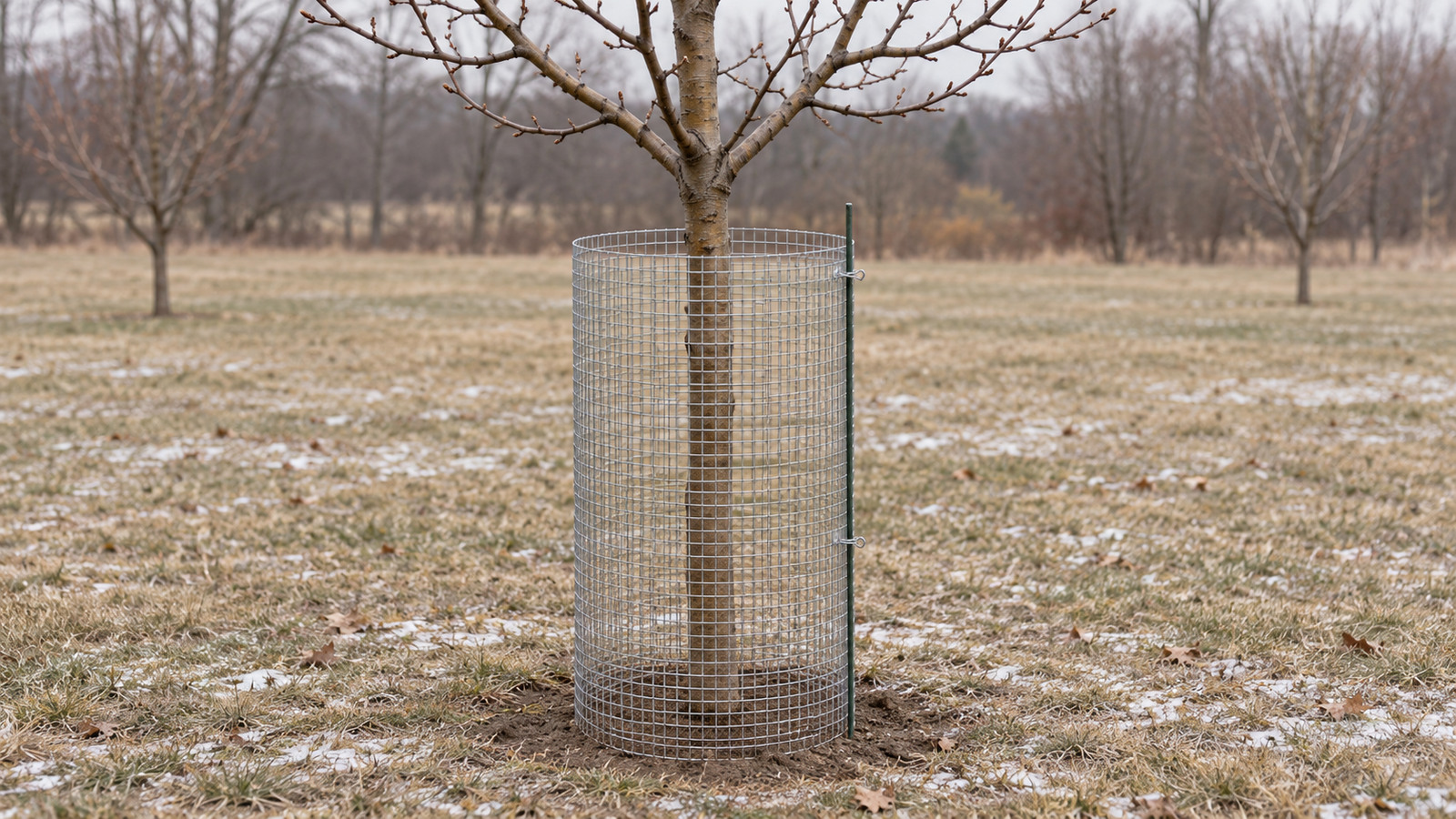
If you planted a young apple, pear or crabapple around Galion this year, take a look at the base of the trunk before snow settles in. When other food is scarce, rabbits and voles can chew the thin bark. If they strip a complete ring around the trunk, an injury called girdling, the tree may not make it through the following growing season. Start with your newest trees and any that were chewed last winter. Iowa State University Extension
Look at Where the Chewing Happened
Rabbits can leave twigs clipped at a neat angle. They also chew bark and can reach higher than you’d expect by standing on packed snow. Voles are more likely to leave irregular gnaw marks near the base of the trunk, often hidden under snow or mulch. Narrow, winding trails in the grass after a thaw are another clue. These signs aren’t proof by themselves, but they tell you where to look and why a good guard needs protection at both ends. Penn State Extension’s vole guide
How to Put Up a Wire-Mesh Tree Guard
Use ¼-inch hardware cloth, a stiff wire mesh with small square openings. Ordinary chicken wire can help stop rabbits, but choose the finer mesh if you’re guarding against voles too.
- Leave room around the trunk. Make a freestanding cylinder with about 6 inches of space between the bark and the mesh. Fasten the seam to itself, not to the tree.
- Close off the bottom. Set the mesh edge 2 to 3 inches into the soil to discourage voles from tunneling underneath. Secure the guard so it stays upright and check for gaps at ground level.
- Measure from the snow, not just the ground. Aim to have 18 to 24 inches of mesh above the snow depth you expect around that tree. Go taller where snow drifts or gets piled up along a driveway. Check that young branches don’t hang over within easy reach. University of Minnesota Extension’s winter tree guide
Check the Guard After Snow, Then Again in Spring
Pull mulch back about 6 inches from the trunk and trim tall grass right around the tree. You don’t have to strip the whole yard. The idea is to remove cover where voles could approach the bark. After a heavy snowfall, look for drifts that have turned the guard into a short step. In spring, remove or widen a seasonal guard before it can rub or restrict a growing trunk.
If you find chewed bark, check whether healthy bark still connects the trunk above and below the injury. A patch of damage isn’t the same as a full ring. Don’t seal it with pruning paint or wound dressing. If most or all of the bark is gone around the trunk, ask a certified arborist to assess the tree. Iowa State University Extension
Before you shop, measure the trunk clearance and the height you need above the snow. You can compare your measurements with Liberty’s ¼-inch galvanized hardware cloth. The linked roll is 24 inches tall, so choose taller material if burying the bottom and allowing for snow would leave the guard too short.
Keep Reading

Can Garden Sprays Stay in an Unheated Shed All Winter?
Can garden sprays stay in an unheated shed? Check product labels, freezing limits, secure storage and disposal before winter in Galion, Ohio.

Green Tomatoes at Season’s End: Which Ones Can Ripen Indoors?
Learn which green tomatoes can ripen indoors, when to harvest before frost, and how to store them. A fall gardening guide for Galion, Ohio.