
Spring Color Starts Now: An Ohio Guide to Planning and Planting Fall Bulbs
Plan spring color before autumn gets busy: choose healthy bulbs, match them to the right site, plant at the right depth, and protect your investment through an Ohio winter.
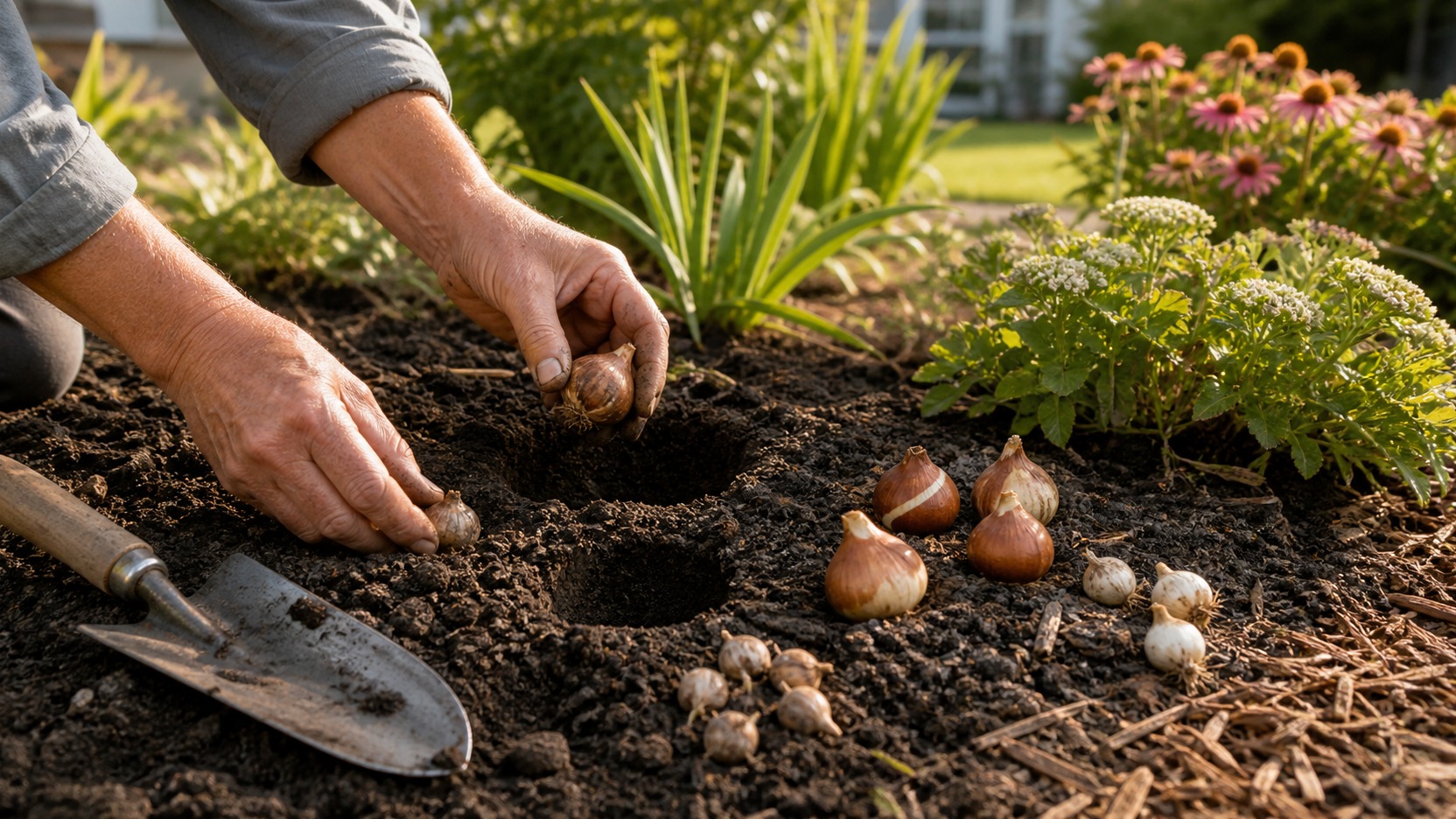
Late August does not look much like spring in Galion. Coneflowers are fading, tomatoes are still coming in, and the first hard freeze feels comfortably far away. Yet this is exactly when a good spring display begins—not with a bloom, but with a plan. Spring-flowering bulbs spend autumn making roots, rest through winter, and then use their stored energy to push leaves and flowers as the soil warms.
The useful distinction is between planning now and planting at the right time. Shop early enough to get sound bulbs and the colors you want, but do not rush every bulb into hot, wet late-summer soil. Ohio State guidance points to October as the main planting period for spring bulbs, especially daffodils, because they need time to root before the ground freezes. In north-central Ohio, the calendar is only a guide: soil condition, drainage, and the bulb label matter more than any single weekend.
This guide walks through the whole job—from reading your yard in August to arranging bloom times, preparing clay soil, planting at useful depths, managing animal pressure, and caring for the bed after spring flowers fade. The goal is not a perfect formal display. It is a planting that fits your property, survives an Ohio winter, and gives you something worth waiting for.
Why Late August Is the Right Time to Make the Plan
Planning while the garden is still fully leafed out gives you information that will be harder to see later. You can spot where water stands after a storm, which beds are shaded by buildings, where mature perennials will hide fading bulb foliage, and where spring color would actually be visible from a window, sidewalk, or driveway. Take a few photos now. Mark bare-looking spring spaces, but also note which summer plants will eventually occupy them.
Buying early can improve selection, but a bulb is a living storage organ, not a shelf-stable decoration. Choose bulbs that feel firm and heavy for their size. Reject soft, moldy, badly cut, or shriveled bulbs. A loose papery outer skin on a tulip or daffodil is not automatically a problem, but the underlying bulb should be sound. Keep unplanted bulbs cool, dry, dark, and ventilated. Do not seal them in plastic, leave them in a hot vehicle, or store them beside ripening fruit; ethylene from fruit can damage developing flowers in some bulbs.
Use the waiting period to build a simple planting map. Measure the bed, decide where the display should be tallest, and estimate quantities by the spacing on each label. Small scattered purchases often disappear visually. Repeating groups of the same kind usually reads more clearly than placing one bulb of every color at even intervals. If you want a natural look, toss a handful gently over the intended area and plant where they land, while still keeping the required spacing.
At Liberty Farm, Home & Garden, we can help you think through the practical side of the project—bed size, hand tools, soil preparation, and how you will move material—without turning the article into a shopping list. The key first step is still the same: read the site before you buy for it.
Match the Bulb to the Site, Not Just the Photograph
A package photo shows the flower at its best; your yard decides whether the plant can get there. Most familiar spring bulbs perform best in well-drained soil with substantial sun during their active season. A bed beneath a deciduous tree can work because early bulbs may receive plenty of light before the canopy fills in. Dense evergreen shade is different: it stays shaded when the bulbs need light and may also be dry from root competition.
Drainage is the first hard requirement. Bulbs are prone to rot in persistently wet ground. After a soaking rain, inspect the site. If water sits there long after nearby soil has drained, choose another location or correct the grade and soil structure rather than treating the bulb as a test of luck. Heavy north-central Ohio clay can be workable, but simply pouring loose amendment into a narrow, deep hole may create a pocket that holds water. Improve a broader bed and avoid compacting the bottom into a bowl.
Also consider what happens after bloom. Spring bulb leaves need to remain until they yellow and wither naturally because green foliage is rebuilding reserves for the next year. Place bulbs among perennials that emerge later, behind a low border, or in a bed where softening foliage will not tempt you to mow too soon. In a lawn, use only bulbs suited to naturalizing and delay mowing until their leaves have finished.
Warm south-facing foundations can encourage earlier emergence than open beds. That may sound appealing, but early shoots and flowers can face more freeze exposure. A sheltered microclimate can be useful; a heat-reflecting wall that pulls growth forward is not automatically the safest location. Think in terms of drainage, spring light, and the full life cycle—not just the week of bloom.
Build a Bloom Sequence Instead of a One-Week Show
The easiest way to make a bulb planting feel generous is to spread the bloom across early, middle, and late spring. Exact dates move with weather and the selected cultivar, so rely on the season printed on the label rather than promising a particular week. Small bulbs often open first; many daffodils, hyacinths, and tulips carry the display through mid-spring; later tulips and ornamental alliums can extend it toward early summer.
The table below is a planning guide, not a substitute for the planting directions on a specific cultivar.
| Bulb group | Typical role | General planting depth | Useful placement |
|---|---|---|---|
| Crocus and other small bulbs | Very early color | About 3–4 inches | Front edges, drifts, or suitable lawn areas |
| Daffodils | Early to mid-spring backbone | Often about 6–8 inches | Groups in beds, beneath deciduous shrubs, naturalized areas |
| Hyacinths | Compact mid-spring color and fragrance | Often about 6–7 inches | Near walks or entries with good drainage |
| Tulips | Strong mid- to late-spring color | Often about 4–8 inches | Masses or repeated groups in sunny beds |
| Ornamental alliums | Late-spring height and structure | Varies widely by bulb size | Among perennials or toward the middle/back of a border |
Depths vary with bulb size, species, soil, and supplier instructions. A common extension rule is to place spring bulbs about two to three times as deep as the bulb is tall, measured from the bulb's base, but Ohio State material gives a somewhat deeper rule of thumb for some bulbs. When the package supplies a depth, follow it. The variation is one reason to sort bulbs before planting instead of opening every bag at once.
Limit the palette enough that the display holds together. Two or three repeated colors can be more effective than ten isolated ones. To make a small bed feel larger, repeat one bulb group in several pockets. To make a long border feel intentional, carry one color through it while changing the height or bloom season.
Prepare the Bed Before You Open the Bags
Good preparation makes planting faster and protects the bulbs from the two common structural problems: compacted soil and poor drainage. Clear perennial weeds first. Loosen the intended bed to the working depth and break large clods without pulverizing wet clay. Soil that smears on a shovel or forms a shiny ribbon when squeezed is too wet to work; wait until it crumbles more readily.
For a new or uncertain bed, a soil test is more useful than guessing with fertilizer. Bulbs do not need a rich pocket of fresh manure, and excessive fertility—especially nitrogen—can encourage soft growth or contribute to poor performance. If a soil test calls for correction, incorporate the recommended material through the bed rather than dropping concentrated fertilizer directly against bulbs. University recommendations differ in their example fertilizer programs, which is another reason to use current label directions and a soil test instead of copying a universal recipe.
Organic matter can help heavy soil when it is incorporated through a broad area. The objective is a root zone that drains yet holds useful moisture, not a fluffy planting hole surrounded by dense clay. If the site stays wet because of grade, runoff, or a high water table, compost alone will not solve it. Move the planting or build a genuinely raised, well-drained bed.
Lay bulbs out on the prepared surface before digging. This is the moment to adjust spacing, rhythm, and sightlines. Put taller alliums and tall tulips where they will not hide low crocus. Leave access for spring cleanup. If you are mixing bulbs with established perennials, work carefully around crowns and major roots. A few minutes of layout prevents the familiar result of one crowded end and one empty end.
Plant at the Right Time, Depth, and Orientation
For Galion and surrounding north-central Ohio, late August is usually planning time rather than a command to plant immediately. Ohio State's Fairfield County guidance identifies October as the best period for spring-flowering bulbs, with enough time for rooting before the ground freezes. Illinois Extension notes that hardy bulbs can generally be planted until the ground is frozen. Those statements are compatible: October is the dependable target, while later planting may still succeed if the soil remains workable.
Choose a day when the soil is moist enough to dig but not saturated. For a group planting, excavate the whole area to the correct depth instead of punching dozens of narrow holes. A broad bed makes it easier to keep the base level, check spacing, and avoid compacted sides. Set the basal plate—the flatter rooting end—down and the pointed growing tip up. If a small bulb has no obvious top, place it on its side; the shoot will usually orient itself, though emergence may take more energy.
Measure depth from the bottom of the bulb unless the supplier says otherwise. Keep bulbs at their labeled spacing so foliage has room and the display does not crowd prematurely. Place them firmly enough to make contact with the soil, but do not force or twist them into hard ground. Backfill with loosened soil and press gently to remove large air pockets without packing the bed tight.
Water after planting to settle soil and provide moisture for root growth. Do not keep the bed continually wet. If autumn is dry, check moisture below the surface rather than sprinkling automatically. Once the ground has cooled, a moderate mulch layer can buffer temperature swings and moisture loss. Keep mulch even and avoid piling it into a deep, wet blanket.
- Sort bulbs by type and labeled depth.
- Lay out groups on the prepared bed.
- Excavate to the correct depth.
- Set bulbs with the root plate down.
- Backfill, settle the soil gently, and water.
- Mark the area so spring digging does not disturb it.
Plan for Squirrels, Mice, Deer, and Accidental Digging
Animal pressure is uneven from yard to yard, but it is easier to plan for it before the soil is closed. Ohio State and Illinois Extension both identify rodents as a possible reason bulbs disappear. Tulips and crocus are frequent targets; daffodils and alliums are generally less attractive to rodents. That does not make any planting wildlife-proof, and it does not justify using a homemade treatment that could harm animals, soil, or pets.
Start with physical and cultural measures. Remove loose bulb skins and planting debris that advertise the site. Water and settle the surface, then restore mulch so the freshly disturbed area is less obvious. Where pressure is persistent, half-inch hardware cloth can be used as a barrier while allowing shoots and roots to pass. Install it so sharp edges are buried and the barrier does not interfere with normal maintenance. Follow current extension guidance for the exact arrangement.
Deer and rabbits are a separate spring problem because they may browse shoots and flowers rather than dig bulbs. Plant selection helps: daffodils and ornamental alliums are often chosen where browsing is common, while tulips may need protection. No plant is guaranteed to be untouched. A short-term physical barrier during emergence is more predictable than assuming a repellent will work through every rain.
People are also a major cause of bulb loss. Mark the bed with a discreet label, add it to a garden map, or take a photo that includes fixed landmarks. In spring, pause before cultivating an apparently empty patch. Small shoots are easy to shear off with a hoe, and a deep shovel can split bulbs that have not yet emerged.
Spring Care Determines Whether the Display Returns
When shoots appear, remove only mulch that is matted or blocking growth; do not strip the bed bare simply because the first warm week arrives. If a hard freeze is forecast after growth has begun, a light protective covering may be useful for tender flowers, but many bulb leaves tolerate ordinary spring cold. Avoid walking on wet soil around emerging shoots.
During bud development and flowering, water when the root zone is dry and rainfall is insufficient. A quick surface sprinkle may not reach bulbs planted six or eight inches deep. Water thoroughly, then allow drainage. Soggy conditions promote rot, while prolonged drought during active growth can reduce performance. Keep water off open flowers when practical so blooms last better.
After flowering, remove spent flower heads if you do not want seed production, but leave green foliage in place. The leaves are manufacturing and storing energy for the following year. Do not braid, tie tightly, mow, or cut them while green. Wait until they yellow and wither naturally. Later-emerging perennials can screen this transition without depriving the bulbs of light.
Expect different long-term behavior from different bulbs. Many daffodils and small bulbs can naturalize under suitable conditions. Some tulip and hyacinth displays decline after a few years and may be treated as short-lived rather than permanent. If a mature clump produces fewer or smaller flowers, crowding, shade, early foliage removal, poor drainage, or depleted bulbs may be involved. Diagnose the site before adding fertilizer by habit.
A Practical North-Central Ohio Timeline
A useful calendar leaves room for weather. It tells you what to watch, not just what date to circle.
- Late August to September: Inspect sites while foliage is present, map the bed, compare bloom seasons, buy firm bulbs, and store them cool, dry, dark, and ventilated.
- October: Use this as the main planting window for spring-flowering bulbs in Ohio. Prepare the whole bed, follow each label for depth and spacing, water after planting, and record the location.
- Late fall: Continue planting while soil is workable if bulbs arrive late, but do not save ordinary hardy spring bulbs for spring. After soil cools, apply a moderate mulch where appropriate.
- Late winter to early spring: Watch for emergence, loosen matted mulch, and avoid foot traffic on wet beds.
- Spring bloom: Water deeply only when needed, enjoy the sequence, and note gaps or combinations you want to change.
- After bloom: Deadhead if desired, leave foliage until naturally yellow, and photograph the bed before foliage disappears.
- Early summer dormancy: Divide or move crowded bulbs after foliage has matured when needed, then store sound lifted bulbs in a cool, dry, ventilated place until fall.
If you are loading several bags of soil amendment, mulch, or other bulky garden material, Liberty's drive-through service in Galion can save lifting—we load you. Customers can also shop inside, and the full in-store assortment can be ordered online at libertyfhg.com. Availability changes, so choose the bed and method first, then verify the exact materials you need.
The payoff is delayed, which is part of the pleasure. A careful hour in fall becomes a sequence of small arrivals: the first crocus close to the ground, daffodils that hold through uncertain weather, tulips at the height of spring, and alliums bridging the bed toward summer. The best spring bulb planting is not the one with the most varieties. It is the one placed well enough—and cared for long enough—to return.
Frequently Asked Questions
Keep Reading
Plant Cover Crops Now: An Ohio Home Garden Guide
Plant fall cover crops in an Ohio vegetable garden with practical guidance on timing, species, seeding, winter care, and spring termination.
Save This Summer’s Garden: A Practical Ohio Seed-Saving Guide
Save tomato, bean, pea, lettuce, marigold, zinnia, and other garden seeds with this practical late-summer guide for Galion and north-central Ohio.