
Goldenrod or Ragweed? A Late-Summer Ohio Field Guide
Learn to tell goldenrod from common and giant ragweed in north-central Ohio, protect useful late-season blooms, and make smarter yard decisions.
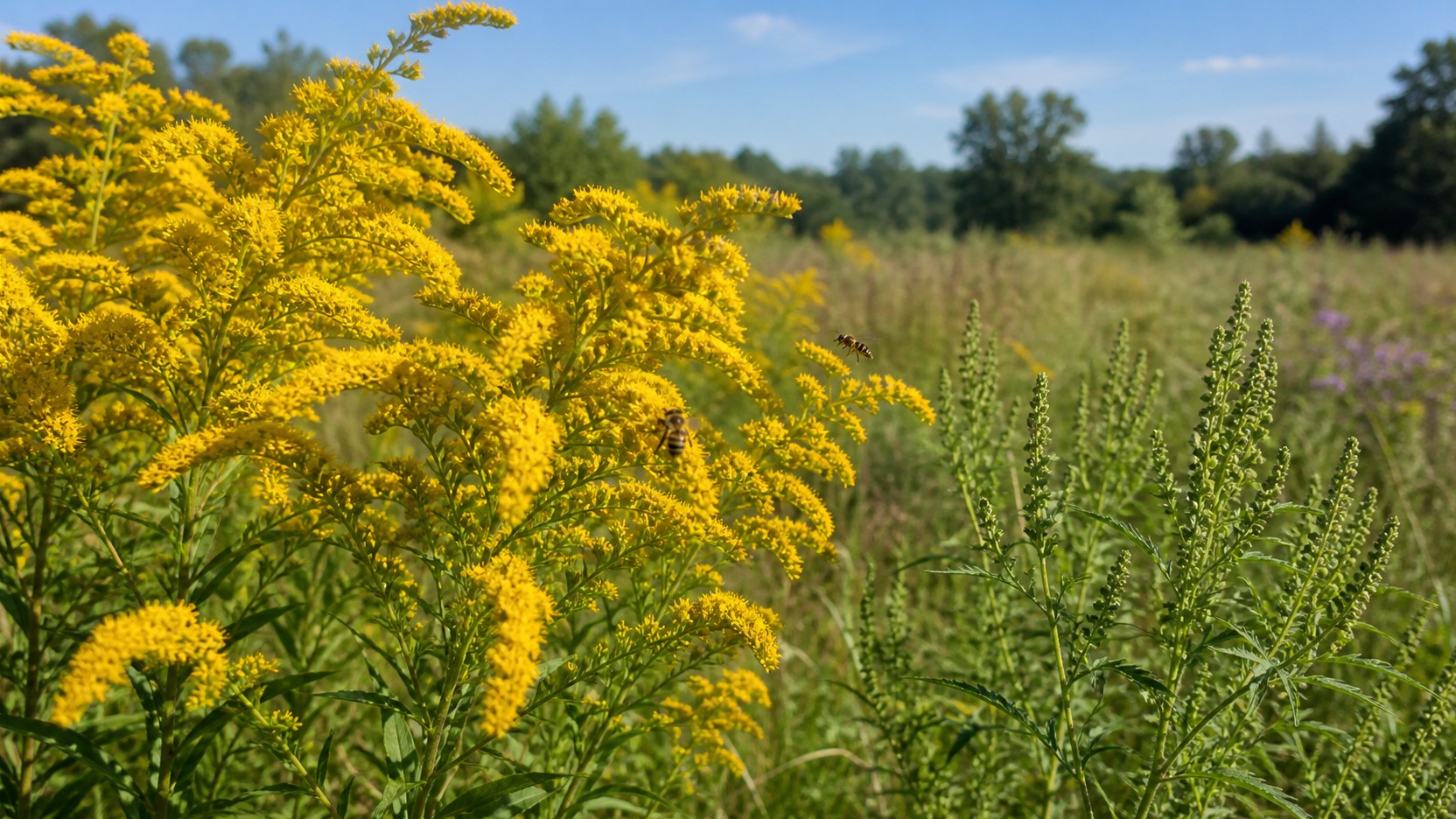
Late August turns the edges of Galion roads, fence lines, gardens, and fields yellow. Golden plumes rise above the grass, bees work the flowers, and almost on cue someone says, “There’s the plant making me sneeze.” The timing feels convincing. The identification usually is not.
Goldenrod and ragweed bloom in the same season, often within a few yards of each other, but they advertise themselves very differently. Goldenrod produces the conspicuous yellow flower clusters everyone notices. Ragweed’s flowers are small and green, easy to overlook, and built to release pollen into the wind. Ohio State University Extension notes that ragweed pollen—not showy goldenrod—is a primary contributor to late-season hay fever.
That difference matters beyond settling a plant-name argument. Correct identification helps you preserve useful late-season flowers, control ragweed where it creates a real problem, and avoid clearing every wild-looking plant from a field edge. This guide gives north-central Ohio homeowners a practical way to recognize all three plants you are most likely to compare: goldenrod, common ragweed, and giant ragweed.
Why the Confusion Peaks in Late Summer
Goldenrod gets blamed because it is visible. Its bright yellow flower clusters can color an entire roadside or meadow just as late-summer pollen symptoms begin. Ragweed is usually standing nearby, but its green flowers blend into the rest of the vegetation. We naturally connect the obvious plant with the obvious symptom.
The pollen explains why that visual shortcut fails. Ohio State’s Buckeye Yard & Garden Line describes goldenrod pollen as large and sticky, adapted to travel on visiting insects rather than on the wind. Ragweed’s small, abundant pollen is windblown. A plant does not have to look dramatic to put pollen into the air; in fact, wind-pollinated flowers do not need bright petals to attract bees or butterflies.
This does not mean no person can ever react to direct contact with goldenrod, nor does a photograph diagnose the cause of anyone’s symptoms. It means that the familiar claim “the yellow field is filling the air with goldenrod pollen” gets the basic biology backward. If late-summer exposure brings sneezing, congestion, itchy or watery eyes, or worsened asthma, use current pollen information and medical advice rather than treating a patch of yellow flowers as proof.
In and around Galion, the practical window is easy to remember: when roadsides and untended corners begin glowing yellow, slow down long enough to look for the quieter green plant. You are often seeing two members of the aster family flowering at the same time, not one plant doing two jobs.
Goldenrod vs. Ragweed at a Glance
You do not need to identify every species to make a sound first decision. Start with flower color and leaf shape, then check the plant’s overall form. Use several clues together; one damaged leaf or partly opened flower can mislead you.
| Feature | Goldenrod | Common ragweed | Giant ragweed |
|---|---|---|---|
| Flowers | Conspicuous yellow clusters or plumes | Small green flower spikes; no showy petals | Small green flower spikes on a much taller plant |
| Leaves | Usually narrow, simple leaves arranged along the stem; details vary by species | Deeply divided, fernlike or lacy-looking leaves; mostly opposite and hairy in OSU’s description | Broad opposite leaves, commonly divided into three large lobes but sometimes more |
| Overall look | Yellow flowering stems, often forming patches or colonies | Bushy, green annual that can disappear visually among other weeds | Coarse, upright annual that can tower above surrounding plants |
| Pollen route | Primarily moved by flower-visiting insects | Wind-pollinated | Wind-pollinated |
| First yard decision | Identify the species and location before removing; a managed patch can be valuable | Remove from high-use or sensitive areas before seed when practical | Control early where its height, seed production, or location creates a problem |
The fastest field test is simple: showy yellow flowers point toward goldenrod; deeply cut or large lobed green leaves with plain green flower spikes point toward ragweed. If you are still uncertain, take clear photographs of the whole plant, the leaf attachment, both sides of a mature leaf, the stem, and the flowers. A single close-up of green foliage is rarely enough.
How to Recognize Goldenrod
“Goldenrod” is a group, not one uniform plant. Ohio landscapes contain multiple Solidago species and cultivated selections, so height, leaf width, flower shape, and spreading habit vary. That is why rigid rules such as “goldenrod always has this exact leaf” are less useful than a combination of traits.
Begin with the flowers. The tiny individual blossoms are grouped into bright yellow sprays, plumes, wands, or flatter clusters, depending on the species. Look closely on a warm, calm day and you may see bees, flower flies, beetles, or other insects moving from cluster to cluster. The visible insect traffic fits the flower’s pollen strategy.
Next, look at the foliage. Many familiar field-edge goldenrods have narrow, simple leaves along upright stems rather than ragweed’s dramatically divided foliage. Some goldenrods spread by underground rhizomes and form dense colonies. Ohio State cautions that common or Canada goldenrod can be aggressive in places where it is not wanted, while also pointing gardeners toward better-behaved landscape selections. “Native” and “appropriate everywhere” are not synonyms.
Location should shape your decision. A goldenrod colony in a back meadow, drainage edge, or designated habitat strip can provide late-season color and an insect food source. The same spreading plant in a small formal bed may crowd its neighbors. You can appreciate its ecological value without giving it every square foot.
If you want goldenrod in a designed landscape, identify the plant before moving it and choose a species or selection whose mature size and spreading habit fit the site. Do not transplant from a roadside or property you do not own. For an existing patch, define its boundary, remove unwanted runners at the edge, and watch how it behaves for a season before deciding whether it belongs.
How to Recognize Common and Giant Ragweed
Common ragweed (Ambrosia artemisiifolia) is the plant most likely to fool a quick observer because it can blend into mixed weeds. Ohio State’s weed-identification page describes its leaves as mostly opposite, hairy, and pinnatifid—botanical language for leaves cut deeply toward the center vein. To most homeowners, they look fernlike, feathery, or lacy. The stem is also hairy.
The flowers do not form a colorful head. Small green flower structures develop along upright spikes near the tops of stems. When the plant is flowering, avoid shaking it around unnecessarily if pollen exposure is a concern. Photograph first, then make a plan.
Giant ragweed (Ambrosia trifida) is harder to miss once it matures. It can stand well above nearby vegetation. Its leaves are opposite and broad, commonly divided into three prominent lobes, although Ohio State notes a range of three to seven lobes. Think of a coarse green plant with hand-shaped leaves, sturdy upright stems, and plain flower spikes—not a yellow-flowering plant.
Do not identify either ragweed by height alone. Mowing, shade, soil, competition, and growth stage can alter a plant’s form. Common ragweed can become substantial, while a young giant ragweed is not yet giant. The leaf pattern is the stronger clue: finely divided foliage suggests common ragweed; broad, large lobes suggest giant ragweed.
Also avoid using the common name as a safety label. Ragweed is not poison ivy, and the issue discussed here is airborne pollen, not the same skin reaction caused by poison ivy oil. Gloves and long sleeves are still sensible when pulling unknown or rough vegetation, but learn each plant separately instead of treating all weeds as interchangeable.
What the Pollen Difference Means for Your Household
The Centers for Disease Control and Prevention lists sneezing, congestion, and a runny nose among symptoms of allergic rhinitis from pollen exposure. Pollen may also contribute to red, watery, or itchy eyes and can trigger asthma attacks in people whose asthma is sensitive to pollen. Those are reasons to take symptoms seriously, not reasons to diagnose their cause from the yard.
CDC’s practical exposure guidance includes checking pollen forecasts, limiting outdoor time when counts are high, showering and changing clothes after outdoor work, keeping windows closed during pollen season, and using appropriate high-efficiency HVAC filtration only when the system can accommodate it without violating its warranty. Prescribed allergy or asthma medicines should be used as directed by a health-care provider.
For yard work, timing and technique can reduce unnecessary exposure. If you are sensitive to pollen, choose a lower-pollen period rather than a dry, breezy afternoon. Wear clothing that keeps plant material off your skin, avoid touching your eyes, and clean up after the job. Bagging flowering ragweed in a small residential area may be more considerate than carrying it uncovered through the house or shaking it beside an open window.
Seek medical guidance when symptoms are persistent, severe, unclear, or involve asthma. Urgent breathing trouble requires urgent care. A garden guide can help you identify plants and reduce exposure; it cannot determine which allergen is responsible for an individual reaction.
One more useful distinction: removing one ragweed patch can improve a specific high-use area, but airborne pollen travels. Yard control is not a guarantee of symptom relief. Pair reasonable landscape management with the health measures that fit your household.
A Better Yard Plan: Keep, Contain, or Remove
Once you have identified the plants, divide the property by use instead of applying one rule everywhere. A tidy entrance bed, a children’s play area, a vegetable garden, a fence line, and a back field do not need identical vegetation.
Keep or manage goldenrod where it fits
Consider keeping a defined goldenrod patch at a sunny back edge where it will not block sight lines, interfere with equipment, or spread into a small bed. Watch the patch through more than one season. If it expands faster than the space allows, thin the perimeter rather than waiting for the colony to take over.
Remove ragweed from high-use areas
Prioritize ragweed near doors, patios, play spaces, frequently used paths, gardens, and other places where people repeatedly brush past it or work nearby. Small plants are easier to pull before flowering and seed production. When soil is moist, roots often release with less disturbance. Hold the plant low, lift steadily, and avoid scattering mature seed.
Use mowing with realistic expectations
Mowing can prevent tall growth and may interrupt flowering if timed before seed develops, but one pass is not a magic reset. Plants can regrow or branch below the cutting height, and new seedlings can emerge in disturbed soil. Recheck the area rather than assuming the job is complete.
Protect bare soil
Ragweed readily occupies disturbed ground. After removal, reduce the open space it leaves. In a bed, that might mean mulch at an appropriate depth or a planned groundcover. In turf, improve density with seasonally appropriate lawn practices. Along a field edge, a stable, desirable plant community is more useful than repeated scalping that exposes fresh soil.
If chemical control is being considered, identify the plant and site first, then read the entire current label of any product. A label governs where and how a herbicide may be used. “Weed killer” is not a universal instruction, and blanket spraying can remove the flowering plants you meant to preserve.
What to Do This Week in Galion
Late August is a good time for a deliberate field walk because the yellow flowers and green ragweed spikes are visible at the same time. Take a phone, gloves, and a way to mark uncertain plants. Do not begin by cutting everything.
- Walk the high-use zone first. Check entrances, patios, garden paths, play areas, fence gates, and the edges you mow or trim regularly.
- Find the yellow flowers. Photograph the entire goldenrod plant and note whether it is a single clump or part of a spreading colony.
- Look beside, not only at, the yellow. Search nearby for green flower spikes and either finely divided leaves or large lobed leaves.
- Classify the location. Decide whether each plant is in a formal bed, high-use area, production garden, utility edge, or low-use habitat area.
- Act on confirmed identifications. Pull small ragweed in priority areas, contain aggressive goldenrod where space is tight, and leave useful flowering patches where they fit the property.
- Schedule a recheck. Return in one to two weeks to catch regrowth, missed plants, or developing seed.
Take better photographs when you need help: one image of the whole plant in its setting, one of the flowers, one of a mature leaf, and one showing how leaves attach to the stem. Put a ruler or gloved hand nearby for scale without covering the plant. Clear images make remote identification far more reliable.
For larger acreage, crop fields, rights-of-way, or a serious infestation, household-scale advice is not enough. Contact the appropriate Ohio State University Extension resource for site-specific identification and management guidance. In agricultural settings, herbicide resistance, crop stage, and label restrictions can change the plan substantially.
The Useful Lesson Hidden in a Yellow Field
The goldenrod-and-ragweed mix is a good reminder that the showiest plant is not always the one doing what we assume. Goldenrod’s yellow flowers advertise to insects. Ragweed’s plain green flowers release pollen to the wind. Once you see the difference, the late-summer landscape becomes easier to read.
That knowledge leads to a more measured kind of maintenance. Keep valuable blooms where they fit. Contain plants that spread beyond their space. Remove confirmed ragweed from the places where your household spends time. Protect the soil afterward so the same disturbed patch does not simply refill with weeds.
Liberty Farm, Home & Garden serves Galion-area homeowners, gardeners, and landowners who need practical help sorting out what is growing and what to do next. Bring clear plant photos when you stop in, and include the flowers, leaves, stem, and whole-plant view. A good decision starts with a good identification.
Most important, do not erase an entire field edge because one plant has been misnamed. Learn the yellow, learn the leaves, and manage the property by purpose. That approach is better for the landscape and more useful than blaming every August sneeze on the brightest flower in view.
Frequently Asked Questions
Keep Reading
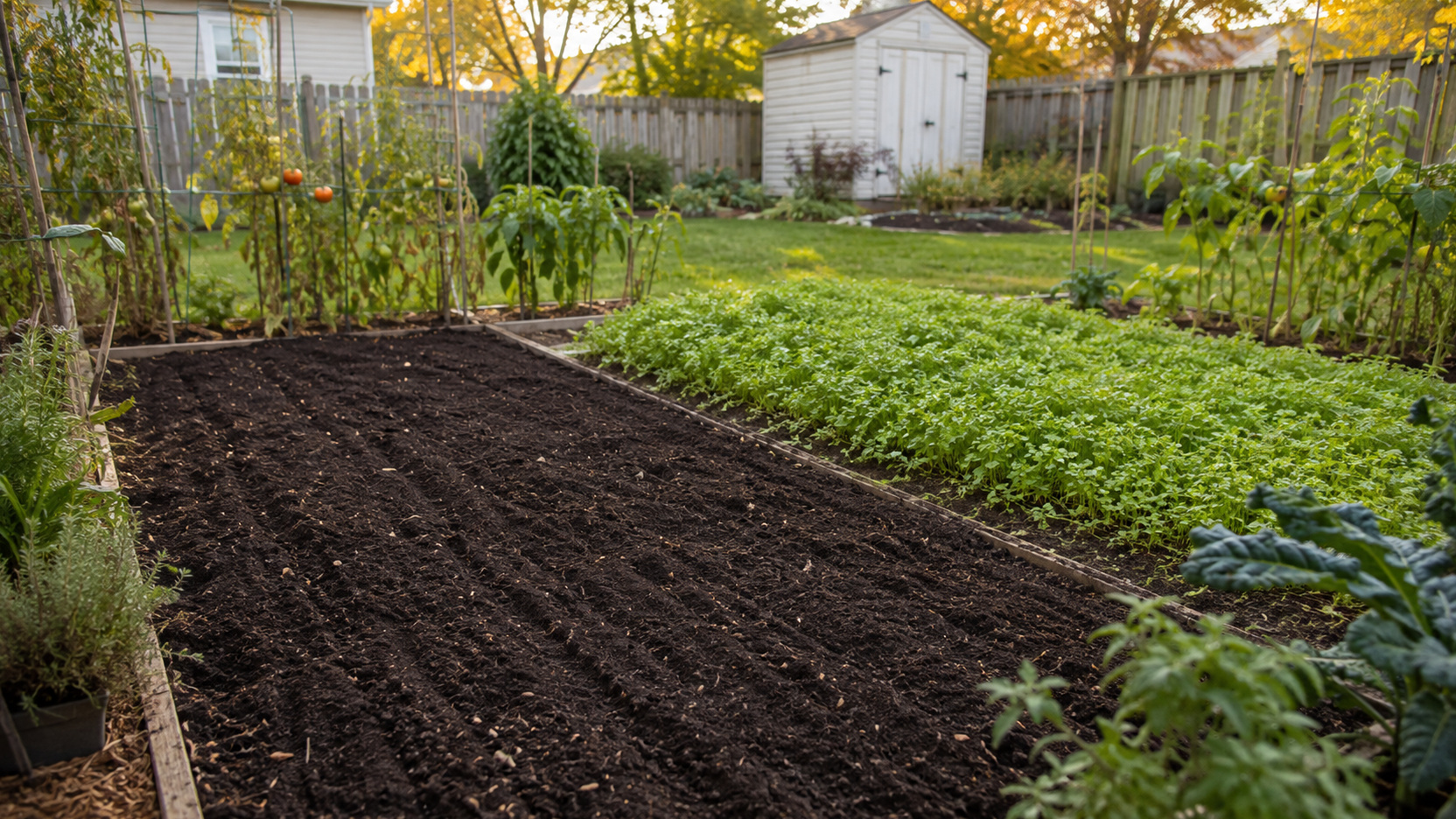
Plant Cover Crops Now: An Ohio Home Garden Guide
Plant fall cover crops in an Ohio vegetable garden with practical guidance on timing, species, seeding, winter care, and spring termination.
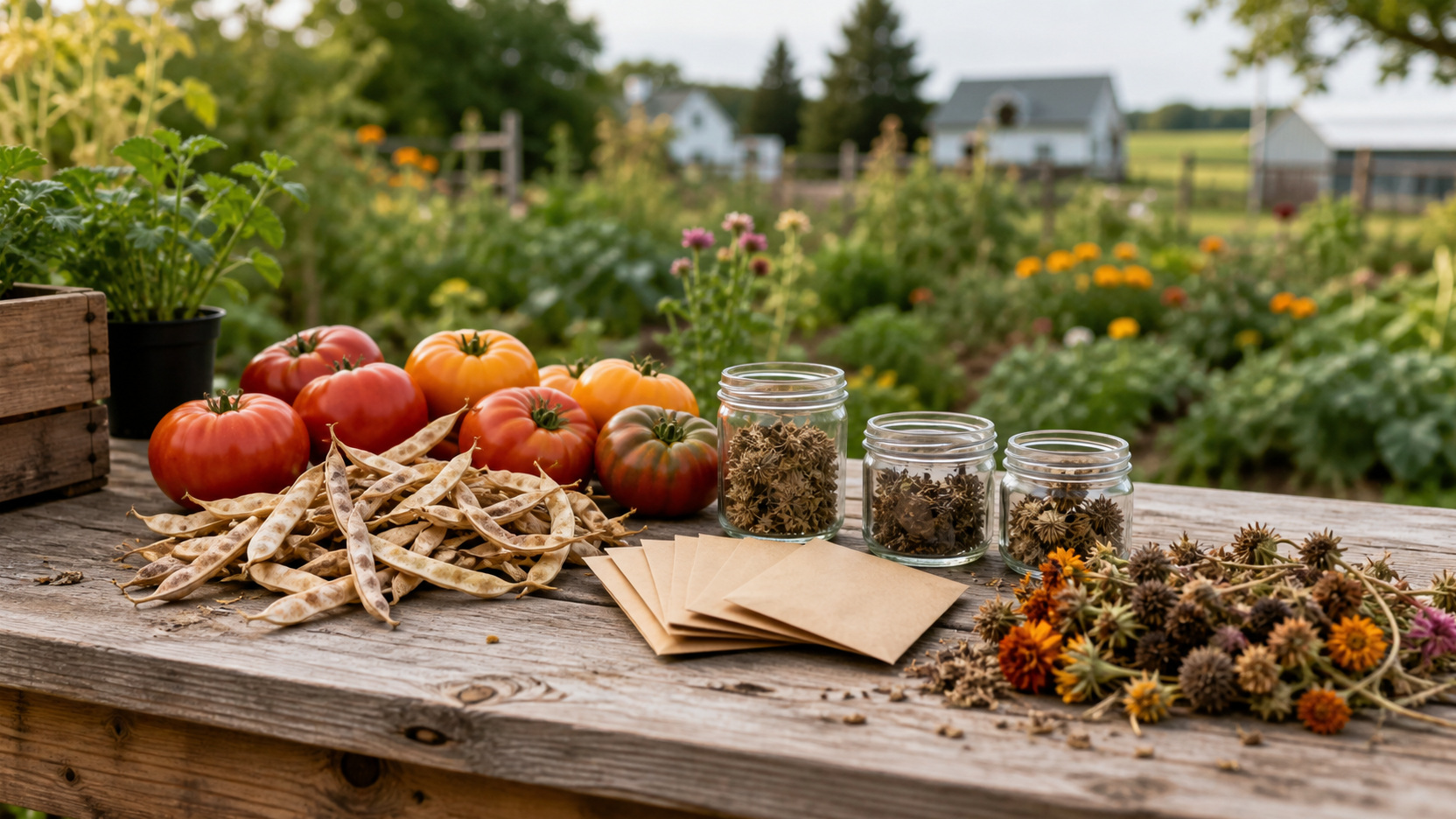
Save This Summer’s Garden: A Practical Ohio Seed-Saving Guide
Save tomato, bean, pea, lettuce, marigold, zinnia, and other garden seeds with this practical late-summer guide for Galion and north-central Ohio.